
Category Archives: Video

Behold: the glorious Orion nebula and what it might be like to fly through it. To wit:

The exciting dynamic visualisation of the Orion Nebula is based on real astronomical data and adept movie rendering techniques. Up close and personal with a famous stellar nursery normally seen from 1,500 light-years away, the digitally modelled representation based is based on infrared data from the Spitzer Space Telescope. The perspective moves along a valley over a light-year wide, in the wall of the region’s giant molecular cloud. Orion’s valley ends in a cavity carved by the energetic winds and radiation of the massive central stars of the Trapezium star cluster. The entire Orion Nebula spans about 40 light years and is located in the same spiral arm of our Galaxy as the Sun.

(Video: NASA, Spitzer Space Telescope, Universe of Learning; Visualisation: F. Summers (STScI) et al.; Music & License: Serenade for Strings (A. Dvořák), Advent Chamber Orch.)


apod

A short by Ed Bulmer in which Frank recalls an awkward attempt at workplace humour.

The story was inspired by this podcast episode in which a neuroscientist explains that “every time you revisit a memory, the more inaccurate it becomes; each time becoming further distorted by your perception of events rather what actually happened”.

shortoftheweek

https://vimeo.com/568430412

A mesmerising hovering drone time-lapse capturing the rhythms of sheep herding at Yokneam in Israel by photographer Lior Patel. To wit:

Vegetable farmer Michael Morgan, who’s referred to as the “king of cabbage,” and South Africa-born herder Keith Markov have managed the flock since 1985, and today it fluctuates between 1,000 and 1,750 individuals. Each year, the sheep migrate up to seven kilometres from the valley to the outskirts of Ramot Menashe with the help of shepherds Mustafa Tabash, Mahmoud Kaabiyah, Eyal Morgan, and Dan Goldfinger and a few border collies, which you can see circling the edges of the flock and rounding up stragglers.

colossal

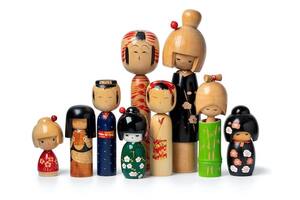
Kokeshi – arguably, the ancestors of post-WW2 kawaii or ‘cuteness’ culture –  are traditional Japanese  wooden dolls that were first made by craftsmen during the end of the Edo period in the late 1800s. To wit:

The skills needed to craft kokeshi is traditionally passed down through the family line. The sons of kokeshi masters typically become apprentices and learn the craft from their father in their own homes or workshops. However, now that more focus is being put on keeping this ancient art alive, more and more women are learning how to make kokeshi too. This new generation of artists learn everything they need to know under the guidance of a kokeshi master.

mymodernmet

A two hour HD montage of 1540 paintings by Claude Monet – a significant proportion of the artist’s oeuvre assembled by Learn From Masters. To wit:

Over 2,500 such works have been attributed to him. That number is probably much higher “as it is known that Monet destroyed a number of his own works and others have surely been lost over time,” notes the Monet Gallery.

openculture