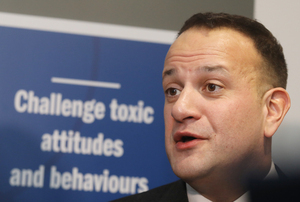

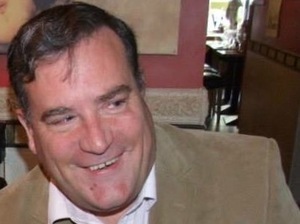
From top: Fine Gael MEP Brian Hayes (centre), who is leaving politics, canvassing in the 2014 European Elections; Dan Boyle

There probably won’t be a general election this year. There would need to be some clarity on Brexit, along with a belief in Fianna Fáil that it can advance in some way. Neither are likely, but if they were to come to pass, an election could take place in September/October.

A decision to hold a general election will be informed by the definite holding of local and European elections in June. Mid term elections are usually not good news for a party in government. Voters are more likely to use these elections to give parties in government a good kicking.

The European elections are those in which independents and smaller parties can make hay. There are three independent MEPs currently representing Ireland, four if you include Brian Crowley (currently in exile from Fianna Fáil).

There is also a strong tradition of electing independents – TJ Maher, Pat Cox, Dana and Kathy Sinnott, all of whom sought to present themselves, in varying degrees, as something apart from traditional politics.

Similar voter volatility has benefited smaller parties from The Worker’s Party winning a seat in 1989; through Joe Higgins winning a seat for the Socialist Party; to the Greens electing two MEPs in successive elections (1994/99).

Sinn Féin made its big impact in 2014 winning three seats, although Mary Lou McDonald had earlier served as a single term MEP.

This time it is difficult to predict what might happen, there are so many variables at play. In the Dublin euro-constituency there is an additional fourth seat to be contested.

Two of the outgoing MEPs will not be standing again. These two, Brian Hayes and Nessa Childers had won the second and third seats on a margin of one third of one per cent, with Eamon Ryan narrowly missing out.

Lynn Boylan for Sinn Féin will likely be re-elected, albeit on a smaller vote. The other three seats could go anywhere.

Senator Neale Richmond is likely to seek selection for the seat held by Brian Hayes. He has received a great deal of media attention as a Brexit spokesperson, although he is unlikely to improve the vote Brian Hayes got last time, a vote that was barely enough then.

Conor Lenihan is seeking a nomination to be the Fianna Fáil candidate. He certainly has a profile, even if in Dublin the FF vote remains its weakest in the country.

These two, if and when selected, would be fighting it out with Ciarán Cuffe of The Greens, Alex White of Labour and Gary Gannon of the Social Democrats, for those final three seats.

The situation seems more clear cut in the Midlands/North West euro-constituency. Matt Carthy should be re-elected for Sinn Féin, although he may suffer from an impression that he may not serve a full term, as he much prefers the prospect of becoming a TD for Cavan/Monaghan.

Mairead McGuinness will I suspect top the poll. Only one of two current independent MEPs Marian Harkin and Luke Flanagan is likely to get elected, with Harkin being in the stronger position.

A dual threat exists for Flanagan – Fianna Fáil with the right candidate will be in the frame for a seat in the region where the party picks up its strongest vote.

Should he choose to run Peter Casey, with sufficient momentum from the presidential election, would amass enough votes to be elected, unfortunately.

In the Ireland South euro-constituency, now with an added fifth seat, Fine Gael’s Sean Kelly should be re-elected. Sinn Fein’s Liadh Ni Riada has had her name recognition enhanced after a far from successful presidential campaign.

Fianna Fáil’s leader Micheál Martin has given his imprimatur to Malcolm Byrne from Wexford. Malcolm and I worked together in the National Youth Council of Ireland. He has a capacity to be a very effective MEP.

What may hinder his prospects are the plans of outgoing MEP Brian Crowley, perhaps the greatest vote gatherer in Irish politics, on whether he will seek to defend the seat he holds. He is unlikely to be given a FF nomination having had the whip removed in 2014.

Even if he were to run as an independent candidate he would face uncomfortable questions on why he wants to extend his mandate, given that due to illness he has not attended a single session of the European Parliament since 2014.

Deirdre Clune‘s ability to retain a second Fine Gael will depend on how the party manages its vote. Labour doesn’t seem to have identified a strong candidate here. This opens the door for the Greens, with Grace O’Sullivan who looks set to add upon what had been a substantial vote in 2014.

These votes will not be replicated in a general election, but they will be analysed to see where the next slippage in our traditional voting patterns occur.

Dan Boyle is a former Green Party TD and Senator. His column appears here every Thursday. Follow Dan on Twitter: @sendboyle

Rollingnews

China has made history by landing on the far side of the Moon

Now China, Earth’s biggest commune
Has reached the dark side of the moon
Though in the space race
They’ve missed out on first place
It’s still something one shouldn’t lampoon

John Moynes

Pic: EPA/EPA/China National Space Administration

Cover of the Irish Mail on Sunday, on May 25, 2014; the site of the former Bon Secours Mother and Baby Home in Tuam, Co Galway

Taoiseach Leo Varadkar confirmed to journalists last Saturday that excavation work at the site of the former Bon Secours Mother and Baby Home in Tuam, Co Galway, will begin in the latter half of 2019.

Further to this…

The Tuam Home Survivors’ Network have since released a statement saying:

“It is now four and a half years since Alison O’Reilly broke the story of Tuam to the world press on Sunday the 25th of May, 2014.

“In March 2017, Minister Katherine Zappone advised that the remains uncovered during the test excavation dated to the period of the home (1925-1961) and were of babies and children aged between 35 fetal weeks and three years.

“This revelation, while confirming what many survivors and family members suspected, brought a new urgency to the situation.

“Finally, Dr Geoffrey Shannon’s report focused on the human rights which continue from cradle to beyond the grave attributing to the 796 in an effort to provide much needed dignity and respect to the lost children of Tuam and six mothers whose burial place remains unknown.

“To that end, we look forward to the New Year in the hope that it brings some element of closure to an injustice that weighs heavily on families seeking return of loved ones and an elderly population of survivors who seek answers in their lifetime.

“Tuam Home Survivors Network looks forward to direct involvement in decisions by Government and appointed experts along every step of the way throughout this comprehensive programme of activity required to bring about a resolution that meets with international best practice protocols for the recovery of human remains and to bring comfort to our network participants, primarily family members and survivors.”

Tuam Home Survivors Network Response Regarding An Taoiseach Leo Varadkar’s Confirmation of Exhumation in 2019 (Tuam Home Survivors Network)

Rollingnews

From left: Assistant Garda Commissioner David Sheahan, Minister for Transport  Shane Ross and RSA Chief Executive Moyagh Murdock launching a proposal to make it an offence to pass a cyclist closer than 1.5m on roads with 50kph limit or higher

Mr Ross said it had proved exceptionally difficult to draft legislation on a minimum passing distance that was constitutional and that could be enforced, and as a result the Bill would not proceed.

It is understood the Attorney General’s concerns centred on how the 1m and 1.5m distance could be measured for enforcement purposes.

He spoke too soon.

Spoke.

Suit yourselves.

New law on drivers overtaking cyclists abandoned (Irish Times)

Rollingnews

Newly re-elected Republican Utah Senator Mitt Romney (right) says US President Donald Trump has caused ‘dismay’ worldwide

Incoming Senator Mitt
Has decided that finally it
Is safe to attack
The president’s back
But will he score a palpable hit?

John Moynes

Pic: Getty


From top: Taoiseach Leo Varadkar; Bryan Wall

On Christmas night, the group Inner City Helping Homeless (ICHH) attended to 106 people in Dublin who were sleeping rough or in need of some aid.

One day later on St. Stephen’s Day, the Irish Examiner reported Taoiseach Leo Varadkar as saying that property taxes would now go back into the areas from which they were collected.

According to the article, this means “wealthy locations will keep their money while poorer communities will see a drop-off in funds.” Such a move is likely to be welcomed by those living in more wealthy areas of the country.

Two days later, The Irish Times reported on the Taoiseach’s defence of vulture funds, a term he finds derogatory given that “it is a political term” and apparently not in keeping with the reality of the situation. He also commented that vulture funds come under the same regulations as banks and that therefore consumers are protected.

Like his comments regarding hospital staff not taking time off work over the holidays, these are not gaffes by a politician who blurts out things that are inexcusable.

These are the comments of a man who believes what he says.

The Taoiseach believes what he says when he defends vulture funds as having a better business model than the nationalised banks here. Similarly, property taxes should not be pooled together out of which every area draws what it needs.

Instead, it should only go to those who pay into it and those who pay more should benefit more.

Given the current structure of societies in terms of class stratification, the outcome of the mooted plan is well-known by all in advance, including the Taoiseach. The context within which these comments are made is also important.

To say that we are in the midst of a housing and homelessness crisis would be an understatement. It would also not entirely capture the whole situation. Both issues are encompassed by the larger crisis of late capitalism. Intent on making profit no matter the cost, the human toll continues to mount.

Defenders of the status quo remain indifferent to the casualties of their preferred worldview or, being aware of said casualties of the ideology to which they ascribe, justify it on the basis of market discipline working itself out without the need for superfluous state intervention.

Many people have internalised this ideology. If you end up homeless it is you that has done something wrong not the system.This gains even more credence in the minds of the defenders of the faith given the supposed economic recovery that has taken a hold of the country.

Writing this past Friday, one Irish economist was at pains to understand why “so many people are worried there may be a recession around the corner” given “the otherwise rosy economic picture.”

Pointing to statistics which show that the country has nearly reached full employment and that wages have increased, the author reinforces the view that if all is well, then how can anything be wrong?

The economist – a former economic consultant to Joan Burton and the World Bank – failed to mention that the increase in rental prices negates any apparent increase in wages.

According to a rental price report published by Daft in November, rents nationwide are now thirty per cent higher than they were during their peak in the Celtic Tiger years. Year on year, the rents have risen by over eleven per cent.

Internalising of ideology is one of the core elements of how any ideology functions in the first place. It is no different when it comes to capitalism and its adherents.

When Leo Varadkar’s comments regarding the property tax was reported on, the authors of the article wrote “the move is likely to be welcomed by people living in wealthier areas who want to benefit form their own taxes.”

This is written without need for further comment. It is taken as a given that the wealthy elite simply do pay more and therefore are more deserving of help, be it in whatever form their friends in the government decide. Tax is a burden placed upon them. You would be at pains to find a more impressive level of internalising of ideology in another setting.

Mr Varadkar’s comments are welcome then, as he will rectify this obviously unfair situation. The poor, unable to pull themselves out of their self-inflicted misery, will get what they deserve: nothing.

Meanwhile, the burden of caring if the person down the road lives or dies by contributing to the national pool of tax will be removed from the wealthy and elite. They already have to live with the burden of the masses asking for more crumbs from the table.

We have a Taoiseach who accepts this worldview as the one true answer to the problems of society and the world at large. Is it any wonder that housing and homelessness have been ignored by the government?

We are undergoing a variation of the shock doctrine, albeit in slow motion.

A country in Western Europe in the 21st century that is unable to provide basic services, such as healthcare and housing, to its population is not a failed state according to capitalist doctrine. It is functioning precisely how it should.

Those who can afford to pay exorbitant amounts for housing or expedited medical care are the ones who matter. If masses of people are unable to afford either housing or medical care so be it.

Market doctrine must reign. Everyone can either get on board with the system or fall by the wayside. It is they that are the problem, not the system itself. Leo Varadkar’s statements are emblematic of this.

Vulture funds are called that for a reason. David Hall, CEO of the Irish Mortgage Holders Organisation, has said that the Taoiseach simply “does not understand that the ‘protections’ he refers to are meaningless.”  Furthermore, Mr Hall told me that “Vultures are parasites and will destroy many more families”.

It is unlikely that Varadkar does not understand what he says regarding vulture funds. It is just that most people who have a moral centre find it difficult to understand how an obviously intelligent man can say something so ludicrous. However, intelligence is not a measure of one’s moral rectitude.

The leader of our country was more concerned with a mercenary force being attacked in retaliation to a violent attack that was carried out by them than with their initial violence in the first place. When this is the case, you can be assured that any concern for the average person is no longer a key policy issue in the halls of power.

Housing and medical care will be provided but only if it can be done at a profit. If it cannot, then market doctrine declares that other more profitable ventures must be undertaken, such as full-scale privatisation.

The power of the certainty of one’s beliefs is a potent force. Leo Varadkar’s belief in the holy doctrine of the free market is powerfully dangerous especially given his leadership of the country. His convictions will ensure that housing will be left to the whims of private entities.

Homelessness will increase and our health system will continue to lurch towards its inevitable collapse. In this equation people are expendable. Why shouldn’t they be? People, especially those organised against injustice, have an annoying tendency to get in the way of the pursuit of unbridled profit.

If injustice is to be defeated, that means confronting the forces of exploitation head-on whether they come in the form of a private corporation or the government itself. Securing a decent future requires us to fight injustice regardless of the facade it wears.

Bryan Wall is an independent journalist based in Cork. His column appears here every Monday. Read more of his work here and follow Bryan on twitter:  @Bryan_Wall

Rollingnews

Broadsheet.ie