



Poulaphuca Reservoir, County Wicklow


Poulaphuca Reservoir, County Wicklow
An Garda Síochána write:
While patrolling the Wicklow division The Garda Air Support Unit noticed the ruins of a homestead and a piece of farm machinery (mowing bar) on a raised piece of land which had previously been submerges in the lakes…
Agricultural homestead?
Or early dumping place?
We may never know.
Retreating waters in Co Wicklow lake expose ruins of homestead (RTÊ)

Norma Burke aka Bunty Twungtinton McFuff
Frilly Keane writes:
Also in the Dublin City Council chamber yesterday was Bunty Twungtinton McFuff You might remember Bunty was hoping to join the Gavin Duffy campaign
Rather than getting all insulted and grandly upstanding like Mannix Flynn, I suggest Councillors, all over the Country, recognise what this route to nominations has turned the Presidential Election into.
It is their oow internal Party workings and voting arrangements along with organised abstentions that drew Bunty into the Nomination process, and she should be congratulated for forcing Dublin City Council to call time on their own right to nominate rather than be considered a Fine Gael conspiracy
That on its own deserves its own place in the comedy of Áras 2018 we now have before us; out of a Chamber of 63 councillors, seven are Blueshurts.
If this County is to continue to pretend it is a Democracy, then why not vote for someone because they have the best hair?
The Local Councillors have already nominated two businessmen, with no public service record, other than one of them being a former Fianna Fáil Ministerial assistant and fundraiser, the other being a paid external consultant, alongside a Pro-Life advocate whose connection to
the Iona Institute cannot be denied.
This on its own is a blatant two-fingers to the convincing majority of these Councillors own constituents.
I’ve already said here that Michael was no innocent bystander to this farce , so for anyone charged with deciding who gets on the ticket at all to be objecting to Bunty’s pitch yesterday would want to take a better look at themselves.
Up your Áras lads.
Frilly Keane can be followed on Twitter: @frillykeane
Earlier: ‘I Would Like To Defend The Voiceless‘
Saved
at


This afternoon.
Sean McDermott Street, Dublin
The last remaining Magldaelne Laundry site of its kind still in State ownership.
Dublin city councillors voted yesterday evening to block the sale of the Magdalene Laundry to an hotel chain
Earlier: A Constant Reminder
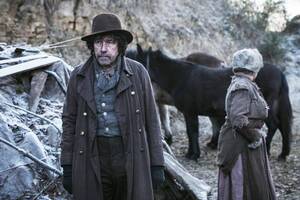
Stephen Rea (right) in Irish box office hit ‘Black 47’
On The Ray D’Arcy Show…
Via RTÉ
Ray will be talking to Oscar nominated actor Stephen Rea about his role in Black 47, the number one movie at the Irish box office, based on the darkest year of the Irish Famine.
In the run up to next week’s National Ploughing Championships in Offaly, Ray is joined by much loved double act, Marty Morrissey and Aine Lawlor.
Social activist and Senator Lynn Ruane reveals the intimate details of her new book, People Like Me – an inspirational memoir about family, class and identity.
Ray meets transgender actor Rebecca Root, the first trans actor to play a trans role in a professional Irish play and finds out more about her upcoming Hollywood roles, alongside Jake Gyllenhaal and Joaquin Phoenix.
And in studio with Ray is photographer Gerry Mooney, who got the royal seal of approval this week when his photograph of Meghan Markle, was personally chosen to be the Duchess’s birthday ‘Thank You’ card.
*begins personal RTÉ famine*
The Ray D’Arcy Show tomorrow at 9:50pm on RTÉ One
Oll Korrect
at
How the LOL of the 1830s became America’s, and subsequently the world’s favourite abbreviation. To wit:
Young Boston intellectuals in the early 1800s used a humorous code of abbreviated phrases, like “KC,” or “knuff ced”; “KY,” “know yuse”; and “OW,” “oll wright.” And while most of them eventually fell out of fashion, one abbreviation persisted: “OK,” or “oll korrect.
MORE: Why We Say OK (Vox)


Gemma O’Doherty addressing Dublin City Council chamber yesterday
Yesterday, Gemma O’Doherty was among a number of Presidential hopefuls including Peter Casey, John Goarke and Sarah Louise Mulligan to make their case to Dublin City Council.
Councillors chose to discard all nomination following disruptions during an address by comedy candidate Norma Burke aka Bunty Twuntingdon McFluff.
Ms O’Doherty told councillors:
As a proud Ranelagh woman who grew up just up the road from here it’s a honor to be here today but I would like to pay tribute to the brave young men and women who are currently occupying properties in the city and trying to draw attention to the appalling housing crisis that our city and country now face.
I would like to put on the record of this chamber that I am profoundly disturbed at the sight of men in balaclavas coming down to our city, guarded by our police force, and removing these young people, who are desperate, who cannot afford even to dream of buying a house in this city, never mind renting one, and my reason for seeking this nomination is in furtherance of my desire to serve the cause of truth, justice and integrity for the Irish people.
I believe that our relatively young nation is suffering from a culture of corruption and clientism which is deeply damaging to democracy and to the relationship between politicians and citizens.
I believe that the presidency can set the standard for the sort of democracy that we all want to live in, one that respects citizens’ right to truth and justice, the right to affordable housing, the right to a first world health care service, the right to a publicly owned safe and reliable water supply and the right to a free press.
Most of my work in investigative journalism has focused on exposing wrongdoing within the criminal justice system. A number of my investigations have let to the reopening of murder files including that of Niall Molloy and Mary Boyle, our longest and youngest missing person.
During my work at the Irish Independent, where I spent almost 20 years, I worked with Maurice McCabe and was one of the first journalists to expose the very serious allegations that he was trying to highlight, and as part of my work I was responsible for exposing I suppose an elite that had been operating in this country and continue to operate people who are going onto the roads of our country and doing whatever speeds they liked.
Some of these people were judges, some of them were state solicitors, journalists, crime reporters and newspaper editors.
As part of that particular work I exposed the fact that the Garda Commissioner, the former Garda Commissioner, was also abusing the penalty points system and that resulted in the end of my career at INM. I was forced to take a case to the High Court, where I was successful.
Since then, I have been highlighting injustice and organizing a number of trips to foreign parliaments with victims of state corruption and these have included Stormont, Brussels, Westminster and Washington DC, where I have visited with citizens who have been denied justice and spoke to foreign MPs and MEPs and tried to highlight cases that Irish governments have turned their back on.
As I said earlier I am very concerned about the housing and health crisis and I believe that boundaries of the presidency can be pushed out in order to stand up and defend those who have lost their voices in this country. I believe that there are many of them now.
Many more people become voiceless every day in our city and our country and they are the people I would like to defend.
Thank you very much for listening to me today.
Watch here (from 23.33)
Earlier: And For That Reason
Previously:: Mid Morning Presidential Matters


From top: Members of the Garda Riot Squad (Public Order Unit), during the National Emergency Service Parade on September 1 in Dublin city ; Alyson Kilpatrick’s report for the Irish Council of Civil Liberties and Ms Kilpatrick
This morning.
At the Irish Human Rights and Equality Commission on Green Street, Dublin 7.
Former human rights advisor to the Policing Board of Northern Ireland, Alyson Kilpatrick BL presented her report A human rights-based approach to policing in Ireland – for which she was commissioned by the Irish Council for Civil Liberties.
In her report, Ms Kilpatrick writes:
A human rights-based approach is necessary because it is required by law. In Ireland, the European Convention on Human Rights Act 2003 requires An Garda Síochána to perform its functions in a manner compatible with the state’s obligations under the European Convention on Human Rights (ECHR).
Moreover, a human rights-based approach is the best means of securing the reform of policing that is desired and needed. It is effective in securing a professional, lawful, democratic and accountable police service that respects and values the people it is there to serve while effectively combating crime and maintaining order.
It will help secure police legitimacy and therefore enhance safety and security. A human rights-based approach puts the rights of individuals and protected groups, enshrined at law by the ECHR,3 at the centre of every decision and action of the Garda Síochána and gardaí.
…If police are to build (or rebuild) trust they must behave so as to secure the confidence, approval and support of the public – willingly – by their professional, human rights compliant approach which respects democracy and the rule of law.
Trust in the police can be easily undermined, particularly when public order operations end in violence.
Scenes of police battling with protesters for example will be beamed across the country, drawing observers into a debate about the very legitimacy of the policing operation and the legitimacy of police themselves.
The police will be compelled to justify their actions by reference to the law and human rights principles. Without a ready willingness to explain, provide justification and answer questions the police will be pitched against the community it is there to serve.
Unanswered questions will invite speculation and silence will result in conspiracy theories. Tactics will be discussed and criticised by those who urge a harder edged policing response and by those who condemn the police for their over-use and/or misuse of power.
An Garda Síochána does not make its policy directives, training, strategy, decision-making logs or de-briefs available for public scrutiny.
In other words, the framework within which the garda operate is entirely hidden from the public.
There has been published an overarching policy directive on public order incident command but it is general in nature. It does contain the statement that it is “the aim of An Garda Siochana to uphold and protect the human and constitutional rights of everyone” but there is little in terms of practical guidance on how that will be achieved.
The garda’s policing of protest has given rise to concern among the public about tactics and potential political interference in policing operations but remains shrouded in secrecy.
The report can be read in full here
Pics: Eamonn O’Farrell/Rollingnews and ICCL