
“Look at the German!”#WorldCup2018 #MEXGER 💔 pic.twitter.com/UVrJnsMfNY
— Tom Moylan (@moylato) June 19, 2018
*kichern*
German papers slam national team ‘wimps’ after World Cup loss to Mexico (ESPN)



“Look at the German!”#WorldCup2018 #MEXGER 💔 pic.twitter.com/UVrJnsMfNY
— Tom Moylan (@moylato) June 19, 2018
*kichern*
German papers slam national team ‘wimps’ after World Cup loss to Mexico (ESPN)

Don’t Forget Me.
By Melissa Jane Carroll.
Melissa writes:
This song and music video was created in an effort to raise funds towards the research and support of cancer and cancer patients.
The song was inspired when my father became ill late last year. Although it turned out he didn’t have anything sinister and all was okay, it motivated me to do something for the amazing Irish Cancer Society.
More here
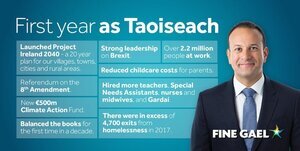
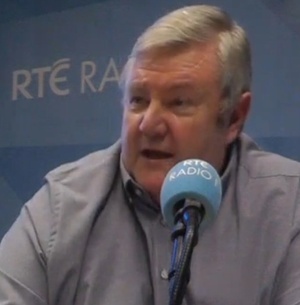
From top: Fine Gael infographic marking Leo Varadkar’s first 12 months as Taoiseach; Derek Mooney
As part of the hoopla to mark Leo Varadkar’s first year as Taoiseach, Fine Gael produced the nifty infographic (top) setting out some of the new leader’s biggest achievements.
The list offers an interesting insight into what the Taoiseach cares most about or, to be more accurate, what the Fine Gael pollsters tell him that his potential voters care most about.
Pride of place goes to the very frequently hyped national framework plan, Project Ireland 2040, followed by “Brexit Leadership” and the “8th Referendum”.
At the other end you find “and gardai” shoehorned into a claim about hiring more nurses and teachers, followed by curiously worded item on housing, though the word itself fails to make an appearance.
To avoid embarrassing Leo by putting a figure on the number of houses and apartments built over the past year, the copywriters had to come up with some phrasing that managed to convey the idea of progress, without breaching the standards in advertising code.
The result is this extraordinarily clunky and impersonal boast that:
“There were 4,700 exits from homelessness in 2017”.
“Exits”? If ever a single phrase summed up Orwell’s description of political language “… as giving an appearance of solidity to pure wind”, it is surely this.
It reads as if it came from the pen of someone who writes real estate ads. You know the ones, where “open plan apartment” means the bed is between the cooker and the lavatory and “close to nightlife” means the place is directly over an all-night, bikers’ bar.
No one even vaguely familiar with the presentation of political issues could have signed off on such a phrase. Some alternative wordings must have been considered, such as “families housed”, “homes built” or even the horrid stock civil service phrase “net reductions”.
The fact that these were rejected in favour of “exits” tells you what a tough task some poor Fine Gael wordsmith had trying to script anything even vaguely resembling an achievement on housing or tackling homelessness.
They knew they had to mention the issue somewhere on the list, so there the line sits. Not mentioning it would have caused a bigger outrage. That is the problem with a record like Leo’s, when it comes to housing not only are the statistics bad, they cannot even be trusted not to be worse.
Up to very recently the Government was claiming that 85,000 houses had been built between 2011 and 2017. In reality, as the CSO has recently confirmed, only 53,000 houses were built over that period. An over-estimate of 31,000. Meanwhile, nationwide between 2014 and 2017, local authorities only built 818 houses.
When it comes to the housing crisis there is no end to the bleak statistics. Over 9,500 people are homeless in Ireland today, over 3,500 of whom are children. Rents increased last year by 7.1%.
So why, with this being such a horrendous issue for Fine Gael, is Leo talking up the chances of there being a no confidence motion in his Housing Minister?
Well, because that is what today’s Fine Gael does. Gone are the days of Enda’s obfuscation and microphone dodging, Leo’s Fine Gael is now the party of high theatricality.
Every event, every issue, every announcement is approached as if it was a one-off scene in a theatre or movie production. The focus is not on the narrative or the plot, it is all about the staging and the positioning.
Since the judicious leaking of Leo’s comments at the Fine Gael party meeting, warning of a possible Sinn Féin motion of no confidence in Minister Eoghan Murphy that would see Fianna Fáil take a kicking, the focus has not been on the issue of housing but on the party politics of the issue of housing.
We are talking about housing while not talking about it. It is the perfect Fine Gael production. Lots of high drama, plenty of column inches and dozens of social media posts featuring pictures of Leo and Eoghan, but no content.
Not a single word about policy or actual outputs. At the end of the drama everyone is precisely in the same place as they were at the start. Nothing progresses. It’s lights, cameras and no bloody action.
But through it all, Leo gets what he wants. There is a little less public discussion of the substantial housing and cervical smear controversies. He positions himself as the man above the partisan political fray, not wanting an election but caught between the warring Fianna Fáil and Sinn Féin tribes.
And, in a piece of masterful timing, all of this just after a very well received visit to Northern Ireland and just before welcoming Jean Claude Juncker to Ireland for discussions in advance of the following week’s June EU summit on Brexit.
As political productions go, it was spot on. Well executed, beautifully timed and nicely played, but as with all cinematic and theatrical productions, the appearance should not be confused with reality.
The production crew who brought you last weeks’ no no-confidence motion spectacle also staged last November’s weekend long melodrama turned farce: The Saving of Frances – and that one did not turn out the way they had planned.
The worry is that this is all the FG crew has in store for us over the coming weeks and months, more and more productions and no governing. If so, then the election cannot come soon enough.
Yes, we do have Brexit looming on the horizon and there is an argument that we do not need a month or so of uncertainty at this critical juncture, but there is no major disagreement between the major parties on Brexit and anyway the negotiations are being led on a day to day basis by Barnier and his Brussels team with input from senior Irish officials.
A three-and-a-half week long, high octane campaign that results in a government team that is really prepared to govern, even if getting that government takes a few weeks of horse trading, is far preferable to a year or more of maximum quality, minimum content productions only timed for the next opinion poll.
Derek Mooney is a communications and public affairs consultant. He previously served as a Ministerial Adviser to the Fianna Fáil-led government 2004 – 2010. His column appears here every Tuesday Follow Derek on Twitter: @dsmooney

One Small Thing To Do.
A mini-rockumentary mainly recorded on phones.
Luke Abbot writes:
Two festivals in two countries in 12 hours. That was the task facing King Kong Company last June as they closed Body & Soul [Ballinlough Castle, Westmeath] then twelve hours later made their Glastonbury [Somerset , England] debut.

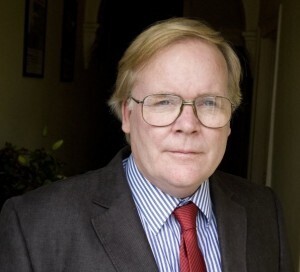
From top: Minister for Finance Paschal Donohoe; Michael Taft
People are rightly questioning whether the measurement of national output– GDP – actually measures the real worth of economic activity. President Sarkozy even set up a commission – the Commission on the Measurement of Economic Performance and Social Progress – to ascertain whether there were alternative measurements to capture the wealth and social progress of a nation.
From what was once a fringe interest the question of how to break from ‘GDP fetishism’ has now moved mainstream, five decades after Senator Robert F. Kennedy stated:
‘Our Gross National Product, now, is over $800 billion dollars a year, but that . . . counts air pollution and cigarette advertising, and ambulances to clear our highways of carnage. It counts special locks for our doors and the jails for the people who break them.
It counts the destruction of the redwood and the loss of our natural wonder in chaotic sprawl. It counts napalm and counts nuclear warheads and armored cars for the police to fight the riots in our cities. It counts Whitman’s rifle and Speck’s knife, and the television programs which glorify violence in order to sell toys to our children.
Yet the gross national product does not allow for the health of our children, the quality of their education or the joy of their play. It does not include the beauty of our poetry or the strength of our marriages, the intelligence of our public debate or the integrity of our public officials
. It measures neither our wit nor our courage, neither our wisdom nor our learning, neither our compassion nor our devotion to our country, it measures everything in short, except that which makes life worthwhile.’
While we still remain wedded to GDP-ism, we have a range of new indicators that attempt to provide a wider measurement of our economic and social health.
The UK’s Office of National Indicators has started to chart this area with measures of well-being which include personal well-being, relationships, health, personal finance, education, economy, environment, etc.
But one thing researchers into national well-being have overlooked is how to measure the real value of the enterprise. If businesses are the motor of wealth-creation in a market economy, then this is a big omission.
The only measurement we have of an enterprise’s value is the financial accounts that count profit, loss, assets, cash-flow, etc. In this tabulation, the higher the profit the more successful an enterprise. But does this truly capture the value of a firm?
We know that a firm may be profitable but at a cost to the economy and society. A typical example is the firm that pollutes the nearby river which the state has to pay to clean up. This is called ‘externalising’ costs – the firm makes money by transferring the costs of its activity on to someone else.
Another example would be the firm that relies on precarious contracts. In competing with others that provide permanent contracts (full-time or part-time), the precarious firm may make more money and grab greater market share; hence, more successful.
However, these precarious contracts externalise costs on to the Exchequer (either through social protection payments such as Family Income Supplement and/or reduced tax revenue), on to the employees (the stress of uncertainty) and on to other businesses (reduced consumption from precariousness). The balance sheet says one thing but everything else tells another story.
If we are a long ways from measuring social value at a macroeconomic level, we are even further away from measuring value at the micro-level – in businesses. But there are some interesting developments:
The government intends to introduce gendered payroll reporting for firms, to fight the gender pay gap.
The Central Bank is taking steps to ensure gender equality at the boardroom level of firms under their regulatory oversight
In the US they are going further – with requirements to publish payroll based not just on gender but the ethnicity and race (though whether this got through Congress I can’t say)
Staying with the US, companies will have to disclose the gap between CEO pay and average employee pay (the median wage)
There are a number of areas companies could be required to report on annually – wages, working conditions (benefits, collective bargaining, precarious contracts), environmental auditing, etc.
Just as we can’t automatically assume that a high GDP brings about real value, we should not automatically assume that high profitability brings about real economic and social value. This is open to measurement, debate and action.
If one accepts the proposition that the enterprise is a social space comprising dense layers of contractual interaction between various stakeholders (shareholders, employees, managers, suppliers, the environment, the community), then measuring the enterprises’ social value becomes not only logical but desirable. Even necessary.
This is one more step in ensuring that market activity works in the democratic interest.
Michael Taft is a researcher for SIPTU and author of the political economy blog, Notes on the Front. His column appears here every Tuesday
Rollingnews

Last night. Taken from the Sam Beckett bridge, Dublin.
(Thanks Brennan)


The ‘urban interventions’ of French artist Benedetto Bufalino: from cars transformed into pizza overs to mobile disco mixer trucks and aquarium mini-diggers. Bufalino installs much of his work in public places, inviting unsuspecting passers-by to engage with it.
More here.

US President Donald Trump said he wants America to have a “space force”
When fascists put children in cages
And don’t want that on the front pages
They launch a new race
To put soldiers in space
Which is evil and sad and outrageous
John Moynes
Pic: Getty

Ciaran Tierney tweets:
FAILTE … to mark #WorldRefugeeDay on Wednesday, @galwayantiRN are asking as many people as possible to gather at #Salthill beach and spell out ‘Fàilte’ for a spectacular aerial photo (Opposite Coco Cafe, 6.30pm!)
