

North Korean leader Kim Jong Un (left) and US president Donald Trump
Trump thinks North Korea is BAD
And finds this incredibly SAD
But this verbal slurry
Will not make Kim worry
He knows that the Donald is MAD
John Moynes
Pics: AFP/Getty



North Korean leader Kim Jong Un (left) and US president Donald Trump
Trump thinks North Korea is BAD
And finds this incredibly SAD
But this verbal slurry
Will not make Kim worry
He knows that the Donald is MAD
John Moynes
Pics: AFP/Getty

Real Engineering (Brian James McMahon) explains, in impressive detail, how the Dutch stay dry.




MORE to folly

Bake Off 2017 winner Sophie Faldo flanked by Prue Leith (left) and Paul Hollywood
The Great British Bake Off final took place on Channel 4 last night.
Frilly Keane writes:
Of all the episodes to have a giant Ah FFS ahead of it.
While I was fortunate to un-folly all Bake-Off updates and news after oven-door gate I managed to keep meself ignorant of Prue Leith’s yeah-right accidental spoiler.
So when the GBBO’17 winner was announced I was still hoping for Kate. Yet when t’was Sophie that got the engraved Cake Stand my immediate response was that it was a boring decision by Paul and Prue. There was a distinct fed-up’ness about it.
They went with Steady as She went, rather than the plucky last burst from the outsider, and explained themselves off by saying Sophie wasn’t as experienced as the other two and had achieved so much over the 10 weeks.
But it was just too plain and easy a decision for me. Maybe if we’d known her fella was Irish I might be more exited. Or may t’was just the Honey in her Showstopper. I curdle on the mention of the stuff.
There there was Steven, who was nowhere near that finish line so maybe the Hollywood just wasn’t arsed giving it too much attention in the end. Christ he was over and back to that freezer like they were cooling rods he was checking in case of a meltdown.
Either way, I’m more interested in the Final Show and how Bake Off got on overall following its move to C4 rather than the winner.
The 1st Final back then in 2010 required a Full Tea Party that had the bakers produce everything from bread to fancies, slices, sangwiches and of course presentation, so it was a solid and thorough all-round test to separate those very first Finalists, but all three from Signature to Showstopper in the last night’s final, was collectively the best full two-day finalist trials of any Bake-Off season we’ve had.
The Mini-Loaves in the Signature were genius, and Kate well won that round. Her Curry Buns get a fancy name of Chala Breads but the skill level is set to Easy. How could you not try and give’em a lash and get Jaggery with it?
And Stephen’s Fancy Knot ones, are totally up my street because they have Cinnamon, but I definitely would need full diagrams and plenty goes to get that knot thing right; so it’s no surprise that that the skill level par is Challenging. But fair dues to him they did look the business.
The Technical was all about Confectioners Craft. It was brilliant to watch and fair play to all three. If only Kate had’a finished them all … She pretty much forfeited that round to the other two. Fine icing and finishing is a skill that I never got a chance to get any handle on. But maybe when I collect my 6-figure pension and since I‘ll still be young enough …. Ha! I’m as likely to start appearing in Porno flicks.
That Showstopper, an Entremet, was just the best final showdown for all us home-bakers, simply because we can all try one out at home ourselves, regardless of skill level and to our own recipes and tastes; you might even include all the family and guests in the different layers and finishes.
Merange, Sponge, Moouse, Jelly, Ganache Bavarois – which could easily translate as shop bought sponges, Eaton Mess, Instant Whip, jelly and custard. Seriously tho’, it could well go on and be my Christmas Day afters centrepiece using some Christmassy bakes already done anyway. (Probably not this year but definitely next year if I’m still about.)
My final thoughts go to the Season overall and its move to Channel 4. OK last night’s final didn’t reach the BBC’s 15 million the year Nadiya wiped them all out.
But two things that must be considered along with that value. Prue’s big trap, and the spread of streaming and Netflix/ Amazon etc onto the Domestic Television viewing landscapes and all our front rooms.
But give Channel 4 their due, their Great Big Gamble paid off. The only thing that really changed was the line-up, the format remained intact and didn’t even suffer from the ad-breaks. We really did get our full 60 minutes each episode.
I can’t see them changing anything about the line up, but I would love to see guest judges in on some of the segments, particularly former Bake Off finalists.
Two final thoughts for the Final Final Frill-Bake:
My tip for future success is Bread Week Champion Julia Chernogorova And I’m going to miss those singing cakes.
Frilly Keane can be followed on Twitter @frillykeane





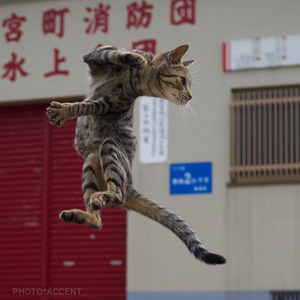

The work of Japanese photographer Hisakata Hiroyuki – an expert when it comes to capturing the action poses of scrapping cats.
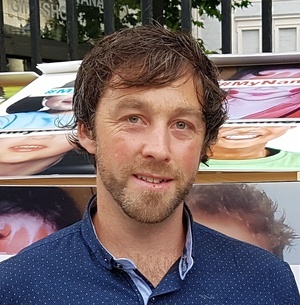
Dr Rory Hearne
We live in extreme times. Extreme inequality – where the 8 richest men on the planet have the same wealth as half the entire global population. Here in Ireland the top 20% own half of all the wealth.
But it is also a time of extreme insecurity – a deep sense of fear and trepidation about the present moment (and the future) – how can I have some sort of decent life, or even just survive?
Be that trying to access an affordable secure home, hospital treatment or a living wage. And then there is our children – we are deeply worried about how we can ensure they have the possibility of a better now and even more importantly, a better future.
It is also a time of extreme individualism – where people (once known as citizens with rights) have been commodified by corporations into perpetual ‘consumers’ of products.
And the future increasingly looks like it is going to be an extreme dystopia (some of you might have seen this depicted quite well in the recent movie, Bladerunner) of digitisation and automation.
This presents a horizon of unlimited exploitation of the majority – as human consumer-slaves – by the corporate super-elite, global financial markets and their ‘bots’. And within all this is politics which is ever more distant from the people – hollowed out democracies where politicians and government serve their banker, corporate and financial market masters to the exclusion of their citizens.
But there are signs of hope.
New ‘citizens’ movements are emerging to try challenge this age of extreme inequality, and they are trying to create a new politics that actually represents the majority – and not just a wealthy elite and corporate interests.
From the Momentum movement that has been the backbone of the phenomenal rise in support behind the Labour Party and Jeremy Corbyn in the UK, to the ‘People for Bernie’ Campaign supporting Bernie Sanders in the US, and the 15M and Podemos movements in Spain (visible also in the Catalan independence protest).
Here in Ireland we have seen new movements emerge to challenge the injustice of austerity and the unequal recovery –from small grassroots groups like the Ballyhea says no to Bondholder Bailout in Cork to the incredible Right2Water movement that involved hundreds of thousands of people from across the country.
We saw it too in the occupation of Apollo House last Christmas that drew attention to the homelessness crisis, the Tesco and Dunnes’ strikes by workers for a living wage and conditions, and, again in the recent Repeal the 8th pro-choice protests.
There are also tens (if not hundreds) of thousands of citizens acting in co-operative and solidarity ways (i.e. not just consumers) across this country in citizen’s movements, protests, community groups, volunteering with an NGO or homeless support groups, helping to build co-operative ‘not-for-profit’ housing, being active in trade unions.
But you are told every day in the media, at work, in universities and school that you can’t change things and so you just have to accept this age of extremism – be it homelessness, high rents, climate pollution, corrupt politicians, child poverty, unaffordable childcare, and contract work.
But these movements, action, protest and politics challenge this consensus of passive acceptance and assert that there is an alternative and better path. Most importantly, they provide an alternative way of living than just being the atomised, individualised and alienated consumer that is the current dominant form of so-called living today.
This co-operative action, where we work with others to help bring about change for ourselves and the community, country or organisation around us, is a fundamental challenge to the dominant economic thinking that sees us as people seeking individual profit maximisation in a Darwinian ‘fight for survival of the fittest’.
But interestingly, psychological studies on people’s well-being show that “engagement in collective civic action toward a common purpose increases connectedness among individuals in a community, and connections to fellow human beings satisfy a basic human need for belonging….(which) stave off social isolation and depression”.
We have been sold the neoliberal ‘free-market’ myth that happiness comes from fulfilling our individual material consumerist desires -from having the latest technology – from purchasing what we ‘want’. But in fact, the state of the world around us – be it our community, our country and the planet affects us deeply in a psychological-emotional way.
Our identity and our sense of well-being is affected by the well-being of others.
This is profound as it suggests we cannot be happy if we see fellow citizens in our community suffering. So taking action – like protest – against inequality is not just an act of self-interest or charity – but a logical response that recognises our welfare is bound up with the welfare of others. And it has been found that more equal societies (where clearly the values of solidarity and cooperation are dominant) do better.
However, politics and our shallow democracies in this age of extremism have become a major problem.
Civil society movements can protest and change the frame of debate and influence some policy change but it is at government and national parliament level that decisions are made about the direction of our economies and societies. Increasingly it is in authoritarian, conservative right-wing ways.
But the movements in support of Corbyn and Sanders have recognised this – that the power of the people needs to create a new politics in government that is willing to challenge the power of the privileged, financial markets and corporations.
Here in Ireland, in the run up to the 2016 general election, the successful Right2Water campaign established, Right2Change, a political campaign which sought ‘a fairer, more equal Ireland that benefits all of the people rather than a select few’.
Right2Change developed with the participation of community activists, trade unionists and political representatives, ten policy principles that would underpin a ‘progressive Irish government’ (i.e. a government led by parties of the left and independents, rather than the two right-wing parties of Fianna Fail and Fine Gael that have shown time and time again, decade after decade, their inability and unwillingness to create a fair and socially just society). The principles included the right to water, decent work, housing, health, debt justice, education, democratic reform, equality, a sustainable environment and national resources (read them here ).
Right2Change convinced 100 candidates to enter a voting transfer pact (including Sinn Féin, People Before Profit and independent candidates) in the 2016 general election. They got 19% of first preference votes and 36 out of 158 seats in the Dáil.
The establishment parties (Fianna Fáil, Fine Gael, and Labour) received their lowest combined support in the history of the state.
But what has happened to the momentum for change since that election? The establishment politics of Fianna Fáil and Fine Gael backed each other up to ‘shore up the centre’ (ie. protect the status quo) and form a new government of the centre-right.
The various left parties (including Sinn Féin, Social Democrats, People Before Profit etc) and independents, while each have done great work on various issues, they have not worked on developing a common vision, co-ordination or manifesto for a forthcoming election.
And while, despite the housing emergency and wide-scale housing crisis affecting a broad range of people, a citizen’s housing movement has yet to appear although it is growing and could yet emerge from Apollo House, local grassroots housing actions and national housing coalitions. Worth noting that this Taoiseach and the government are building their politics on a PR-image and veneer of addressing issues.
This makes them very vulnerable to anything that shatters that shiny image. Therefore, a large protest campaign uniting private renters, the homeless, those in mortgage arrears and those waiting for social housing together highlighting the devastation caused by the housing crisis would present a formidable challenge to that image and thus the government).
However, with the apparent lack of a broad united left political and citizens movement alternative the most recent opinion polls have shown the centre-right alliance of Fine Gael and Fianna Fáil recovering in public support.
But all this can change utterly in an instant as our election (where Fine Gael did much worse than expected) and the recent UK and US elections have shown. Citizen’s movements and new politics that offer hope and a positive vision for a future based on equality can dramatically change the political landscape.
That is why I will be speaking at the ‘Another Ireland is Possible’ Right2Change conference this coming Saturday in the Mansion House in Dublin. I believe, and I know many others do too, that we need a citizen’s movement for hope in Ireland that can transform our country into a Republic of Equality for all.
I will be talking about the housing crisis, solutions that could provide affordable housing and the role of people, citizen action and the need for a genuinely new citizen-led politics to bring about this change. The conference is open to the public and organisers are “encouraging everyone who shares a vision for a fairer, more equal Ireland to join us on Saturday, 4th November 2017 to discuss a pathway towards achieving a truly egalitarian Republic”.
Wealth has the power. But citizen’s movements create a counter power that can challenge all others. It is the power of ordinary people to take away the legitimacy of the government –to withdraw the consent of the people. If enough people protest the government has to listen. The water movement showed that.
But movements and politics must unite in order to create this power. They must bring together all the groups excluded – from the middle and working classes, public and private sector workers, unemployed, lone parents, the youth, disabled, migrants – into a power that government cannot ignore. All those groups working on their own can effect some change but it cannot radically transform societies and economies.
And that is what we need now- not tinkering around at the edges of a system that is producing such extreme inequality and human misery. We need transformation to bring about a caring and flourishing society that the economy serves and not, as we have it now, an economy that dictates and destroys society.
The sad reality is we should be living in an age of extreme hope and not despair. With digital technology and the massive wealth that exists globally (and in Ireland) we should have a world without poverty, without homelessness.
Here in Ireland there is no reason why we can’t have a Republic of equality for all (not just the Taoiseach’s ‘Republic of Opportunity’ for the privileged few) where we guarantee decent housing, health care, education, quality employment, liveable communities, and sufficient caring support to the young, old and disabled- to everyone. Countries like Sweden and Denmark can do it.
Poverty and inequality are not inevitable –they result from societal and political priorities and choices. We need a new politics, and citizen’s led movements to change the current priorities – and to turn fear into hope.
Dr Rory Hearne is a policy analyst, academic, social justice campaigner. He writes here in a personal capacity. Follow Rory on Twitter: @roryhearne
You can register for the November Right2Change conference here (speakers from the ‘People for Bernie’ Campaign, Spanish 15 M Movement, Union of Students in Ireland, Right2Water, Housing/Homeless and Decency for Dunnes workers campaigns)


YIKES!
Two weeks ago, with a Golden Discs voucher worth 25 euros on offer, we asked you to name a song that gives you the chills.
You answered in your spooked out dozens.
But there could be only one scary winner.
In reverse order then…
Pink Floyd – Echoes
Boj writes:
While not exactly scary, I am always creeped out in a good way by Pink Floyd – Echoes because the sections of the song have a building level of menace. Earphones, dark room, *optional* mind-altering substance of choice and Echoes….ah thank you! My hipster buds tell me it would completely blow my mind on vinyl but I think I’ll be grand with me Discman (if I stay very still).
Ludo – ‘Love Me Dead
Elizabeth writes:
Starts out sounding like a kid’s nursery rhyme sung by a fresh faced nice looking young man and goes via screaming guitars to a very dark place lyrically. Who could not failed to be charmed with these lines?
You suck so passionately
You’re a parasitic, psycho, filthy creature
Finger-bangin’ my heart
You call me up drunk
Does the fun ever start?
You’re hideous and sexy!The video is probably NSFW (enjoy!)
Bauhaus – Bela Lugosi’s Dead
Otis Blue writes:
While not exactly scary, I’m always creeped out in a good way by the Bela Lugosi’s Dead by Bauhaus because a ludicrously overblown goth standard never gets old. Even if I have.
Dead Can Dance – The Host of Seraphim
Walter Ego writes:
While not exactly scary, I am always creeped out in a good way by The Host Of Seraphim, From Dead Can Dance because Lisa Gerrard’s ethereal voice just haunts and sends shivers down the very pit of your soul. ’
Winner
Black Sabbath – Black Sabbath
Gorugeen writes:
While not exactly scary,I am always creeped out in a good way by Black Sabbath by Black Sabbath because the storm and tolling bell intro followed by [Tony] Iommi’s pure metal riff pull the listener into the dark gloom. Ozzy then lays on a thick layer of dread with his almost dreamy lyrics. The figure in black is now pointing at the listener.
Ozzy beseeches “Oh God no” and we’re right there with him in the dread. Now we start to run, Butler, Ward and Iommi erupt a rollicking dirge. We truly get our mosh on. It’s got it all. Horror, tension, dread, gloom and volcanic riffs. Creepy but sort of scary and loads of fun…
Thanks all.
Previously: I Got Chills

The Policing Authority publishing its commissioned report on Garda breath test figures this afternoon
Readers may recall how, in March, it emerged that there were nearly one million (937,212) phantom Garda breath tests recorded by gardai between between November 2011 and October 2016.
In September, a review carried out by Assistant Commissioner Michael O’Sullivan found there were more than 1.4million (1,458,221) fake Garda breath tests recorded between 2009 and 2016.
Readers may recall that, at the time Assistant Commissioner O’Sullivan’s report was published, it was reported how the Policing Authority had hired financial auditors Crowe Horwath to conduct its own independent investigation into the matter.
This afternoon, the Policing Authority has published that report.
And they’ve found another 400,000.
In addition, the report states:
“On examination of summonses issued between 2006 and 2016, a total of 149,426 incorrectly issued summonses were identified. Several thousand convictions were imposed in relation to incorrectly issued summonses: this figure is estimated by the Garda Síochána at a maximum of 14,736, with 11,218 of these confirmed as requiring appeal to date.”
And the report found gardai they falsified the number of checkpoints that were set up…
From the report:
“From our engagement with frontline Gardaí and supervisors (sergeants) across the organisation, it was reported that some members would inflate the number of MIT checkpoints recorded on PULSE, and thereby the number of breath tests, in order to be seen to have delivered the number of checkpoints authorised for that tour of duty.
“For example, a number of Garda members in a busy urban station told us that they were frequently under significant pressure when on patrol, and at any given time might have six or seven backed up calls awaiting their response, which would be prioritised in order of seriousness.
“They explained that whilst they fully understood the value of operating MIT checkpoints from a road safety perspective, they simply couldn’t manage to perform all of those which had been authorised, and the habit had therefore developed of entering erroneous data onto PULSE – for instance, if three checkpoints were authorised and only one was carried out, two checkpoint incidents might be registered on PULSE and false data entered in respect of the checkpoint which had not been operated.”
“We were also advised that on occasions, supervisory sergeants would suggest that the numbers be inflated in order to comply with management expectations relating to MIT checkpoints being operated.
“We have also heard from serving and retired Garda members who have told us confidentially that some MIT checkpoints were authorised and recorded as having been performed, but were later found not to have taken place, whether due to the pressure to record compliance with the authorisations or (as suggested in some cases) Garda members taking advantage of the lack of frontline supervision and remaining in the patrol car or in the station rather than conducting the checkpoint.
“This tendency seems to have been particularly prevalent amongst regular uniformed Gardaí, whose operational policing duties cover a wide range of activities, and who would therefore often find themselves in a situation where the operation of MIT checkpoints on a given day would be far down their list of priorities.”
“During our visits to the 28 Garda Divisions, we asked many frontline and supervisory members about the sense of pressure to report performance in respect of MIT checkpoints. We were frequently told during these visits that there was no formal requirement in that regard, and no documentation was presented to us in respect of directives from Garda HQ or from regional or Divisional management to meet any qualified performance targets.
“Instead, the pressure was apparently more implied rather than explicitly stated, and often related to actual (as opposed to forecast) performance figures presented at Divisional or regional meetings: no Division wanted to be “bottom of the league” and there was often a degree of competition and rivalry between Divisions (i.e. if one Division showed a 5% increase in the number of MIT checkpoints operated, then a neighbouring Division would want its performance to at least match that).”
“This was interpreted by many frontline and supervisory Garda members as meaning that MIT checkpoint data needed to be maximised. By contrast, the prevailing view from Divisional Officers at Chief Superintendent level, and from other members of local management teams, was that there was never any such pressure placed upon frontline members and supervisors.
“Indeed, many senior Divisional members were of the opinion that they were happy if checkpoints didn’t take place, provided a valid reason was given.”
In addition, it found, contrary to claims made by some senior gardai that there were no performance targets, there is evidence of specific targets being set for checkpoints and breath tests.
The report found:
“…we have reviewed a selection of Divisional Policing Plans published during the period 2009 to 2016, and it would appear that in a number of these plans there are indeed specific targets relating to both MIT checkpoints and breath tests.
“In relation to the latter, it is not clear whether these are breath tests conducted at MIT checkpoints or those carried out either at the roadside or in Garda stations as a result of other operational policing activities.
“The content of the Divisional Policing Plans differs from one Division to another, and will generally depend upon local priorities and policing needs, with a link to overall national priorities and targets.
“It is certainly the case that some Garda Divisions set and published targets for the performance of MIT checkpoints and breath tests on an annual or quarterly basis, which again is at variance with some of the claims by senior officers that no such targets existed.”
Yet.
It also found:
“Our view is that it is highly unlikely that there is any connection between the inflation of MIT checkpoint data on PULSE and any personal gain which a Garda member may have wished to attain. Clearly, fabrication of MIT checkpoint data to justify a false claim for overtime payment would represent both a disciplinary and criminal matter, but we have seen no evidence to suggest that this actually happened.”
Meanwhile…
At the press conference…
We were dismayed by this last March. This report affirms that dismay. Other forces have problems with police shooting civilians… pic.twitter.com/cS4VUHcwRK
— Juliette Gash (@JulietteGash) November 1, 2017
Previously: A Breathtaking Timeline
Pic: Policing Authority
UPDATE:
The report can be read here


The recently unveiled V12, 1036bhp Ferrari FXX K Evo – a track-only racecar designed for closed circuits and high speed trials.
Megawealthy supercar geeks and downforce aficionados only. No price available.
