https://www.youtube.com/watch?v=9noJt4LpkoI&t=1s

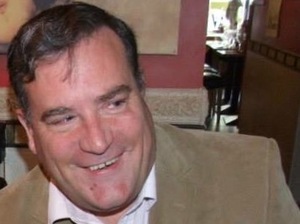
Rising comedy star Seamus Kelly in conversation.

Spud, of the Comedy Cast, writes:

I spoke with a Kilkenny comedian who lives in Kerry, Seamus Kelly, (Behind the Kingdom & The KY Comedy Alternative) . We talk a lot about mental health, he suffers from fierce anxiety and depression and attempted suicide a while ago.

It’s not a attempt to hijack his misery, he just speaks very openly about what he goes through, how comedy has helped and how the HSE were useless in it all.

He’s very funny as well.

Colourful language throughout.

The Comedy Cast

Clockwise from left: Judge Peter Charleton, retired Assistant Commissioner Kieran Kenny, Garda Keith Harrison and members of his legal team

This morning.

At the Disclosures Tribunal.

Proceedings have yet to begin and it’s just been announced that they now won’t start until 1.30pm.

Readers may recall how the tribunal heard new evidence late yesterday which appeared to link the Assistant Commissioner Kieran Kenny to a Garda strategy meeting where it was decided that matters pertaining to a domestic incident between Garda Keith Harrison and his partner Marissa Simms would be referred on to Tusla and GSOC.

The notes were written by Chief Supt Terry McGinn who was present at the meeting in Letterkenny Garda Station on October 8, 2013 – two days after Ms Simms gave a statement to gardai on October 6, 2013.

Yesterday, the tribunal heard Chief Supt McGinn jotted down:

“Spoke to Supt O’Loughlin [sic] referral and A/C“

It’s understood Supt O’Loughlin is reference to Chief Supt Anthony McLoughlin, of the B Branch.

Earlier this week, Patrick Marrinan SC, for the tribunal, put it to Garda Harrison that there didn’t appear to be “a scintilla of evidence to suggest that either Assistant Commissioner Kenny or the Commissioner of An Garda Síochána or anybody in Garda Headquarters had any input in relation to the meeting that took place on the 8th October and the referral of the matter to Tusla”.

Yesterday, in light of the note, Judge Charleton called for statements to be made to the tribunal by both retired Assistant Commissioner Kieran Kenny and Chief Supt McLoughlin by this morning at 10am.

Judge Charleton also criticised the Garda Commissioner for not ensuring that Mr Kenny and Mr McLoughlin had made statements.

Readers should note that, subsequent to the meeting of October 8, 2013, a house visit was eventually made by social worker Donna McTeague to the home of Garda Harrison and his partner Marissa Simms on February 19, 2014 and, after concluding there were no issues of concern, Garda Harrison and Ms Simms received a letter from Tusla on February 27, 2014 to say the matter was closed.

In respect of the GSOC referral, it was sent to GSOC on October 9, 2013, as a Section 102 referral which concerns matters that indicate “the conduct of a member of the Garda Síochána may have resulted in the death of, or serious harm to, a person”.

The tribunal has already heard that the GSOC referral didn’t proceed.

George O’Doherty, Head of Corporate Services and Human Resources at GSOC, said there was nothing in Ms Simms’ statement to suggest such “serious harm” had been inflicted on her.

In addition, it heard that, on December 10, 2013, Dan Wright, of GSOC, wrote to the then Chief Superintendent in Internal Affairs, Chief Supt Anthony McLoughlin, to tell him that the Section 102 referral was “improperly referred in the view of the Commission” but added: “The Garda Ombudsman Commission accepts, however, that the decision to refer a matter to GSOC is entirely one for An Garda Síochána.”

More to follow.

Previously: ‘It Is A Case Of The Tribunal Bowing Figuratively A Bugle As Loud As It Possible Can’

Today’s Irish Times/Ipsos MRBI poll

“Today’s numbers offer further evidence of the strengthening of the centrist consensus in Irish politics. Since the last general election both Fine Gael and Fianna Fáil have seen their support grow, slowly but steadily. Both parties are now five points ahead of their result in the last general election.

That time, in February 2016, the two old Civil War parties struggled to hit 50 per cent of the vote – a far cry from the days when they commanded 80 per cent between them. Their opponents hailed it as further evidence of their irreversible decline and the end of the old duopoly. And that’s how it looked.

But that decline has proved not so irreversible. Now their combined support is at 60 per cent. Throw in the Labour Party, the Greens and a lot of the Independents and you have well over two-thirds of voters aligned to broadly centrist politics.”

Pat Leahy, Irish Times

FIGHT!

‘Irish Times’ poll: Radicalisation of Irish politics seems to have been arrested (Pat leahy, Irish Times)

From top: Catalan independence protest in Barcelona; Dan Boyle

The brutal response of the Spanish Government to the Catalan referendum, like that of the British to the Irish rising of 1916, is likely to help confirm a critical mass in favour of independence, where none may previously have existed.

A similar exercise is about to take place in Kurdish Iraq. It is being condemned in advance by those who consider themselves to be ‘elite’ nations, who see what seems a natural expression of nationhood, as a likely destablising factor in the region.

What defines a nation? Territorial integrity? A dominant language? A dominant religion?

Each and all of these factors have been cited as justifying new nations asserting themselves, even when dominance of belief or language are often the most destabilising of factors.

One of the decisions I was not happy with, while the Greens were in government, was the decision (at the behest of Germany) to recognise, so quickly, the independence of Kosovo.

There were many other options that could have been and should have been considered at the time. Kosovo could have become an international protectorate. The role of Albania (Kosovars being ethnic Albanians) should also have been explored further.

Establishing new nations, particularly the defining of citizenship, has been a fraught process in several countries.

Lativia and Estonia are countries whose independence, in its current form, has existed for little more than twenty five years. Both countries continue to struggle with large Russian minorities within their boundaries. Their second class citizenship, and laws passed against the Russian language, may yet provide a pretext for Russia to invade the Baltics.

Nation building isn’t simple nor is it easy. The 1960s film ‘What’s Up Tiger Lily‘, (a Japanese film dubbed into English with dialogue by Woody Allen) pointed to a more interesting approach. In the movie a character introduces himself as the representative of “a non existent but likely sounding country” who were next on the list for a place on the map, once an opening became available!

On Catalonia I find myself in agreement with the Sinn Féin representatives there, while also being somewhat jealous of their being able to witness history first hand.

Where we probably would diverge, is how we would view the ironic context of people who live in a north eastern territory of a wider national concept.

It would never happen here, of course.

Dan Boyle is a former Green Party TD and Senator. His column appears here every Thursday. Follow Dan on Twitter: @sendboyle

Broadsheet.ie