
From top: the former Bessborough Mother and Baby Home in Cork; A map indicicating a children’s burial ground on the grounds of the former institution; Professor Clair Wills

What about Bessborough?

Ireland-born, Cambridge-based. English Professor Clair Wills, in a 10,000-word review of the Mother and Baby Home Commission of Investigation report for the current issue of London Review of Books, writes:

….the home with the worst infant mortality rate was Bessborough in Cork, where over the twenty years between 1934 and 1953 ‘in the region of 25 per cent’ of babies died – five times the rate for Ireland in 1950. In 1944 the newly appointed chief medical adviser for the Republic of Ireland, James Deeny, tried to close the home because in the previous year 180 babies had been born there and 100 had died.

…Bessborough opened as a mother and baby home in 1922, in a Georgian house on 150 acres in Blackrock, to the south-east of Cork City. It was owned and run by the Congregation of the Sacred Hearts of Jesus and Mary (also, initially, a French order) and its remit – as recommended by the Cork Board of Guardians, which was responsible for the poor law union – was to remove unmarried mothers from workhouses.

The grounds were subsequently enlarged to 200 acres, and in 1930 a maternity ward was built so that women who entered the home no longer had their babies in Cork District Hospital (known as St Finbarr’s), but on the Bessborough estate itself. T

he home took in unmarried expectant mothers and women who had recently given birth from all over Ireland, paid for by local health authorities. It also accepted private fee-paying unmarried mothers. Until 1946, when the rules changed, a considerable number of these private patients, willingly or under family pressure, discharged themselves from Bessborough after giving birth, leaving their babies awaiting informal adoption or boarding out through the Catholic Women’s Aid Society.

Infant mortality was highest among those babies whose mothers had left the home, and who seem to have been routinely neglected. From the mid-1950s onwards, another adoption agency, St Anne’s, brought unmarried expectant mothers back from the United Kingdom to have their babies at Bessborough, from where they would be adopted.

All these different organisations – St Finbarr’s, the Catholic Women’s Aid Society, St Anne’s and Bessborough itself – had responsibility for the burial of children who died under their care. Private burial grounds were not legally required to keep records of burials, but canon law did require records to be kept. Yet there are almost no burial records at all.

Given the extraordinarily high mortality rates, the involvement of adoption agencies and the absence of records, it is no surprise that many people believe some of the babies did not die, but were ‘sold’ for adoption. The report did not find evidence for a trade in live babies from Bessborough, although this doesn’t mean it didn’t happen, and critics, including the campaigning journalist Conall Ó Fátharta, question the commission’s conclusions. But it does suggest that whatever did happen there, ‘economies’ were at the back of it….

… During the 1920s Bessborough’s dead babies (or some of them) were buried in the ‘Poor Ground’ section of St Joseph’s Cemetery in Cork, at the cost of ten shillings each, which the congregation had to recoup from the health authority responsible for the child’s maintenance. It was expensive, and a hassle, and it would have been cheaper and easier to bury them on public assistance in the Cork District Cemetery at Carr’s Hill, a former famine ground. And perhaps that is where they are, though no burial register has been found to prove it. Or perhaps they are buried in unconsecrated ground somewhere on the Bessborough estate. That would have been the cheapest way of dealing with the problem, and was the way things were dealt with at Tuam.

At Tuam there are bones, but no burial ground. At Bessborough it is the other way round. There is a burial ground, but no bones. Inside the estate there is a small plot, which was opened in 1956 for members of the order:

It seems to have been assumed by former residents and advocacy groups that this is also where the children who died in Bessborough are buried as there are occasional meetings and commemoration ceremonies held there. The vast majority of children who died in Bessborough are not buried there; it seems that only one child is buried there.

More than nine hundred children died in Bessborough or in hospital after being transferred from Bessborough. Despite very extensive inquiries and searches, the commission has been able to establish the burial place of only 64 children. The Congregation of the Sacred Hearts of Jesus and Mary who owned and ran Bessborough do not know where the other children are buried.

Unlike Tuam, which closed in 1961, the Bessborough Mother and Baby Home continued to operate until 1998. Members of the congregation claimed not to know where the children might be buried. The commission states that it…

‘…finds this very difficult to comprehend as Bessborough was a mother and baby home for the duration of the period covered by the commission (1922-98) and the congregation was involved with it for all of this time. The commission finds it very difficult to understand that no member of the congregation was able to say where the children who died in Bessborough are buried.’

But perhaps forgetting where babies were buried is a way of forgetting that they died.

One sister who lived at the home for fifty years between 1948 and 1998 could not recall the deaths of any children at all during that time, although 31 children died there between 1950 and 1960 alone. Her name is given as the informant on a number of death certificates. It is a powerful act of erasure.

No grave, no baby. No baby, no grave.

Architectures of Containment (Clair Wills, London Review of Books)

Previously: Archeology of Containment

Sila Sveta’s original award-winning art/dance piece and its even more ambitious sequel, showing the progression from small projection-mapped set to extensive digital stage.

Stick around for behind the scenes footage at the end.

awesomer

Behold: the Opel Manta GSe Elektromod – an all-electric remake of the Manta A by Opel, celebrating 50 years of the 1970s coupe with the original factory inline-four swapped for a 145bhp rear-mounted electric motor.

The car retains its four speed manual gearbox and rear wheel drive but gains an LED display, a modified interior and 17-inch wheels.

There are (as yet) no plans to put the Elektromod into production.

hiconsumption

From top: A scene from Season 2 of For All Mankind; Heber Rowan

The recent conclusion of Apple TV’s “For all Mankind” highlighted the potential for war in space. Yeah, you read that right. Space wars.

So without giving spoilers of the excellent series, I’d like to take a moment to discuss space policy and what it means for us going forward. I will examine the questions of ‘is it worth it?’ and what a colonised Mars would mean.

Donald Trump’s presidency created a new branch of the US military, The Space Force. Now to my mind that just sounds ridiculous. Space exploration is a broad international effort based on collective interest in progressing our fortunes among the stars. At least that is what I have been raised to believe looking at the shuttle launches as a child and equally enthralled as an adult watching the developments at SpaceX.

We are getting there, among the stars that is. It’s not over the top to say that with rocket technology and artificial intelligence improving people are getting hopeful. With most eyeballs focused on America’s space programme not China’s, we are rolled up into the idealistic soft power image of America being the place with the best and brightest.

Sadly, in noting that, I am reminded of the ‘Victorian Summer’ of the antebellum period in which western society believed in the progressive development of technology as something that would inherently end all future suffering. How wrong that idea was…

What’s the worth?

The problems of society’s inequality and tackling climate change are a challenge. Can we have equality, growth and reduce our impact on the environment. The standard answer is: no.

Instead of looking at Earth’s direct issues, Elon Musk and Jeff Bezos are now looking to the stars and aiming for a multi-planetary expansion of humanity. Inspirational perhaps. Personally, I love the idea of ‘pushing the envelope’ and doing more with the motivation of a scientific transcendence that is space travel.

Though it reminds me of the person who goes off for a ‘gap year’ wandering in south east Asia thinking that a bit of travelling will solve all of their underlying personal problems by the ‘horizon opening’ of travel. While the novelty of travel can be great for a period, eventually what was once new, can become dull, familiar.

Looking at the complexities of the problems our children will face, we have to think of ‘our own houses in order’. That to invest the efforts of great minds building rockets and trillions in the pursuit of space, we have to stop and think about getting our Earth working well first. Not easy.

Yes, going to space provides us with a valuable external goal that inspires others to search for more and do more than plain old earth can manage, yet I’d argue it would be great if the benefits weren’t also additions to a military industrial complex. That said, there are technological innovations from the blue sky research that is space exploration. Sometimes the demand for immediate results stymies innovation.

That said: don’t kid yourself, Elon Musk is invariably helping the hegemony of America to stay the master of the skies. To take an international relations angle that is. Joe Biden has not disbanded the new ‘Space Force’ and I doubt he will. There is too much to gain by ripping up the outer space treaty of the UN and viewing the juicy asteroids as ‘terra nullis’ mines ready for exploitation. These are the things that matter for the next century. At the current rate of development, I believe it could well be possible for such a development. The rubble of one is currently on its way back to Earth only recently.

To green Mars or not? That is the trillion dollar question.

Essentially, it’s about deciding if there is something intangible and sacred about Mars left as it is or terraforming it for humanity’s benefit. In the famous Mars trilogy of hard science fiction, Kim Stanley Robinson depicted that very debate in detail showing those in the ‘Red Mars or Green Mars’ camps fighting out over keeping Mars as it is or changing it.

I’d argue that when we consider the future politics of space travel and military policy, not caring about polluting another planet with our germs and terraforming is a big deal. The debate might take 50 years for it to properly happen, though I believe it is going to happen eventually the way we are headed. So we should start talking about it. Now.

Even if life isn’t found on Mars, there is still the fundamental question to be asked about the morality and indeed the economics of it all. Is it actually worth it on so many levels rather than just a ‘we do it because it is hard’ attitude. Wiser minds will undoubtedly examine these very questions philosophically and ethically in the years to come.

Elon Musk suggested that the polar ice caps of Mars could be melted with a nuclear detonation in order to start the change in the atmosphere to allow human colonisation of the planet. As cool as that would be to see in some ways… it is something else to have a billionaire get their hands on weapons of mass destruction in the name of ‘the greater good’. Troubling.

The aforementioned outer space treaty of the UN prevents nation states and private companies from getting unique control on celestial bodies. Essentially, we all have to share whatever is out there and do what we can to share what we learn in the process of discovering how to get there in the first place.

The protection of life is built into it all also so that’s why the Mars rover and any other craft landing among the heavens undergoes a sterilisation procedure. No germs, no trace of Earth’s life to save whatever life big or small might be there. There indeed could also be a risk of exotic germs coming back to Earth and killing many.

When we weigh up the long term survival of the human race on Earth against upholding a principle of not harming another planet and its potential life, many figure, it is not worth it. Nuke those icecaps!

It is the argument essentially that we can’t hope for biological equilibrium on Earth with the standard of living that we have now against the draw of a blank canvas. A ‘red one’ if you will.

Though as we all know, the best of intentions can often have the worst of outcomes. If you stop the rehabilitation of an ill person by feeding them in bed everyday, one day they might find that they can no longer walk. Good intentions can be harmful, just like too much bedside feeding of that ill person.

There is so much that will and can change in the next 50 years. The prospect of a multi-planetary society can be a reality with the right motivation and resources put behind it. Thousands even millions may want to go to this new horizon with the vigour of adventure.

The inherent value of a dusty planet seems hard to compare to green Earth. Even while it is treated as a doormat. In writing this, I am reminded of the clarion call for environmental protection by Chief Seattle in his letter to US President Pierce:

‘If we do not own the freshness of the air and the sparkle of the water how can you buy them? Every part of this earth is sacred to my people. Every shining pine needle, every sandy shore, every mist in the dark woods, every meadow, every humming insect, all are holy in the memory and experience of my people. We know the sap that courses through the tree as we know the blood that courses through our veins. We are part of the earth and it is part of us.’

The new society

If we colonise Mars and have private space companies mine its surface, we may devalue the dust of Mars itself by seeking a price from it. Yes, getting to Mars is going to be extremely expensive, hazardous and something those who pay for it all will want some profit from it.

Mars could in time be its own country and society. Only time will tell. The main thing is how it gets started. What principals and ideals are instilled in those who will one day call it home when robots become redundant on its surface? If commercial or national interests get ahead of any spirit of international cooperation and a value for Mars being left as ‘red’.

Trade between Earth and Mars could benefit both though once the balance tips as Mars becomes self reliant, if possible, conflict may ensue. The US ‘Space Force’ may be engaged to fight on the dusty surface of Mars to stop a Martian independence movement. Right now, such thoughts are the subject of science fiction novels though not without a basis in probability as we look forward.

Earth has, in my view, yet to have its watershed moment of a complete systems change for environmental change and a genuine hunger for immediate all hands on deck, drive to colonise Mars. Speeches by Greta Thunberg can only do so much. So this debate of the principals of being a ‘green martian’ or ‘red’ are academic for now. We aren’t going there yet. Indeed it may be 2030 before there are boots on Mars.

Though if this question can do anything for us now, it is the thought provoking aspect of what is it that we value on Earth and idealistically if we could create a new society elsewhere, what would it be like?

As we get out our telescopes and eye the frosty red ball that is Mars, we dream of a different world. The reality is though any new society we make there will be shaped heavily by the one it came from. Flawed.

Heber Rowan is a Sligo native with a passion for politics. He works in public affairs and enjoys listening to and narrating audiobooks. He can be found on Twitter and occasionally blogs on Medium.com.

Pic via Apple TV

The Grand Canal at Portobello, Dublin 8 where La Touche Bridge, named after a banker and slave-owner, can be crossed

Portobello Harbour.

Harry writes:

Portobello Bridge in Dublin with its distinctive lamp posts, red painted railings and deep Lock is one of the Grand Canal’s visually more attractive bridges. Dubliners just as frequently refer to it as Rathmines Bridge, it is of course correctly titled La Touche Bridge and it has a very interesting history.

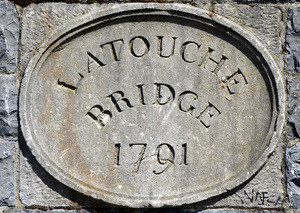
The original La Touche bridge was constructed in 1791 and named after William Digges La Touché banker and a director of the Grand Canal Company. The La Touche family also “owned” slaves. Following the abolition of the slave trade the family received ‘compensation’ of £6000 (over £700,000.00 in value today) in 1834, for 400 of their slaves on two of their plantations in Jamaica.

Dublin’s Portobello shares its name with London’s Portobello Road and Portobello in Edinburgh. They were named to honour the capture by Admiral Edward Vernon in 1739 of the Spanish ruled town of Puerto Bello or Portobello on the Caribbean coast of Panama, during a war between Britain and Spain known as the War of Jenkins’ Ear when Robert Jenkins, a merchant sea captain, had his ear sliced off by a Spanish officer in Havana in 1731.

It led to calls in the British parliament for war with Spain. Captain Edward Vernon claimed he could take the Spanish town of Porto Bello with only six war ships and after a ferocious battle his very popular victory made Vernon a national hero. Portobello Dublin, still honours the Admiral’s victory to this day

In the 18th century Portobello began to develop as a small suburb in the south of the city of Dublin, expanding from Richmond Street. Portobello Harbour was built in 1801. The Grand Canal supplied water for Portobello Basin, the local areas reservoir and supply of fresh drinking water. It was in use until the 1860s when testing of the water quality identified too high levels of sulphuric acid and water was then sourced from Varty reservoir. The Basin was filled in 1883 and the harbour itself was largely filled in and in 1912 an Ever-Ready battery factory was built on the site.

By the 19th century Portobello Harbour was an important transport hub for traffic on the Grand Canal and a new hotel Portobello House, was built in 1807 to cater for passengers. It fell into decline after the success of the railways took away passenger transport on the canals. In 1858 it was taken over by a Catholic order of nuns, opening St. Mary’s asylum for visually impaired girls, after further incarnations it subsequently becoming a nursing home where the artist Jack B. Yeats passed away in old age. In later years it became a building for commercial use but still retains its visual charm along the canal.

The bridge and the lock have had its share of tragedies. At 9 o’clock Saturday evening on the 6th April 1861, a horse-drawn Omnibus with eight passengers, driven by Patrick Hardy, stopped at the crown of the bridge so a passenger and his young son could alight, the driver attempted to make the horses go on and as they clambered over the incline of the bridge one of the horses was startled and began to rear.

The driver tried to turn the horses to traverse the bridge diagonally but both lead horses became uncontrollable with fear. The back park of the Omnibus came in contact with a wooden fence between the Lock and the road, the back wheels went over the granite kerb causing the carriage to topple over and plunge six passengers along with two horses into the dark freezing waters of the canal Lock, which has a depth of over 6 metres.

The conductor managed to jump clear and the driver was pulled to safety from the roof of the Omnibus. The Lock gates were quickly opened lowering the water somewhat and two brave men, Police Constable Gaffney and Private Smith of the 4th Light Dragoon’s from nearby Portobello Barracks, with the aid of a ladder, used hatchets to break a hole into the roof of the Omnibus and diving into the flooded carriage, pulled out the now tragically drowned bodies of the passengers.

One of the victims was the father of the Gunne brothers, who opened the Gaiety Theatre in South King Street. Two women were mothers, each with a little daughter, one of them a niece of “The Great Emancipator”, Daniel O’Connell. Subsequently after the accident and until the bridge was redesigned, passengers on horse-drawn vehicles then had to disembark at Portobello Bridge and walk over the bridge before continuing on their journey.

But what spooked the horses leading to the accident? As with many tragedies’ legends sprung up. Some witnesses claimed they seen a bright light arising from the water and taking human shape, the ghostly form frightened the horses resulting in the tragedy.

There is an old ghost story about the Lock, that there was a previous avoidable accident resulting in a tragedy due to the Lock chamber overflowing with water, making the edge of the canal and the Lock chamber indistinguishable on a foggy night. The Lock gates should have been opened lowering the water table but were closed due to the Lock keeper being drunk at the time. The victim was crossing over the Lock’s footbridge and slipped fell in and drowned.

After that tragedy the Lock keeper was sacked from his job and in remorse drowned himself. On the anniversary of his death a bright light reportedly has been witnessed rising from the water. Supposedly the same phantom light arose when the horse drawn Omnibus was crossing the bridge, thereby spooking the horses. More realistically the horses lost their footing and the weight of the Omnibus pulled them backwards and toppled over the bridge.

During the Easter Rising in 1916. A group from the Irish Citizen Army seized Davy’s Bar (now the Portobello Pub) near the bridge, British army members were dispatched from Portobello Barracks and were pinned down by rebel fire. Army reinforcements set up a Maxim machine gun on the bridge and sprayed the bar with heavy calibre fire shattering windows, mirrors and embedding bullets in the walls and furnishings. After they ceased firing, they checked the premises but the rebels had made their escape.

It was along here that the anti-war pacifist Francis Sheehy-Skeffington was arrested on 25 April 1916 on his way home to Rathmines, he was taken to Portobello Barracks and murdered by the orders of Captain Bowen-Colturst in the barracks.

So, today La Touche Bridge and Portobello Harbour’s history continues. It is still making multiple news reports, as evidenced by Portobello Plaza having been closed due to copious amounts of outdoor alcohol consumption leading to antisocial and degrading behaviour by both sexes, coupled with the filthy littering of a residential area, or depending on your point of view, the abject failure by Dublin City Council to facilitate a public space with enough litter bins and toilet facilities along with the Gardai’s failure to properly police the area.

In some distant future when the pandemic has ceased and lockdowns have faded away to a memory that is best forgotten, Broadsheet readers may enjoy reading a brief history of Portobello that will include this era’s pandemic as an interesting historic footnote in time.

Harry’s Dublin appears here every Friday.

All pics by Harry Warren

This morning.

The first trailer for ‘Dear Evan Hansen‘.

A big-screen adaptation of the Broadway musical smash.

Andy Pipkin writes:

I’m predicting this to be a massive hit. With an important message…

Release date: September 24

Broadsheet.ie