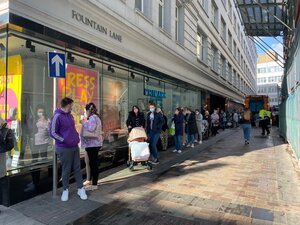
Minister for Health Stephen Donnelly at Government Buildings yesterday

This morning.

RTÉ’s Today with Claire Byrne

Minister for Health Stephen Donnelly has said analysis is being done on whether those aged in their 40s could potentially get vaccinated at the same time as those in their 50s, who will have to wait for the Johnson & Johnson vaccine.

“What we are thinking through is, in several weeks’ time, is there an option to begin vaccinating for example the 40-49 cohort in parallel [to the 50 to 59 year olds]?” he said.

The Department of Health is “running the numbers” today and over the weekend. Mr Donnelly said another “really positive thing” is the opening of the vaccination portal for those aged 50-59 next week .

Earlier…

This morning.

Anyone?

Meanwhile…

Oh.

Meanwhile…

Hic.

RollingNews

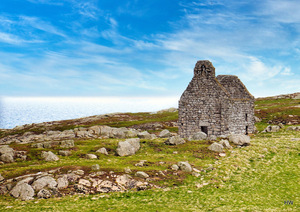
From top: Dalkey Island: gun battery; Martello Tower and the ruins of St. Begnat’s Church

Dalkey Island.

Harry writes:

Dalkey Island appeared wonderful in the Spring sunshine. It is a beautiful compact island of 22 acres. It is only 300 metres across Dalkey Sound off the mainland and can be visited by a boat from Collimore harbour.

It’s many years since I first strolled around the island and I look forward to visiting it again hopefully sooner than later. It is deserted now but it wasn’t always so and the island has a long history. A human skull filled with periwinkle shells was discovered during an excavation in the 1960s and it was radio carbon dated all the way back to 2,500 BC.

Archaeologists have shown that the island was home to some of the first Stone Age settlers on the east coast of Ireland. There have been finds of flints, arrowheads, axes and pottery relating to the Mesolithic, Neolithic, Iron and Bronze age.

There is evidence that the island appears to have had a metalworker after the discovery of clay moulds for socketed spearheads, knives, axes and a sword along with crucible fragments for metalwork. Later excavations recovered medieval glassware and pottery from the Mediterranean region and from Gaul, English pottery and an 11th Century silver coin from Normandy. There are also signs that the island was once used for farming.

The original Irish name for the island was Deilg Inis or Thorn Island supposedly due to it resembling a thorn in shape. With the arrival of the Vikings the name Dalk-Ei came into use. The Danish word Dalk means thorn and Ey means island so at least our Viking chums kept the original meaning of the Irish name for the island.

One of the earliest mentions of Dalkey relates to a Viking raid on Dalkey: “Coibhdeanach, Abbot of Cill-achaidh, was drowned in the sea of Delginis-cualann while fleeing from the foreigners”

Viking raiders kept slaves there and it was also used as a refuge by the Vikings when in 942AD the Vikings fled to the island after being beaten at a battle in Dublin.

Evidence of Christianity in Dalkey island dates back a long time and you can see the stone ruins today of the 11th century St. Begnat’s Church overlooking the shoreline. Archaeologists recovered evidence of an earlier 7th century wooden church on the same location. Saint Begnet’s Church and its burial ground is dedicated to Saint Begnet also known as Begh or Bee and is associated with Saint Bea’s Head in Cumberland and Killibeaes in Scotland.

In the 19th century changes were made to the church by workmen constructing the islands Martello tower and gun battery: “The masons and other workmen finding it inconvenient and often dangerous to cross the Sound to their lodgings, fitted up the ruin as a dwelling house, added a fireplace, and enlarged a doorway and some of the windows.” Quite a home from home.

On the south-east of the Island are the remains the gun battery and nearby on higher ground is the Martello Tower. The tower is built in a sentinel position with excellent views out to sea of any incoming vessels. The tower was also used for semaphore signalling and it can be clearly seen from Howth Peninsula twelve miles to the north-east across Dublin Bay.

Along the south-east side it can be seen from other Martello towers along the coast from Sandymount to Bray. Both the tower and gun battery were built in response to the threat of invasion by French forces around 1804 to 1805. The roof of the Martello tower had two 24 pounder cannons as offensive armament. The tower was designed to work in tandem with the gun battery armed with three cannons to control a ships approach to Dublin Bay and anchorage in Dalkey Sound: ‘For the defence of the Sound, and passage between the Muglins, to keep an enemy’s boats & vessels at a distance and oblige them to work up to fetch the South Bull.’

If you visit it today it is in fairly good condition but unfortunately its floor has collapsed so you enter at your own risk.

Just off Dalkey Island are three small rocky islets, Clare Rock, Lamb Island and Maiden Rock that is said to have received its name after some girls from the mainland were foraging and were unfortunately drowned in a tragic accident.

North-east of the island are a group of rocks known as the Muglins and they have a macabre history. In 1776, the executed bodies of the pirates MacKinley and Gidley were hung in chains and left to rot on the Muglins. They were executed for the murder of Captain Cochrane, Captain Glass, and other passengers of the Ship “Sandwich”, on the high seas in the previous year.

In 1765 the ship Sandwich sailed from one of the Canary Islands with a cargo of Madeira wine and a large treasure of Spanish milled dollars, ingots of gold, some jewels and a quantity of gold dust. Before leaving the Canaries MacKinley the ships boatswain and Gidley the ships cook along with two others conspired to murder all on board and to plunder the vessel. When the ship was in the English Channel on her way to London, they killed all on board apart from two boys.

The pirates landed in Duncannon, Wexford and were eventually arrested with their booty. Suspicions were aroused when they brought too much attention to themselves by carousing and drunkenness. They were put on trial in Dublin and on March the 1st in 1776 found guilty.

The pirates were executed in Stephen’s Green with the bodies of MacKinley and Gidley eventually being hung in chains to rot, tied to the Muglin rocks in Dalkey, as a warning to would be pirates. Today there remains are reputed to be buried beneath the concrete base of a beacon on the Muglins.

So, if you want to give yourself a treat then find your way to Collimore harbour in Dalkey where you can get a ferry across the sound to enjoy an island with historic ruins to explore along with rare flora, fauna and wildlife to view.

Harry’s Dublin appears here regularly, often on a Friday.

All pics by Harry Warren

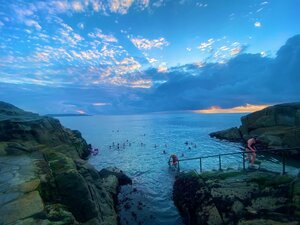
From top: Forty Foot swimming area, Sandycove, County Dublin; Grace Garvey

Listening to writer Rosita Boland speak candidly on the radio recently about the loneliness of the past year, I felt like giving her a call to share the secret to a tolerable solo lockdown: tear off your clothes and jump in the sea. Seriously! It’s that simple.

High tide and a brisk wind at lunchtime Wednesday combined to create optimal conditions for a dip. I didn’t so much wade in as get swept away. Bobbing on the swell of the waves was nothing short of exhilarating. It was not the day for exchanging pleasantries with fellow swimmers unless you wanted a mouthful of salt water, and even that had a payoff. On an interminable Teams call later, a salty knuckle to the lips was all it took to revisit the thrill. I have no idea why swimming in the sea makes for instant lightness and glee, but believe me when I say it does.

Boland spoke of finding the latest lockdown most challenging of all, but for me, the first one took the biscuit. The shutters hadn’t even gone down when I found myself in the throes of a Covid infection in early March. Being ill while living alone wasn’t particularly lonely – general wretchedness tends to leave little room for specifics – but I certainly considered the logistics of not making it through the night.

Boland wondered how long it would take for someone to find her if she died in her sleep, whereas at peak sickness, I was more concerned about whether I should leave the front door unlocked as I didn’t fancy someone kicking it in.

My birthday, which fell on Easter Sunday, brought no resurrection. Although five weeks had passed since I’d first woken up feeling awful, my experience of Covid wasn’t the straightforward two-week ailment of news reports. It was rather a trickier beast with myriad symptoms that seemed to wallop me at intervals of two weeks. No sooner would I begin to celebrate my recovery than I would be hurled back to bed.

By the time restrictions were eased, I was well and truly weary. When a friend arrived over for a socially distant visit outside, he was a wonder to behold.  Waving him goodbye was probably the loneliest moment of the entire year.

Subsequent lockdowns have been a walk in the park. The effects of Covid lingered, so days were either spent feeling sick or glad that I wasn’t. Through it all, swimming never failed to give me a lift. It also provided structure to the day and afforded social contact without flouting the rules.

No one had told me how convivial swimming could be. I’ve had some great chats with complete strangers in a state of undress. People of all ages, from all walks of life, congregate along the wall to peel off wet togs and set the world to rights. Faces became familiar and before long, you’re getting recommendations on everything from books to heart surgeons. Eilis McGovern has magic hands apparently, should your ticker ever act up.

Every day is different in the sea. I look forward to rounding the corner of the hill on the drive down to see if I can gauge its mood. Is it grey and belligerent or hazy and calm? The temperature fluctuates too, but the colder the better I find. Looking like a lobster is the closest I’ll get to a colour without the spectre of melanoma looming, and that tingling sensation in every cell reminds me I’m still here.

Another thing that has helped immensely to ward off feelings of isolation has been forming a support bubble for the duration of lockdown three. It may not be feasible for everyone, but being able to break bread with friends at Sunday lunch makes the world of difference. As with proximity to the sea, I appreciate my good fortune in this. Being roundly beaten by my 11-year-old godson at chess prompted me to start playing online, so that’s another gift from Covid, thank you very much.

Of the estimated 400,000 people who live alone in Ireland, chances are most of us felt lonely at some point during the pandemic. Actually, that probably goes for the rest of the population too. We all need companionship to one extent or another and while technology has helped, it’s no substitute for the flesh-and-blood presence of others. Boland rejects the trope that suggests what doesn’t kill you makes you stronger, but I feel there’s some comfort in knowing we can prevail.

As freedom beckons and restrictions are set to lift, here’s hoping we can fling ourselves back into the maddening crowd any day now. Until then, there’s still time to answer the call of the sea.

As the old-timers are fond of saying, you’ll never regret a swim.

Grace Garvey is a Communications and Content Marketing Strategist. Grace can be reached at ggarvey2021@gmail.com

RollingNews

‘sup?

This morning.

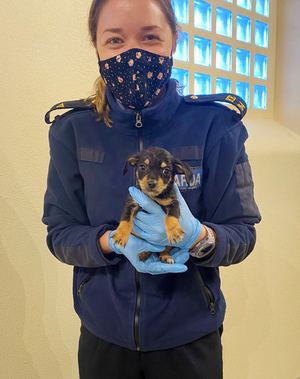
Leixlip Garda Station , county Kildare.

One of a number of puppies seized overnight in the Kildare area due to animal welfare concerns – all are safe and well and will be transferred to Kildare ISPCA.

Arf.

RollingNews/@gardainfo

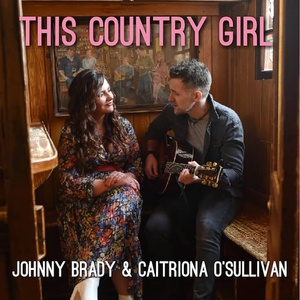
Johnny Brady & Caitriona O’Sullivan – This Country Girl

Move over, Garth & Trisha, there’s a new country power ballad couple in town.

Antrim’s Johnny Brady met Kerry’s Caitriona O’Sullivan on the set of the TG4 music programme Glor Tire and a thriving songwriting partnership was born.

The scenic video was shot in Dingle.

Nick says: I’m gonna try for The Kingdom.

Johnny Brady

Caitriona O’Sullivan


Can you find Blueshirts founder Eoin O’Duffy in the mural (above) at Knockaconny, County Monaghan (top)?

The inclusion [of Eoin O’Duffy], in what is an otherwise impressive piece of art, does not sit well with its own description as ‘a progressive and vibrant school working to the highest standards in teaching and learning’. In fact, it only taints the reputation of this multi-denominational school and demeans other individuals depicted on the mural.

The Friends of the International Brigades in Ireland.

Fight!

Statement from Friends of the International Brigades in Ireland on inclusion of fascist leader in school mural (The Cedar Lounge Revolution)

Top pic via Coláiste Oiriall

Thanks Liz

This morning.

Belfast, Northern Ireland.

They’re back, baby.

Broadsheet.ie