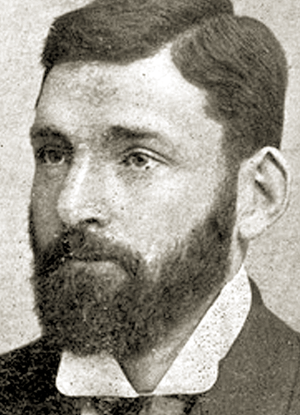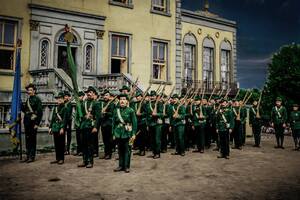
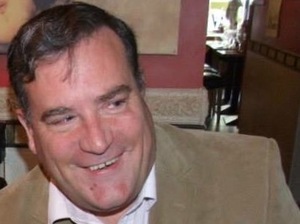
From top: The Irish Citizen Army, Easter 1916; Dan Boyle
For the year that’s about to be in it.
While there can be no doubting the courage of those involved in 1916, there has to be ongoing analysis of their conflicting motivations. And even the individual sanity of some.
Dan Boyle writes:
One of the more infuriating parts of inhabiting that exceptionally frustrating period of life between middle age and final acceptance of being old, is the realisation as to how relative time actually is. The less time that is available the more it seems to go by that bit more quickly.
Being someone who wants to eke the best out of every moment, this occasionally gets me down. With the year ahead it’s a downside I’m more prepared to accept, even to embrace.
I’m not looking forward to 2016. The idea of a twelve month orgy of flag waving, the restoration of myths as being our true national characteristics, and the Wolfe Tones providing the soundtrack of authentic Irishness, is something I think I’ll be spending a lot of time avoiding.
Of course we need to acknowledge the events that led to the formation of the State. It is right as well that they are commemorated. What I’m not sure about, and feel less comfortable about, is that we should celebrate all these events. Each event in every single aspect.
The complexity of being Irish then was no less intricate than it is today. There was nothing inevitable, no linear progression, about the events of 1916. As a military operation it was extremely amateurish in its conception and its execution. The collateral damage of civilian deaths, especially women and children, has always been brushed over, lest it tarnish the national myth.
And while there can be no doubting the courage of those involved, there has to be ongoing analysis of their conflicting motivations and even the individual sanity of some.
I would much prefer to remember [Padraig] Pearse as the author of ‘The Murder Machine‘, rather than the blood lust-obsessed provocateur wildly exaggerating the death of an eighty three year old man as victimhood.
Notwithstanding that deceit, the role of [Jeremiah] O’Donovan Rossa himself discredited even within the Fenians as being a hothead, is another part of the national whitewashing exercise.
The position of James Connolly is more problematic than others involved in the 1916 Rising. Like them there was no reason not to believe he thought it to be the best mechanism to achieve change. Unlike the others, he had already provided an analysis on disadvantage and inequality in the country, an analysis our subsequent political system has chosen to address only through creating different forms of disadvantage and inequality.
The Rising achieved political success only through the appalling disproportionate response of the British, especially in executing Connolly while he was in a wheelchair.
The 1919-21 period is far more worthy of marking. The Rising may have informed what followed later, but was little different in its effect on the British State than the misadventures of 1867, 1848, 1803 or 1798.
What most worries me are those who cloak themselves in a pseudo legitimacy, gained by striking out wildly, violently, viscously, while referencing 1916.
I once worked with a woman whose family had moved to West Cork, having found life in Belfast in the 1970s to be impossible. All except a brother who had been arrested, and then took part in the ‘on the blanket’ protests that preceded the hunger strikes of the early 1980s. I never doubted his or his colleagues’ personal courage. Where I argued with his sister, despite us becoming good friends, was my belief that governments born of violence remain open to violence against them by those opposed to their existence.
In this, even from an opposing perspective, I find myself in agreement with Our Gerry and with other members of his cult. At least in terms of the effect if not the cause.
Of course this could be the other effect of dwelling in the other grey area of being between middle aged and being old. That of becoming curmudgeonly. I exist therefore I moan.
Dan Boyle is a former Green Party TD. Follow him on Twitter: @sendboyle