
Tag Archives: Irish Times letters page

ibrahim

Ibrahim Halawa

Yesterday witnessed the 14th adjournment of the trial of young Irishman Ibrahim Halawa. In a matter of moments the hopes of the family, friends and of those who have campaigned for Ibrahim’s release were dashed.

To be clear, Ibrahim is, as Amnesty International formally recognises, a prisoner of conscience. He has been “detained”, in reality imprisoned, since August of 2013 for speaking out against a military coup.

In a recent letter, Ibrahim recalled the manifest human rights abuses that he is being routinely exposed to and which do not bear repetition here. This has to end with Ibrahim’s release and it has to end now.

To date, the approach of the Irish Government in “protecting” Ibrahim as one of its citizens has been a manifest failure. Calls have been made for the Government to alter its course in how it is dealing with Ibrahim’s case, including from highly regarded legal office Doughty Street Chambers of London and Ibrahim’s former cellmate Peter Greste of Al Jazeera.

These calls have gone unheeded, and all the while Ibrahim, a young man from Firhouse in Dublin, languishes in prison for advocating for democracy. The toll this must be having on Ibrahim’s family can only be imagined.

The Government may have had its reasons for the softly-softly diplomatic approach that it has approached Ibrahim’s case with to-date; however, in light of yet another adjournment a new course must be charted and the advice of international experts listened to.

Various groups have called for the utilisation of Egyptian legal mechanism “Law 140”, essentially a presidential decree, the result of which could see Ibrahim return to Ireland while a final ruling is made on his case.

If those close to Ibrahim’s case still feel this is the way to proceed, then surely it is worth taking their advice seriously. As a young Irishman awaiting entrance to university in Ireland, Ibrahim has a future full of promise ahead of him. Each second he spends in prison is a second less for Ibrahim to develop into the young Irishman known to his friends and family.

I implore Minister for Foreign Affairs Charlie Flanagan to listen to all advice available and take every appropriate action now and bring Ibrahim home to Dublin. We owe it to ourselves as a democratic state that upholds the rule of law, due process and human rights. Most of all we owe it to Ibrahim.

Dr James Carr,
Department of Sociology,
University of Limerick.

Adjournment of Ibrahim Halawa’s trial (Irish Times letters)

img_4441

Founder and CEO of Console, Paul Kelly, who resigned last week

Following a spate of scandals in 2014, the then government established the Charities Regulatory Authority. The effectiveness of this new organisation can be summed up in just one sentence taken from its website: “We are not currently empowered or resourced to conduct statutory investigations of charities.”

Anthony Sheridan,
Cobh,
Co Cork.

Time for reform of charity sector (Irish Times letters)

Previously: Inconsolable

Pic: RTE

71i8nZBfmL._SL1500_

Rev Patrick G Burke states that the Church of the Flying Spaghetti Monster is a fiction. It is not.

I became an ordained Pastafarian minister during 2015. Beforehand, I went through an arduous process in 2014 involving the ecclesiastical authorities in Armagh to have my excommunication from the Roman Catholic Church confirmed in writing.

My faith in the Church of the Flying Spaghetti Monster is considered heretical by the Roman Catholic Church and this incurs latae sententiae excommunication, according to Canon 1364.

In the correspondence that I finally received from the bishop, he also states that he is “acknowledging apostasy in accordance with Canon 751, the total repudiation of the Christian faith”.

One of the reasons why I repudiated Christianity was the long history of Pastafarian persecution that has been perpetrated by Christians of every hue. I hope correspondents will reflect upon this history before blaspheming against my religion.

Pasta-based religions should be afforded the same respect as carpenter-based religions.

John Hamill,
Pastafarian Minister,
Church of the Flying Spaghetti Monster,
Castleblayney,
Co Monaghan.

The Church of the Flying Spaghetti Monster (Irish Times letters page)

Previously: Strained Relations

Screen Shot 2016-06-14 at 16.29.34

Terry Dignan’s car insurance has risen from €470 to €886 in just four years. Let me advise Mr Dignan that this is not despite his being 13 years with the same insurer, but because of it.

From first-hand experience of writing premium calculation software for the motor and home insurance industry, I can assure him and all your readers that there’s an in-built “inertia penalty” for such customers.

As a general rule of thumb, if at renewal time a private motorist is obtaining fewer than five quotes – including at least one via a broker – then he or she is almost certainly throwing away money.

Coincidentally, I too have been driving for 25 years with no claims. The difference is that I’ve never used the same underwriter for more than three years in a row.

Mr Dignan is, of course, still right that the Government should take a close look at the industry.

R Scanlan,
Leopardstown,
Dublin 18.

FIGHT!

The cost of motor insurance (The Irish Times letters page)

Previously: ‘There Is A Cartel Of Insurance Underwriters’

CjrzfrMWYAAwQI3

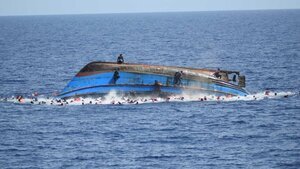
A boat carrying people seeking refuge in Europe capsizing in the Mediterranean last week

Our proud tradition as a nation that speaks up for the voiceless is being undermined by the failure to speak up and demand a humanitarian response to the continuing crisis on Europe’s shores.

Ireland was once the country that people under threat of starvation, torture and war could count on for solidarity.

When others turned away, we offered shelter during the Bosnian conflict, brought the plight of Somalia to the floor of the UN and stood firm against apartheid.

Unfortunately the same cannot be said in terms of the current crisis.

Ireland must refocus the European and global debate away from bogus arguments and back to the needs of men, women and children fleeing barrel bombs, chemical attacks and executions.

We must speak up and demand safe legal channels to Europe, with every country doing its bit and offering people a genuine chance to restart their lives.

Our silence, coupled with the continuing unacceptable delay in honouring our own promise to shelter 4,000 people, is difficult to understand – in particular in light of the widespread public calls for action just six months ago.

It is time for Ireland to rediscover its humanitarian voice and show the most vulnerable people of the world that they are not forgotten.

Brian Killoran,
Chief Executive,
Immigrant Council
of Ireland,
2 Andrew Street,
Dublin 2.

Ireland and a humanitarian crisis (Irish Times letters page)

Pic: Al Jazeera

Screen Shot 2016-05-26 at 13.44.27

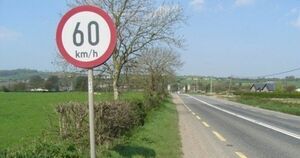
Is there anyone in authority to call a halt to the insanity of the new city-wide 30km/h (19 mph) limit to be fully rolled out by 2018? It is hard to believe anyone who has ever driven a car thought this was a reasonable measure. Why not 10mph? Why not 5 mph? How about we all just walk? Or maybe just stay at home? Or maybe in bed?

John O’Donovan,
Rathmines,
Dublin 6.

30km/h speed limit for Dublin (Irish Times)

Related: Speed limits to be reduced to 30km/h across Dublin (Irish Times)

Screen Shot 2016-05-25 at 13.15.02

Fine Gael MEP Brian Hayes

They say the most important part of a debate is defining the arguments. Suzanne Lynch’s excellent article explaining TTIP (Transatlantic Trade and Investment Partnership) is a perfect example of how TTIP opponents have been successful in defining what an EU-US trade agreement, like TTIP, might contain.

Opponents to Atlantic trade are focusing on the straw men of genetically modified food and hormone-treated beef. Let’s be clear – no EU trade agreement will ever lower our level of protection of consumers or food safety. European food standards are not up for negotiation.

Many of these issues arose in the EU-Canada trade deal and were resolved. The scare tactic put forward of some sort of malevolent investor court ruling for multinationals against governments is not borne out by history.

Investment protection exists in 1,400 bilateral agreements signed by EU member states since the 1960s. These have not stopped governments legislating in the public interest. Little if any attention has been given to the massive steps forward for workers rights and the environment a potential trade agreement between Europe and America could bring.

The sustainable development provisions the EU negotiators put forward are the most ambitious provisions on sustainable development, labour protection and the environment put to any trading partner. Europe’s negotiators want TTIP to include the International Labour Organisation’s core standards. The sustainable development chapter ensures high standards for labour and addresses health and safety at work and workers’ rights.

TTIP allows Europe to bring our environmental standards on biodiversity, shipments of chemicals and waste, and sustainable management of natural resources to bear on a global scale. The EU legal text enhances co-operation between the EU and US to fight illegal logging, illegal fishing and the illegal trade in endangered wildlife.

TTIP would make it easier to trade goods and services that help us tackle environmental problems, such as climate-friendly and resource-efficient products. We have an international agreement to combat climate change, and TTIP can help us implement it.

International trade negotiations are complex and cannot be boiled down to a slogan on a placard. The details of TTIP need to be discussed openly, honestly and fairly. A good start is to look at the totality of the negotiating documents and not straw men put forward by opponents to trade.

Brian Hayes MEP,
Donnybrook,
Dublin 4.

TTIP negotiations and global trade (Irish Times letters)

Previously: Luke’s TTIP

Leah Farrell/Rollingnews

story-20640-20640-xlarge

There has been a discussion on the call by the Road Safety Authority and others about the possibility of introducing speed limiters in cars. However, this technology is very new, and it would take many years for all car manufacturers to install them as standard. There is another system that could be introduced quickly.

Every car could be monitored with a GPS device linked to a mapping database that covers all roads and speed limits in Ireland.

The insurance company AXA introduced such a scheme for young drivers in 2012, and this allowed AXA to track driver speed and behaviour. The system could be modified so that if a driver was driving over the speed limit in a certain area, the driver is alerted and given time to reduce their speed.

Continuous driving over the speed limit would then result in penalty points and a fine.

In effect, it would be as if there was a continuous speed check on all cars at all times. Such a system would save many thousands of Garda hours in speed monitoring, and with a consequent reduction in speeding, would save many lives every year.

Seamus Lennon,
Salthill,
Galway.

Speed limits and driver safety (Irish Times letters)

dublin

It is with alarm that I read Frank MacDonald’s article about the new definition of “low rise” for the purposes of the draft Dublin City Development Plan.

In any European context, and in particular in an Irish context, the idea that up to 28 metres (nine storeys) could be “low rise” is a serious abuse of language and can only be designed to confuse the average citizen.

The development plan has been called an environmental contract between the city and its citizens and there should be no room for confusion or misinterpretation.

The attempt to dissemble is made worse by the fact that this is not the first time that the description of allowable building heights has been fudged.

In the defunct policy document Maximising the City’s Potential, earlier efforts to increase building heights, without actually clearly defining what that would mean, were rejected.

The unique selling point of Dublin is its scale, with big skies and the sight of the mountains at the end of the road. We can increase density and “maximise” its potential without destroying that quality.

Let us not try to compare ourselves to London and New York but rather to cities of similar population and scale. Above all , let us not pretend that any building up to nine storeys high is “low rise”.

Jane Lanigan,
Dublin 4.

FIGHT!

Building heights in Dublin (Irish Times letters)

Pic via Gravity Bar

Dail-Chamber

Robert A Sharpe is quite on point regarding prayer in the Dáil. Paul Murphy’s claim that this oration is anachronistic might be acceptable in Cuba, but it discounts truths applicable even in “modern” Ireland.

The preamble to the Constitution finds authority in “the Most Holy Trinity” and invokes Jesus Christ by name. Article 6 of the same text then acknowledges that all power derives “under God”.

Most fatal to Mr Murphy’s contention, however, is article 44, which clearly nods to “public worship . . . due to Almighty God”. Moreover, the Constitution next bids the State to hold God’s name “in reverence” and to “respect and honour religion”.

Despite Mr Murphy’s allergy, our institutions plainly presuppose the existence of a divine being, and prayer in the Dáil would appear to be consistent with this view.

Dr Sean Alexander Smith,
Sandyford,
Dublin 18.

FIGHT!

The Dáil prayer (Irish Times letters page)

Previously: Without A Prayer