Yearly Archives: 2016

pic00 pic02

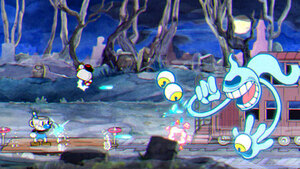
A promo for CupHead – a new side scroller from Studio MDHR (for PC and XBox One). To wit:

Inspired by cartoons of the 1930’s, the visuals and audio are painstakingly created with the same techniques of the era, i.e. traditional cel animation (hand drawn & hand inked!), watercolor backgrounds, and original jazz recordings

MORE: Cuphead Vs Warren Spector (Games Industry)

quipsologies

harry

Harry, 1986-2016

Following the the death of ‘Harry’ the adult silverback and father of six who died after a short illness at Dublin Zoo on Sunday.

In 2009, Harry was featured in Animal Rights Action Network (Aran) investigation into the gorilla enclosure that forced Dublin Zoo to upgrade facilities.

John Carmody, of ARAN, writes:

“Sadly Harry has never really known what nature intended for him and his family which is the lust forests and rivers of the Congo, a far cry from life at Dublin Zoo,

Instead, he has known nothing but a concrete and glass enclosure with a few gimmicks thrown in to replicate the gawking onlookers.

Dublin Zoo needs to do what SeaWorld is doing and that is to end any further breeding of gorillas, commit to naturally phasing out the exhibit and to replace it with a modern, digital interaction experience of what life is like in the natural home of Harry and his species.”

ARAN

Dublin Zoo’s Harry the gorilla (29) dies after short illness (Irish Times)

Pic: 98FM

Meanwhile…

Payslip_large
Michael-Taft

From top: Salary payments; Michael Taft

Most of the income increase over the last five years has been concentrated among higher-income groups

Michael Taft writes:

In a previous blog I discussed the issue of who is benefiting from income increases, using national accounts and the Survey on Income and Living Conditions.

Here’s another look at the issue, this time with the assistance of the CSO’s Earnings database, focusing on wages. This will give us another, potentially more provocative, look at the issue.

That wages are rising is not in doubt.

Since wages (average weekly earnings) bottomed out in 2011,there has been a growth of 7 percent in the private sector while public sector wages have flat-lined. This has resulted in an economy-wide growth of 3 percent.

We always have to be aware of the compositional effect, though – a change in the composition of the group you are measuring.

Here is a simple example: we are measuring the average income of all customers in the pub.There’s 10 customers (slow night) and they have an average income of €36,000.

Then a millionaire walks in. We measure the same group – all the customers of the pub; but now the average is substantially higher. The original 10 customers haven’t experienced any change in income; it’s just that the composition of the group we’re measuring has changed.

So the 7 percent increase in private sector weekly earnings doesn’t mean every worker received that wage increase – more jobs created in in high income sectors (financial, information & communication) will change the composition.

With that caveat, let’s proceed to the next measurement.

The CSO measures average weekly earnings of three types of employees:

Mangers & Professionals: this includes associated professionals
White-Collar Employees: this includes clerical, sales and service employees
Blue-Collar Employees: this includes production, transport, craft and other manual workers

How have these two groups fared?

graph

Managers & professionals have been big gainers – over €100 per week, or nearly 10 percent increase. All other employees, however, have seen their weekly incomes fall. Even if with a compositional effect, its’ a significant difference.

There are some differences when we look under the hood. In the industrial sector (manufacturing, utilities, and mining), the three groups experience similar increases with managers & professionals receiving a 11 percent increase, white-collar workers receiving a 10 percent while blue-collar workers received a 14 percent increase.

However, the rest of the economy brings down the average of the latter two groups.

Rooting under the hood some more here’s another interesting finding: the Information and Communication sector makes up 3.9 percent of all employees in the economy. Yet this sector accounted for 21.2 percent of the entire increase in average weekly earnings.

This shouldn’t be too surprising given the number of multi-nationals in this sector that have located and expanded here in the last five years. Still, it gives evidence of the concentration of earnings.

What does all this mean? Even with a compositional effect, it shows that most of the income increase over the last five years has been concentrated among higher-income groups.

Here are the annualised average earnings for the three categories of workers in the first quarter of this year:

Managers & Professionals: €62,300

White-Collar Employees: €24,500

Blue-Collar Employees: €26,100

Again, we have to mindful that, especially among service workers (e.g. hospitality), some of this difference can be accounted for by less working hours.

We can’t say how much because the data doesn’t provide earnings per hour or working hours; we can’t produce full-time equivalents.However, Information & Communication employees earn nearly three times the hourly wage as hospitality workers – even more of a gap than the annualised earnings above.

Bottom-line: earnings inequality is growing in the economy. This may not mean much if you don’t think inequality is a problem.

However, if you think rising inequality will result in economic inefficiency and social erosion then you should be concerned. Very concerned.

Michael Taft is Research Officer with Unite the Union. His column appears here every Tuesday. He is author of the political economy blog, Unite’s Notes on the Front. Follow Michael on Twitter: @notesonthefront


gridlock

Ireland’s first traffic jam-based thriller.

Finally.

IHD writes:

Trailer for a new short film ‘Gridlock’ coming this Summer, starring Moe Dunford from ‘Vikings’, Peter Coonan from ‘Love/Hate’ and Steve Wall from ‘Rebellion’ and The Stunning. Gridlock is a thriller set during a traffic jam on a country road. When a little girl goes missing from one of the cars, her father forms a desperate search party to find her. But soon everyone is a suspect.

Fail Safe Films (Facebook)

LeadersHairy_footballers

Hair we go.

Joe Collins writes:

Nutmeg Clothing have a new shirt out for the Euros in France. It’s of our great leaders – Martin and Roy. Available in Designist this Thursday and online now (at link below).

We have 3 to give away (total print run of just 70) to three Broadsheet readers.

To enter, just complete this rhyming couplet:

‘Please put Martin and Roy on my chest,

I’ll wear them with pride over my vest,

___________________________,

_____________________________’

Lines MUST close at 1.45pm 5.15pm.

Euro 2016 Tees (Nutmeg Clothing)

Matthew Carrigan writes:

I made a Twitter bot that uses a recurrent neural network to construct new movie titles based on the structure it learned from existing ones. Much cheaper than hiring a real scriptwriter

FIGHT!

Autuer Bot

70090322200

From top: Irish Water bill; Brendan Ogle

But will the 32nd Dáil subvert its democratic mandate to keep Irish Water running?

Brendan Ogle writes:

When Right2Water exploded onto our streets on 11 October, 2014 as the umbrella campaign for the anti-water charges movement a promise was made.

Unusually in Irish public life this promise was kept.

The promise was that Right2Water would be around AT LEAST until the next election seeking the abolition of the regressive double water tax. We also promised that this would be the number one issue in the next election.

For a year and a half commentators and establishment politicians sneered at these claims and repeatedly told us that the campaign had dissipated.

After election 2016 nobody is sneering.

What seemed unlikely, or even impossible, has happened. Labour have been humiliated by their traditional voters and Alan Kelly has been humiliated by what remains of Labour.

Fine Gael have lost one third of their seats and the two large right wing  ‘Irish Tory’ parties, Fine Gael and Fianna Fail, can’t even claim that they command the support of a majority in this divided state combined. Seismic change.

Irish Water has been rejected in the polls and, politically and financially, is a beaten docket with charges now suspended. Irish Water, and the privatisation agenda that it represents, has been beaten up, but it is not yet beaten.

Last week Fianna Fail failed to deliver on its electoral commitment to abolish the super quango when given the opportunity in a Dail vote.

Fianna Fail joined a long list of 59 TDs who either abstained on this vote or were unavailable. Even worse, however, is that the vote was carried by 60 TDs vs. 39 TDs and the 60 even included John Halligan and Finian McGrath as Independents.

So, for now, Irish Water continues to function on life support. It’s time to pull the plug.

The day before this vote I attended a very positive meeting of the three Right2Water pillars. This involves trade unions, political parties and independents, and also community activists, working together to seek abolition of Irish Water.

These three strands worked together since 2014 and delivered the largest (per capita) and most peaceful protest movement anywhere in the world today.

Our objectives are simple. We want Irish Water abolished and replaced with a single national water and sanitation board funded through progressive general taxation.

We also want public ownership of the public water supply protected in a new Article 28 Section 4:2:1 of our Constitution to read:

‘The Government shall be collectively responsible for the protection, management and maintenance of the public water system. The Government shall ensure in the public interest that this resource remains in public ownership and management.’

This will require a referendum and in the coming weeks a Bill sponsored by Joan Collins TD and signed by Sinn Féin, PBP, AAA and other Independents goes before the Dail proposing exactly that.

Since the beginning public debate of the Irish Water issue has been conducted as if a fiction were true. That fiction is that Irish Water, the meters and the billing system is not about privatisation.

All across the globe vulture funds and corporates are taking ownership of public water supplies and turning our human Right2Water into a right to profit for the 1%. They are turning that which we need to live into a commodity that they can turn off and deny to citizens at will.

Apart from ‘financial services’ nothing delivers bigger profit margins for these vultures than our life sustaining water.

From Bolivia to Berlin, and from Portugal to Portroe corporate interests have ensnared politicians to do their bidding and hand the people’s water over to them.

But the people have fought back and prevented this happening or even won water back through re-municipalisation as has happened in Bolivia, Berlin and Paris for example.

Water in Paris and Belin were both re-municipalised in 2014 following rising bills, lack of investment in new infrastructure and public pressure.

The Cochabamba water war took place in Bolivia’s third largest city in 1999 and 2000. A community coalition ‘Coordinadora in Defence of Water and Life’ won after public protests which saw one protestor killed. The privatisation was reversed.

Of course, on the rare occasion that the media have put this to them, politicians in Fine Gael, Labour and the Greens have rejected the argument that they are engaging in a privatisation quest.

And they have been allowed to issue bland denials of what is blindingly obvious without being held accountable.

That is now about to end. If privatisation is not the agenda behind Irish Water then this ‘Government’ can save itself no end of trouble by simply supporting Joan Collins’ bill when it goes before the Dail.

I personally believe that the expected failure of Fine Gael to support this bill, or further obfuscation by Fianna Fail or Shane Ross’s ‘Independents’ that prevents this vital bill from being passed, will be a subversion of the democratic mandate of the 32nd Dail that will require a response.

This Government is barely a Government at all and it is already hanging by a thread before it has even begun.

People power led to a massive change in the electoral shape of Ireland in the February election. I don’t believe for one minute that the necessary change is complete.

In fact I believe it has only just begun.

Brendan Ogle is Unite Trade Union and Right2Water Co-ordinator