



Yearly Archives: 2017


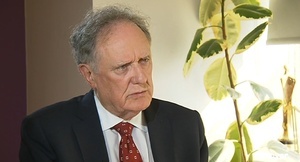
Minister for Housing Simon Coveney on Tonight with Vincent Browne last night
Last night.
On Tonight with Vincent Browne.
In a pre-recorded interview with Fine Gael’s Minister for Housing Simon Coveney, who is running in the Fine Gael leadership race against Minister for Social Protection Leo Varadkar…
Mr Coveney said he is different to Mr Varadkar who, earlier this week, said he wants to lead a party for “people who get up early in the morning.”
In addition, Mr Coveney said “those people are as important to me as people who pay for everything” referring to people in receipt of social welfare payments.
The Housing Minister also called for people to judge him based on his actions, pointed to his €5.5billion social housing plan.
From the interview…
Simon Coveney: “I think there is a choice for the party that’s quite different.”
Vincent Browne: “Tell us the choice, between one person who says what and the other person says. Tell us both.”
Coveney: “I will. What I have been talking about is a party that represents everybody. Unlike most parties in the country at the moment, many of the smaller parties in particular, focus on niche areas in society and only represent that group of people and then actually get political traction on the basis of division and anger and protest.”
“What I’m talking about is Fine Gael representing someone who is unfortunately in a sleeping bag tonight on the streets of Dublin, as well as supporting people who are creating thousands of jobs. And supporting them and celebrating that success.
“This is a party that I joined and it’s a party that I’ve been a part of for nearly two decades of my working life that I believe has to get the best out of everybody regardless of their limitations or disabilities or social disadvantage or whatever. And…”
Browne: “Ok, that’s what you stand for…tell us how…”
Coveney: “I am not the kind of person that talks about Fine Gael only representing the person that gets up early in the morning.”
Browne: “And that’s what you stand for. Now tell us how that differs from what Leo Varadkar stands for?”
Coveney: “Well I think that is my vision for the country, is one…no, let me finish now and I’ll get to your question.”
Browne: “Ok, good.”
Coveney: “My vision is one of social justice, as well as economic progression. And I think that the approach that I have, that Fine Gael needs to reach out to people who don’t naturally support us and who may never support us in the future but our responsibility to try and get the best out of those people in society, not in some kind of dependancy way but in an enabling way.”
“I think that is a very different message to what I’ve heard from Leo Varadkar this week when he talks about Fine Gael being the party of the person that gets up early in the morning to work. Of course those people need to be represented by Fine Gael because they pay for everything. But there are many people who need the State’s intervention to allow them fulfil their potential and those people are as important to me as people who pay for everything.”
Browne: “Ok, he’s talking…”
Coveney: “I think that is very different vision for the party.”
Browne: “Ok, he talks about a sense of, culture of entitlement in the country. Do you perceive that?”
Coveney: “I mean, I think there is a politics in Ireland at the moment, that calls for the State to deliver people’s rights on everything. A right to a house, a right to healthcare, a right to education, a right to a decent income.”
Browne: “Justice. That’s justice.”
Coveney: “Yeah it is… but the way…”
Browne: “Are you not in favour of that?”
Coveney: “The way in which you achieve it is to ensure that the State enables people to make a contribution to society, as well as a dependency on a government. And I think that is the big difference between me and the hard left. And I think, you know…judge me on what I’m actually doing. I mean, in housing policy at the moment, Vincent, people will talk about the numbers and so on. We have a huge social housing build programme that’s now under way, it’s a €5.5billion project and so on. But the real change, actually, that I’m looking to bring to social housing policy in Ireland is forcing integration.”
“I no longer accept the hard-left arguments that we should designate whole parts of cities and fill them with social housing estates in a mono-tenure way. Instead we have to ensure that social houses are part of private developments and that private housing is part of new social developments…”
Browne: “Are you suggesting that Leo Varadkar is part of the hard left?”
Coveney: “No, I’m not. I’m not suggesting anything about Leo Varadkar, I’m talking about myself.”
Previously: ‘They’re Loud And They’re Growing’
Social Housing And Affordable Housing Are Not The Same
Related: Homeless families with nowhere to sleep sent to Garda stations (Kitty Holland, The Irish Times)
Dublin councils accused of preventing housing development (Olivia Kelly, The Irish Times)
Watch back in full here
Warm Front
at
*swelter*
Gavin T writes:
I don’t wish to objectify weather presenters and I know you don’t normally do this but….Heyyy!! Dishy McDish on TV3 yesterday….who is HE?
Anyone?

How many are you on?
Celebrate the 13th issue of Rabble [non-profit newspaper from the underground] in the Pearse House, Pearse Street, Dublin 2 at 7pm.
Featuring Fiona Measham founder of The Loop, which conducts forensic testing on pills and powder and what have you at festivals and clubs in the UK.
Plus a screening of club documentary Notes on Rave In Dublin.
TESTING YOKES TESTING YOKES TESTING YOKES TESTING YOKES

Mark Hamill and the late Carrie Fisher photographed on the set of The Last Jedi by Annie Leibovitz.
READ ON: Cover Story: Star Wars: The Last Jedi, the Definitive Preview (Vanity Fair)
(Via Paul Condron)

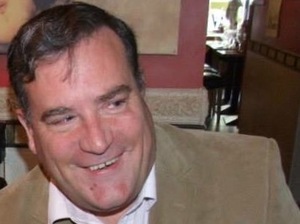
From top: Former Anglo Irish Bank Chairman Seán Fitzpatrick leaves court yesterday; Dan Boyle
The first ever bulky report placed in my cubby hole, in the mail room of Leinster House, was from the Director of Corporate Enforcement, then Paul Appleby. It was an investigation into the activities of Ansbacher Bank (Ireland) Ltd.
Many of the details had already been leaked. The central allegations had been aired over several years. Even so the collective airing in one document of such a huge financial conspiracy, continued to shock and did nothing to alleviate public concern.
Over 200 people, supposedly prominent in Irish life were named. To be historically accurate and fair, few of these were directly involved in politics, none currently involved then. The nexus of labyrinthine financial mechanisms, created by Des Traynor, centred around the Guinness and Mahon bank and the boardroom of Cement Roadstone Holdings.
There was meant to be some satisfaction in the €120 million in unpaid taxes and fines that were collected. What never happened was any prosecution of any of the people involved.
Over the subsequent years, The Office of the Director of Corporate Enforcement, through the tenure of several directors, has tended to be underresourced. This led the office to concentrate on smaller fry, having neither the resources nor the willingness to take on the bigger offenders. In Ireland the bigger the fraud, the less the likelihood of it being identified and, as such, of it ever being prosecuted.
Like most I look askance at the verdict passed on the Seán Fitzpatrick trial. I won’t quibble with the legal technicalities, I freely admit I lack the capacity to do so. Nor will I indulge in the hang ’em, flog ’em, throw ’em in the brig (I realise the order is nonsensical. That’s the point!) cravings that we all indulge in.
Seán FItzpatrick is ethically guilty of huge breaches of trust. He moved enormous sums of money between financial institutions, aimed at protecting his acquired wealth, and to create an impression that the institutions concerned were more financially sound than was actually the case.
In doing so, he undermined the lives and livelihoods of tens of thousands. He was part of a group of a small number of people, whose actions helped put the economy of this country onto life support.
I am more saddened than angered, that these obvious wrongs cannot be legally recognised. That as a State we seem to lack the capacity, either through indifference or diffidence, to properly investigate or securely prosecute.
Our ongoing frustrations not only exonerates those who have failed us, it means we fail future generations for whom what has happened, can so easily happen again.
If it takes a new legal code, a new Constitution, or new methods to select a judiciary better grounded in moral imperatives, then we should be prepared to ask such questions. To continue to accept this form of Justice as She is Spoke, demeans us as a Republic.
Dan Boyle is a former Green Party TD and Senator. His column appears here every Thursdyay. Follow Dan on Twitter: @sendboyle
Rollingnews

Dublin Docklands last Summer
The mercury’s rising once more
And today we’ll see temperatures soar
It will feel grotesque
When you’re stuck at your desk
And sweat oozes from every pore.
John Moynes
Rollingnews


https://vimeo.com/218695484
Dublin-based filmmaker Kevin Littlewood writes:
Ghost buildings and hidden walkways, dotted across an ever-changing Dublin city. A short film of what we pass and what passes us…of what remains, even when it’s gone.