

Yearly Archives: 2019

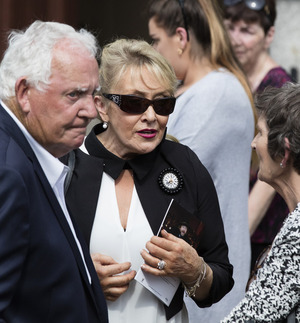
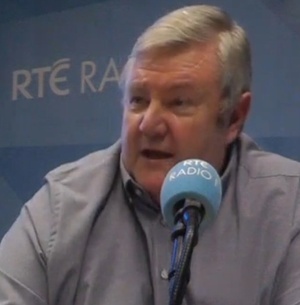
From top: Taoiseach Leo Varadkar; Galway City Councillor Owen Hanley

This month Taoiseach Leo Varadkar unveiled a climate action plan nobody really believes in to do something that he never seemed to care about to appeal to voters who never elected him as Taoiseach.

It’s an odd intersection of politics where the news cycle is mostly going through the motions. That said there are some really good things in the Climate Action plan including the incorporation of climate duties under the role of Taoiseach as well as having a more rigorous review process of the government’s track record on climate and biodiversity action.

But in the end it felt like another peg in a premiership that hasn’t really done anything meaningful.

That’s not to fall into a political trap of criticising every aspect of Varadkar for the sake of it. The current minority government situation is stretched to a limit. And I even met him once and annoyingly he was likeable.

But I don’t understand him. Or why he does what he does other than that he’s doing it.

If I genuinely ask myself why is Leo Varadkar Taoiseach I have no answer.

Like too many in politics he was planning for the next job.He was a Councillor so he could be a TD. A TD so he could be Minister. A Minister so he could be Taoiseach. But now that he’s arrived here, what’s it for?

And specifically I’m talking about the role of Taoiseach.

I can understand why someone would want to be TD or Minister. Step up and take the extra influence for your area and get paid a bit better, even if it means more scrutiny and less family time.

But to want to be Taoiseach should surely offer such unifying personal reasoning that it’s obvious to everyone who sees them in action. Why else go through all the scheming and negotiating and double-speak required?

For the past two years Leo Varadkar has been primarily defending himself against charges by Fianna Fáil’s Micheál Martin that he’s all spin, no substance.

That criticism bothers me for three reasons. One is the fact that Martin’s substance is a decade of Fianna Fáil blunders that lead to a decade of recession and austerity.

Two, the hypocrisy of using a test-group focused line to death to criticise marketing spin is neverending.

And three, it let’s Leo Varadkar away from the main criticism the opposition leader should ask. Why you?

Why when homelessness soars to the highest in our nation’s history should you lead us?

What does your brief tenure as Minister for Health say about your vision for healthcare?

What are the new ideas and ambitious qualities you bring the highest role of governance in the land?

It wasn’t really a question the Fine Gael parliamentary party asked either when they ignored their own members and choose him as Taoiseach.

It’s undeniable that electoral success was their primary concern, and as they should have the right to as any party.

But now that success seems less plentiful we’re left to wonder did they ask themselves who is the Taoiseach they choose for us?

A directionless Taoiseach creates a directionless party. Hence, why Fine Gael probably got hit hard in some spots during the Local Election. In contrast the Social Democrats’ focus on quality of life and the Green Party’s message on climate action resonated with people.

Enda Kenny was elected during an unquantifiable crisis. He ran and was elected to be a prudent overseer. The ultimate civil servant. You can argue the merits of that.

But we don’t need a civil servant to lead the country today. The housing and homelessness crisis requires massive state intervention. Healthcare needs to see radical transformations to transition to a single-tier Slaintecare system.

Transport demands bravery as we see a modal shift that compliments our higher density living and supports rural Ireland.

Ultimately, all this leads to the thought that Varakdar is just another man who at 18 decided he deserved to be Taoiseach and did everything to achieve that without asking why.

What was he trying to fix? What problems in the world bothered him the most? Why is it he should lead the country?

As I’ve tried to stress I’m not going intentionally force false narratives about greed or ego. But neither do I think we should allow basic ideas of doing a better job or it has to be someone so why not me be good enough.

He’s neither incompetent nor the Taoiseach we need.

It’s a hard job, you get criticised all day, and you sacrifice a lot to do it. I’m sure he has good intentions and is trying his best.

But why? Where is it going?

And in the end what kind of Ireland will he leave behind?

Owen Hanley is a Councillor on Galway City Council for the Social Democrats and has a background in human rights law

Rollingnews

Banner in Dublin 6 warning of a ‘Treeless Desert’ due to ongoing council felling measures

Richard Talbot writes:

Spotted on Terenure Road East. Spare me from the D6 NIMBYS and their outlandish claims!

To what authority should I report this banner to?

Anyone?FIGHT!

Previously: Don’t It Always Seem To Go

Mneanwhile…

This morning.

Botanical Terrace, Iveagh Garden Hotel, Dublin.

Wellbeing coach, author and motivational speaker Alison Canavan (above left) and Vegan food blogger, author and fashion stylist Holly White (right) at the launch of Vitality 2019.

Vitality is Ireland’s largest natural health and wellbeing event, taking place on September 28-29 in the RDS Simmonscourt.

Vitality will bring together “leading Irish and international experts in natural health, nutrition, fitness, wellbeing and sustainability”.

*stares at cigarette*

Leah Farrell/RollingNews

From top: Derek’s Summer reads part 2; Derek Mooney

Leadership: In Turbulent Times by Doris Kearns Goodwin

Published late last year, this book from the doyen of American presidential biographers, Doris Kearns Goodwin, asks whether the leader make the times or do the times make the leader.

She does this by considering the backgrounds and life stories of the four US presidents she has written most about: Abraham Lincoln, Theodore Roosevelt, Franklin D. Roosevelt, and Lyndon B. Johnson and examines how they each came to recognise the leadership qualities within themselves and how they went on to use these in office.

It’s a fascinating examination of how political leadership once worked and suggests that it could be that way again. The other reason this is on my list is because I am a fan of Goodwin. I’d happily buy an anthology of her notes to the milkman, if published.

Alarums and Excursions, Improvising Politics on the European Stage by Luuk van Middelaar

The best critique I have read of this book is that it’s “…neither a partisan defence of the European Union nor a pessimistic prophecy of doom, but a cool analysis of the role of European institutional structures and of key personalities.” From what I have read of this so far, it is a far summation of Van Middelaar’s approach.

A former adviser to Herman Van Rompuy while he was the EU Council President, Van Middelaar writing is far more vibrant and engaging on paper than his former boss was in person.

First published in Dutch and then in French the title comes from an Elizabethan stage direction that prepared actors for an onstage skirmish and to make battle noises. “Alarums and excursions” according to the author, conveys “the feverish mood when action becomes imminent”. Not a light read, but an essential one for anyone interested in EU affairs.

Twitter and Tear Gas, The Power and Fragility of Networked Protest by Zeynep Tufekci

Published about two years back, this book from Zeynep Tufekci of the University of North Carolina, sometimes described as a scholar-activist, has been widely hailed as the definitive work on the power of influence of social media in modern protest movement. In the book Zeynep considers how the social media and the internet both helped demonstrations in places such as Turkey, Mexico and Egypt get off the ground but also makes them harder to sustain.

The headline on the Washington Post’s review of her book sums its message up well: “Twitter and Facebook helped spark protest movements then they undermined them.”

The Psychology of Social Media by Dr Ciarán Mc Mahon

The second book on social media on this list is this short and well researched volume from Dublin based psychologist Dr Ciaran MacMahon. It does – to use the hackneyed phrase – exactly what it says on the tin. It explains how and why so much of our daily lives have come to be saturated by popular and absorbing social media platforms.

Ciaran does this by first posing a series of questions and then answers each in precise detail with reference to various examples. The Psychology of Social Media explores how so much of our everyday lives is played out online, and how this can impact our identity, wellbeing and relationships.

It looks at how our online profiles, connections, status updates and sharing of photographs can be a way to express ourselves and form connections, but also highlights the pitfalls of social media including privacy issues.

An Act of God by David Javerbaum,

The good news about this book, it that you kind don’t have to buy it to enjoy it. The second fiction book on my list, it is less a book and more a multi-platform experience. It is a book, originally published in 2015, as The Last Testament: A Memoir, which has since been turned into a hilarious stage play. Both of these in turn are anthologies of the best posts from the twitter account: @TheTweetOfGod.

Written by a former head writer at The Daily Show with Jon Stewart it is God’s latest instalment of the Testaments (and Qur’an) based on his experiences of mankind over the last few centuries. Written in biblical verse (how else could God write?) he opines, over 400 pages, on every aspect of universe from updating the Ten Commandments to Simon Cowell and Caitlyn Jenner. You can get a flavour of the style from checking out the currently pinned tweet:

In an ideal scenario the President of the United States and the worst human being in the world would be two different people.

Future Politics: Living Together in a World Transformed by Tech by Jamie Susskind,

Possibly the heaviest and most demanding read on the list. It also carries the burden of being reviewed and highly recommended in the Irish Times last December by, Finance Minister, Paschal Donohoe. Notwithstanding this, Susskind’s book follows on from the two other volumes dealing with Social Media and is a must-read for anyone interested in the great political debate of the 21st century: how will digital technology transform society and politics?

Susskind approaches the debate with both the expertise of a lawyer and a deep understanding of the digital world. His analysis is informed by the maxim that “how we govern, store, analyse, and communicate our information is closely related to how we organise our politics”.
As much of our daily lives are governed by algorithms as they are by laws made in parliaments.

The issues of data collection, privacy and freedom are so closely intertwined in today’s world that discussion of one has significant consequences for the other, yet these are largely in the hands of private big tech firms. Yet, Susskind’s outlook is not dystopian, not least because challenges policy makers and opinion formers on how free societies can still retain control.

Yesterday: My Summer Political Reading 2019 (Part 1)

Derek Mooney is a communications and public affairs consultant. He previously served as a Ministerial Adviser to the Fianna Fáil-led government 2004 – 2010.  Follow Derek on Twitter: @dsmooney

Minister for Health Simon Harris

This morning.

Via RTE:

Correspondence obtained by RTÉ News has revealed that a private secretary to the Minister for Health wrote on 6 June to the woman whose case exposed the latest CervicalCheck crisis.

The letter to ‘Sharon’ says that: “The Minister for Health, Simon Harris, T. D. has asked me to thank you for your correspondence concerning CervicalCheck and would like to again apologise for any distress this delay has caused you and reassure you that this is a priority for his Department and the Health Service Executive (HSE).”

Last weekend, the department said that it became aware of the existence of an IT issue on 25 June through information supplied by the Health Service Executive.

Minister Harris has said the matter was first escalated to him last Wednesday evening, 10 July.

Minister’s office wrote to woman at centre of latest CervicalCheck issue on 6 June (RTÉ)

Previously: ‘I’m Still Kind Of Flabbergasted’

Rollingnews

On Monday afternoon, despite the tempting display of pastries piled on the counter, Luigi Massone’s café, Scoff, on Ranelagh’s main street was empty save for two small tables of customers.

Pointing behind him, just hours after new higher parking charges came into force in the Dublin 6 village, Massone said: “Look, the place is empty. It’s lunchtime. They changed a lot of rules. The business of everybody has gone down.”

Parking tariffs rose across the city on Monday. However, Ranelagh and Rathmines are among the districts most affected, seeing a 70 per cent increase in charges from €1.60 to €2.70 per hour

‘Look, the place is empty’ – rise in parking charges hits Ranelagh businesses (Irish Times)

Oh.

Last night.

Prime Time on RTÉ One.

Emma Kennedy of Kennedy Analysis explains the amount of water that will be recovered through fixing leaks in the coming years will be offset by the projected growth in Dublin’s demand to the consternation of Independent TD Michael Fitzmaurice (top).

Shannon pipeline not needed if Dublin water leaks fixed, study claims (Irish Times)