
Category Archives: Misc

90429653

garygannon

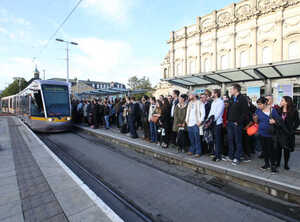
From top: Heuston Station Luas stop yesterday; Gary Gannon

Dubliners need a figurehead who has the democratic legitimacy to engage with business, academia, unions or if necessary our own government.

Gary Gannon writes:

There exists a democratic deficit in the City of Dublin.

The Chief Executive of Dublin City Council is by far the most powerful official in our nation’s capital with no electoral mandate from the people of Dublin yet makes decisions which impact daily upon the lives of Dubliners.

We had no say when our waste management services were privatised.

There is nobody that can be held to account for the dereliction that blights the aesthetic quality of our City Centre.

A single accident on the M50 motorway regularly brings our entire city to a standstill.

The time has long since arrived for Dublin to have an identifiable and accountable structure of leadership.

The people of Dublin should be afforded the chance to vote for a directly elected Mayor with appropriate powers and a budget to enact upon an agreed vision for our capital city.

As Dubliners we are often accused of being a little overly confident by those who reside outside of The Pale. With the expectation of a 26th All Ireland Championship arriving this weekend, it may be considered impolite to further highlight the significance of the capital as the economic heart of the country but the facts speak for themselves.

Economic activity in the Dublin region accounts for 47% of our entire GDP. As a comparison, London accounts for only 20% of the UK’s. According to the CSO figures of 2011, 49% of all the employees in the State are located in Dublin where they contribute to 55% of Ireland’s entire income tax.

There are currently four ministers at cabinet level with responsibility to some degree concerned with the affairs of rural Ireland but not one with a sole focus on Dublin despite the obvious importance of the City to the country as a whole.

This is an oversight which leaves Dublin vulnerable to being overtaken by European Cities who we are competing with on a multitude of levels.

Recent years have provided several obvious examples of where an absence of an identifiable person with a responsibility for the Dublin region has been to the reputational and economic detriment of the city.

The Dublin Web Summit for example brought 30,000 people into the RDS in addition to a wealth of global tech innovators each year. Much public scorn has been directed at the organisers following their decision to relocate the Web Summit to Lisbon but their conditions upon which they would stay were not entirely unreasonable.

Emails published by the Web Summit between they and the office of the Taoiseach showed that the four main issues that the organisers were concerned with were traffic management; public transport; the costs of hotels and the poor standard of wifi in the RDS.

It should never be the role of a Taoiseach to organise wifi or present a traffic management plan to a single event but the fact that Dublin City Council and its elected representatives were impotent on this issue was unjustifiable.

In those same emails one of the organisers of the Web Summit expressed his astonishment that he had been unable to attain a meeting with the chief executive of Dublin City Council but had regularly held meetings with the prime ministers of other countries.

Dublin as a major European city needs a figurehead who has the democratic legitimacy to engage with business, academia, or if necessary our own government.

It is estimated that just under 500,000 people travel within Dublin City Centre every day.

These include 235,000 work related trips, 45,000 education related trips and 120,000 trips that comprise of domestic visitors, tourists and shoppers. At an absolute minimum these people need to feel safe in our capital city but yet a total of 314 Gardai were removed from the Dublin North & South Central Policing Divisions since 2009.

Polls regularly show that people do not feel safe walking in Dublin City Centre and yet the removal of so many Gardai from the Central Divisions occurred without much opposition or fanfare.

Whether it was prescribed in legislation or not, a person elected by the people of Dublin to serve its need would be expected to be involved in these decisions or to at a minimum offer a counter political narrative.

Just yesterday it was announced that Dublin Bus workers will engage in a further 13 more days of strike action throughout the month of July following the refusal of the company to engage with workers.

This is an issue which has impacted on almost 400,000 passengers in Dublin and yet the political response to the industrial conflict has been largely mute with the exception of a couple of useless platitudes calling on both sides to engage.

A directly elected Mayor for the City could surely bring some much needed political leadership to this issue.

It would be inconceivable that Sadiq Khan in London or Bill De Blasio in New York would not seek to intervene or act as intermediaries if such a dispute was to occur in their respective cities.

A directly elected Mayor for the City of Dublin could never get away with the type of indifference that is regularly shown from cabinet to issues that face our capital.

There is a much broader discussion to be had on the extent of the powers that would be afforded to such a position but at a minimum a directly elected Mayor would have authority over the areas of transport; planning; waste management and water services in Dublin.

I would also add policing to that list on the understanding that policing in our major cities presents different challenges to policing in towns or rural areas but I imagine that this suggestion would be a little audacious in our current political culture.

The branding of Dublin that is projected on to the world stage is one that is intrinsically associated with its people but yet this is not reflected in our political structures.

A directly elected Mayor is in many ways the embodiment of that cities people and we should not neglect or be fearful of the public relations aspect of the role.

European Cities are increasingly in conflict with each other for potential commercial investments or greater access to tourist markets and Dublin is desperately missing a person that can be the public face of those campaigns.

Dubliners care about their City and deserve to have a say in who is in charge.

In 2013 over 18,000 submissions were made to Dublin City Council concerning the naming the bridge that became The Rosie Hackett.

One can only imagine the level of civic engagement that would occur if they were presented with the opportunity to choose a Mayor that could lead our city in to the future.

Gary Gannon is a Social Democrats Councillor on Dublin City Counicil for Dublin’s North Inner City. His column appears here every Friday usually before lunch but a little later today owing to an editorial mix up. Follow Gary on Twitter: @1garygannon

Previously: Derek Mooney on the Dublin Mayor Nightmare

screen-shot-2016-09-16-at-12-12-35screen-shot-2016-09-16-at-12-12-03

This morning.

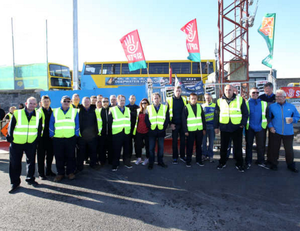
At the Broadstone bus depot for Dublin Bus in Dublin 7.

Dublin Bus workers – including Noel Fagan and Inspector Peter Duffy of the National Bus and Rail Union (top pic) – picket outside the depot on the second day of the latest 48-hour Dublin.

Yesterday, the National Bus and Railworkers’ Union announced that further strike action will take place on the following dates:

• 48-hour stoppage on  Tuesday, September 27 and Wednesday, September 28.
• 24-hour stoppage on Saturday, October 1.
• 24-hour stoppage on Wednesday, October 5.
• 24-hour stoppage on Friday, October 7.
• 24-hour stoppage on Monday, October 10.
• 24-hour stoppage on Wednesday, October 12.
• 24-hour stoppage on Friday, October 14.
• 48-hour stoppage on Tuesday, October 18 and Wednesday, October 19.
• 24-hour stoppage on Monday, October 24.
• 24-hour stoppage on Wednesday, October 26.
• 24-hour stoppage on Saturday, October 29.

Meanwhile, Dublin Bus writes:

Dublin Bus will issue customers with annual and monthly tickets on Leap Cards with a refund for each day lost due to the industrial action. Customers can collect their refund at our Head Office on 59, Upper O’Connell Street.  Refunds should be claimed once the dispute is resolved.

Previously: When My Humming Was Smothered

Sam Boal/Rollingnews

templebar

Gulp.

Barbara McCarthy writes:

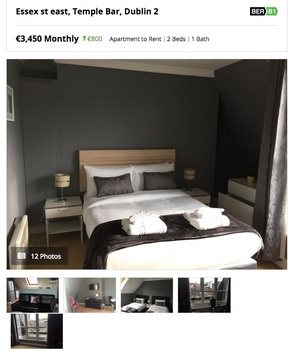
This landlord has increased the rent from €2,450 to €2,950, reduced it by 300 then increased it by a further  €800... within 10 days. 2 bed for €3,450.

I’m emailing all landlords on daft.ie who are taking the complete and utter piss and making it impossible for people to find decent homes to live in, close to things they need. Please Feel free to do the same. #NoMoreRipOffRents.

Essex Street, Temple Bar, Dublin (Daft)

goldendiscs

Every week we give away a Golden Discs voucher worth an EU ‘pony‘ to spend freely at any of the 13 Golden Discs stores nationwide.

All we ask from you is a tune we can play at 4.20pm TODAY.

This week’s theme: Stoned sounds

To mark the week that was in it what music bangs your bong and tickles your ‘bud’?

To enter, please complete this sentence

‘In the unlikely event that I would smoke illegal plants I would vouch for______________________________as background music because____________’

Lines MUST close at 3.45pm

Golden Discs

screen-shot-2014-12-09-at-11-19-45

Amid speculation that Brexit may lead to higher house prices in Dublin, your headline asks “Will Dublin’s property market benefit from the vote to leave EU?”

Your definition of the word “benefit” clearly differs from mine.

Colm O’Connor,
Stoneybatter,
Dublin 7.

Meanwhile.

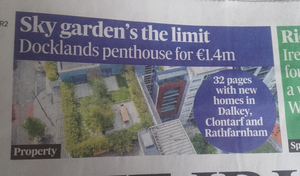
On the front page of yesterday’s Irish Times

screen-shot-2016-09-16-at-11-26-59

Thirty.

Two.

Dublin property prices (Irish Times letters page)

screen-shot-2016-03-10-at-11-45-17

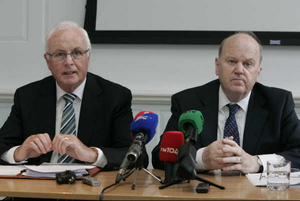
Nama chairman Frank Daly Minister for Finance Michael Noonan

This morning.

The Irish Independent reports:

Nama has shrugged off criticism from the State’s most powerful spending watchdog by launching a €3bn loan sale, the Irish Independent has learned.

The State agency pulled the trigger on the massive sale yesterday, just 24 hours after the publication of a highly critical report by the the Comptroller & Auditor General (C&AG) into the agency’s handling of the controversial Project Eagle sale of Northern Ireland loans.

A Nama insider said the sale had been in the works but indicated the timing would signal ‘business as usual’ at the agency which still has a vast portfolio of loans to sell off or work out over its remaining three years.

Meanwhile…

Nama launches €3bn loan sale despite watchdog criticism (Irish Independent)

Previously: ‘The Taxpayer Got Full Value For Money’

Spotlight Falls On Noonan

latelate-1-1024x543

RTÉ’s Ryan Tubridy and Irish Independent crime correspondent Paul Williams on The Late Late Show earlier this year

You may recall Irish Independent Crime Correspondent Paul Williams’s appearance on The Late Late Show on February 19 of this year, just a week before the general election on February 26.

Yesterday, the Broadcasting Authority of Ireland rejected two complaints made about Mr Williams’s interview with presenter Ryan Tubridy.

In it’s decision, the BAI noted that, although live, the interview had been previously rehearsed and Mr Williams had unexpectedly raised the Special Criminal Court, Sinn Féin and Sinn Féin voters.

In the first instance, the complainant was John Flynn.

The BAI explained:

[Mr Flynn] objects to an interview with the journalist, Mr Paul Williams, who he claims was freely allowed to malign Sinn Féin voters as criminals.

The complainant believes that in the initial reply he received from RTÉ, the Producer relied on the weak intervention of the presenter and on the hazards of live TV to excuse the failure of the broadcaster to distance itself from Mr Williams’ claim.

The complainant maintains that Mr Williams stated that only people/organisations
opposed to the Special Criminal Court were Sinn Féin members of criminal enterprises.

The complainant states that RTÉ chose not to repudiate the remarks both on the night
and later in reply to the complainant. This was especially repugnant during an election campaign.

In response, the executive producer of The Late Late told Mr Flynn:

RTÉ state that this was a wide ranging and lengthy item that told the story of two criminal families and their vast wealth over a number of years.

The broadcaster states that towards the end of the item, which, for legal and editorial reasons, had been strictly rehearsed and planned in advance, Mr Williams unexpectedly started discussing the Special Criminal Court and his support for its ongoing existence.

The broadcaster states that the presenter attempted to cut him off but Mr Williams continued and made the accusation that the complainant and several others have found offensive. The interview continued about the feuding families thereafter.

RTÉ state that while it is worth noting that Mr Williams did not say that anyone who votes for Sinn Féin is a drug dealer or killer, he did say that the only people who support that part of their manifesto are.

This was unplanned, unscripted and the opinion solely of Mr Williams.

In rejecting the complaint, the BAI concluded:

…Mr Williams’ comments about the position of Sinn Féin in respect of the Special Criminal Court and their proposal to abolish it were factually correct.

From a review of the programme, it was evident that the comments made by the guest concerned the response of some segments of the electorate, in particular those engaging in criminal activities, to this aspect of the election manifesto of Sinn Féin.

While the comments could be reasonably seen as an implied criticism of that aspect of the Sinn Féin manifesto, the Committee did not agree that it amounted to a
comment on supporters of this party as a whole
, as stated by the complainant.

While audiences would have benefited from a more forthright response from the presenter to the remarks of his guest, it noted that the presenter quickly stated that the proposals of Sinn Féin in respect of the Special Criminal Court were not relevant to the discussion and also noted that the party, had it been in studio, would disagree with Mr Williams’ analysis.

Given the focus of the discussion, the factual nature of some of the comments in respect of the Special Criminal Court, the response of the presenter, and having also had regard to the right to free expression, the Committee was of the view that, on balance, the programme did not infringe the fairness, objectivity or impartiality requirements of the Broadcasting Act 2009 or the BAI Code of Fairness, Objectivity and Impartiality in News and Current Affairs in the manner stated by the complainant. Accordingly, the complaint has been rejected.

The second complaint was made by Enda Fanning who claimed Mr Williams’ comments were an attempt to harm Sinn Féin in the then forthcoming General Election. He said Sinn Fein was the only political party referred to by Mr Williams in his comments.

RTÉ sent the same response to Mr Fanning as it did to Mr Flynn.

And, in rejecting Mr Fanning’s complaint, the BAI made the same conclusions in its rejection of Mr Flynn’s complaint.

Read the BAI decisions in full here

Previously: Passing Stools