
 Last week, Microsoft announced that it had finished migrating all 300 million active Hotmail accounts to the new Outlook Mail platform.
Who has a Hotmail account these days?
Nobody, that’s who.



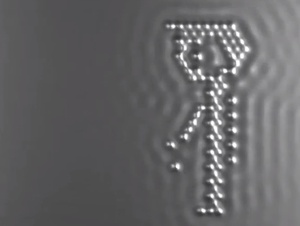
Billed by the team of IBM engineers who made it as the ‘world’s smallest movie’, this 242-frame stop-motion animation was shot with a two-tonne microscope operating at minus 268°C and a special probe which arranged 5,000 carbon atoms into the ‘pixels’ of the moving image.
The magnification factor is 100,000,000x – about the same ratio that exists between an orange and the planet Earth.
Show offs.

The ASL1000 system from Lunasee uses four 1W LEDs to activate strips of photoluminescent tape attached to the rim of motorcycle wheels.
They say it increases safety by enhancing side visibility at night, but really, it’s all about the Tron.
($150 for single wheel, $200 for two wheels)
For bicycles, see Revolights.
http://www.youtube.com/watch?v=yPVy7Gb-RBY
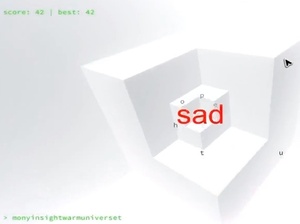
A typing speed challenge game from Minecraft creator Markus ‘Notch’ Persson as a submission to the rapid game creation competition Ludum Dare.
It’s infuriatingly difficult.
Play it here (you’ll need to install Unity Player first).
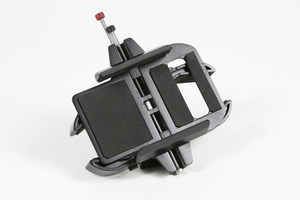

The Snapzoom Phone Scope Adaptor – a brilliantly simple concept you could easily have come up with yourself but instead was invented by Hawaiian brothers-in-law Daniel Fujikake and Mac Nguyen.
Currently overfunded on Kickstarter, the design attaches any smartphone to any binocular, telescope or microscope eyepiece.
It will almost certainly be a thing you can buy soon.

The original NeXT browser
20 years ago TODAY, CERN released the technology needed to run the WorldWideWeb freely available.
With this simple altruistic act, the information-based revolution began spawning entire industries that were not even conceived of even a few years previously.
By late 1993 there were 500 websites.
Today there’s somewhere in the region of 630 million.
Without this project spinning out of CERN, we would probably still prefer dogs and maybe look at things a little bit differently.
If you’re of a technical bent, you could even try and get the first web browser up and running (aside: it’s written in Objective-C which is used to write the vast majority of iOS apps).
H/T to Steven Troughton-Smith for the browser link


After the release of the updated Broadsheet iPhone app, Dublin based indie developer Neil Turner (of Bus Nearby fame) asked if we’d be interested in servicing that vital 1% of our mobile users – Windows Phone – for the killer price of the fame and glory it’d bring him.
The app went live over the weekend and Neil has done a brilliant job. if you have a Windows phone, do us a favour and download it from the store.
Android users: We’re still working on an app for you and hope to have it pass final muster sooner rather than later. Sorry.
Broadsheet.ie on Windows Phone
 Ian Heffernan [via BS App] writes:
My neighbour’s wifi network…

Materials scientist Mark Miodownik demonstrates some of the bizarre properties of ferrofluid, a liquid:
…literally ‘dripping with magnetism’, containing a suspension of ferromagnetic nanoparticles that make the liquid responsive to external magnetic fields, generating unusual patterns, shapes and motion.

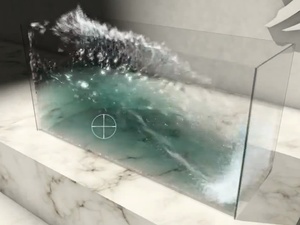
Realistic fluid dynamics (CG water with accurate physics that doesn’t look fake or require massive processing power to render) is a bit of a black art.
Enter game developer PhysXInfo with its ‘position based fluids’ software. The impressive demo here is powered by a single, far from state-of-the-art GTX 580 graphics card.
(Hat tip: Andy Sheridan)