
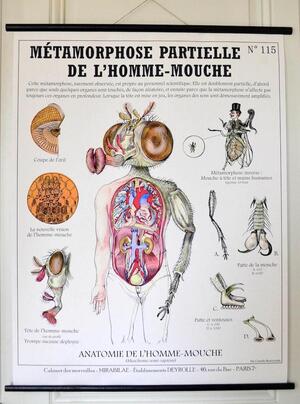


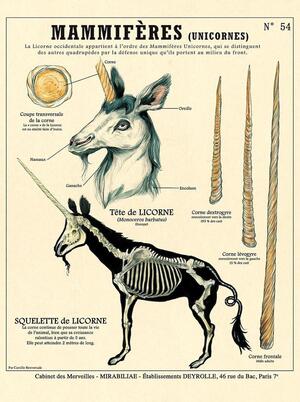
Artworks by French chimérologist Camille Renversade: mythical and fantastical creatures depicted and directed in the style of vintage Deyrolle illustrations.
Available as prints here.



Artworks by French chimérologist Camille Renversade: mythical and fantastical creatures depicted and directed in the style of vintage Deyrolle illustrations.
Available as prints here.


This morning.
Kildare Street, Dublin 2.
Above from left: Solidarity-People Before Profit TDs Richard Boyd Barrett, Mick Barry, Brid Smith and Paul Murphy on the plinth at Leinster House.
Last night in the Dáil, the situation in the Skelligs Star hotel, Cahirsiveen, County Kerry (top) was raised with Minister for Justice Charlie Flanagan following an outbreak of Covid-19 after 120 asylum seekers were moved from Dublin to the hotel.
People Before Profit TD Bríd Smith said “somebody in your department [of Justice] decided to send applicants from overcrowded conditions, to remote hotels, some of them still overcrowded where they couldn’t’ socially isolate, where they share bathrooms and shower facilities, communal bathrooms and shared meals”.
Ms Smith added that testing began on April 14th at the hotel. Four people tested positive but it was only on April 28th that a dedicated medically qualified person was appointed to the Skelligs centre.
She said the Government contracted out responsibility to a private company “with no medical experience or expertise in public health who until this week had one cleaner with no public health experience cleaning 15 rooms in which people are infected”.
Mr Flanagan told the Dáil the Department only became aware that coronavirus was an issue following their arrival.
Department ‘didn’t know’ asylum seekers had virus before moving them to Kerry (irish Times)
Meanwhile…

Michael Healy Rae
Mr Healy Rae had previously stated he had nothing to do with the hotel. He had stated that he was involved in a tourism company, the Skellig Hotel Experience (SHE), and that another shareholder coincidentally had the lease to the hotel.
However, when it was pointed out to him yesterday that the Skellig Hotel Experience company, in which he was a 25% shareholder, held the lease until last December he said he was unaware of that.
“All I can tell you is I was involved in the company and I had nothing to do with the hotel.”
Michael Healy-Rae had shareholding in Skellig Hotel Experience (Michael Clifford, Irish Examiner)

Paul Reid, HSE CEO this morning
This morning.
O’Brien Centre for Science, UCD, Dublin 4.
Via Irish Times:
“We need to improve where we’ve been at,” he {Paul Reid, CEO HSE][ said, while defending progress made to date. “We have faced very significant backlogs which resulted in a very poor experience for many people,” he said, adding the HSE had been “rightly judged and held to account”.
…His comments come amid scrutiny of the State’s contact tracing and testing process, seen as a key element of relaxing restrictions on movement and other measures over the summer.
Experts have said current timelines are too slow relative to where they should be to help ensure the disease is kept under control as lockdown measures are relaxed.,,,
Coronavirus: HSE says new three-day target for testing and tracing to be introduced (Irish Times)
Meanwhile…
This day last year, I joined the HSE as CEO. I expected it would be tough but I never planned on a Pandemic. I said then, that I wanted to strengthen the public trust in the HSE. We have lots to do but I hope we have made some progress. Feeling priviliged. @HSELive #COVID19
— Paul Reid (@paulreiddublin) May 14, 2020
That’ll learn him.
This morning.
North Quays, Dublin 1
New pedestrian and cycle lanes along the North Quays. The barriers prevent vehicles from parking along the stretch, and provide additional space for cyclists and pedestrians.
Finally.

EURO MOMO detects and measure ‘excess deaths related to seasonal influenza, pandemics and other public health threats’
Anon writes:
Could you ask one of your mathematics competent regulars to look at this?
I was looking at the EURO MOMO site this morning and checked the Irish situation.
EURO MOMO uses the Z-scale to monitor excess mortality throughout Europe. Z numbers are a statistical method based on the expected mortality rate for each week of the year.
A Z score of 2 for the country ( which equals 2 x the Standard Deviation of the base line ) is considered to start moving above the expected.
I was shocked to see that Ireland has not had, and has never has had, a problem with covid-19. In fact the Z score for week 19 in Ireland is negative, which means Ireland had less deaths than expected for that week.
Ireland’s peak weekly total at 492 in week 17 has a Z-score of -1.76. Definitely not a problem.
Look at “Map of z-scores by country” and use the timeline slider to look at week 15 onwards and then at “Z-scores by country” to see the Z numbers graph.
Compare with England, Belgium, Italy, France and Spain….
Anyone?


An animated short by Argentinian director Fernando Livschitz in which the Austrian capital becomes an absurd, floating, Slinkified carnival city.

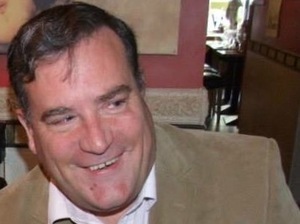
From top: One of 23 buzzards found dead in County Cork, the largest poisoning of birds of prey in the country; Dan Boyle
This week we learned that twenty three buzzards had been poisoned by some person or persons.
When I heard this news it made me feel quite angry. Then I checked myself.
Am I this angry about COVID? Does the existence and persitence of homelessness move me in the same way?
Of course they do. This got me thinking further. Why was I whatabouting myself?
One of the biggest negatives that has come about, in a world where communications are increasingly conducted through social media, has been the avoidance of context or proportionality.
Greens/environmentalists/animal welfare activists regularly get reacted to when they try to raise issues of concern. For some it seems to invoke a whole series of questions they think rhetorical.
Greens particularly get criticised for antropomorphising animals. Sometimes the criticism goes deeper with claims that environmentalists become superantropomorphic by investing in animals qualities that make them more important than humans.
Some may do but that is far from being a fair criticism. Their importance is a mutal importance which is shared with us humans. It is the reason why Greens bang on so much about biodiversity.
The planet we share with other living things works best when nature is balanced and in harmony.
The natural world evolves to achieve ecological balance, sometimes quite brutally. That we have a biodiversity crisis at all is solely down to human interventions.
Often wilfully and certainly indifferent to consequential effects, meeting what we have defined as our needs, we have been the overwhelming source of inputs towards creating the biodiversity crisis.
Someone has decided that the existence of these buzzards was inimical to their well being. They chose to act illegally not only in what they chose to do, but also in how they chose to do so.
The poison chosen, carbofuran, should not be in anyone’s possession. When used with such reckless abandon it threatens all life forms.
I suspect those who undertook this action care little of its effect. They may even think themselves clever that their quarry, being birds, would die at locations distant from where the poison was laid.
They are also most probably very smug, secure in a knowledge that resources to effectively prosecute do not exist.
It was a local farmer who found many of the dead birds. He found the manner of their deaths to have been offensive. He, it was, who informed the authorities of what had happened.
His being offended, his natural display of disgust, is a reminder of the difference between agriculture and agribusiness. Where your preoccupations centre around yield, the environment in which you operate can easily be seen as an impediment in achieving a somewhat flawed efficiency.
We need to challenge the thinking of some that nature is an enemy.
More importantly we need to acknowlege the cultural aspect of life in agriculture, recognise that for what it is and have it economically rewarded.
However offended I am by the actions of the poisoners, I take greater heart from the disgust of the farmer who has helped bring this cruelty to light.
To rewrite the old song The Farmers and The Greens can be friends.
Dan Boyle is a former Green Party TD and Senator and serves as a Green Party councillor on Cork City Council. His column appears here every Thursday. Follow Dan on Twitter: @sendboyle
Pic via Irish Raptor Study Group

The grenade was found in the Grand Canal close to Harold’s Cross Bridge, Dublin 6
There were Troubles a century ago
And Dubliners might want to know
There’s still bombs to be found
In odd places around
The city, and up they could blow
John Moynes


 </a

