

#Map shows all settlements in #Ireland that contain the term 'Bally'. Source: https://t.co/qg9VIgEP0w pic.twitter.com/IwPvNwl5nc
— Simon Kuestenmacher (@simongerman600) January 10, 2019
Gulp.



#Map shows all settlements in #Ireland that contain the term 'Bally'. Source: https://t.co/qg9VIgEP0w pic.twitter.com/IwPvNwl5nc
— Simon Kuestenmacher (@simongerman600) January 10, 2019
Gulp.


This afternoon.
Convention Centre, Dublin
Former British Foreign Secretary and Churchill biographer Boris Johnson arrives at the second day of the Pendulum Business Leadership Summit.
Update:
Boris Johnson's interview with Brian Dobson is something else.
Dobson asks about Irish border trade several times, talking over Johnson.
Johnson nicks Dobson's sheet with border trade facts.
Dobson quips: "You can keep that, you might find it helpful"
Queue wild applause pic.twitter.com/uUXLmkQL6T
— Paul O'Donoghue (@paulodonoghue93) January 10, 2019
Oh.

Samuel Beckett
Just-released documents from 1968 show the [Nobel Prize for Literature] committee’s chairman, Anders Österling, writing that “regarding Samuel Beckett, unfortunately, I have to maintain my basic doubts as to whether a prize to him is consistent with the spirit of Nobel’s will”.
“Of course, I do not dispute the artistic effect of Beckett’s dramas, but misanthropic satire (of the Swift type) or radical pessimism (of the Leopardi type) has a powerful heart, which in my opinion is lacking in Beckett,” wrote Österling.
He had previously slammed the possibility of the Waiting for Godot author winning the Nobel in 1964, when he said that he “would almost consider a Nobel prize for him as an absurdity in his own style”.
…Beckett, despite Österling’s previous reservations, would win the next year, “for his writing, which – in new forms for the novel and drama – in the destitution of modern man acquires its elevation”
Samuel Beckett rejected as unsuitable for the Nobel prize in 1968 (The Guardian)
Pic: Getty
Thanks Ultan Mashup

SOAK – Knock Me Off My Feet
Just ‘dropped’.
A new single from Derry-born Bridie Monds-Watson off ‘Grim Town’, her latest long player released in April.
Video by Jak Payne
Thanks Pete Murphy

Oh my.
This morning
Team Ireland tweetz:
For the first time ever two Irish skaters will compete in the same category at an International Skating Union (ISU) Championships [European Short Track Speed Skating Championships in Dordrecht, Netherlands this weekend] – best of luck Ryan (left) and Sean McAnuff in the Short Track Euros..
Meanwhile…
Have skates, will travel! ✈️#EuroShortTrack pic.twitter.com/LBs8D6TbCG
— ISAI (@IceSkateIRL) January 6, 2019
Freshly-shorn Ryan (right) and Sean en route to Holland this morning.
An improvement?
YOU must decide.
McAnuff Brothers All Set For Short Track Euros (Olympic Federation of Ireland)


The seemingly malleable and elastic but actually carved and polished wooden works of Bristol based sculptor Phil Young.

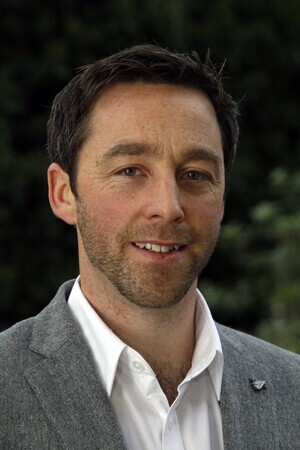
From top: The National Housing Demonstration in Dublin city centre last December; Dr Rory Hearne.
In an interview on RTE’ Radio 1’s ‘Drivetime’ yesterday, I outlined that it is really important that any discussion of housing taking place at the moment starts by stating that that there is nothing normal about our homelessness crisis.
There is nothing acceptable about it and nothing normal about an increase in child homelessness from 500 children in 2014 to almost 4000 in 2018 – a 600% increase in just four years.
There is nothing normal or acceptable about a generation of people being locked out of affordable housing – contrary to what some people have been saying.
The discussion of developers’ incentives to build such as reducing VAT has to be put in context of a wider discussion about our housing crisis – because this isn’t something that can just be tinkered around with.
The government has already made a number of incentives in relation to house building. One of the very significant incentives was done in 2015 when they reduced the obligation in private housing developments to provide Part V social housing from 20% down to 10% – similarly there were changes were made to apartment standards.
The problem is if you look at it from a policy perspective and how housing systems operate you can give all the incentives in the world but that doesn’t mean that the private sector will build or not. There are a number of issues determining that such as access to finance, access to land and profitability.
Dublin City Council are doing a number of initiatives such as the cost rental housing proposal that offer a solution. Because the problem is we got into the crash in 2007 and 2008 because developers were over incentivised – there was too much credit flowing in and pushed up prices.
We had huge supply but we still had no affordability.
At the core of that problem is that we don’t do what countries that provide successful affordable housing systems like Denmark and Austria do – where the state and not-for-profit housing providers (housing associations and cooperatives) provide a very significant proportion of the supply of housing.
Yet in the first three quarters of last year only 800 local authority social housing units were built by local authorities across the country and only 350 were built in the wider Dublin area.
We need a new form of supply of affordable housing, done by the state and guaranteed. That also guarantees a supply of work for builders and construction workers as well.
The state needs to see that the private approach of incentivisation of the private market hasn’t worked and it won’t work to provide affordable housing .
The cost rental and affordable rental model is a way that the state should be doing it – the way that can guarantee provision and it should be providing 20,000 affordable units per year.
Even Tom Parlon, head of the Construction Industry Federation agrees as he outlined in the discussion on ‘Drivetime’:
Philip Boucher Hayes [host]: “You don’t seem to be in any disagreement with Rory – that getting the state to step in to do the building and you guys tender to do the work?”
Tom Parlon: “Yes, it is a solution.”
There may be a chink of light emerging in this crisis. But we have a long way to go!
Dr Rory Hearne is a policy analyst, academic, social justice campaigner. He writes here in a personal capacity. Follow Rory on Twitter: @roryhearne
Listen back to interview here


Behold: the Brabham BT62 supercar – a street legal version of Anglo-Australian Brabham Automotive’s 700bhp V8 BT62 hypercar with the spartan racing interior upgraded to include air conditioning, power steering, luxurious upholstery and practical tweaks like door locks, an immobiliser and slightly raised front and rear ground clearance to reduce scuffing of the carbon fibre skirts.
Yours for a cool €1.4 million.


