
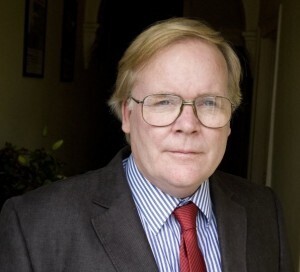
From top: Taoiseach Leo Varadkar and Peter Casey at the Presidential election centre at Dublin Castle on Saturday; Michael Taft
The worrying thing about Peter Casey’s campaign was that it was unplanned. Having spent weeks hovering around two percent, he stumbled into his controversy on the Travelling community.
Such was the outcry he temporarily withdrew from the contest. However, he apparently received enough support that he came out of isolation to talk about the hard-working Irish, paying for everything and getting nothing in return, the alarm-clock people, the culture of entitlement and welfare-dependency – all in the last few days.
He ended up with over 23 percent.
Now imagine if all this was planned from the very beginning, that his starting platform encompassed these issues and more. Imagine if went on about how we were forced to pay for banks, how we had to ‘control’ immigration, how the EU is taking power from the people (insert your favourite complaint here). What might his support have been?
There’s been a lot of commentary deconstructing this vote – what it represents (racism?), who it represents, its long-term political impact. There’s been exaggeration and dismissal. One Minister called Casey voters moaners. However, with nearly one-in-four voters supporting Casey, dismissal and name-calling doesn’t help us understand.
We can describe Casey’s vote as anti-politics – the rejection of traditional politics, institutions and discourse. Hence, the epigrammatic ‘he speaks the language of the people’; ‘he connects with ordinary folk’, ‘he’s not afraid to say what people think.’
This rejection emerges out of the de-politicisation of public space:
‘The New Right Project of the last few decades – neoliberalism – has attacked the public domain in the name of free markets and market discipline. Public choice theorists have positioned politicians and civil servants as self-interested rent-seekers. Deregulation, privatisation, and audit have removed power and responsibility from public actors. Why should people engage with formal politics when those involved are not to be trusted and no longer powerful?’
Therefore, in a contest for a ceremonial office in which the winner was already known, people could vote with few consequences. And many used it to express a frustration at a stifling political consensus, crystallised in a supply-and-confidence agreement between the two largest parties playing out a mock battle of Government and Opposition.
Anti-politics defies neat ideological categorisation. Casey can go on RTÉ radio and attack the greed of the one percent and even describe himself as a socialist-capitalist symbiosis. We can call it a right-wing vote, even a far-right vote, but there were not insignificant strands of anti-politics in the anti-austerity demonstrations a few years ago.
What ties all this together is an inchoate ‘anti-establishmentism’: the juxtaposition of a corrupt elite (liberal establishment, the rich, cosmopolitans) who exploit a ‘pure’ people. Ironically, Casey victimised the Travelling community but many people who voted for Casey see themselves as victims.
It’s not that Casey’s vote will result in a new party or movement – though Gemma O’Doherty is already calling on people to organise ‘anti-corruption’ candidates for the next locals and Europeans. It’s that it may infect political culture in subtle, indirect and subterranean ways, awaiting a clever, opportunistic leader to exploit people’s legitimate concerns. And that’s when the danger would become real.
Currently, the Left is incapable of meeting this challenge – whether to channel people’s understandable frustrations into a more positive politics or to challenge the more reactionary elements it contains. The Presidential campaign was one more example of that.
Michael D. Higgins showed that a life-long politician of the Left, a principled proponent of progressive causes, thoughtful, intelligent and capable of reaching a broad range of the population in all social constituencies, can win national office not just once, but twice – the latter in handsome fashion.
What does that say for the fragmented Left, stagnating in the polls? Some supported the President, some opposed him and others abstained.
President Higgins is holding up a mirror to us: what is it that he can do that we seemingly can’t? What is it that he is saying that we’re not?
More importantly, how is it that he instills confidence in the majority of people and we don’t?
Hopefully the Presidential election will force progressives and the broad Left to do some serious reflection on the nature of anti-politics – both its symbols and its underlying narrative.
But just as importantly, we need to begin constructing a politics that can convince people, inspire their confidence, and seriously challenge for power – to persuade them that politics itself has the power to resolve problems collectively, and reverse the marketisation of people’s economic and social relationships.
A big ask but at least we have one important asset – for the next seven years we have a President who understands these issues.
Michael Taft is a researcher for SIPTU and author of the political economy blog, Notes on the Front.
Rollingnews
Yesterday: Bryan Wall: A Warning Shot




