

This afternoon.
Camden Row, Dublin 8/
A mural highlighting homelessness created by art collective Subset.
Earlier: Anne Marie McNally: Our Right To Housing
Rollingnews



This afternoon.
Camden Row, Dublin 8/
A mural highlighting homelessness created by art collective Subset.
Earlier: Anne Marie McNally: Our Right To Housing
Rollingnews

The breakdown of respondents who said they could speak Irish in the Republic of Ireland and Northern Ireland censuses of 2011
Colm Ó Broin, who last week compiled a rich example of prejudice in the national press about the Irish language, writes:
There are people in every society who are hostile to groups that are different to them. We are all familiar with prejudice against people of a different gender, sexuality, skin colour, nationality, ethnic background or religion.
But what about people who speak a different language? Usually bias against a language is classed as racism – for example, immigrants being verbally abused for speaking their native languages or chauvinists repressing the languages of minorities like Kurdish in Turkey.
We have our own version of this chauvinism here in Ireland – the hostility of British loyalists to the Irish language. One of the earliest examples are the Statutes of Kilkenny, which outlawed the speaking of Irish among the descendants of settlers from Britain.
These laws were enacted in 1366 but given the political nature of this hostility it’s more than likely it goes all the way back to 1169. The fear behind it was the belief that people would be less loyal to the English Crown if they spoke Irish – a fear still heard today in hysterical claims that the United Kingdom will be “undermined” if speakers of Irish Gaelic are given the same rights as speakers of Scottish Gaelic.
Which brings us to Gaeilgephobia – the irrational fear or hatred of the Irish language and those who speak it. You’ve probably never heard the term before and the concept has received little or no recognition in English-speaking Ireland, despite it being one of our oldest recorded prejudices.
While we can see the open hostility of Unionist politicians to the Irish language in Northern Ireland, many would find it hard to believe that there is prejudice against Irish speakers in the Republic of Ireland as well. Any negativity surrounding the language south of the border is supposedly related to government efforts to promote it, and not the language itself.
If you read the articles that the quotes used in my post are taken from you will indeed see legitimate arguments against official policies on the language – but scattered among them you will also see something entirely different – prejudiced attacks on the Irish language and Irish speakers.
One thing that’s striking is the GUBU nature of these statements, which would be worthy material for a Louis Theroux documentary.
In the bizarre corner we have the claim that no Irish word has been created in the past 100 years and the argument that Irish is comical in some way because it has taken words from other languages, something that practically every language on the planet does, none more so than English itself.
Then we have the comparison of Irish speakers with Nazis, skinheads, Communists and Islamic fundamentalists.
Among the worst is the comparison of a school in Dingle with the Finsbury Park Mosque, an establishment frequented by Islamist terrorists linked to Al Qaeda. The great crime committed by this school was to teach through the medium of Irish – in what is officially an Irish-speaking area.
Then there is the association of Irish speakers with IRA terrorism, “mucksavagery” and last but not least, the sexual abuse of children. If linking an entire community to the sexual abuse of children isn’t prejudice then ‘prejudice’ has no meaning.
Like other phobias Gaeligephobia has its own set of mantras that are repeated ad nauseum regardless of evidence, many of which are seen in the quotes.
One of the most common is the false claim that Irish is a “dead language”. The commentators who say this are fully aware that there are Irish-speaking communities in Ireland as well as thousands of fluent speakers in the rest of the country, so this is simply a crude attempt to insult Irish speakers.
After all, if Irish is a “dead language”, and you speak Irish, that means there is something “dead” about you and your community.
The most blatant example of Gaeilgephobia is the ludicrous claim that Irish language schools are “middle class”. The basis for this seems to be that because there are Gaelscoileanna in middle class areas in Dublin then all Gaelscoileanna must be middle class, which is like saying that only middle class people shop in Dunnes Stores because there is a Dunnes Stores in Stillorgan.
Opponents of Irish language education don’t have to send their children to Gaelscoileanna and are not affected in any way if other people make this choice. However, they still go out of their way to attack parents who choose Irish-medium education for their children.
But as they don’t have a rational reason for this opposition they have to resort to bogus pretexts. This is the most revealing attack on Irish as it relies on false claims, which is a sign of pure bias against the language.
Claims that the Irish language is somehow “middle class” are also very amusing for Irish speakers as for centuries we have been told that Irish was a “badge of poverty”.
This Orwellian doublethink will be familiar to other groups subjected to prejudice, like the immigrant who can scrounge on the dole while stealing your job at the same time.
Similarly, if a poor person speaks Irish it becomes a “peasant language”, but if a rich person speaks it it’s an “elitist language”. The object here is not to establish facts but to negatively stereotype the minority group using any means necessary.
Attacks on the Irish language began hundreds of years ago and the quotes highlighted last week show that they continue to this day.
Whatever the reason for this bizarre prejudice it’s time we consign it to the rubbish bin of history, where it belongs.
Colm Ó Broin is an Irish speaker from Clondalkin, Dublin and a member of Conradh na Gaeilge. Follow Colm on Twitter here.
Previously: I’ve Nothing Against Irish Speakers, But…
Pic: Wikipedia

This afternoon.
Outside the National Maternity Hospital on Holles Street, Dublin 2.
The Irish Centre for Bio-Ethical Reform is back.
Previously: Blanket Coverage
Via Darragh Doyle
Update:
Mark Sugrue writes:
The ICBR have been picketing Dublin maternity hospitals and each of them has a body worn camera filming the public. I’d like to raise awareness of the fact that, if they record you, you have the right to a copy of that video (and they have to manually blur out everyone else, which is expensive and takes them ages, meaning they have less time to picket). All the details you need to make a request are here.

They’re back.
With stout!
Are Ye Having That writes:
‘LeatherJacketGuy’, JohnnyBS, & LeviJeans take on the Ultimate Guinness Challenge!!
Hic

From top: journalist Cathal MacCoille, UN Special Rapporteur for Adequate Housing, Leilani Farha (centre) and Emily Logan, Chief Commissioner for the Irish Human Rights and Equality Commission, in Buswells Hotel last week at a Simon Communities event, ‘Making the Case for a Right to Housing’; Anne Marie McNally
This day last week I sat in a room in Buswells Hotel and watched one of the most impressive women I’ve come across lately give a presentation (and I come across a lot of impressive women!). That woman was UN Special Rapporteur on Housing Leilani Farha.
Her no-nonsense common-sense presentation highlighted the problems of not only Ireland but of other cities and countries that have also encountered significant difficulties with getting housing policy right.
The difference was, for most of the other cities she spoke of, she was able to give examples of how, by working with her and other agencies, those cities had been able to make progress in dealing with the housing crises they faced.
Ms Farha reminded us that Ireland has signed up to the Sustainable Development Goals (SDGs) and in doing so we have committed to ending homelessness by 2030. But what strategies are we deploying to achieve this. asked Ms Farha? Or is it yet another EU target which we sign up to but never expect to actually meet-like our climate targets?
Portugal on the other hand, have worked with Ms Farha’s team and have now implemented policies with a goal to eradicate homelessness by 2028- and they’re on track to achieve this.
Other countries and cities are also starting to get things right whereas we continue to spiral. Our homelessness figures continue to rise – despite the cynical manipulation of same by those in power. Housing continues to move further and further from the reach of many people – even those working and earning what could be considered decent wages.
Successive Government policy has tinkered around the edges, never really making the substantive changes required to shift from what has increasingly been a market-led approach to housing; an approach that is obviously failing, to a sustainable system of affordable housing that is accessible to all.
That is why the Social Democrats favour a Right to Housing. As Ms Farha pointed out; there is much confusion over what the term Right to Housing means and in her experience even Governments are confused about the concept.
Those who fear that an equal society will somehow minimise their own privilege reject the concept because ‘nobody should get a house for free’ – as Leo himself actually said in the Dáil chamber during a recent housing debate.
However if those knee-jerk reaction people took their heads from their own arses long enough they might actually see that a Right to Housing does not in fact mean that every Joe Soap can knock on Leo’s door looking for their home.
A Right to Housing enshrined either constitutionally or legislatively simple means that Government housing strategies MUST ensure that there is a wide variety of housing types that are affordable and accessible to all citizens.
In other words, Joe might want a 3 bedroom semi but he doesn’t have a right to one. What he does have a right to is a housing system where he can access the kind of unit he can afford based on his current circumstances. Basically that it is impossible for him to be completely priced out of the housing market.
In that way we move away from the spectre of homelessness hanging over people. How many people do you know who are one or two pay packets from the streets? For me it’s a lot.
And this failure of housing policy is not just costing us socially in terms of the lives we are destroying both now and into the future – over 3,000 children in emergency accommodation living in fear and uncertainty is not the recipe for a healthy next generation of society – but it is costing us economically.
The seminar Ms Farha spoke at was told that in 2017 just over €1 billion (yes, billion) was transferred to private landlords in housing supports. One third of every tenancy in the State is in receipt of a housing support payment.
It makes no sense either socially or economically and yet as a nation we continue to elect Governments that pretend the market will provide the solution to the housing emergency. It never has done in the past, it’s not doing it now and it never will do.
Housing is the number one issue of our time. Ms Farha said she would go as far as to say that it is a more pressing issue than climate because, she said, societies that cannot provide safe and secure housing options cannot be, and are not, sustainable. They will fail.
We are failing and we will continue to do so until we recognise the need to enshrine the Right to Housing either constitutionally or legislatively.
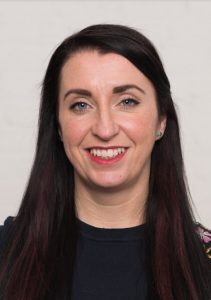
Anne Marie McNally is Social Democrats Political Director and General Election candidate for Dublin Mid-West.
Rollingnews


