


MORE to follow.



MORE to follow.

This evening.
Spotted in an unspecified Aldi.
Steve writes:
Emm…. really??? This is a thing? #aldihasitall

Tom Lyons tweetz:
“So this happened in INM…”
Meanwhile…
What is remarkable about this is how long it has taken @RAE_Stephen to get stuck in on the behalf of his colleagues to get answers from management…hopefully he will issue a full statement after the meeting to explain what went on.
— Tom Lyons (@TomLyonsBiz) April 4, 2018
Earlier: ‘Arguably One Of The Largest Data Breaches In The History Of The State’

Harry Browne, lecturer at the School of Media at Dublin Institute of Technology
In Village magazine…
DIT lecturer Harry Browne writes:
…media (like healthcare) have a capitalism problem, and that everything from fake news to clickbait to inadequate investigative resources to Denis O’Brien flows from that basic source. But you don’t have to agree with me and name the underlying problem as capitalism to understand that there are structural causes for crises such as the one that erupted recently over Government ‘advertorial’.
“I believe the Government is attempting to exploit the difficulties many local and regional titles are facing to promote their party interests”, said no less a media critic than Fianna Fáil’s Timmy Dooley, the party’s spokesman on communications. (How sweetly old-fashioned that word ‘communications’ can sound as it grapples with the changing world.)
Media literacy, if it is to be of any use, has to do more than implore us to look for the little ‘special feature’ tag on the top of a piece of paid corporate or government puffery, then to regard the ‘journalism’ below with due scepticism.
It must mean understanding ‘the difficulties’ for all journalism that operates in the current market, especially one in which technological change has accelerated existing trends toward blurred lines, and in which advertisers have alternatives to local and regional newspapers when it comes to reaching eyeballs.
If the most poignant aspect of that brief, quickly snowed-under ‘Ireland 2040’ crisis was the image of the Taoiseach issuing guidelines for labelling advertorial content – guidelines of which the most callow intern in a local newsroom should surely already be aware – we shouldn’t lose sight of the fact that media have been operating at the edges of such guidelines for decades, for the benefit of advertisers looking to buy a little ersatz editorial credibility. How can this fail to be a lesson about how fragile, at best, any such credibility has become ?
As the media may or may not have told you, global research shows trust in media is in tatters – media are less trusted than governments, NGOs, businesses – and Irish people are at the mistrustful end of the distribution. In this context, media literacy can hardly consist of legacy media saying ‘trust us, not them’.
What can be done ? (Yes, short of getting rid of capitalism.) Anyone who has worked in a newsroom knows what a frightening prospect it would be to try to earn the public’s trust with transparency and accountability about our editorial practices.
On a daily basis, contingent and incomplete information is transformed into definitive statements of ringing certitude. That’s one sausage factory we don’t want you to see inside, especially since the work often consists of sticking our label on someone else’s meat.
The irony is that the technology often over-simplistically blamed for creating the journalism crisis has long offered tools for remarkable transparency, tools that most journalists have chosen to use only in limited ways…
Read in full: Capitalisteracy (Harry Browne, Village)
Earlier: The Great Irish Fake-Off


Splutter!
This afternoon.
South Great George’s Street, Dublin 2.
Artist, anyone?
Rollingnews
Behold! The Irish web! Arrived safe and sound from our friends @internetarchive. It will be winging it’s way to our reading room very soon! #staytuned #webarchiving #digipres pic.twitter.com/cdlqaBxjOO
— Nat Library Ireland (@NLIreland) April 4, 2018
Anyone?

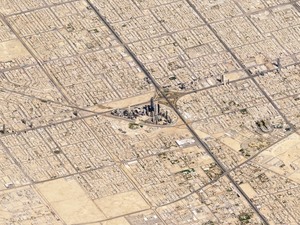
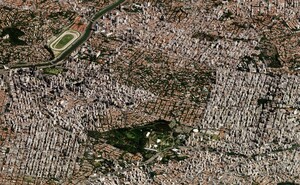

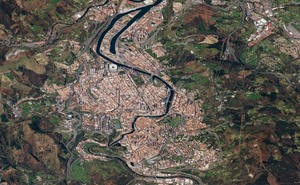
A gallery of satellite images taken – not vertically – but at an angle, published by Planet Labs.
To wit:
…the satellite imagery we’re most familiar with — taken straight down — flattens and obscures the visual cues we get from perspective, making the imagery appear like maps, not photos… from an angle, the view becomes altogether different: the mountains rise to their commanding height, valleys regain their depth, and background features recede into the distance. It’s like getting a view out the window of an airplane 450 kilometers high.
From top: Monte Fitz Roy in Patagonia; Riyadh, Saudi Arabia; Sao Paulo, Brazil; Klyuchevskaya volcano in Russia and Bilbao in Spain.


A chalet for rent in Moonacre, Nevinstown Lane, Swords, Co Dublin.
For €765 a month.
From Daft.ie:
Cosy wooden chalet, central heating, kitchen/living room, one bedroom with walk-in wardrobe, bathroom with shower. New 36″ TV in living room. Set in private, well-maintained gardens. Country setting yet only two minutes’ walk from Airside Retail Park. Close to Swords village, the Wright Venue, VHI, Tara, Winthrope Clinic and only five minutes’ drive to the airport. Suitable for one person only please.
Nicorgio writes:
Another candidate for the letting of shame 2018…
Hmmm.
Not the worst we’ve seen, in fairness.
FIGHT!
Moonacre, Nevinstown Lane, Swords, Co. Dublin (Daft.ie)
UPDATE:
But sure isn't it any wonder? Look at this nonsense in the papers.
"Escape the middle and working class! Earn €€€€€€€! Order now and receive a free tent for the racecourse!" pic.twitter.com/FRlqe0O9Zk
— Dr Nguyen Van Faulk (@dr_faulk) April 4, 2018

Last week, new members of Fine Gael made their pitch to our team. Here’s some highlights from the event.
You can watch back the full event here: https://t.co/MxtIUbih3q #MakeYourPitch pic.twitter.com/oJjreelj2K
— Fine Gael (@FineGael) April 4, 2018
Jay.
Kers.
Via Fine Gael
