Tonight.

On RTE Two’s First Dates Ireland…

Gareth Naughton, of RTE, writes:

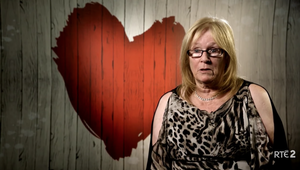
Dun Laoghaire woman Angie (68) dates retired trucker Denis (75) from Drimnagh and shares her life-story of growing up in an industrial school while her mother was in the Magdalene Laundries.

First Dates Ireland is on RTE Two at 9.30pm

Today’s Times Ireland edition

This morning.

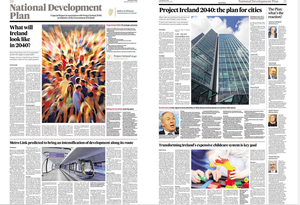
Following on from Ellen Coyne’s previous reports about how the State paid for content in newspapers, including the Irish Independent and Irish Times, here and here

In today’s The Times Ireland edition.

Ms Coyne reports:

A drive to cut hospital admissions during the winter flu crisis was among the publicly funded campaigns that local papers were instructed to present as a news story, The Times can reveal.

The HSE was given final approval over journalists’ copy during the initiative, run by Mediaforce, the same agency used by the government for Ireland 2040 and Creative Ireland campaigns.

To create advertorial content, local newspaper journalists were sent to interview staff at a number of HSE injury units. The interview was arranged by the media agency. It is understood that in at least one case, the journalists had been working in-house while others were freelancers.

Mediaforce told journalists that the advertisements should be laid out like a normal news page. Yesterday, The Times revealed that the same firm told editorial staff that advertorials had to look like normal news stories.

Correspondence seen by The Times shows that after journalists wrote the interview it was laid out on the page, often labelled as a “special feature,” and the HSE was allowed to request amendments.

HSE campaign to cut hospital admissions during winter flu crisis pushed as genuine news (Ellen Coyne, Times Ireland edition)

Meanwhile…

In the Irish Independent

A British newspaper has denied it is using Facebook data to influence the result of the upcoming abortion referendum.

And the newspaper with a London-based headquarters insisted it used the social media platform to promote its stories to all sides of the abortion debate.

The pro-life side of the abortion campaign has frequently accused ‘The Times, Ireland Edition’ of being biased in favour of repealing the Eighth Amendment.

British newspaper in ‘bid to influence abortion vote’ denial (Irish Independent)

Meanwhile…

Last night…

Ah here.

Peter Murtagh?

Previously:  Propaganda Is Something You Pay For

The King is Dead, Long Live the King.

Behold what purports to be the fastest road car in the world: the curvy, 1960s retro style, carbon fibre Corbellati Missile Hypercar – a 9.0l, twin turbo, 1800bhp V8 manned projectile capable of a Hennessy Venom pwning 500km/h (311mph).

The Missile launches next month at the 2018 Geneva Motor Show.

uncrate

From top: paid for pages in the irish Times; Derek Mooney

In November 1962, in what would become known as the “last press conference”, a tired and agitated Richard Nixon spoke with journalists gathered at his hotel as the results of the Governor of California election became clear. Nixon had lost.

It was his second major political defeat in as many years having narrowly lost the 1960 presidential election to John F Kennedy.

The defeat in his home State was about to end his political career. A political career that already had been mired in controversy and a difficult relationship with the press.

He finished his comments with the following plea:

I believe in reading what my opponents say and I hope that what I have said today will at least make television, radio, the press, first recognize the great responsibility they have to report all the news and, second, recognize that they have a right and a responsibility, if they’re against a candidate, give him the shaft, but also recognize if they give him the shaft, put one lonely reporter on the campaign who will report what the candidate says now and then.

It is the plaintiff cry of almost every politician of the modern era – give me all the stick you want, but please make sure that somewhere, somehow my unfiltered and unmediated comments can get through to the public.

It is not an unfair request.

Elected politicians should have their statements and speeches reported fairly. Voters are entitled to hear what the people they elect to high office say reported accurately and without prejudice. They are also entitled to hear alternative viewpoints reported fairly. It is about balance. In a democracy you need to hear both sides.

But the Nixon who pleaded for fairness in 1962 is also the Nixon whose flunkies and henchmen were, seven years later, drawing up “enemies” lists, sanctioning break-ins at the homes and offices of opponents and banning the Washington Post from the White House.

Nixon demonstrated that there can be a slippery slope from asking that your message be fairly heard to deploying all the levers at your command to drown-out all critical analysis.
The slide is by no means inevitable, but it is a risk that even less Nixonian political leaders can face, especially when they close their eyes and ears to the warnings.

Last November the Government’s press secretary was telling journalists that the Government’s new “Strategic Communications Unit” would be staffed by up to five people when it becomes fully operational.

Last week, An Taoiseach informed Micheál Martin and other party leaders en passant during a supplementary reply to a parliamentary question that there are now 15 people working in the unit. Fifteen. Three times the number originally suggested.

When this was put to An Taoiseach and leader of Fine Gael on the day he sought comfort in citing a Fianna Fáil-led government including a budget for strategic communications in the 2007 National Development Plan.

It is also the line that Fine Gael backbencher Noel Rock, a sort of millennial Bernard Durkan, was pushing yesterday as he tried, very non-strategically, to draw attention away from reports that provincial papers were pressured to make government advertorials look like normal news stories.

Yes, many major projects, both public and private, do have a strategic communications element. It is sensible to want to publicise that particular initiative and communicate information about it effectively. In most cases this involves a key element of modern strategic communications, a two-way interaction.

But that is not what we have here. The Taoiseach’s Strategic Communications Unit is far more preoccupied with campaign marketing than it is with public information. Its communications are anything but two-way. They are decidedly one way and that one way is from the top down – from a beneficent team of FG ministers to grateful public. There is nothing especially modern about that. It is decidedly old fashioned and mid-20th century.

It pushes a very particular image of not just the government as a concept, but of this specific government – and some key players in it – as a unique and marketable brand.

Indeed, one of the many tender contracts that the Strategic Communications Unit have awarded is for branding, the contract for the “Development of Government identity system for roll out across Government Departments” going to the people behind the Irish Water logo, a matter that Broadsheet discussed before.

One presumes this “identity system” is not a form of Public Services Card that every government department is compelled to carry anytime it wants to make a claim or renew its driving licence, but rather a rebranding system that creates a consistent identity for government departments and agencies á la UK model.

If it is just about a government logo, though I thought the 14th century Brian Ború Harp was not just the official State logo, but the government logo too, then it may be something worth exploring.

But the other contracts for “media strategy planning and buying services” and the provision of “marketing pitch specialist services” suggest that the focus is more political. These are phrases more familiar to those preparing party political election campaigns rather than cross government information projects.

But, as we have seen time and again with the Strategic Comms Unit the focus is not on all of Government with all its many departments and agencies.

It is not on all of Government, in the Art 28 constitutional definition of the 7 – 15 members who form the Cabinet.

It is not even on all the Fine Gael ministers who sit in Cabinet.

Rather, it is on a subset of those ministers: a coterie that can be marketed and sold as a fresh, young Government, newly arrived and freshly minted in 2017.

It is a cadre that includes the Taoiseach, Tánaiste and the Ministers for Finance and Environment as regular cast members with the Ministers for Health and Social Protection playing occasional walk-on parts, as required.

As last week’s Dáil exchanges highlighted, the 15-man cheerleading machine… sorry… Strategic Communications Unit is the one big initiative the Taoiseach has taken since assuming office it now dwarves, in terms of staffing and resources, other units in the Taoiseach’s department, notably the social policy division.

Yesterday and today’s revelations regarding the placing of advertorials in provincial papers that were not to be marked as sponsored should make for interesting Dáil exchanges this week.

So will answers to questions on who is getting paid outside to produce all this material and when will the Dáil be shown the plans and progress reports on all these projects, which are all paid for with public money?

Who knows, if the public discussion continues in this vein, maybe we won’t have the Strategic Communications Unit to kick around any more?

Derek Mooney is a communications and public affairs consultant. He previously served as a Ministerial Adviser to the Fianna Fáil-led government 2004 – 2010. His column appears here every Tuesday morning. Follow Derek on Twitter: @dsmooney

Rollingnews

From top:Taoiseach Leo Varadkar with Minister for Children and Youth Affairs Dr Katherine Zappone; Last Sunday’s Sunday Independent; Michael Taft

The Sunday Independent devoted three pages to the escalating cost of childcare. This was based on a Departmental document made available to the paper, along with a new Eurostat study and an analysis of childcare affordability from Ciaran Nugent of the Nevin Economic Research Institute. It tells the same story that I canvassed late last year – that rising childcare fees are cancelling out a substantial portion of the new €20 per week subsidy.

I don’t intend to go over the arguments first made in this post written when the new scheme was announced. However, I will restate the main point: as long as childcare services are run on a stand-alone basis – whereby each provider must raise enough money (primarily from parents) to meet their costs – affordability will be elusive.

Any attempts to subsidise the service will lead to fees inflation as services seek to increase investment with the additional payment – as is happening now.

Here I’d like to outline an alternative programme of affordable and quality childcare, working from where we are now. Ideally, childcare services should be a public sector activity as it is in other countries where municipal services play a lead role. However, public sector intervention is not likely in the short-term. We need to work with the 3,700 services currently providing early years’ service.

Each service would be invited to participate in a national network operated by a dedicated public agency. This agency would oversee the quality of each service and provide general operational guidelines, allowing for flexibility so that services can match local needs.

The key incentive to participate in this network is that the agency – funded through the Department of Children and Youth Services – would directly pay employees’ wages and social insurance costs. This could dramatically reduce fees.

According to the detailed 2007 Deloitte study of childcare costs (a bit out of date but the proportion of costs should remain the same), employee compensation makes up 67 percent of childcare expenditure. This shouldn’t be surprising – caring for children is very labour-intensive. If the public agency takes over this cost, this would reduce childcare fees by two thirds.

On average, childcare fees would fall from an average of €179 per week to €58 per week, saving parents €525 per month.

That savings would be a real benefit to families’ living standards, increase women’s participation in the workforce and boost consumer spending in other non-childcare businesses: win, win, win.

Taking over employee compensation would remove the main upward pressure on childcare fees. Services need to pay higher wages to reduce staff turnover (which is approximately 30 percent resulting in high recruitment and training costs) and attract higher-skilled people.

Workers in the sector would be able to negotiate collectively with the agency – covering not only their wages, but their working conditions (full-time contracts, up-skilling, pensions, etc.).

In other words, we could start to professionalise the sector.

The cost would not be as much as might be imagined. Using the recent Pobal survey of the Early Child Services sector we find there are 23,000 employees in the sector, half of which are full-time. If we assume 20,000 full-time equivalents (this is probably on the high side but let’s try to find the highest possible cost) at the average hourly pay of €11.93 the cost to the new public agency would be €484 million. If we immediately increased pay by 20 percent across the board, the cost would rise to €580 million.

Though this is just a back-of-an-excel-sheet estimate, the gross cost would replace a significant amount of current expenditure which, in 2016, amounted to approximately €225 million for the full Early Childhood Care and Education programme. The net cost, therefore, would be less. This would still leave Ireland well down the table in public spending compared to other EU countries.

Is childcare affordability affordable?

Even if we were to take €580 million as the final cost, we could easily fund this out of the current fiscal space.

The Government projects it will have €10 billion available over the next three years, of which €3.3 billion is earmarked for tax reductions.

The proposed cost would make up less than 18 percent of the proposed tax cuts. Wouldn’t this be a better use of limited resources?

There are a number of issues that would still need to be teased out:

1) Would for-profit services be admitted to this network (granting as a subsidy to private profits)

2) Would there be provision for capita payments – similar to primary schools

3) Would the public agency or local authorities be enabled to provide childcare services directly in areas of low supply

These and other issues would need to be addressed but locating these within a public sector-led national network makes it easier to deal with affordability, quality, supply and access.
We have the need, we have the resources. But the first – and main – decision we need to make is political.

Michael Taft is an economic analyst and author of the political economy blog, Notes on the Front.

Rollingnews

Last night.

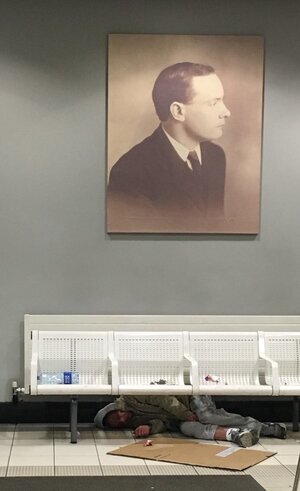
Garda station, Pearse Street, Dublin 2


Fahy Bumbury tweetz:

We witnessed this scene upon leaving a Garda interview. Such a sad sight, particularly given the adverse weather conditions expected, yet reflective of the Dublin of today. Make an effort to help those less fortunate and in need where possible – that’s our ethos!

Broadsheet.ie