
Kevin Myers

Today.

The Broadcasting Authority of Ireland released its latest decisions on broadcasting complaints.

In respect of a complaint made against RTE’s Morning Ireland – in which former Sunday Times columnist Kevin Myers was called a “holocaust denier” by one of the show’s presenters – the BAI upheld the complaint.

RTE has reported that it is considering a response to the finding.

BAI’s summary of the complaint – by Karl Martin – states:

The complainant states that one of the presenters on this programme described Mr. Kevin Myers as a ‘Holocaust denier’. The complainant states that this was an absurd claim based on a newspaper article written by Mr. Myers over eight years ago under a misleading headline that he didn’t write.

The complainant states that Mr Myers took issue with the word ‘Holocaust’ on account of its Greek origin, meaning ‘destroy by fire’. He stated that there was no single Holocaust because it took many forms; Jews were shot in pits, beaten to death, frozen and starved to death, burnt alive in their homes and synagogues and gassed.

The complainant maintains that it is quite clear from the newspaper article that Mr Myers believes that there was a Nazi genocide of the Jews – he typically and pedantically takes issue with the word. The complainant adds that Mr Myers has written many times about the Holocaust and the suffering of the Jews and that it is ridiculous and offensive to label him as ‘Holocaust denier’. The complainant states that no senior member of the Irish Jewish community has called him ‘a denier’.

In support of his complaint, the complainant submits the following:-

a) A copy of a statement issued by the Jewish Representative Council defending Mr. Myers from, inter alia, the claim that he had denied the Holocaust in an article eight years ago.

b) A copy of the Guardian newspaper’s correction to its earlier description of Mr. Myers as a Holocaust denier.

c) A copy of The Times of Israel published defence of Mr. Myers by the Jewish blogger, Mr. Jonathan Hoffman.

The complainant states that despite all of the above, the broadcaster still claims that it was correct to refer to Mr. Myers as having previously written a column in which he “denied the Holocaust”. The complainant states that this is, to quote the Jewish Representative Council, “an absolute distortion of the facts” and is based on the selective use of certain phrases taken out of context.

RTE’s response to the BAI is summarised as follows:

“The broadcaster states that the references to Mr. Myers in this context relate to articles written by Mr. Myers for the Irish Independent and Belfast Telegraph newspapers in 2009. In reaction to commentary on the articles following Mr. Myers’ final Sunday Times newspaper column, the Irish Independent immediately removed the article in question from its website.

The Belfast Telegraph had not, at the time of replying to the complainant, removed its version of the article. These are quotes taken directly from the article:-

“There was no holocaust (or Holocaust, as my computer software insists) and six million Jews were not murdered by the Third Reich. These two statements of mine are irrefutable truths.” “It is an offence in Germany to say that six million Jews did not die in the holocaust. Very well then, I am a criminal in Germany.” “I’m a Holocaust denier.”

“The broadcaster states that these are Mr. Myers’ own words. He may have then qualified his headline statements by then writing that there certainly was genocide waged against the Jews by the Nazis, in what he describes as “one of the most satanic operations in world history.”

The broadcaster maintains that if he is being referred to around the world as a Holocaust denier, it is because he described himself as such.

The broadcaster refers to the contents of this article as unarguable evidence that the statement by the presenter that Mr. Myers had “previously written a column in which he denied the Holocaust” was accurate and fair, did not misrepresent Mr. Myers and was not in any way misleading to listeners.

In its decision to uphold the complaint, the BAI said:

“While noting that Mr. Myers had described himself as a ‘Holocaust denier’ in a typically provocative newspaper article that he had written, it was evident from the article as a whole that his description did not in fact amount to a statement denying the genocide of the Jewish people at the hands of the Nazi regime.

Rather, the article was a comment on how language is used and the criminalisation of individuals or groups who engage in Holocaust denial. In this context, the comments by the presenter were considered to lack fairness to Mr. Myers and both misrepresented his views in a manner which would likely mislead audiences as to his views. Accordingly, the complaint has been upheld.

Read the decision in full here

UPDATE:

Meanwhile…

George Hook

A complaint about comments made by George Hook last September on his then High Noon show on Newstalk has also been upheld.

On September 8, 2017, Mr Hook had made certain comments in light of a court case concerning a sexual assault.

Mr Hook said:

“But when you look deeper into the story you have to ask certain questions. Why does a girl who just meets a fella in a bar go back to a hotel room? She’s only just barely met him …. then is surprised when somebody else comes into the room and rapes her.”

“Is there no blame now to the person who puts themselves in danger? There is personal responsibility. You then of course read that she passed out in the toilet and when she woke up the guy was trying to rape her. There is a personal point of responsibility, because it’s your daughter and it’s my daughter.

“And what determines the daughter who goes out, gets drunk, passes out and is with strangers in a room and the daughter that goes out, stays half way sober and comes home. I don’t know … but there is a point of responsibility. The real issues nowadays and increasingly, is the question of the personal responsibility that young girls are taking for their own safety.”

The complaint to the BAI was made by Fiona O’Toole, who summarised her complaint as follows:

The complainant states that it was not appropriate for the presenter to blame an alleged
victim of sexual assault for the fact that she was raped. The complainant states that it is irrelevant that she chose to go back to a hotel room with one man; she should not be raped by a second.

The complainant expressing the opinion that the presenter believes that the victim is responsible for this assault is offensive and harmful. The complainant states that
nobody would suggest that men who are mugged walking down Grafton Street in Dublin are responsible for being mugged and it is not appropriate for the presenter to blame women (and their parents) for rape rather than the rapist and their parents for how they raised them.

Newstalk’s response to the BAI was…

The broadcaster states that the day following the initial broadcast, Saturday 9th September, the programme presenter and Newstalk issued an apology for the on-air remarks.

On Monday 11th September, the presenter, while on-air, issued a further, more detailed,
apology. The broadcaster states that an internal process within the station in relation to the comments was undertaken and, on Friday 15th September, it was confirmed that the
presenter had been suspended from his duties at the station while the process was
ongoing.

The broadcaster states that on the 22nd September it was confirmed that the
process which reviewed the circumstance that led to the presenter’s comments had
concluded and Newstalk confirmed that the presenter would be stepping down from his
lunchtime slot and would return in December when he will take on a new weekend show.

In upholding the complaint, the BAI stated:

“In the case of the programme that is the subject of the complaint, the Committee noted that it is aimed at an adult audience and the programme and presenter’s sometimes provocative style are well established and understood by the audience.

The Committee also recognises that it is permissible in broadcasting to deal with the question of personal responsibility in covering issues of crime and criminal behaviour. However, this topic was raised in the programme in the context of a then ongoing UK court case about rape and the issue of personal responsibility was described by the presenter as “the real issue” in this matter.

As such, the Committee considered that the manner and context of raising the issue of personal responsibility in the context of a specific case of alleged rape caused undue offence and there was a strong possibility of causing distress to audience members who might personally identify with this issue.

In considering this complaint, the Committee acknowledged that the broadcaster subsequently undertook remedial action and has accepted the substance and validity of the complaint.

It also noted that the presenter explicitly stated that he does not condone rape.

However, the broadcaster had a responsibility to take greater care to prevent the possibility of undue offence and harm, including taking timely corrective action where content is likely to have caused offence.

The Committee was of the view that the broadcaster had failed to take corrective action in a timely fashion, action which may have ameliorated the undue offence caused. Given this and given the content of the programme, the Committee has decided to uphold the complaint.

Decision can be read in full here

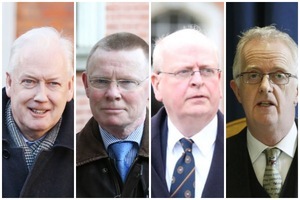
Top: Maurice and Lorraine McCabe arrive to the Disclosures Tribunal last week; Above from left: Head of HR at An Garda Siochana John Barrett, former Chief Administration Officer Cyril Dunne, Michael McDowell SC, for Sgt Maurice McCabe and Supreme Court Judge Peter Charleton

Yesterday.

At the Disclosures Tribunal.

Head of HR at An Garda Siochana John Barrett resumed giving evidence, before Supt Noel Cunningham was questioned (more about Supt Cunningham’s evidence later).

Mr Barrett claims that, following a meeting involving former Garda Commissioner Noirin O’Sullivan and former Chief Administration Officer Cyril Dunne, he was asked to stay back and Mr Dunne made a comment to him in relation to Sgt Maurice McCabe and the O’Higgins Commission of Investigation which took place in 2015.

He says that he was told by Mr Dunne “we’re going to go after him in the Commission”.

Mr Barrett said he believes the “we” was a reference to the executive of An Garda Siochana.

Mr Dunne – who is scheduled to give evidence tomorrow afternoon – denies this ever happened.

Mr Barrett didn’t take a note of this alleged remark and can’t specifically recall when this meeting took place.

But, based on looking at emails, he believes it was on May 13, 2015 – the night before the hearings of the O’Higgins Commission of Investigation began.

On Friday, the tribunal heard Conor Dignam SC, for Ms O’Sullivan, say she was in the UK on May 13, 2015 and left the UK at 5.35pm.

Yesterday Mr Dignam told the tribunal Mr Dunne has said he wasn’t in Garda HQ – where the alleged meeting took place – from 6pm on May 13, 2015 as he had “important” meeting related to a sports club in Wicklow of which he is honorary secretary.

In any case.

Mr Barrett maintains the remark was made to him and Mr Dunne maintains it wasn’t.

Yesterday, Judge Peter Charleton, who is overseeing the tribunal, put specific questions to Mr Barrett.

He asked Mr Barrett about his view of Noirin O’Sullivan as a Garda Commissioner in 2015 and why he didn’t contact her immediately after this comment was made to him.

He asked why it took him two years to tell Sgt McCabe about the alleged remark.

And he then asked him about his relationship with Mr Dunne – drawing attention to the fact there had been newspaper reports that suggested there was some conflict between them.

The questioning prompted Michael McDowell SC, for Sgt McCabe, to say that if questions put to Mr Barrett might infer that Mr Barrett had some kind of grudge against Mr Dunne then either the judge, or some counsel, should ask Mr Barrett out straight if that was the case.

Some tetchy exchanges then followed between Mr McDowell and Judge Charleton.

This is how it unfolded…

Judge Peter Charleton: “When we go back to this time, you are in Human Resources, it’s 2015, it’s early 2015, and you are in the job quite a short time, I think. You joined, what, the end of 2014?

John Barrett: “Yes, 3 October ’14.”

Charleton: “Yes. So you had got to know the Garda Commissioner by then?

Barrett: She was — I met her before I accepted the job. She hadn’t interviewed me, but I went to meet her in her office before I joined the job.

Charleton: And you made what offer?

Barrett:I felt that she was going to try and bring about change in the organisation.

Charleton: Did you feel she was a genuine person?

Barrett: At that point I had absolutely no difficulty with the mission that she set out to me.

Charleton: That is not the question I am asking you, Mr. Barrett.

Barrett: Yes, I did feel she was genuine.

Charleton: Did you feel she was a truthful person?

Barrett: I did, I did, absolutely.

Charleton: All right. And did you feel, in terms of the engagement with Maurice McCabe and the whole idea of whistleblowers perhaps not being right, not always necessarily being saints, but the necessity to listen to them and try to learn from what they were saying —

Barrett: Absolutely.

Charleton: — did you feel she was genuine about that?

Barrett: Yes, I believed that.

Charleton: And did you feel the efforts that you were putting in place, including the lengthy efforts that are detailed in the minute where you were driving along in your car, did you feel that they were actually engaged in, not from the point of view of public relations but from the point of view of setting things to right?

Barrett: I absolutely believed that, and at the end of that journey, Judge, I was quite pleased with the day’s work, yes.

Charleton: You were personally investing heavily in this as well?

Barrett: Yes, my credibility, my time, my energy.

Charleton: In the event that this turned into a success, clearly it would be a success that you would have led as Head of Human Resources?

Barrett: It would have been a collective effort. And I am not driven by individual accolades, but I would have taken some considerable personal pride had it been successful.

Charleton: So there you are, you are in May, you are in the job seven months.

Barrett:Yes.

Charleton: And your boss turns to you, having asked you to remain behind after a meeting with the Commissioner, who is genuinely attempting to move the Gardaí forward and to engage with those who make protected disclosures, and your boss tells you: by the way, we are going to ruin it all before the O’Higgins Commission?

Barrett: He didn’t say that.

Charleton: Well, I am finding it hard to construe it any other way. We are going after Maurice McCabe before the O’Higgins Commission. How do I construe that, Mr Barrett?

Barrett: I am alarmed by it, but I don’t understand it fully, Judge, that is the reality. I didn’t understand.

Charleton: You told me, Mr Barrett, that you had a visceral reaction to it. Visceral, of course, refers to your stomach, your intestines.

Barrett: Yes.

Charleton: Why did you have a visceral reaction to it?

Barrett: I have genuinely invested, time, energy, commitment in trying to move this thing to a point away from conflict. Maybe it’s naivete on my part, but I thought, simply, Judge O’Higgins was going to review all of the facts of the matters that were arising on the terms of reference and make a judgment on those facts, that it wasn’t going to be adversarial in its — that was my view. And clearly, what I had — just the shot fired across my bows was, this is something different. And I was conscious in hearing it, and it’s easy to be wise after the fact, of Maurice — of Sergeant McCabe’s doubts about the bona fides of the organisation when we first met in February. And I hadn’t won Sergeant McCabe over to suddenly believe that the organisation was, you know, after changing its perspective entirely. So this was a work in progress.

Charleton: And your visceral reaction, is what I asked you about.

Barrett: I felt my stomach tighten.

Charleton: Why?

Barrett: I have — it’s just a feature of who I am, sir. I respond to things physically if they either shock or surprise.

Charleton: Did you feel that the process you had started was going to be ruined in consequence of what Mr Dunne revealed to you?

Barrett:  I didn’t know that, but what I did know was, the process I was embarked upon was bearing fruit and I was protective of it.

Charleton: Well, what interpretation did you put on the remark you say that Mr Dunne made to you?

Barrett: The only thing that I, as I said in the transcript, the only thing that I did was, I took a further look at the terms of reference and left the —

Charleton: That is not what I am asking you. I am not interested in the terms of reference. I know the terms of reference. Right. You looked at them. What interpretation did you put on the remark that Mr Dunne made to you?

Barrett: That there would be conflict at O’Higgins of some sort.

Charleton: And how would that impact on the work that you embarked on?

Barrett: I felt that it would damage it. I felt it could possibly damage it.

Charleton: Do you mean possibly, or were you more definite about that, given your visceral reaction?

Barrett: Possibly. It could possibly damage it.

Charleton: Was it not appropriate, therefore, for you to ring the Garda Commissioner, a person whose genuineness you believed in and a person you trusted, and said, look, there may be a problem in relation to the O’Higgins Commission and the way it’s being approached, could we have a word about it?

Barrett: I very much regret not doing that, Judge.

Charleton: I am wondering why you didn’t do it? I am not wondering about your regrets, Mr. Barrett. I am wondering why you didn’t do it?

Barrett: I think that I was probably swept forward into all of the other things that were going on and didn’t do it and let the matter unfold. To a degree, I vested trust in the process. I perhaps shouldn’t have.

Charleton: Maurice McCabe trusted you?

Barrett: He did.

Charleton: And by not doing this, you were prepared to see somebody else, on your account of things, undermine his trust in the organisation, of which, by the way, you are a part.

Barrett: It weighs heavily on me.

Charleton: Whether it weighs heavily on you now or not, is neither here nor there. I am asking, why did you not react by ringing the Garda Commissioner and asking her what was the explanation for this and pointing out to her, look, there may be issues ahead in the event that this particular strategy is followed through, which conflicts with the strategy that we had already agreed and settled upon in numerous meetings?

Barrett: I don’t have a good answer to that, Judge. I don’t. I should have, and I didn’t. I was troubled by it. And then the matters unfolded over the coming weeks. I sought to continue to build a bridge with Maurice. The record shows that it’s sustained. Many of the initiatives that were spoken of, as far back as February, did not continue.

Charleton: It took you two years to tell him about this remark that you say happened.

Barrett: Yes.

Charleton: Why did it take you two years?

Barrett: Because the nature of my engagement — I am representing the organisation in my dealings with him. There are very specific issues arising in that relationship, as I saw it. I was, as I said yesterday — or Friday, in seeking to try and maintain Chinese walls, I wanted to represent the organisation.

Charleton: I really don’t understand this phrase about Chinese walls. I really don’t know what you are talking about when you say “Chinese walls”. It’s a phrase, by the way, that is used in relation to large firms of solicitors that seem to be representing opposite sides of Government agencies through the same firm. Now, I don’t know what it means, but let’s move on. Yourself and Mr Dunne, have you stayed in contact since he left the organisation?

Barrett: I shook his hand when I met him here on the 8th.

Charleton: That’s not what I asked you.

Barrett: We meet periodically.

Charleton: Mr Barrett, that’s not what I asked you.

Barrett: No, we are not socially engaged.

Charleton: Why not?

Barrett: I have no good answer for that. I mean, we had a professional relationship. There are many people for whom I have had — who have been working colleagues that I am not professionally engaged with, and there are people I have long, long engagements with.

Charleton: That is fair enough. For those perhaps who read the newspapers, it may appear that the two of you have been in conflict in relation to the interpretation of certain issues over the course of the last year or so. Would that be correct or incorrect?

Barrett: The issue is the —

Charleton: Forget about the issue. Just please answer the question.

Barrett: On one specific case, yes.

Charleton: On what?

Barrett: The financial irregularities at the Garda College.

Charleton: And you are saying what and he is saying what?

Barrett: Well, this matter was played out in front of the Public Accounts Committee.

Charleton: Just tell me, if you wouldn’t mind, please.

Barrett: The issue of how those matters were investigated and dealt with.

Charleton: And your view on the matter is directly contrary to his?

Barrett: Partly contrary to his. Partly. At the very beginning of that process, which was May of 2015, Cyril and I were in lockstep as to what needed to be done.

Charleton: It’s made headlines, hasn’t it?

Barrett: I haven’t studied the headlines in the last number of days, but I have followed it as it played out in the PAC.

Charleton: Thank you very much.

Barrett: Thank you, sir.

Michael McDowell: Judge, I think if it is going to be found in relation to this witness that he was motivated by a grudge against Mr. Dunne, somebody, yourself or your counsel, should put that —

Charleton: Now, Mr McDowell, that is going too far.

McDowell: Sorry, it’s not.

Charleton: No, it is going too far.

McDowell: Otherwise your questions seem to be irrelevant, Judge.

Charleton: What exactly is the point you are making, Mr. McDowell?

McDowell: Precisely the point I made; that if it is going to be inferred, from the matters that you have just raised with the witness, that he fabricated this remark on the part of Mr. Dunne as part of settling some grudge, that should be put to him fair and square by somebody.

Charleton: And you suggest it should be done by me?

McDowell: You asked the questions about his relationship with Mr. Dunne. Your counsel didn’t. If that is — if it is relevant, I think you should go the whole way with him, Judge.

Charleton: And all the remarks you have made during the course of this Tribunal about this being an inquiry, Mr. McDowell, do they not apply to me as well? Am I not entitled to inquire?

McDowell: Well, I think, Judge —

Charleton: And do you think —

McDowell: May I make this point, Judge?

Charleton: And do you think — well, I need to make a point too, Mr. McDowell, because you are very free with your language.

McDowell: I am not free with my language.

Charleton: Do you think, Mr. McDowell, that all the warnings about the judge entering into the arena are lost or do they not apply in these circumstances?

McDowell: You are not a judge; you are an inquisitor here. And if you have — if it was relevant to make those points to the witness, I think the — that the inference that appears to be blatant in them should be put to him.

Charleton: Mr Dignam asked the questions as well, didn’t he?

McDowell: And Mr Dignam has his instructions. I am just saying that somebody should put this to him. Chairman, can I make this point to you —

Charleton: Well, Mr. McDowell, it very often happens — it seriously very often happens that two people meet, they discuss matters, one comes out saying the following happened and the other comes out saying no, that didn’t happen at all. Now, it could happen, as well, that those people don’t exactly get along. Perhaps it’s because of a lack of an emotional connection that misunderstandings occur, but Mr. McGuinness has cleared it up. There is no misunderstanding here. It’s not a question of, for instance, we are adopting our strategy and it’s not going to be easy for Maurice McCabe. It’s a question of the ‘remark’, in inverted commas, being absolutely correct. Now, I really have to inquire, in circumstances where a person who allegedly made the remark says he didn’t make it and where the person to whom that remark was repeated within weeks, it seems, says, well, that never happened, as to precisely what is going on, and I think I am entitled to do that, Mr. McDowell. And I feel if I didn’t do that, I’d be failing in my duty to make an inquiry.

McDowell: Well, Judge, maybe perhaps I can put the question to the witness then.

Charleton: If you wish to put the question, you are certainly entitled to do so. But please don’t ascribe to me anything that you don’t know is in my mind.

McDowell: Judge, you asked the questions. I queried its relevance other than in this context.

Mr McDowell then went on to question Mr Barrett…

McDowell: Anyway, Mr Barrett, in case anybody would draw the inference from your evidence that you have fabricated this remark by Mr Dunne and that you have done so in part to settle some score with him or because you have a very poor relationship with him or you fell out with him, what have you got to say about that?

Barrett: “None of those assertions are true. Mr Dunne hired me into the organisation. I respect his background, I respect his integrity. We have a difference of view on one significant matter, which related to how we should proceed in relation to the investigation of financial irregularities at the Garda College. That is a matter of public record. I shook his hand here on the 8th January. I feel no animosity whatsoever from Mr Dunne, and that is a matter of fact.

Yesterday’s transcript can be read in full here
Previously: Diametrically Opposed

Taoiseach Leo Varadkar and Minister for Employment Affairs and Social Protection Regina Doherty at the launch of the Government’s Self Employed Benefits Awareness Campaign in City Hall yesterday.

To much fanfare, the Taoiseach and the Social Welfare Minister launched a ‘Self Employment Benefits Awareness’ campaign this week.

This is their happy clappy attempt to distract from the fact that somewhere between 20% and %100 of you (depending on the industry, and yes some industries are 100% bogus self employment), didn’t choose to be self employed, don’t want to be self employed and have no idea at all why you are labeled as self employed.

Maybe you’re new into the workforce and you don’t know any better, maybe you’ve been around for a while and you know that this job you used to do as an employee is no different to the job you are now are forced to do as self employed, but damned if you know how your employer is getting away with it. .

Bogus self employed workers lose holiday pay, sick pay, maternity pay, workplace protections, including the right to join a union; face an increased tax burden; receive no overtime pay; and may have no recourse for workplace injury violations and disability-related disputes.

The loss of all these rights, your rights as an employee, results in a labour cost saving to your rogue employer of about 30%.

Bogus self employment has become a no brainer for employers. Ireland is the only country in Europe where an employer can register a worker as self employed without the consent, involvement or knowledge of the worker.

There have been no widespread investigations into bogus self employment since 2001. Once in a while, Revenue inspectors will arrive on a building site and pick off a few of the lowest hanging fruits to placate the odd journalist who asks questions, otherwise, it’s a bogus self employment free for all with the full consent and backing of the government through various ‘special tax arrangements’ like the eRCT and the Courier Agreement.

Bogus self employment doesn’t just steal from workers, it is stealing massive amounts from the state too. In 2017, 75,000 construction workers were registered as self-employed out of a total workforce of 130,000.

At least 30% of these self employed workers are bogus self employed workers with no employees of their own. The loss to the state is in the hundreds of millions and it is only the tip of the iceberg.

Rogue employers are now demanding that groups of workers set up companies to filter their wages through so that employers can evade PRSI. These come under the ‘self employed with employees’ category, nobody is even looking at the area for bogus self employment but it is happening and on an ever increasing scale.

When the construction industry collapsed in 2007, we were given the opportunity to have a unique insight into just how much bogus self employment in the construction industry was costing the state.

Between the years of 2008 and 2014 there was a combined total of 500,000 construction workers registered as self-employed. The total tax take in those years from those workers was minus 90 million!

YES – (minus) 90,000,000 euro from 500,000 self-employed contract situations over 6 years. 500,000 employment contracts situations would have netted the exchequer somewhere around 2 billion for the same period.

Now here’s the really astounding thing, these ‘Special Tax Arrangements’ like the eRCT and the Courier Agreement were not established to actually collect revenue, they were established to bring workers, who had traditionally been working in the Black Economy, into the tax net.

As the former Comptroller & Auditor General wrote:

All concerned recognise that it is far from being an ideal system and that there is room for improvement.

But the improvements never came, the Black Economy is still the Black Economy and it is bigger and slicker than it has ever been.

The government has agreed to turn a blind eye to bogus self employment because that’s the price they are willing to pay to reduce the numbers on the unemployment register.

For those outside the construction sector, there has never been any wide or even narrow scale investigations. Don’t bother trying to challenge you employment status, it can take up to 3 years, cost you  10s of thoudands in in legal fees and the fix is already in before you start. Instead, Leo and Regina will make you pay more PRSI for very very limited benefits.

You are truly lost in self employment.

Martin McMahon podcasts with Tony Groves at The Echo Chamber and blogs at RamshornRepublic

Previously: Deconstructing Bogus Self Employment

Rollingnews

Meet Your Maker podcast.

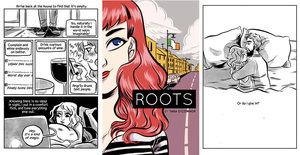
Liam Geraghty meets love lorn US cartoonist Tara O’Connor.

Liam writes:

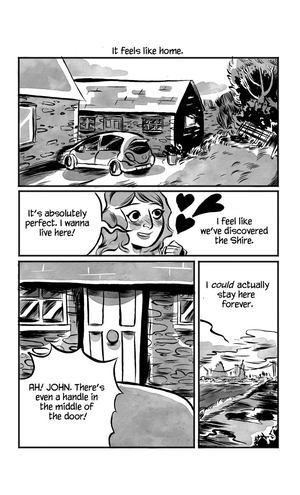
After a messy year of heartbreak and setbacks, New Jersey cartoonist Tara O’Connor sets off to Ireland in search of clues to her family’s ancestry but what she finds isn’t at all what she expected. Some of it has to do with the lack of records, but a lot has to do with John, the charming cartoonist she met on Twitter….Subscribe on Apple Podcasts, Spotify or wherever you listen to podcasts.

Meet Your Maker

Tara O’Comics

Broadsheet.ie