Jim O’Callaghan writes:
Christmas lights still burning brightly (Jan.29) Westport Co.Mayo yesterday evening.



Jim O’Callaghan writes:
Christmas lights still burning brightly (Jan.29) Westport Co.Mayo yesterday evening.


From top: the 11th floor of the Google HQ in Dublin; Michael Taft
As part of a drive to bring a little bit of democratic accountability over multi-nationals, the EU Commission is proposing that multi-national country-by-country reporting be made public.
This refers to the process by which large multi-nationals are required to report in what countries they derive their profits from and pay their taxes in.
In the future, large companies will be required to provide this information to the national tax authorities in the EU. The question the EU Commission is posing is whether this information should be made public.
Unsurprisingly, a number of interest groups are opposed to public disclosure, according to Ian Guider writing in the Sunday Business Post (paywall). In its submission to the Department of Finance, Ibec warned:
‘It is difficult to envisage how public trust could be engendered through this system (making country-by-country reporting public) or how debate could be better informed by publication of confidential information.’
This is curious reasoning. Experience suggests that public trust is ‘engendered’ through transparency; it is secrecy that undermines confidence. Second, debate is better informed with full information; it is degraded and open to manipulation in the absence of information.
Deloitte employs a more interesting reason not to make this information public. According to Guider, Deloitte claimed that:
‘ . . . revealing it (country-by-country profit and tax information) could lead to [companies] becoming targets of audits’.’
Well, this information will already be provided to tax authorities so if there is something amiss, an audit would (or should) result, even without making the information public. In any event, companies shouldn’t worry – if they are tax-compliant.
Returning to Ibec’s concerns, there is one argument that is really strange. Referring to the prospect of companies having to reveal where they are operating:
‘Companies in sectors such as pharma and medical devices where site information is highly guarded, even within company groups, would be put at a disadvantage.’
I can understand occupying military empires preferring not to reveal the location of their bases (the natives might start taking pot shots at them), but to equate company location information to state secrets is somewhat extreme. In any event, competitors and tax authorities can easily access this site information through industrial detectives.
Of course, when all arguments fail, fall back on the ‘it-will-deter-foreign-investment’. Make country-by-reporting public and Ireland will lose out on foreign investment (the corollary is that secrecy is a sustainable investment policy).
But is this unsubstantiated assertion true? Let’s look at one public country-by-country reporting process that is already in place and see what lessons can be drawn.
Since 2015 all EU banks have been required to publish country-by-country data –and this information is public. Oxfam undertook an examination of the top 20 EU banks using this public data: ‘Opening the Vaults’. They found:
The 20 biggest European banks register around one in every four euros of their profits in tax havens, an estimated total of €25 billion in 2015.
These European banks made profits of €4.9 billion in Luxembourg – more than they did in the UK, Sweden and Germany combined.
Barclays, the fifth biggest European bank, registered €557 million of its profits in Luxembourg and paid €1 million in taxes in 2015 – an effective tax rate of less than 0.2 percent.
European banks did not pay a single euro of tax on €383 million of profit made in smaller tax havens.
A number of banks are registering losses in countries where they operate. Deutsche Bank, for example, registered a loss in Germany while booking profits of €1.9 billion in tax havens.
Low levels of profit in countries that are not tax havens translate into low tax revenues for those countries. For instance, Indonesia and Monaco have a similar level of economic activity by European banks, but the banks make 10 times more profit in Monaco than they do in Indonesia. Such gaps can hardly be explained on the basis of ‘real’ economic activity.
In the Oxfam report, Ireland features prominently as a destination for potential profit-shifting (that is, profits generated in other countries but booked in Ireland to take advantage of the accommodative tax regime). This is why Oxfam refers to Ireland as a potential tax haven or, at least, a tax haven facilitator.
The questions here are: has this country-by-country information helped inform the debate? Has this publicly available information led to a withdrawal of foreign direct investment? Has this public data led to tax audits? The answers are yes, no, and hopefully.
None of these tax avoidance activities – and their interaction with Ireland – appear to be illegal. But that is the problem. If it was illegal it could be closed down. The purpose of open information is to stimulate a debate over what should be legal and what shouldn’t be. The EU Commission proposal is the first step towards starting this conversation
. The purpose of Ibec’s and Deloitte’s submission – as reported in the Sunday Business Post – is to close down that conversation.
And there is no better way to lose trust and confidence in the system than to keep vital information secret. So let’s open the books. Let’s have that debate – in Ireland, Europe and throughout the world; wherever multi-nationals operate.
Michael Taft is economic analyst and author of the political economy blog, Notes on the Front.
Rollingnews
https://www.youtube.com/watch?v=Gfn4taDi0EA
https://www.youtube.com/watch?v=jirDGL6vL1A
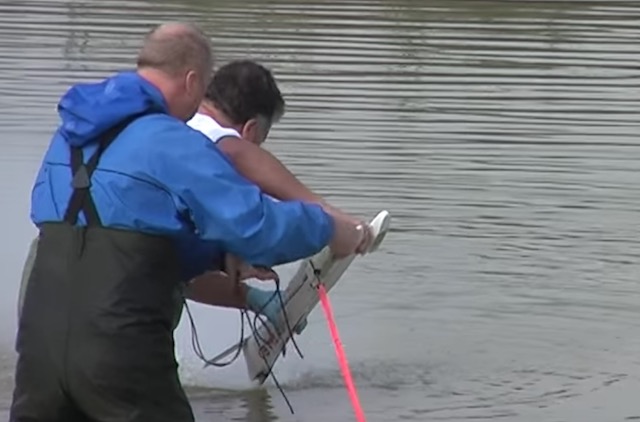
Behold: the deeply satisfying, slightly alarming ’sport’ of tethered hydroplane racing where motorised hydroplanes are tethered to a central point in ponds then released, whipping round at speeds up to 217km/h (135mph).

Watch Nell McCafferty’s thoughts on abortion and contraception pic.twitter.com/MhpY69ZJXZ
— RTÉ ClaireByrneLive (@ClaireByrneLive) January 29, 2018
Last night.
On RTÉ One’s Claire Byrne Live.
Nell McCafferty gave her thoughts on the the abortion debate in Ireland.
Last night: The End Of May

From left : Noirin O’Sullivan, Terry Prone and Frances Fitzgerald
Yesterday.
At the Disclosures Tribunal.
There was an exchange between Patrick Marrinan SC, for the tribunal, and former Deputy Secretary of the Department of Justice and Equality Ken O’Leary, who retired last June.
It came after Mr Marrinan asked Mr O’Leary about the Department of Justice’s relationship with the Garda Commissioner.
It was in the context of the swirling of drafts – with the help of Terry Prone of the Communications Clinic – being sent back and forth between the then Garda Commissioner Noirin O’Sullivan and the then Minister for Justice Frances Fitzgerald, via Mr O’Leary, in May 2016 after reports emerged in the Irish Examiner and RTE about the O’Higgins Commission.
The drafts were in relation to pending public statements by Ms O’Sullivan and contributions to the Dáil by Ms Fitzgerald.
When Ms O’Sullivan gave evidence, it was put to her that it appeared she was drafting a statement for the minister – to be made in the Dáil – when she wrote an email, with a draft attached, and the message:
“I understand that you may have to make a statement this morning and I enclose a draft for your consideration.”
But Ms O’Sullivan said:
“I may have said a draft, I don’t mean a draft statement, it’s a draft insofar as here are pointers that you can choose to use or not.
But actually, and we probably will come to the email but they were the facts, the actual facts as opposed to the erroneous facts that were floating around the commentary at that time.“
The draft, or pointers, included the lines:
“I have interrogated this matter in detail with the Commissioner…I wish to state here and now that I have full confidence in the Commissioner.”
Ms Fitzgerald didn’t end up saying this in the Dail.
Returning to the exchange between Mr Marrinan and Mr O’Leary:
Patrick Marrinan: “I mean, a commentator might say that you know, that the Department was acting hand in glove with the Commissioner at the time?”
Ken O’Leary: “And so it was, for the very good reason that we had to take a public interest view in relation to all these matters and our view was that the public interest was not going to be served in any way by the Commissioner’s position being put in jeopardy at that time.”
Marrinan: “Yes. But you will appreciate that we are probably hearing about this relationship as it existed at the time between the Department and the Garda Commissioner for the first time, because it’s not evident and apparent to members of the public to know that there is this closeness and degree of closeness between the Garda Commissioner and Department — officials in the Department of Justice and indeed the Minister, do you understand?”
O’Leary: “Well, I mean, there is two points I’d make: Like, our contribution, I mean, if any of the material that week looked as if we were very supportive of the Garda Commissioner, that’s because we were very supportive.”
Marrinan: “Yes.”
O’Leary: “And it wasn’t because of loyalty or whatever. It was because we took the view that there was no proper basis for questioning the Commissioner’s position. But there was a danger because of the political feverish climate going on at the time, if people had looked at previous things that had happened during the course of Garda controversies they could go anywhere.
And frankly, we also thought there was a danger that the Commissioner, given the way she was being pilloried in public and the very difficult position that was in, there was obviously a danger that a sensible person might say, look, I am not putting up with this any more.
And the implications for us of having to find a new Commissioner and the disruption that would have been caused, as I say our view of the public interest was that anything we could do to support the Commissioner, we would do, because we thought that was in the interests of the leadership of the Guards, and the public interest.
So as I say, it wasn’t all friends helping each other out; it was a clear view of where we thought the public interest lay. If –I mean, if the O’Higgins Commission report said the Commissioner inappropriately relied on strategies to do down Sergeant McCabe, well then we would have had to deal with that in an entirely different way.”
Marrinan: “Yes. So I mean, would it be fair to summarise your position in relation to this, that you may well have been hand in glove with the Commissioner in relation to this issue at the time, not because you had a cosy relationship but because the Department had taken a view arising out of the O’Higgins Commission that the Commissioner was in fact correct in her approach and there was no question that she was going to resign?”
O’Leary: “It’s not that we were taking a view the Commissioner was correct in what happened at the O’Higgins Commission, because we had absolutely no information except for one detail, we may be coming to.
What we were doing was relying on Judge O’Higgins’s report and there was nothing in that that questioned in any way the approach of the Garda Commissioner on our reading of it. The hand in glove phrase, do you know, if you don’t mind me saying so, it is a bit pejorative. Like, we were working closely with the Garda Commissioner in the situation which arose to achieve the objectives we thought were best in the public interest.”
Marrinan: “Yes. But so closely that you thought it appropriate and not out of order to send a draft letter to the Commissioner for her consideration to send back to the Department and also that the Garda Commissioner could contact the Minister directly with what, on the face of it, appears to be a draft speech expressing confidence in her?”
O’Leary: “In relation to, you know, what is called a draft letter, I have tried to explain the background to that, if it had been written, headed instead ‘points that you might take into account in the light of our discussions’, I don’t think anyone would find that objectionable and maybe that is what I should have done.”
Marrinan: “I know. But that is not the way it’s written, it’s written in the first person, as indeed the speech is written in the first person.”
O’Leary: “Well, I mean, frankly, like, that is a question of form rather than substance in relation to what was going on.”
Marrinan: “Well, I think if it had become — either the letter or the speech had become bestsellers, there might have been a quarrel in relation to copyright and royalties, but anyway.”
The tribunal continues today.
Previously: Disclosures Tribunal on Broadsheet
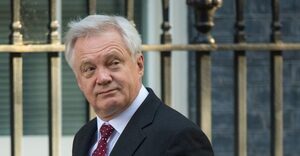
UK’s Brexit secretary David Davis hopes Ireland will support its bid for a trade agreement
For a year now the British have shown
That it’s hard to strike out on your own
And it seems now they feel
We’ll help them get a deal
The substance of which is unknown
John Moynes
Pic: Getty

Animator Álvaro Gracia Montoya of MetaBall Studios compares the relative size of sundry movie monsters.







MORE to folly
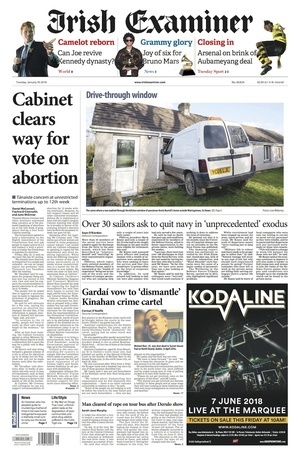
Referendum on 8th Amendment before the end of May agreed by Cabinet. People will be asked if they want to retain Amendment or repeal and put a provision in the constitution to give the Oireachtas the power to set abortion laws. Taoiseach to set out his views here soon @rtenews pic.twitter.com/pdFe7GremS
— Mícheál Lehane (@MichealLehane) January 29, 2018
Tonight.
FIGHT!