
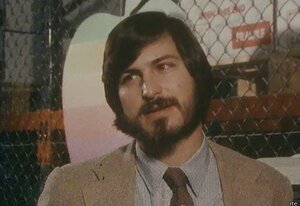
stevejobsapple

ciaragraham

From top: Steve Jobs in Ireland,1980; The sources of iPhone’s technology; Ciara Graham

Apple is no stranger to state aid and while its founder is often hailed as one of the world’s greatest tech innovators the reality tells a very different story.

Ciara Graham writes:

Italian-American economist Mariana Mazzucato explains how Apple exploits technologies that were developed AND crucially funded by the US State.

Many of the technologies found on the modern iPad or iPhone were developed by the Advanced Research Projects Agency (ARPA), founded in 1958, during the Eisenhower administration.

It is responsible for the early development of microprocessors and micro hard-drive technologies, and ultimately the internet itself.

Technologies such as Global Positioning Systems owe their origins to state funded military projects and Liquid Crystal Display technologies were funded by the National Science Foundation (NSF). Swiss-based CERN, the European Centre for Nuclear Research contributed the source of the hypertext languages, used in web browsing and also the basis for Apple’s famous ‘click-wheel’.

All those well-known Apple innovations turn out not to be Apple’s after all.

Mazzucato says:

 “Mission-oriented public investment put men on the moon, and later, lead to the invention and commercialization of the Internet, which in turn has stimulated growth in many sectors of the economy…the US government has been a leading player in funding not only the Internet but all the other technologies — GPS, touchscreen display, and the new Siri voice-activated personal assistant — that make the iPhone, for example, a miracle of American technology.

What Apple is especially good at – and we’re not taking it from them – is design.

They have done an excellent job of pulling together some very useful technologies and installing them on ergonomic and aesthetically pleasing devices; turning these technologies into something consumers really want to buy is their great talent. They are a wonder of marketing, certainly.

But let’s not fool ourselves that they invented the technologies that their products are famous for; and the idea that they should be entitled to any proprietary rights to the technologies that they exploit is very very questionable indeed.

Apple makes billions. They do this off the back of technologies that were developed using government funding.

Fabled for their secrecy, Apple operate a closed technology platform (where only pre-approved programs and applications can interact). Given the publicly funded origins of many of their technologies,

it is ironic that Apple should be so guarded about the proprietary rights protecting their product innovation.

Apple initiated litigation against its key partner and competitor, Samsung, for patent infringement – a saga which has become known as the ‘smartphone patent wars’(3) and has seen subsequent litigations against Motorola and HTC(4).

Apple was also incensed by the open source nature of Google’s Android platform – which gives free access to manufacturers and developers – deeming it an “existential threat” to the company’s existence.

The company’s founder and former CEO, Steve Jobs, was so incensed by the unrestricted accessibility of the platform that he believed Google had “ripped off the iPhone…grand theft!”

He swore to spend “every penny” within Apple’s coffers to “destroy Android”.. More than a little contradictory for a company that owes its successes to publicly funded technologies – share and share alike Steve!

In addition to this legal state aid from the US, Apple has also benefited from what we now know to be illegal state aid from Ireland.

Ireland doesn’t have the budgets (nor the impetus) that the NSF does, but, according to the European Commission it has helped Apple to avoid its tax obligation across the globe. It deemed that through two tax rulings, in 1991 and 2007, Apple had been granted selective treatment.

Essentially, Ireland’s reluctance to take tax from Apple amounts to “illegal state aid” which gave the company an “unfair advantage” over its competition.

Paradoxically, the Commission is not doing this for the public good, but because it amounts to unfair competition over other market-led corporations.

This makes it very difficult for the Irish government to defend as the EU position does not run contrary to the government’s market-liberal policies one bit. Essentially, the Irish government is being hoisted up by its own free-market ideals.

This reminds us of the controversy – or lack thereof – surrounding the early days of the bank bail-out, when only real opposition trotted out was that it might be unfair to European banks!

We’re all familiar with Benjamin Franklin’s oft-used saying about the certainty of ‘death and taxes’. Tax is the money the State ‘earns’ in order to pay for everything it needs to provide for its citizens, and for the continued functioning of industry and commerce – the roads, the energy networks, the educated workforce – it’s part of the social contract.

Yet, so beholden have successive Irish governments become to companies like Apple over the promise of jobs that the State it seems is willing to overlook any other obligations these Multi National Corporations (MNCs) might have to their adoptive homes.

In the early days of the post-war years during the New Deal and Marshall Plan, when governments were actively rebuilding economies on both sides of the Atlantic, governments had the reasonable assurance that the investments they made in developing industry would come back in taxes.

But the new reality of global business – of tax inversion and tax sheltering – is destroying that pact; and perhaps jeopardising the very social contract in the process.

Ciara Graham is Lecturer in Business at the Institute of Technology Tallaght..

References:

Mazzucato, M. (2015) ‘The Entrepreneurial State’: Debunking Public vs. Private Sector Myths. London: Anthem Books.
Mazzucato, M (2013) “The Entrepreneurial State: Apple Didn’t Build Your iPhone; Your Taxes Did” PBS Newshour, Available at: http://www.pbs.org/newshour/making-sense/the-entrepreneurial-state-appl/ Accessed: August 30th, 2016.
“Apple Inc. v. Samsung Electronics Co. Ltd. et al.”. United States District Court, Northern District of California. Retrieved August 11, 2012
Barrett, Steve (2012) “Apple’s War on Android”, Bloomberg. Available at:
http://www.bloomberg.com/news/articles/2012-03-29/apples-war-on-android Accessed: August 31st, 2016.
Patel, Nilay (April 19, 2011). “Apple sues Samsung: a complete lawsuit analysis”. The Verge. Vox Media. Retrieved August 11, 2012

Thanks Henry Silke

1

2

‘sup?

This morning.

Herbert Park, Ballsbridge, Dublin 4

Miss Thea writes:

Found this little one having an early morning snooze in Herbert Park. I have left her at the Lolly & Cooks Café reunification point next to the tennis courts there in Herbert Park, should someone be missing her.

Meanwhile…

leap

Justine writes:

This leap card was dropped on Amiens Street around 8am this morning. It was handed into the security guard at 110 Amiens Street (by the bus stop). He’s tried to log it as lost on their website but I’m not sure how much luck he had with that….

dublinbus

Seán writes`;

I just wanted to send this picture to you to show that there are some extremely kind and generous individuals who work for Dublin Bus. I witnessed this moment of kindness on Sunday afternoon on George’s Street [Dublin 2] when a driver for Dublin Bus was tying an elderly person’s shoelace who was unable to do so himself. Really great to see.

Screen Shot 2016-09-05 at 18.14.42

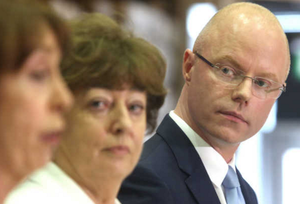
Roisin Shortall, Catherine Murphy and Stephen Donnelly at the launch of the Social Democrats in July 2015

Further to Stephen Donnelly’s announcement earlier today that he is leaving the Social Democrats.

The Wicklow/east Carlow TD spoke to Mary Wilson on RTÉ’s Drivetime this evening.

From the interview…

Mary Wilson: “Were you overwhelmed by the dedication it takes?”

Stephen Donnelly: “No, not at all, Mary. But can I start, I’ll come directly back to that, can I just say today’s decision is, is a very sad one for me personally. It’s one that I’ve thought about long and hard. Catherine [Murphy], Roisin [Shortall] and myself have been working on this for nearly two years. I consider it a great privilege to have worked with Catherine and Roisin. They’re two formidable parliamentarians. I feel, I consider it a great privilege to have worked with our candidates in the election and everyone who’s been involved in the Social Democrats. So, first and foremost, for me, I just want to say that this, this is a sad day – we’ve all invested a lot in it. To your question: look, I think it’s an unfortunate line that Catherine and Roisin are taking. Nobody can start a new political party work-shy. I’ve certainly been accused of all manner of things in my time. But nobody has ever accused me of being work-shy. Look, the reality is we all worked very, very hard on this and I have concluded, sadly, after nearly two years at it, the team, it’s not that it wasn’t working, I think we got some great things done together. It wasn’t working well enough and it just wasn’t working well enough for me. And Mary, anybody who’s listening to the show will understand. Will have been involved in a sports team or a business or whatever it may be. They come together with a good group of people, everybody tries to make it work and, after a reasonable period of time, in this case, for me, nearly two years, somebody on that team, or more people on the team say, ‘do you know what? Look, we’ve all been trying, it just isn’t working for me, this is no longer the right thing for me to be doing’. And so I’m stepping back. That’s what’s going on.”

Wilson: “Or, you could conclude, from the tone of the contributions from Roisin and Catherine, and now from yourself and your statement today, you’re not a team player.”

Donnelly: [Laughs] “Yeah, I don’t think anyone is kind of, who works with me in politics or outside of politics, would conclude that. You can suggest it, but I mean…”

Wilson: “Well I’m reading the line in your own statement, where you say, ‘despite the many obstacles new parties face, one critical component is that the leadership team must function very well together as a team, in spite of everyone’s best efforts, I have concluded our partnership didn’t have that’. You didn’t have that.”

Donnelly: “Maybe, maybe. Am I partly to blame for it? Absolutely I am. In any relationship, in this case, where I was in a relationship where I was in a three-way partnership, of course, there are things I could point to and say, you know, did I always preform at my best – of course not. None of us ever do. It’s a team effort. We all tried, we all did things right, we all made mistakes and, sadly, I have concluded, after a considerable period of time, and after a lot of conversation, and talking to Catherine and Roisin about this, for some time, it isn’t right for me, and it isn’t right for the party either, and that’s the decision I’ve taken.”

Wilson: “So will you continue on now, as an Independent? Or would you, at some stage, in the future, consider joining another party? Or founding another party?”

Donnelly: “Well, look, my head, for the last two years, has been in Social Democrats and my head, over the last few weeks, has been only in whether or not to stay and continue to make a try. I can concluded some time ago that it probably wasn’t right but I, you know, kept going, gave every chance and, by the way, as did Catherine and Roisin. We all tried.”

Wilson: “It must have been an awful blow to you, Stephen Donnelly, I mean you came close in a couple of constituencies in the election, but that you didn’t add value to the party. You’re still there with the three TDs that you entered the last election with.”

Donnelly: “Yeah, yeah, it is a blow, there’s no question about it. It’s been a tough week. I’ve been speaking during the week with people involved in the party, who I care a great deal for and, you know, any of us, with our work colleagues, we feel a sense of obligation, we feel a loyalty, we feel a debt of gratitude, so yes, it does come as a blow. However, if we move from the personal to the professional, I’m elected to do the best job I can do, to serve my constituents here in Wicklow, west Carlow and to serve the country as best I can. And I concluded that I was no longer doing that in the Social Democrats.”

Wilson: “I know but you concluded two years ago that your best way of serving your constituents was to be part of a political party, to move forward the changes that you wanted to bring forward. Now you’re concluding you’re better off as an Independent, or are you?”

Donnelly: “Well, no, all I’m doing today, Mary, is concluding, or announcing the decision I concluded a few days ago, is to say, I can’t serve my constituents and my country as best as I want to within the situation I was in. Like, Catherine, Roisin and myself, everyone who got involved in the Social Democrats, and by the way, I wish the party the very best, we tried to do something very, very difficult to do and if you try these things, you have to be prepared to fail. Now, let me be absolutely clear, I am not suggesting, in any way, that the party has failed, it hasn’t. But for me, my involvement has, had got to the point where I said, ‘no, look, this just isn’t the right place for you to be anymore’. But you have to take those risks. I mean politics needs to be shaken up, we need people in there who are willing to stick the head above the parapet and say ‘look, here’s a set of values we all believe in, let’s try and make this work, let’s try and work together and affect good, positive change in the country’. There is so much opportunity and, you know, other parliamentarians and myself, we’ve got to be able to take risks and that’s what this was.”

Wilson: “Would you take the risk again? Would you join an existing political party?

Donnelly: “Oh look, for two years, or nearly two years, I’ve been involved in the Social Democrats, the last few weeks, I’ve just been thinking about whether or not to do that, today, I’m just announcing, ‘look, I’m stepping back, it’s a hard decision’. I will be consulting with supporters in Wicklow, I started doing it today. There will be people coming into the office this evening and I’m going to be around the county over the next few days. So, that is a conversation that will have to be had. It will be had quickly and it will be had with my supporters.”

Wilson: :You must look though, at some of the Independent colleagues you had in the past, you see them in Government now: Shane Ross, Katherine Zappone, you see the opportunity they have, perhaps, to implement some of the policies that they want to implement. You’d like a slice of that.”

Donnelly: “I think anyone who has the great honour of being elected to the Dail, or the Seanad, or in this case, I guess, the Dail, should aspire to office, but like let’s not forget the vulture fund decision, let’s take that as an example. I think, Minister Ross, Minister Zappone, and I imagine other Independents involved there, would appear to have forced that over the line. But myself and Pearse Doherty and Michael McGrath and others, from outside of Government, have been raising these issues in the last few months and there’s been fantastic work done by RTE, by Prime Time, by journalists like Mark Paul, in the Irish Times, and others, so, it’s not that if you’re in Government, you have all the power and all the influence and, if you’re not, you don’t. You can influence the direction of the country from anywhere. From you, your colleagues in the media, me, my colleagues in the opposition benches, or indeed within Government. This vulture fund decision which was taken today, is an example of that. I wrote to the charity regulator before the [Dail] break and said, ‘Look, are you aware that this is going on with charities in the country? Would you take a look?’ and they got back to me, just about two days ago, and said, ‘you know what? we are going to take a look. So you can affect positive change from anywhere but, if you’re asking me straight, would I love to be in Government one day? Of course I would. I’d be astounded to hear any TD say that they wouldn’t.”

Wilson: “Say differently. Would you be open to an approach from another political party? Would you open to an approach from Fianna Fáil? Or would you immediately say, ‘no, ideologically, I could never join that party’?”

Donnelly: “No, I’m just not there, Mary. That’s exactly the kind of conversation I’m going to have with my supporters here in Wicklow over the next few days and next few weeks.”

Wilson: “But that in itself is interesting, that that is the conversation you’re having about where you go from here. Whether it’s into another political party or whether you’re not definite back to the road of the Independent.”

Donnelly: “No, look the objective, if you’re lucky enough to be elected to serve, in my case, to represent the people of Wicklow and east Carlow, you always want to do that to the best of your ability. I’ve done it as an Independent, I’ve done it as the founder of a party, so I’ll be going into conversations here in Wicklow with a very open mind, you know, I want to serve, I want to do the best job that I can. There’s a huge opportunity out there for the country, there’s a lot of people who were left behind in the recession, there’s a lot of important work to be done. And I want to be involved in doing it.”

Wilson: “Will you stay in politics long-term Stephen Donnelly? You never struck me as a lifer?”

Donnelly: “I’m certainly an accidental politician. There’ no question about that. Before 2011, I don’t know if I’d ever met a politician to be honest, I’d certainly never been in a political party and I’d been out of the country for ten years. I got involved, Mary, I think actually your show was one of the first ones I went on, I remember my hand shaking…”

Wilson: “I remember that too.”

Donnelly: “…for the first time, I was so nervous. And I read out a statement and tried to sound confident. I got in, in response to the crisis, I just wanted to help. My mum spent a long career in public service as a teacher and in a girls’ reformatory, as with the hundreds of thousands of public servants around the country. I like working for my country. I’d no idea how I’d find politics, it’s been bizarre and rewarding and difficult and an incredible honour. I really had no idea…”

Wilson: “Will you stay in politics?”

Donnelly: “That’s a question for the people of Wicklow and east Carlow. My answer is I would very much like to continue to represent them but it is their seat and they get to decide that, not me.”

Listen back in full here

Earlier: Stephen Gonnelly

Sam Boal/Rollingnews

Broadsheet.ie