
From top: US Democrat Presidential candidate Joe Biden (left), US President Donald Trump; Derek Mooney

The future of Donald Trump should be answered by Friday, if not sooner. Three weeks ago I predicted Biden would win. Nothing I have heard since has convinced me otherwise.

According to Professor Michael McDonald’s excellent @ElectProject, at least 93 million Americans had already voted by Sunday November 1. In 2016 just over 136 million votes were cast.

In mid-October Prof McDonald predicted that early voting would hit 85 million and that the overall 2020 turnout would exceed 150 million. As his early voting turnout has already been surpassed, it is not unreasonable to expect his turnout prediction will be too.

Doubtless this will include many who did not vote for Trump in 2016. Republicans have been busy registering more Trump supporters in rural areas, but does anyone imagine that 20–25 million extra voters are turning out because they think President Donald Trump is doing such a great job?

The US presidential was always going to be a referendum on Trump. His handling of Covid19 has made it even more so. He is pleased this is all about him, but that is the big flaw in his campaign strategy: his ego. It is not just a risky strategy; it is a bad one when so many likely voters do not like or respect you.

Two stark sets of figures make this point.

Asked to rate the candidates, likely voters give Trump a score of 41% favourable and 57% unfavourable and Biden 55% favourable: 42% unfavourable. That is a 15% gap in favour of Biden. Biden’s unfavourable rating today is 10pts better than Hillary Clinton’s 52% rating – a rating that cost her: Wisconsin, Pennsylvania and Michigan.

Trump has bet the house, by which I mean other people’s money, on him getting the minority who like him to turn out disproportionately. Early polling figures point to that strategy failing. Trump’s future now depends on a huge polling day turn-out of Trump voters.

Bizarrely, Trump could manage to get more votes than he won in 2016. The GOP’s registration and get out the vote operation could bring out extra Trump votes, but with 20+ million additional voters they simply cannot catch up with, never mind, out poll Biden.

Biden will win the popular vote by a much bigger margin than Clinton did in 2016, the question is how his vote is distributed across the battleground states.

Trump won almost 3 million fewer votes than Clinton. His win was due to where he secured several hundred thousand of them, particularly Michigan, Wisconsin and Pennsylvania.
Trump must now win in every State he won in 2016.

That is a big ask for an unpopular President. Trump cannot afford to lose states – and right now he is likely to lose two or more.

So here are a few of the key states I’ll be watching on Tuesday night/Wednesday morning.

First is Florida. It is counting early votes now and expects to have a result on election night. If Trump loses Florida, it is over all for him. He is losing the support of seniors and suburban voters across and only held Florida by 113,000 votes last time (1.2%). I think he may just hold Florida, but the margin could be ultra slim.

Watch Georgia and North Carolina too. Both are showing early turnouts equal to 90% plus of their 2016 turnouts and both expect to count most votes on the night. Trump won these two states in 2016 and took their combined 31 electoral college votes. This time, both could swing to Biden.

Looking at Georgia first, the latest polls show Biden ahead. Trump beat Clinton here by 211,000 votes (5%). There are also two tough Senate races here with the Trump supporting Senator Perdue under big pressure from his young Democrat rival Jon Ossoff and also a special Senate election with the Democrat facing a split republican ticket.

Turning to North Carolina, polls here have Biden ahead by between 3 and 6%. This compares with Trump’s 2016 winning margin of 173,315 votes (3.7%). There is a big Senate race here too with polls favouring the Democrat challenger over the pro Trump Senator, Thom Tillis.

Trump’s 2016 winning trio of States: Pennsylvania Wisconsin and Michigan are obviously ones to watch, but none are expected to declare a result on the night, indeed Pennsylvanian electoral law says that it may not count postal ballots until the following day.

Biden is well ahead in all the polls in Wisconsin and Michigan. As I pointed out three weeks ago Trump won the suburban and rural districts in Pennsylvania in 2016 giving him a narrow 45,000 vote margin over Clinton across the State. Biden is still ahead here, but the race is tightening.

This is why Pennsylvania is now seeing so much big-name campaigning with both Trump and Biden holding several last-minute events here.

After you look out for the results in these States, as well as Texas, Arizona and perhaps Iowa and Ohio then the focus can move to an even more critical question: what happens after the election?

A UMass Amherst poll shows that 80% of likely voters are concerned about the possibility of election-related violence. On Wednesday I retweeted posts from Dutch and Spanish journalists based in Washington.

Both reported that a week before polling day stores and businesses surrounding the White House were preparing for Election Day by closing and boarding up their windows in fear of violence and looting.

The fears are well founded, especially when the President gleefully cheers the intimidation of Democrats in Texas and the Trump cavalcades blocking highways in New Jersey and New York.

This is the short-term impact. What about the long-term impact? America is divided. Deeply so. The only hope of uniting lies with the losing side accepting the legitimacy of the winner, but outside of a massive Biden landslide, that looks unlikely. Trump signalled on Sunday that he is ready to go to the Courts on Tuesday night to force an early declaration.

A Biden win that takes days to declare fuels Trump conspiracists to claim the election was stolen. The converse is also true. If Trump is to have a second term then it must be seen to be the will of the people, not the vindication of voter suppression or court interventions. There have been over 300 legal challenges in recent days.

The winner will face the challenge of leading a nation that is deeply divided by geography and demographics. That division will not just have its expression in raw political gridlock in D.C. but could, if handled badly, even see greater regional disconnection, even secession. #Calexit anyone?

Derek Mooney is a communications and public affairs consultant. He previously served as a Ministerial Adviser to the Fianna Fáil-led government 2004 – 2010.  His column appears here every Monday.Follow Derek on Twitter: @dsmooney

Earlier: Derek Mooney: Best Practice

The Zen Arcade – Don’t Say A Word

Garage rock around the clock.

Named for the 1984 Hüsker Dü album, The Zen Arcade, feature three members of erstwhile Cavan tyros The Strypes.

This new incarnation rocks like a beast.

The band have their own podcast Higher Fidelity.

Nick says: Breaking the Mould.

The Zen Arcade

https://www.youtube.com/watch?v=8QliKejzLQs

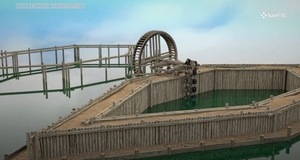
A brief but fascinating animation showing the engineering of the early 15th century Charles Bridge in Prague – decades of Medieval construction distilled into one animated minute. 

colossal

From top: Tanaiste Leo Varadkar leaked confidential documents to his friend and political supporter Dr Maitiú Ó Tuathail (right), a president of the now defunct National Association of General Practitioners (NAGP); Eamonn Kelly

The Village article saga will likely dominate the news this week. Following the article and the statement by the Tánaiste in which he acknowledged that he “had provided a government document to a medical organisation through informal channels,” as reported in The Journal, the next question is, Is that illegal?

Village contends that it is illegal, while the Tánaiste rejects this and admits that it was “not best practise”. This line “not best practise” has been taken up by the taoiseach and others like a shield to deflect the awkward legality angle.

The ins and outs of whether or not this practise is or isn’t illegal is way beyond the scope of my abilities to discern or decide and will be thrashed out over the next week by better informed heads. But the story is fascinating on a number of levels, not least the level of unprofessionalism involved.

It would appear that the recipient of the confidential document is a social friend of Leo Varadkar and was the beneficiary of a favour. It is almost as if one of the perks of being a friend of a politician is that you may have access from time to time to confidential documents which might normally only be available to certain people in government.

The gesture of sharing the document might also be a form of showing off to a friend the reach of your powers. Whatever the motive, the act itself, the sharing of the document, is basically unprofessional, whatever about its legality or otherwise.

Unprofessional Standards

This kind of unprofessionalism is not uncommon in Ireland. People often appear to break from their roles for the sake of interpersonal showing off or advantage.

The point though is not so much the legality or illegality of such actions, as it is the casual abandonment of the person’s role, position, duties and obligations by the standards of professionalism, which you would imagine are held in high esteem by those in high positions.

But as was demonstrated by the church scandals, that may not necessarily be the case, while the current mother and baby controversy seems to amount to a form of human trafficking in which the state is implicated.

And it is here that the Varadkar story is both very Irish and very average. Because here is a former taoiseach who apparently, while taoiseach, by his own admission, abdicated on basic professional standards in order to facilitate a friend.

A friend who was engaged in establishing a rival union to an already existing union representing people in the same sector. The fact that unions are involved, coupled with Varadkar’s neo-liberal ideology, makes the whole affair seem even more intriguing.

The careful repetition by other politicians of the phrase the Tánaiste used in his defence, “not best practise”, while being politically wily, manages only to project a suspicion of complicity in the practise, suggesting perhaps that the practise is fairly common in day-to-day political activity.

Certainly, the general view of politics in Ireland is that it is rife with cronyism. But what hasn’t been made so abundantly clear until now is the likelihood that one of the perks of governing is that you may share inside information with friends and acquaintances, presumably for any number of reasons: from a desire to impress with your power, to even perhaps issuing subtle business tip-offs. Who knows?

The point is, the impression given is that there doesn’t seem to be any moral reason why you wouldn’t engage in such practises. On the contrary, by Irish standards, it seems almost expected of you. You might even argue that the only reason for acquiring political power in the first place is that it gives you access to the inner sanctums of government from whose secrets you and your immediate circle of friends may derive benefit.

Again, such an attitude, which might be framed as “clever” by a certain type of person, is actually a lack not only of professionalism, but also of even the belief that professional standards matter. It’s an acknowledgment that cute hooerism is the accepted Irish professional standard.

Whose Government?

There was an article recently published in the Irish Times by the American writer Richard Ford which oddly sheds some light on this. Ford described Americans as being affected by “a deep, colonial-inherited suspicion of government.”

A similar suspicion due to colonialism perhaps exists in Ireland too, where the acquisition of political office often appears to be seen more like a hi-jacking of the levers of power than an acquisition of power to benefit the wider community.

This sense of an Irish politician using their position to facilitate a crony is what makes the Varadkar story so tawdry, so familiar and so disappointing.

Prior to this there were many who believed that Varadkar was a break with the kind of brown envelope past which, despite Michael Lowry and his supporters, was a culture (or lack of) that was always most strongly associated with Fianna Fáil.

Now it appears that this parish pump form of cronyism is not confined to one party, or even to the occasional cross-party bad apple, but actually appears to be a standard of unprofessionalism that informs much of Irish political life.

Rogue Element

The next week may be less about interrogating a system that encourages clientelism, less about finding out whether or not the Tánaiste’s actions were legal or otherwise, and more about a display of political manoeuvres designed to extricate Varadkar from this awkward tangle, without him having to resign, and without inadvertently implicating the entire system in the lack of professional standards that gave rise to the situation in the first place.

This kind of game has its place in our dysfunctional system, and a ready audience eager to admire the escapology of the rogue, which is how we, as post-colonials possibly understand the true meaning of politics.

Was it illegal? is not the question. Will he manage to get away with it? That’s where the sport is to be found.

Eamonn Kelly is a freelance Writer and Playwright.

Previously: Eamonn Kelly on Broadsheet

John McClean

This morning.

John McClean, a former Director of the Rugby Academy at UCD, has pleaded guilty to indecently assaulting 23 schoolboys at Terenure College in the 1970s and 80s.

John McClean, 73,  was an English and drama teacher, who also coached rugby at the school. He took up the position as director of rugby in UCD in the 1990s.

The charges were prompted by a 2018 article from Gemma O’Doherty, who spoke to a number of Mr McClean’s victims in Village magazine.Her report claimed some gardai were aware of allegations against Mr McClean for decades.

Former rugby coach John McClean pleads guilty to indecent assault of 23 schoolboys (RTÉ)

Previously: John McClean on Broadsheet

Previously: Aidan Fitzmaurice on Broadsheet

Earlier: A Leak To Remember

Thanks Derek

Minister for Higher Education Simon Harris

This morning.

RTÉ Radio One’s Today with Claire Byrne.

Minister for Higher Education Simon Harris, who was the Minister for Health at the time Leo Varadkar leaked a confidential government document on GPs’ pay to a friend, spoke about the controversy.

Claire Byrne: “This was your negotiation. Did you know at the time that the Taoiseach was getting this document that you had worked so hard to agree with the IMO and sneaking it off to his friend at the National Association of GPs?”

Simon Harris: “Well I don’t agree with that characterisation and we’ll come back to that in a moment. But no, I didn’t know. I didn’t know that the then Taoiseach was going to provide this document to the president of the National Association of General Practitioners. But I do very much accept his bona fides and what he was trying to achieve here in terms of an agreement that had now been reached, an agreement that had been announced indeed by himself and myself in a very public way on a Saturday, I think it was a Saturday, the 6th of April and then indeed I had actually brought a memo to Government on the 9th of April confirming that the engagement between the parties had concluded…”

Later

Byrne: “He was undermining you because if anyone was going to share that agreement with the NAGP, it was you?”

Harris: “No I don’t believe he was undermining me and I don’t think it’s about me either…”

Later

Byrne: “But it’s he obvious conclusion, it’s the obvious conclusion right. You’re doing an negotiation, you’re doing it with the Department of Health, with the IMO, all of this has been worked through in terms of the framework that should be followed and yet the Taoiseach is saying I want to get all the other doctors signed up to this, so he gets your document and sends it off to another crowd you have decided, quite rightly, that you’re not in negotiating with, this organisation, because of the framework that’s in place.

“There’s no other way to look at this. You are undermined here, minister.”

Harris: “I’m sure that wasn’t intentional because the negotiations had been concluded…”

Earlier: Leaking Confidence

Derek Mooney: Best Practice

SAGE Barista Express, the best-selling coffee machine during Lockdown at Currys PC World

This month.

Currys PC World commissioned a survey to find out what appliances people couldn’t live without during lockdown.

Lia Stokes writes:

With 74% of people saying they attempted to bake during lockdown and 59% saying they drink 2-4 cups of coffee per day, there’s no guessing when it comes to the appliances we’ve been relying on this year.

When it came to lockdown in March this year, it seems people were relying heavily on their coffee machines with more than a quarter of respondents saying it was their hero appliance during this time!

Other close contenders were the humble kettle, as well as the dishwasher – possibly the top argument-saving appliance in the home. Some rather unexpected lockdown heroes included a sous vide and a pet hair hoover!

Caffeine was king during this period with 65% of people saying they have and use a coffee machine and 59% saying they drink between 2-4 cups per day.

There’s no doubt many of us embraced our inner baker this year with a whopping 74% of people saying they tried their hand at it. Although banana bread was undoubtedly the internet’s favourite food this year, just 29% of people admitted to whipping up a batch of their own.

Cakes were in fact the preferred choice, with 34% of people claiming to have created their own showstoppers. 28% of people opted to bake their own bread (including Brian O’Driscoll!) during lockdown including sourdough, brown bread and focaccia and not a single respondent used a breadmaker to assist their efforts! However, stand mixers accounted for 34% of the efforts while electric hand mixers made up 46.5%.

Currys PC World

Behold: the centre of NGC 6514, aka, Messier 20, aka the Trifid nebula. To wit:

Three prominent dust lanes that give the Trifid its name all come together. Mountains of opaque dust appear near the bottom, while other dark filaments of dust are visible threaded throughout the nebula. A single massive star visible near the center causes much of the Trifid’s glow. The Trifid, cataloged as M20, is only about 300,000 years old, making it among the youngest emission nebulas known. The star forming nebula lies about 9,000 light years away toward the constellation of the Archer (Sagittarius). The region pictured here spans about 10 light years. The featured image is a composite with luminance taken from an image by the 8.2-m ground-based Subaru Telescope, detail provided by the 2.4-m orbiting Hubble Space Telescope, color data provided by Martin Pugh and image assembly and processing provided by Robert Gendler.

Previously: Spitzer’s Trifid

(Image: Subaru Telescope (NAOJ), Hubble Space Telescope, Martin Pugh; Processing: Robert Gendler)

apod

Broadsheet.ie