
Tag Archives: coronavirus

This morning’s The Guardian

Luke Brennan writes:

If you click on the headline above that says “US scientists believe virus is mutating, becoming more contagious“….

…you click through to a page with the subhead that states “Experts believe virus is probably more contagious“…

Then in the article body it states:

“The study did not find that mutations of the virus have made it more lethal or changed its effects, even as it may be becoming easier to catch”…

The article it links through to on The Washington Post is a good one, giving an intelligent balanced perspective on the immunologist perspective on the evolution of the virus.

The lowdown is this, viruses always mutate, the first half of the Guardian headline “US scientists believe virus is mutating” is like saying “US scientists believe rain is falling”. It is a characteristic part of its being.

It saddens me, as someone who studied science, to see this sort of headline. At the heart of science is a search for truth and the honest appraisal of relationships between things to help us learn and progress.

The Washington Port article is an excellent example of this. It starts with a simple premise, there are two strains of the virus that were prevalent in a test study, a “D” and a “G” version.They found that the virus was 71% G in the first wave, 99.9% G in the second wave. So G is more prevalent. The study states simply that.

Then there are interpretations of this data, by two scientists…
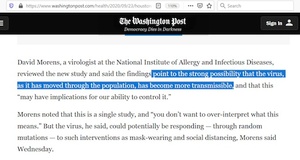
… one David Morens, had this (above) to say.

The article is then balanced by another perspective, that of Kristian Andersen (above):

You can see here that no-one is looking for a “Gotcha” moment here, the facts of the study is detailed, views are expressed, accepting that there are multiple interpretations. The article finishes up by a lament that more studies of these types are not carried out, that more data is available.

The key point of the article is this, if a record is kept of the sequencing, we can anticipate what the virus will do next. As Musser said in the last quote in the article “I think it is shameful that we are not doing that“.

Does that study, and the interpretation of it in the WP deserve to be summed up with a B – movie plotline? “US scientists believe virus is mutating, becoming more contagious”.

I’m sure it gets the clicks, but the first part is self-evident and connecting it to the second is to live on very thin moral gravy.

Previously: Luke Brennan on Broadsheet

Ah here.

This morning.

Meanwhile…

Orla writes:

Too busy to appear before the Oireachtas Special Covid-19 Committe. Not too busy to peddle more bouncy castle bullpoo on Newstalk

Previously: What They Don’t Teach You At Harvard Business School

Rollingnews

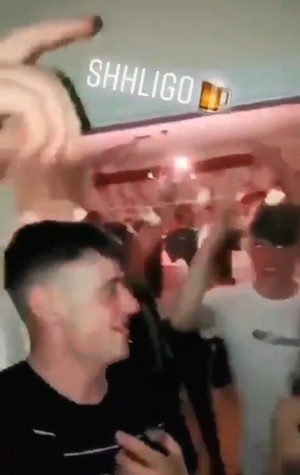
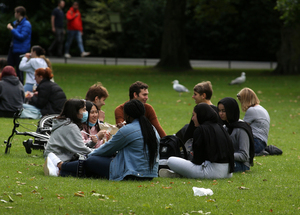
Sligo students (mainly blokes) having it large.

Gurning to the dance of DEATH.

We’ve all been there.

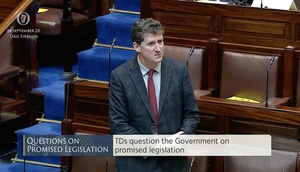
From top: Adrian Bartley (left), his father Ultan Meehan; Kilbrew Nursing Home, Ashford, County Meath; Eamon Ryan and Peader Toibín

Just now.

In the Dáil.

Aontú leader Peadar Tobín raised the death of Ultan Meehan who passed away, aged 79, in hospital just over two weeks after being admitted from the Kilbrew Nursing Home in Ashbourne, County Meath.

Ultan’s son Adrian Bartley, who was a resident of the same nursing home and who had Down Syndrome and dementia, died ten weeks earlier in April. He had also contracted Covid-19.

Peader Toibín: “Mary Bartley Meehan lost her son and her husband to Covid in Kilbrew Nursing Home [in Ashbourne, County Meath] within six weeks of each other. She was recently shown a video of her husband before he died.

“The side of Ultan’s face was discoloured with black, congealed blood. His nails were long and black as he had, unknown to himself, been picking his facial tumours. As a result, it had become infected.

“Shockingly, his face had become infected with maggots. Months after this has happened, Mary has sought an investigation. She has asked the Minister for Health, the Department of Health, the HSE, HIQA and all have refused an investigation of this.

“My colleague Eimear Tobin, Cllr Eimear Tobin in Meath, wrote to the Ombudsman and asked him to investigate this and he sent a letter back today. He said:

‘I’ve once again raised this issue extending to the remit of my office to include clinical judgment. The vast majority of cases relating to healthcare sector involve some element of clinical judgment. It’s a matter of frustration to me that complaints like these can’t be addressed by this office.’

“Minister, will you guarantee that somebody takes responsibility for this and carries out an investigation and that the Ombudsman’s remit is extended.”

Eamon Ryan: “Deputy Tobin I thank you. For me that’s a harrowing story which you can only feel your heart goes out for the family involved. What a terrible experience. Can I ask you to come back to me or to indeed to the Taoiseach or anyone else as to what legislative change would be appropriate in that regard and I’d happily respond on that basis.”

Meanwhile…

Last month

Health Minister Stephen Donnelly and Fine Gael TD Fergus O’Dowd, who has raised the case several times in the Oireachtas, had the following exchange about HIQA looking into the case.

Stephen Donnelly: “I share the Deputy’s sentiment on what has happened. Along with us all, I express my sincere condolences to Mary Bartley Meehan, to her family and to Mr. Meehan’s family, during what must be an extremely difficult time. HIQA is investigating what happened. They are providing a report.”

Fergus O’Dowd: “That is my whole point.”

Donnelly: “To answer the Deputy’s question, if I believe the HIQA report does not sufficiently answer the questions that the family has a right to know, then I will act.”

O’Dowd: “If I could intervene. HIQA is the regulator. It did not regulate and did not act. It cannot be the decision maker in this. This is why we need an independent inquiry. I can send evidence to the Minister that may help him to make up his mind on that.”

Donnelly: “I thank the Deputy. He can feel free to do that. In the first instance, however, the only agency of the State that can do this is HIQA. That is the current law and regulatory environment.”

O’Dowd: “HIQA was the regulator of the home and it did not do its job.”

Donnelly: “That is fine, but what I am saying is that in the first instance, HIQA has to investigate.”

Previously: “Will She Be Told Why This Happened?”

Rollingnews

Oh.

This morning.

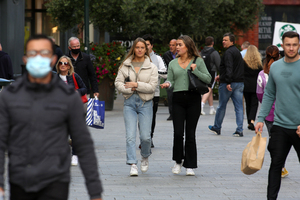
Jervis Street Shopping Centre, Jervis Street, Dublin 1.

Pic by Nick

Meanwhile…

Um.

This morning.

Today with Claire Byrne on RTÉ Radio One.

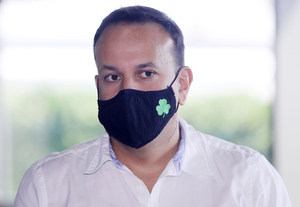
Tánaiste Leo Varadkar (above) was asked about Dr Martin Feeley’s article in today’s Irish Times (see below) and if he thought there was “anything in that”.

Dr Feeley’s opinion piece included the following:

Common sense might dictate that we expose the low-risk population to this condition and protect the at-risk, i.e, the red rag of “herd immunity”. That is what was happening and yet the policy seems to be to prevent this happening. This should particularly have been allowed to happen during the summer months before the “flu season” and thus reduce the workload on the health services during winter months.

…The at-risk can be protected by themselves and others adhering to proven protective measures…The young and healthy majority need to be allowed to live rather than exist, while being mindful of those at risk.

Dr Feeley stood down from his position as clinical director of Dublin Midlands Hospital Group last week with immediate effect, after the HSE “dissociated itself from his remarks” that Covid-19 is “much less severe” than the flu for most people and that restrictions were no longer justified.

Mr Varadkar told Ms Byrne that he disagreed with Dr Feeley’s views on young people and Covid-19 but he also said he didn’t agree with dismissing experts with alternative views.

He said:

“I don’t agree with what he’s saying. But I never think we should dismiss alternative views or certainly views that come from people of expertise because this is a new virus, it’s only around nine months. There’s a lot we still have to learn about it.

“Ronan Glynn, the Acting Chief Medical Officer, always says that anyone who speaks with certainty on coronavirus is doing so out of confidence not out of knowledge because there is so much we have yet to know or learn about the virus.

“One thing to me is that it is not like the flu. It is much more infectious and is much more dangerous in terms of a higher mortality rate and we don’t have an effective treatment for it and we don’t have a vaccine for it. So I think comparisons to the flu are incorrect.”

Earlier….

Dr Martin Feeley

This morning.

Dr Martin Feeley, who was forced to resign from Dublin Midlands Hospital Group after criticising Ireland’s ‘Draconian’ response to the rona, has responded to the controversy.

Via The Irish Times:

In view of recent controversies caused by an article in The Irish Times on Saturday, September 12, I think it is important to articulate my position on the present Covid crisis and its management, and to comment also on more recent developments

How lethal is Covid-19?

Up to August 10th, the number of Europeans who died from a Covid-19 illness (182,639) was slightly above the number who died three years ago as a result of “flu” (152,000). The number of patients who died in Europe from the 1917/18 Spanish flu was approximately 2.64 million – this would be equivalent to approximately 7.4 million deaths of today’s European population.

It is not for want of good reason that deaths are now referred to as Covid-19-associated deaths. Of 5,700 patients admitted to New York hospitals, 88 per cent had more than one underlying condition (co-morbidity) and the US Centres for Disease Control and Prevention reported that from January to May, 19.5 per cent of Covid-19 patients with co-morbidity died compared to 1.6 per cent with no other illness.

The Irish experience is very similar – up to mid-August 94 per cent of deaths were in patients with underlying medical conditions. A Stanford-led group analysed over 100,000 Covid-19-related deaths in Europe, including Ireland, and the US and concluded that “deaths for people under 65 without predisposing conditions were remarkably uncommon”.

Another important feature is the number of people who contract the virus and remain completely asymptomatic. In extremely well-defined scenarios such as the Diamond Princess cruise liner and the Theodore Roosevelt aircraft carrier almost 66 per cent of the positive tests were completely asymptomatic, while a report from China suggests 78 per cent of cases were asymptomatic

Who is at risk?

For most respiratory diseases, such as the common cold and influenza, children are the primary carriers. However, this does not appear to be the case with the Corona viruses which caused SARS in 2003 and Covid-19. Six weeks after opening schools in Denmark there was no evidence of a spike in cases. A University of Southampton review found no reported incident of pupil-to-teacher transmission.

While children are at negligible risk if healthy and not obese, conversely the individuals at the opposite end of the age spectrum are at greatest risk. The case mortality rate regardless of co-morbidities at 60 years is about 1 per cent, at 70 years about 2 per cent, and increases dramatically to above 15 per cent in individuals over 80 years.

The presence of a chronic illness is the all-important factor in determining the risk even in the elderly; up to mid-September approximately 6,000 nursing home residents had tested positive for Covid-19 and 83 per cent recovered. Diseases of the cardiovascular and respiratory systems are high risk; as is diabetes mellitus, although distinguishing its risk from the obesity risk is difficult.

The best kept secret regarding Covid-19 is the vulnerability of overweight individuals. For reasons unknown this is not publicised to the degree required. Unfortunately this lack of awareness is exacerbated, if not caused, by HSE-published data on risk factors. In its definition of obesity the HSE uses a body mass index (BMI) of 40 whereas most international literature uses a BMI of 30.

Dr Martin Feeley: Young and healthy majority need to be allowed to live (Irish Times)

Previously: That’ll Learn Him


What’s wrong with them?

Have they stopped listening to Tubs?

We may never know.

This afternoon.

Non-cowardly but reckless and infuriatingly panic-free ‘young people’ in Stephen’s Green, Dublin 2 and Dublin city centre.

Earlier, at the Oireachtas Special Covid-19 Committee meeting,..

…Professor Kirtsin Schaffer of the Irish Society For Clinical Microbiology, warned…

…that society is starting to verge into two directions and we have to try to bring society together again.

She said for young people the virus is an abstract term and they feel deprived of their social interactions.

We must change our approach and become more open and transparent because, she said, the younger generations have had enough.

On the other hand the elderly and the vulnerable are terrified, she said.

Don’t know they’re born.

Warning that Ireland at start of second wave (RTÉ)

Rollingnews

From top: Dr Johan Giesecke; Michael McNamara TD

This morning/afternoon.

Oireachtas Special Covid-19 Response Committee meeting.

Further to testimony from Dr Johan Giesecke, former chief epidemiologist in Sweden…

….Dr Giesecke was asked what a “soft lockdown” would entail compared to a hard lockdown.

He said:

“There’s no law telling people to stay at home and the police will not pick you up on the street when you shouldn’t be on the street. It is telling people what they should do with distancing, with handwashing, with staying home and so on, self-isolation if you feel sick.

“And you can actually estimate that the number of, in March, mid-March, when the Government introduced these measures, you could calculate that the number of potentially infectious contacts between people in Sweden dropped by 70%, just voluntary, no law.

People did what they were asked to do and they have continued, one thing that’s good with the Swedish strategy is that we haven’t changed anything for the six months whereas other countries are going in and out of lockdowns and restrictions, and which countries you can fly to and which countries you can not fly to.”

Asked how would Covid-19 be allowed to circulate among under-60s yet prevent its transmission to people over-60 and in care homes, Dr Giesecke said:

“Like Professor [Kirsten] Schafer [President of the Irish Society of Clinical Microbiology] said, there is no 100 per cent way to do that but there is a lot you can do to minimise the risk of introduction of the virus in care homes. Over.”

Later…

….Chair of the committee and Independent TD Michael McNamara asked Dr Giesecke if he agreed with the assertion that immunity levels in Sweden are currently no greater than other European states – despite Sweden allowing the virus to circulate more than those states.

Dr Giesecke replied:

“No, I think immunity levels are higher in countries where you had circulation.”

Asked about the efficacy of mask-wearing in all public settings, Dr Giesecke said that he agreed with Dr Tomás Ryan of the School of Biochemistry and Immunology at Trinity College Dublin that social distancing is more important than masks (Dr Ryan also said Ireland should have greater levels of mask wearing, and that mask wearing in all indoor environments should be promoted).

Dr Giesecke then had this exchange with Mr McNamara.

Michael McNamara: “Are masks compulsory in Sweden?”

Dr Giesecke: “No.”

McNamara: “Are they worn generally in schools?”

Dr Giesecke: “No.”

McNamara: “But do you think it would be beneficial if they were worn more?”

Dr Giesecke: “I think the scientific evidence to support mask wearing are very thin.”

Finally, each speaker was offered the chance to give their final thoughts to the committee about responding to Covid-19. Dr Giesecke said:

“Two things. Watch out for undemocratic decisions that are using emergency legislation in the case where it may not be needed. That’s number one. Number two is this will be with us for a long time. We will have to learn to live with this virus. Unless a very good vaccine comes out before Easter which I doubt. Thanks for inviting me.”

Earlier: Herdy Gurdy