

Translation: ‘Wash your hands like you’ve just chopped chillies and are off for a five knuckle shuffle’
Splütter.
Yesterday.
Colgne, Germany.
Pete M writes:
Good work, Germans. That’s how to get the message across….
Via Dr Jane Auken



Translation: ‘Wash your hands like you’ve just chopped chillies and are off for a five knuckle shuffle’
Splütter.
Yesterday.
Colgne, Germany.
Pete M writes:
Good work, Germans. That’s how to get the message across….
Via Dr Jane Auken


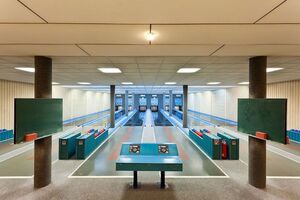

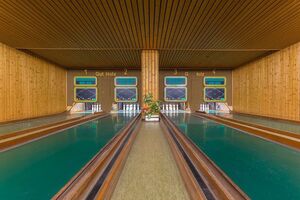


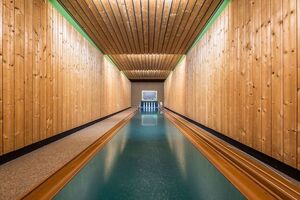

No, not stills from a Wes Anderson movie.
Rather, the retro Kegelbahnen of Southern Germany – largely untouched and mostly located in the basements of traditional restaurants – documented by Robert Götzfried who sez of them:
“Kegeln is pretty similar to bowling but with only nine pins, smaller balls, and shorter lanes. It used to be a big thing in Germany in the ‘60s, ‘70s and ‘80s. These days this sport is not ‘en vogue’ anymore and it seems that mostly older people go these ‘Kegelbahnen.’ ”


This afternoon.
Sky News.
Accurate reporting for a change.
Via Highfield Financial Planning
Meanwhile…
Angela Merkel landing in #Dublin #Ireland now pic.twitter.com/mS1Cu5YC5A
— Intel Sky & Air (@air_intel) April 4, 2019
Earlier: Angst Haben
German Foreign Minister Heiko Maas at the Global Ireland conference in Dublin Castle yesterday
“ I will leave it to the bookmakers and fortune-tellers to predict the results of discussions in London. However, there are three takeaways from the Brexit process and the current state of world affairs that I would like to share with you today.
The first is: We are strong when we stand together. During the Brexit negotiations, all 27 Member States agreed on a common position – and stood by it.
This unity includes full solidarity with Ireland. We insisted, and still do, that a hard border dividing the Irish island is unacceptable. And yes, some people called us stubborn.
But the truth is: Avoiding a hard border in Ireland is a fundamental concern. It is a matter of principle, a question of identity for the European Union. A union that, more than anything else, serves one purpose: To build and maintain peace in Europe.
As Germans, we understand how walls and borders can threaten peace. We believe in the peace-making power of European unity.
A belief we share with you, the Irish. Your Good Friday Agreement is living proof of this principle”
German Foreign Minister Heiko Maas in Dublin Castle yesterday.
Thanks Otis Blue

Yikes.
A number of Ryanair pilots in Germany will hold a strike on Friday, as similar protests take place in Ireland, Belgium, and Sweden.
German Ryanair pilots to join strike on August 10th (Newstalk)
Pic: Ryanair

“Look at the German!”#WorldCup2018 #MEXGER 💔 pic.twitter.com/UVrJnsMfNY
— Tom Moylan (@moylato) June 19, 2018
*kichern*
German papers slam national team ‘wimps’ after World Cup loss to Mexico (ESPN)
This morning.
Iveagh House, Dublin 2
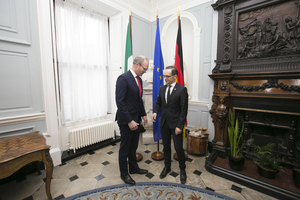
Tánaiste and Minister for Foreign Affairs & Trade Simon Coveney with his German counterpart Heiko Maas, who is on a one day visit to Dublin.
Mr Coveney and Mr Mass unveiled proposals for closer Irish-German ties, including “a new consulate in Frankfurt, a joint Irish-German economic council, closer political and ministerial exchanges and a greater arts push co-ordinated by a new cultural director in Berlin”.
Fight!
Sam Boal/Rollingnews


As our own Winter Wonderland turns to slush, the frozen mountain forests of Germany and central Europe remain crisp and pristine in an evocative photoseries by Killian Schönberger.

AfD supporters celebrate as exit polls are announced
Projected results put the AfD on 13%, behind Angela Merkel’s Christian Democrat-led alliance on 32.9% and the Social Democratic party on 20.8%. The rightwing populist party’s delegates are expected to take more than 80 out of 631 seats in the next parliament.
While the result may not be on the scale of 52% of Britons voting to leave the European Union or 46% of US voters casting their ballot for Donald Trump, it nonetheless represents a landmark in postwar German history.
Germany’s rightwing populists will arrive in the Bundestag with the best result for any new party since 1949, a higher share of the vote than either the Greens or the leftwing Die Linke have achieved in several decades.
In the states that used to form East Germany, AfD looks likely to become the second-largest party.
AfD may not be the first far-right party to enter the Bundestag since the second world war: until 1960 a number of small nationalist groups took part in the coalition government under West Germany’s first post-war chancellor, Konrad Adenauer.
But it will be the first party with an overtly nationalist rhetoric and agenda to claim seats in Berlin’s Reichstag, a building that still echoes with the horrors of the Nazi era.
AfD leaders vow to ‘hound Angela Merkel’ after strong showing at polls (Guardian)
Here is the problem: A far-right party has achieved substantial support even in Germany, a country with a history that serves as a warning of what the far right can do in power, and a political establishment that has long paid attention to confronting the right.
Germany furthermore lacks many of the characteristics commonly associated with far-right populism — the economy is in good shape, the unemployment rate is low, and Germany’s power and prestige are at a historic high. All this says that citizens are more disaffected and populism has greater appeal than many analysts have recognized.
Behind the ‘boring’ German election are four deeply disturbing trends (Washington Post)

They’re back.
Are Ya Having That? writes:
Leather Jacket Guy and Johnny BS unbox traditional German treats!!

 </a
</a