
Yearly Archives: 2017

endaderek

From top: Taoiseach Enda Kenny; Derek Mooney

“But as I leave you I want you to know – just think how much you’re going to be missing. You won’t have Nixon to kick around anymore”

With these words, Richard Nixon departed the political scene, well almost. It was November 7th, 1962. He was concluding what he assumed would be his last ever political press conference after losing the race to become Governor of California. Two years earlier he had narrowly lost the Presidency to John F Kennedy.

While Enda Kenny’s departure, when it comes – possibly over the next week or two – will not be as bitter and waspish as Tricky Dicky’s, there may just be the slightest hint of the same sentiment: just think what we will potentially be missing.
Love him or loathe him, during his time as Taoiseach Enda has been anything but colourless or bland. For all his faults and failings, he showed quickly that he realised that one of the main roles of any Taoiseach is re-assuring the public that there is someone with a plan in charge.

He also grasped that this role as the nation’s re-assurer-in-chief requires you to get out and about and meet people as much as possible. In some ways, Enda has spent the past six years doing a passable Bertie Ahern impression.

Nonetheless, it is where we saw Enda at his best. When you meet him in person, either in a one to one chat or as part of an audience, you realise that Enda genuinely enjoys pressing the flesh.He possesses an ebullient personality, unlike either of his two possible successors, and so he comes across as warm and engaging when encountered personally.

This natural ability and skill was also a potential liability. His desire to have something to say to everyone and to do it spontaneously could lead to problems – as our greatest ever Taoiseach, Sean Lemass, famously observed – the danger with such off-the-cuff utterances is “not the little too little, it’s the little too much”.

Hence Enda’s occasional problems with the actualité. We saw it again last week in Canada when he misremembered discussions about human rights in Saudi Arabia and ended up recounting what he now wished he had said, rather than what he had actually said when sitting with the Princes.

One way his team of advisers had come up with to try to curb Enda’s effusive tendencies was to try to keep him to a script. It worked, but only to a certain extent. If they truly wanted him to him under control then all they had to do was to turn on a camera on.

Nothing was more guaranteed to make him appear wooden and staid than a TV camera. Whereas many senior politicians only truly come to life when the lights switch on and the cameras start rolling, Enda was the opposite. He shifted down the gears. Gone was the bonhomie and the spontaneity and in its place a stiffness of both language and style.

It partly explains why he did not like formal TV debates. It was not his strong suit. But this was not just because of the cameras, it was more than that. Enda is not a details man. Nor is he adept at recalling long tracts of script or prepared lines.

This was clear in his head to head party leaders debate with Bertie Ahern in the May 2007 election. During the pre-debate spin Fine Gael had so reduced the expectations for their man that all he had to do was show up and not set the desk on fire for them to claim a draw.

On the night, many pundits were in awe of Enda as he seemed to hold his own for about the first twenty minutes of the encounter. I recall a senior party colleague calling me about fifteen minutes into the exchange concerned that Enda was doing so well, but their worry was short lived.

By the twenty-minute mark Enda was starting to flag, he was running out of rehearsed material. Meanwhile Bertie, who absorbs and retains facts and figures, was just getting into his stride and used the remaining sixty minutes to leave Enda behind.

Another four years in opposition, including a failed heave against him, and a further six years as Taoiseach has improved Enda’s speech giving ability considerably. He delivered one of his best ever speeches in Canada last week. It was considered and reflective and included a section on the concept of “othering” that I mentioned here in a recent article saying:

“It is happening to the degree that the old battles of right and left might well be over, to be replaced by something that seeks, not to unite us, but to divide us, not only among ourselves, but from what they identify and objectify as the Other. They see the people not for who they are as individuals, but as what they are as an ethnic or faith or economic group.”

It was a well written speech, delivered extremely well. At several junctures, he seemed not to be reading it from a script, but rather delivering it extemporaneously. What just about stopped it from being a perfect speech, was the inclusion of the oft made, but inaccurate, claim that his government achieved the whole recovery by itself – conveniently omitting the reality that two thirds of the correctives had been made by the time he arrived in office, but old habits die hard, I suppose.

In a few week’s (or months) time I will miss having Enda to kick around. I may have a few others to miss too from around the Cabinet table. Instead I will have to focus on the possible successors: Simon, the Enda 2.0 or Leo, the anti-Enda.

Remarkably, both come to the threshold of high office with considerably more ministerial experience than Enda did when he won the leadership. But while both have many years more time spent around the Cabinet table, they come without Enda’s experience of political hard knocks. Their political paths have been charmed and uneventful, well they have certainly been devoid of any great track record or achievement.

Both will doubtless enjoy a political honeymoon and may even feel tempted to capitalise on it with a snap election – whether they will have that opportunity may well be determined by just how down and dirty the race to succeed Enda gets and how much damage will have to be repaired before facing out to meet the voters.

Derek Mooney is a communications and public affairs consultant. He previously served as a Ministerial Adviser to the Fianna Fáil-led government 2004 – 2010. Follow Derek on Twitter: @dsmooney
Screen Shot 2017-05-08 at 13.01.59

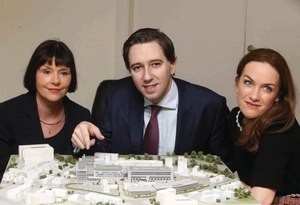
Chief Operating Officer at St Vincent’s University Hospital Kay Connolly; Minister for Health Simon Harris TD; and Dr Rhona Mahony, National Maternity Hospital master

Today.

At 5pm.

Is the deadline for submissions to An Bord Pleanála over the building of the new National Maternity Hospital on the St Vincent’s site in Elm Park, Dublin.

On March 10, the Minister for Health Simon Harris announced that the application was made.

On the same day, Paul Cullen, in The Irish Times, reported:

The move follows the resolution of an 18-month dispute between the two institutions over governance of the new hospital and the recent decision by An Bord Pleanála that the development constitutes strategic infrastructure and can therefore be fast-tracked through the planning process.

Despite this, on May 2, Taoiseach Enda Kenny told the Dáil:

While a planning application has not yet been lodged for the proposed new maternity hospital on the St. Vincent’s University Hospital complex, the proposed structure guarantees that the very best facilities will be available for expectant mothers that one would expect to see in the early part of this century.

After the application was made in March, An Bord Pleanála wrote to Dublin City Council for its views on the application.

The proposed building will be 10m higher than the height permitted (24m), under the Dublin City Development Plan.

However.

Olivia Kelly, in The Irish Times, reports:

Three buildings on the St Vincent’s site already exceed the maximum permitted heights for the area: the clinical services building at just under 36m, the Nutley Wing at 40m and the private hospital building at more than 45m tall.”

“…Due to the presence of existing taller buildings the council had determined that the application did not contravene the city development plan.”

“However it said, even if the board determined that the building did not comply with the city development plan, it could still grant permission for the hospital, due to its veto powers under the planning acts.”

An Bord Pleanála is due to make a decision on the application by September 11, 2017.

Meanwhile.

In the latest edition of The Phoenix magazine…

C_O81CCXoAAYruj

Council backs maternity hospital move despite building height (Olivia Kelly, Irish Times)

Dáil transcript: Kildarestreet.com

Yesterday: Darkness Into Light

Rollingnews.ie and Ruairí McKiernan

solar-egg-sauna-architecture-050517-1023-02solar-egg-sauna-architecture-050517-1023-01 solar-egg-sauna-architecture-050517-1023-03 solar-egg-sauna-architecture-050517-1023-04 solar-egg-sauna-architecture-050517-1023-05

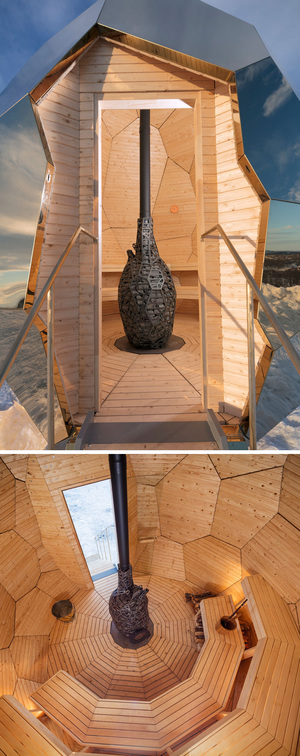
The Solar Egg by Stockholm based design duo Bigert & Bergström – a steel egg plated with gold (reflecting the surrounding landscape of Kiruna in Sweden) with a wood-fired sauna inside. 

Made of 69 separate pieces and accessed by a folding golden stairway, the sauna egg is a  public art installation which can accommodate eight sweaty patrons at once.

contemporist

3 4 5

2

1

Saturday.

Jobstown, Tallaght.Dublin 24

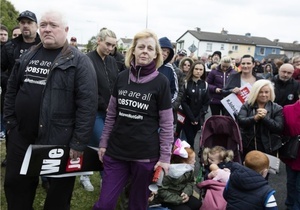
A gathering to protest the ongoing trial of several men, including Paul Murphy TD (pic 1) and Barry Williams (pic 3, with daughter Niamh) charged with the false imprisonment of former Tanaiste Joan Burton and her advisor, Ms. Karen O’Connell at a Right to Water protest in the area in 2014. #NotDregs refers to remarks Ms. O’Connell made while sitting in a car with Ms. Burton.

Eamonn Farrell/Rollingnews

Screen Shot 2017-05-08 at 11.33.12

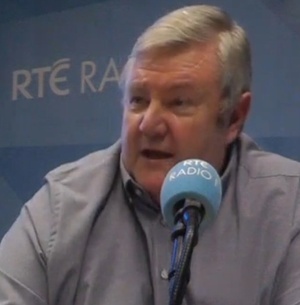
From top: Former Minister for Justice Dermot Ahern; Stephen Fry on The Meaning of Life with Gay Byrne in January 2015

You may recall on Saturday how the Irish Independent’s Cathal McMahon reported that gardaí were investigating a complaint made by a member of the public who claimed English writer, actor, comedian and presenter Stephen Fry made blasphemous comments on RTÉ One television in January 2015.

It was reported that, after the comments were made on Gay Byrne’s The Meaning of Life, the complainant made the complaint in Ennis Garda Station.

The Irish Independent reported:

In late 2016 I wrote to the Garda Commissioner Noirín O’Sullivan asking if the crime I reported was being followed up – a few weeks later I got a standard ‘we have received your letter’ from her secretary.” [the complainant said].

A number of weeks ago the complainant was called by a detective from Donnybrook garda station to say they were looking into the report he made about blasphemy on RTÉ.

“He said he might have to meet me to take a new more detailed statement.”

The viewer insisted that he wasn’t offended by the remarks but stressed that he believed Mr Fry’s comments qualified as blasphemy under the law.

A garda source said the matter is being investigated.

Further to this…

The former Minister for Justice Dermot Ahern, of Fianna Fáil, spoke to Seán O’Rourke this morning in relation to Ireland’s blasphemy law which he updated in 2009 instead of having a referendum to get rid of it.

From their discussion…

Seán O’Rourke: “You were the Minister for Justice and Law Reform when the law was changed in, was it 2009? To introduce a particular provision on blasphemy. What happened then, remind us?”

Dermot Ahern: “Well I wanted to introduce a particular provision, it was already in the 1962 act, defamation. I became minister in 2008 and the defamation bill, which was mainly about defamation and slander and court actions in that respect and the high awards being given out in the courts and, your own organ and many other media outlets had lobbied very strongly for that particular piece of legislation. It wasn’t on my highest priority when I became minister because I was confronted with gangland crime and I, in order to get space in the Dáil, I concentrated on that. But, after about the year, I decided I’d have to do something and pass, bring forward the defamation bill at the time which I think had been initiated by my predecessor Michael McDowell. And we, I sat down with the Attorney General [Paul Gallagher], went through the whole thing and, at the very end of it, he said, by the way, he said ‘you have to put in something about blasphemy’. And I said, ‘what’s that, what’s it about?’. And he said, ‘well, in the Constitution it says that there’s a mandatory obligation on the Dáil and Seanad to have a law on blasphemy. So he gave me a choice: either we have a referendum to delete blasphemy or we, in effect, renew the crime of blasphemy, against blasphemy and that’s the choice we took, rather than go for a referendum.”

O’Rourke: “And this all happened a full 15 years or more, in fact, after the Law Reform Commission, recommended, in 1991, that there was no place in society that respected free speech for this kind of provision. And the Law Reform Commission recommended that it be deleted.”

Ahern:They said it wasn’t appropriate but I think what they suggested was that it should, having a referendum on its own would be a waste of time I think they said, and an expensive exercise. I decided that there was no way that I was going to recommend to the Cabinet, in the economic climate that we had in 2009, when the Government were cutting people’s wages, where people were losing their jobs, where we were going to have an expensive referendum solely on the issue of blasphemy. I’d be laughed out of court…”

O’Rourke: “Why didn’t you just…”

Ahern: “What I did say, what I did say in the parliament, in the committee stage, was that the Government would consider having a referendum in conjunction with a number of other issues on the one day. And I obviously indicated that we would be willing to do that. In fact, I think it was in our Programme for Government at the time, that we’d do it. But I wasn’t going to recommend to Government that we would have a referendum seemingly about blasphemy.”

O’Rourke: “Yeah, I think what happened was the 1961 act, which you were updating on, defamation, it prescribed penalties but didn’t define the offence of blasphemy and what you did then was have that definition introduced.”

Ahern: “Yes, and it was done in such a way, that as one of the experts in this area, a man called Neville Cox, said that in fact he said subsequently that the legislation, and I’m quoting from him, he basically said that the legislation fulfilled a constitutional obligation to have a crime of blasphemy but then he said, I’m only quoting what he said, ‘skilfully rendered the law completely unenforceable’.”

O’Rourke: “Was that your intention?”

Ahern:To a certain extent it was, I can’t really…the Attorney General wouldn’t forgive me for saying it but we put in so many hurdles within, in order to ground the prosecution that we believed that we would never see a prosecution for it.”

O’Rourke: “Yeah, because I think…”

Ahern: “That was only to fulfil, again, I said in the committee stage in the parliament, that we can’t do nothing, we had to do something. We either have a referendum which, as I said, I made a judgement and I think the Government would have agreed with me. That it was absolutely ludicrous to have a referendum in 2009 in those circumstances when, you know, the country was in severe difficulty and that here we were asking for people to go out and vote on blasphemy – you’d bring every headbanger in the country from either side of the argument solely on blasphemy.

O’Rourke: “Yeah, I think the definition, the definition that you put in there, it related to uttering material that would be grossly abusive or insulting in relation to matters held sacred by any religion. But then a defence would be that there was a work of genuine literary, artistic, political, scientific or academic value…”

Ahern: “And that was all put in, and it was also put in I think that we would have to show that the person intended insult, which is a very difficult thing to prove. Obviously.”

O’Rourke: “And what about the fact though, that you kept in very hefty fines, was it what, up to €25,000?

Ahern: “Well that was the recommendation from the Attorney General. I think it was based on what would be the updating of the original fine in the law.”

O’Rourke: “Yeah, and then this matter was referred to, the previous Citizens’ Assembly, looked at all manner of subjects. Sorry, I’m going to rephrase that question. And then this matter was one of many which was looked at by the previous Citizens’ Assembly [the Constitutional Convention], the one whose work led to the marriage equality referendum and also the referendum on lowering the age for eligibility the age for the presidency  and then I think there’s a current, there’s a commitment in the current programme for government, to hold this referendum. Do you think it should go ahead?”

Ahern: “Oh absolutely yes, and I, you know, I would be of my view that it should be done not on a single issue, that they should tack it on to some other referendum. There are those commitments and the Citizens’ Assembly have agreed, or suggested that it be deleted. I would have deleted it at the time, if I could, but I couldn’t other than have a referendum. And I was quite astounded by the subsequent reaction against it. Making me and the Government out to be extremely reactionary, etc, etc and also the suggestion that we were bringing in a new blasphemy law, when in fact we weren’t, it was an existing blasphemy law, 1961. All we did was dramatically dilute it in order to fulfil the mandatory obligation in the Constitution that there should be a law against blasphemy.”

Previously: Oh God

Gardaí launch blasphemy probe into Stephen Fry comments on ‘The Meaning of Life’ (Irish Independent)

Related:  I’m not just embarrassed my country invited Stephen Fry on TV then investigated him for blasphemy – I’m angry (Emer O’Toole, Independent UK)

Listen back in full here

beach

Dooagh beach, Achill Island,  County Mayo before (top) and after (above) April storms that deposited sand back on its strand for the first time since 1984

For decades they had to beseech
The ocean to give back their beach
Now those in the west
Are finally blessed
And once more their life is a peach

John Moynes

Pic: Achill Island Tourism

12039468_1130666690295079_9052449128716265655_n

Sons PhoneticDéise hip-hop collective

What you may need to know…

01. Acting as both a name for their collective creative endeavours and an umbrella for their solo work, Waterford beats co-op Sons Phonetic is comprised of Rabiah “Mook” Zaruq (aka Nylon Primate), Sammy Dozens, Tommy Tyler, Ian Kav, Mouse Hughes and DJ/cutman Tom Dunne.

02. This past weekend, the collective’s first collaborative release since 2011 debut album Twelve Labours was released, entitled Deloreans.

03. The self-produced LP features cuts from UK skratchologist Moschops and Corkonian hip-hop godfather JusMe.

04. The album is streaming in the widget above, and available for download via their Bandcamp, along with several of the members’ solo releases.

Thoughts: Proper, boom-bap production and clinical, precision wordplay. Decent Irish hip-hop™, indeed.

Sons Phonetic