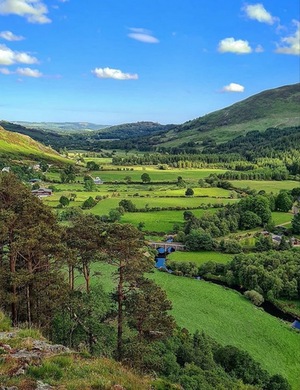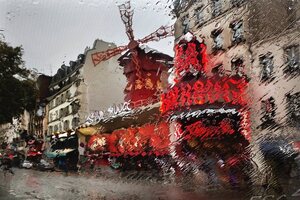




Photo-collage by German artist Volker Hermes.



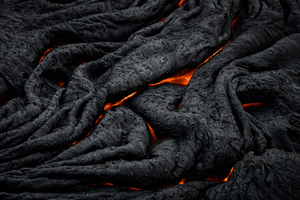
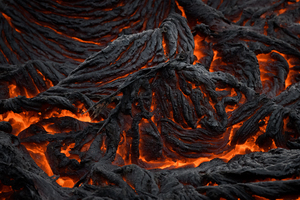
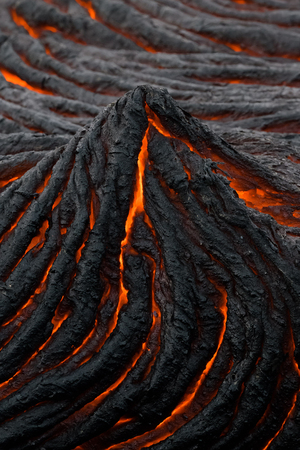
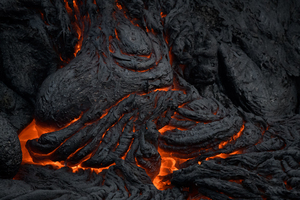
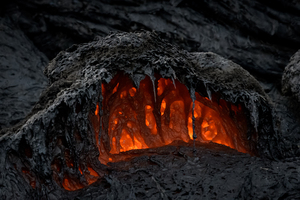


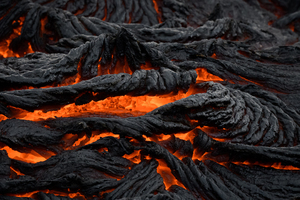
Icelandic photographer Jan Erik Weider’s portraits of molten rock flows from the Fagradalsfjall volcano who spent three days earlier this year getting as up close and personal as humanly possible. To wit:
I was absolutely blown away by how quickly the lava field changed. Apparently, cooled lava broke open, and thick, fresh lava flowed out and formed new shapes and “sculptures,” which were then destroyed again by new lava a few minutes later. This simultaneously beautiful but also brutal transience was the charm for me. A surreal landscape that in just a few minutes will no longer be visible to anyone.


Two HD time-lapse videos from the ESA featuring astronauts Thomas Pesquet and Shane Kimbrough installing a new pair of solar arrays on the ISS last month.
They also cleared out the gutters and fitted a crow guard on the chimbley.
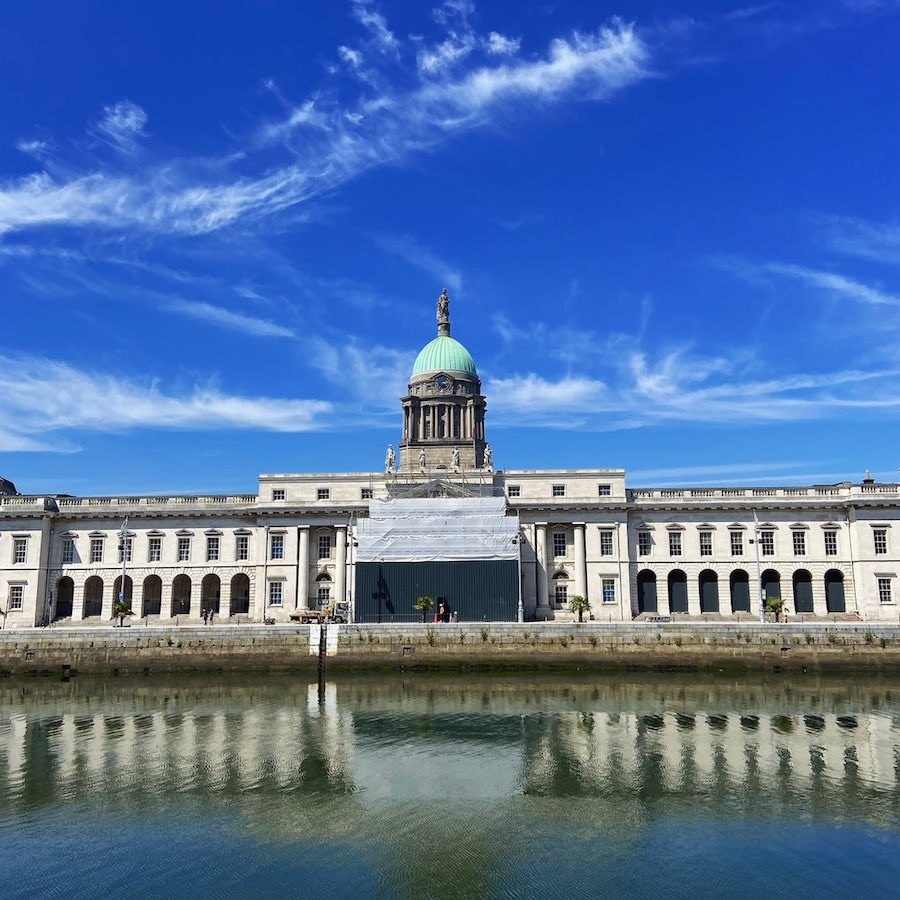
Yesterday.
Colum Cronin tweetz:
Beautiful blue sky summer’s day at the Custom House. Built in 1791. Burnt to the ground during the War of Independence in 1921. Restored in 1928. Further restorations in the 80s. And you can see the tarpaulin and scaffolding surrounding the building again today

Behold: the Orion nebula, tidied up for your viewing pleasure by energetic stars. To wit:
Also known as M42, the nebula’s glowing gas surrounds hot young stars at the edge of an immense interstellar molecular cloud only 1,500 light-years away. The Orion Nebula offers one of the best opportunities to study how stars are born partly because it is the nearest large star-forming region, but also because the nebula’s energetic stars have blown away obscuring gas and dust clouds that would otherwise block our view – providing an intimate look at a range of ongoing stages of starbirth and evolution. The featured image of the Orion Nebula is among the sharpest ever, constructed using data from the Hubble Space Telescope. The entire Orion Nebula spans about 40 light years and is located in the same spiral arm of our Galaxy as the Sun.
(Image: NASA, ESA, Hubble Legacy Archive; Processing: Francisco Javier Pobes Serrano)


To celebrate its recent acquisition by Hyundai, Boston Dynamics has a pack of its Spot robot-dogs (now with hands because the quadruped action wasn’t disturbing enough) perform to “IONIQ: I’m On It’ by Korean boyband BTS.

Behold: a paper moon, a canvas Sun and cardboard clouds. Not really. To wit:
The featured picture of an orange coloured sky is real — a digital composite of two exposures of the solar eclipse that occurred earlier this month. The first exposure was taken with a regular telescope that captured an overexposed Sun and an underexposed Moon, while the second image was taken with a solar telescope that captured details of the chromosphere of the background Sun. The Sun’s canvas-like texture was brought up by imaging in a very specific shade of red emitted by hydrogen. Several prominences can be seen around the Sun’s edge. The image was captured just before sunset from Xilingol, Inner Mongolia, China. It’s also not make-believe to imagine that the Moon is made of dense rock, the Sun is made of hot gas, and clouds are made of floating droplets of water and ice.
(Image: Wang Letian (Eyes at Night)