An interesting feature by Vox (from the perspective of the US, which would appear to have all the jabs) on why you should never judge a vaccine by its stated efficacy rate.
Whatever that is.



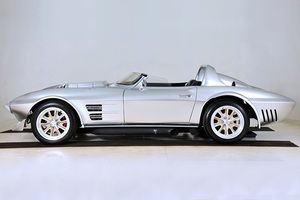


 Behold: the 1963 Chevrolet Corvette Grand Sport.
Well, not quite. Only five Grand Sports were ever made. All are spoken for and this isn’t one of them.
This is a no-expense spared replica, commissioned for the 2010 Fast And Furious sequel ‘Fast Five’ by Ohio-based autoshop Mongoose Motorsports. Titled as a 1966 Corvette, the car has a 380bhp GM performance crate 350 engine, automatic transmission and a custom tubular chassis paired with C4 suspension.
It’s the only survivor of twelve such vehicles made for the film and it’s yours at auction next month.
Bidding starts at €84,000.

Behold: the snaky, braided filaments of glowing gas emanating from Abell 21, also known as the Medusa nebula. To wit:
…this Medusa is an old planetary nebula some 1,500 light-years away in the constellation Gemini. Like its mythological namesake, the nebula is associated with a dramatic transformation. The planetary nebula phase represents a final stage in the evolution of low mass stars like the sun as they transform themselves from red giants to hot white dwarf stars and in the process shrug off their outer layers. Ultraviolet radiation from the hot star powers the nebular glow. The Medusa’s transforming star is the faint one near the center of the overall bright crescent shape. In this deep telescopic view, fainter filaments clearly extend above and right of the bright crescent region. The Medusa Nebula is estimated to be over 4 light-years across.
(Image: Josep Drudis)

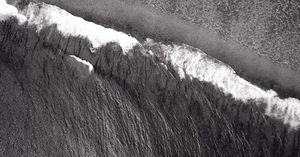
Artist Thomas Blanchard’s hypnotic monochrome video for ‘Omega II’ by French ambient instrumentalist Sébastien Guérive.


A 2017 short by Denis Walgenwitz and Winshluss in which Death’s son is more interested in becoming a guardian angel than taking over the family business.

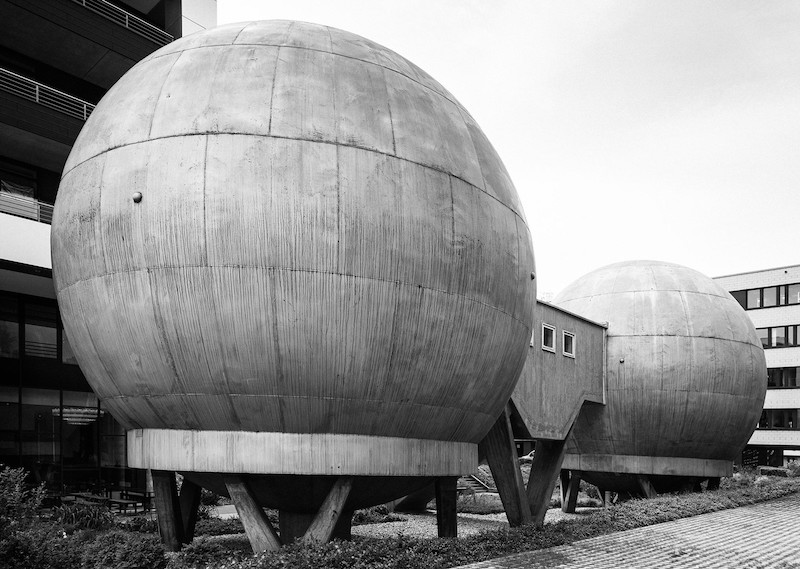


‘Berlin Brutal’: the uncompromising architecture of mid 20th century Berlin captured by Felix Torkar.
From top: Institut für Hygiene und Mikrobiologie, Fehling+Gogel, 1966–74; Isothermische Kugellabore, Horst Welser, 1959-6;Kaiser-Wilhelm-Gedä chtniskirche, Egon Eiermann, 1957–61; Kirche Mariä Himmelfahrt (heute: Mor-Afrem-Kirche), Alfons Boklage, 1964–66 and St. Agnes, Werner Düttmann, 1965–67.
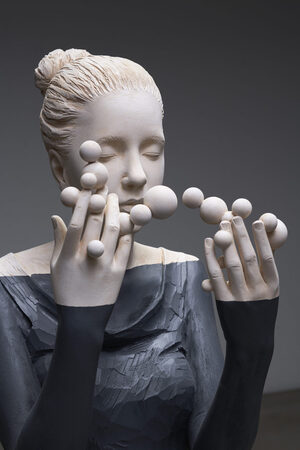
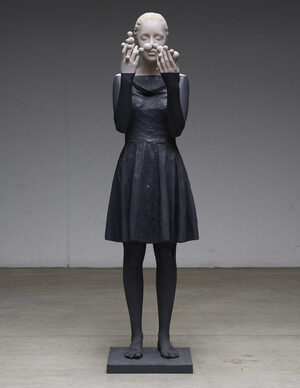


The absurd, whimsical wooden sculptures of Italian artist Willy Verginer – lifelike subjects bisected by strips of monochrome paint, exuding bubbles from their heads and fingertips.
Most of these figures are from his recent series, ‘Rayuela’, Spanish for hopscotch and the title of Julio Cortázar’s counter-novel that can be read from front to back or vice versa – a stream-of-consciousness style, producing varying endings and meanings depending on the reader’s sequence.