Category Archives: Misc

Screen Shot 2016-08-02 at 14.27.51 Screen Shot 2016-08-02 at 14.28.02 Screen Shot 2016-08-02 at 14.28.09

Eek.

This afternoon.

On the River Liffey by the Seán O’Casey bridge.

Leah Farrell writes:

A boat turns over as swimmers jump into the River Liffey, while they launched the 97th Dublin City Liffey Swim at North Wall Quay in Dublin today. The 97th Dublin City Liffey Swim takes place on Saturday (August 6), at Rory O’Moore Bridge, beside the Guinness Brewery, Dublin 8.

The men’s race begins at 1.30pm and the women’s race at 2.30pm. More than 400 swimmers will take part in this year’s race. The Dublin City Liffey Swim is organised by Leinster Open Sea, a not-for-profit voluntary organisation, and is sponsored by Dublin City Council.

Rollingnews

Cosa1lAUMAAEOob

Sunday’s Sunday Business Post

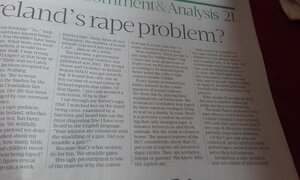
In the Sunday Business Post, at the weekend, Elaine Byrne wrote about how, at 3am one morning, two men chased her in an attempt to attack her.

Recalling the event, Ms Byrne wrote:

The gardaí came. They said I shouldn’t be out so late and dropped me home.

I never really told anyone about this incident. The narrative would have been predictable. Were you drinking? “No.” Well, you should have known better anyway. You shouldn’t have been out so late. What were you wearing? Somehow, it would have become my fault. I was wrong. What did I expect at that hour of the night? There was no Garda report, no incident recorded for the statistics. Nothing.

Ms Byrne added:

I sat through my friend’s rape trial. I watched her on the stand being cross-examined by a barrister and heard him say the most disgusting line I have ever heard in the English language.

Your injuries are consistent with the straddling of a gate. Did you straddle a gate?

Because that’s what women do for fun. We straddle gates.

Why do we ignore Ireland’s rape problem? (Elaine Byrne, Sunday Business Post)

no-blacks-no-irish-01no-blacks-no-irish-02

Yesterday.

Brixton, South London

Ireland-born Richy and Jamaica-born Taurayne modelling Conscious Power tees which sneakily subvert the nasty ‘No Blacks No Dogs No Irish’ message to UK migrants in the 1960s and 1970s

You can order a ‘More Blacks, More Dogs, More Irish’ tee by emailing Consciouspower@outlook.com.

More Blacks, More Dogs, More Irish: Brixton street scene (Brixton Buzz)

Thanks Marissa McEntee

5970f16f5a38bf67bd14350fcb2c79eb_0

Put Out with Wasters writes:

“Greyhound seemed to make it really difficult on me to remain on the Current Plan (fixed monthy charge). In past you didn’t have to do anything to remain on the plan you were on but they changed it up on us this year. Even after I did what was required, they’ve tried to switch me to Pay By Weight anyhow!

They required that we have double the usual pre-pay monthly amount in the account. I did that. I also sent an email and filled out the online form requesting to stay on our current plan – and yet I logon this morning to see they’ve charged me as a Pay By Weight customer. Anyone else seeing this?”

Anyone?

Screen Shot 2016-08-02 at 12.41.30

A still from a PSNI video as part of a campaign to raise awareness about hate crimes

The Police Service of Northern Ireland PSNI has launched a new campaign to highlight hate crimes.

They have released a series of 30-second videos, narrated by victims describing their own personal experiences.

Among them is Broadsheet contributor Shayna O’Neil, who is undergoing gender reassignment.

Shayna was asked to take part in the campaign after being assaulted and driven from her home in Tyrone.

Shayna writes:

Hate crime encompasses race, religion, sectarianism, homophobia, biphobia, transphobia and disabled-phobia.

I have to say that I wasn’t aware that disabled-phobia was a ‘thing’ – and frankly shocked that it exists, but apparently it does and the PSNI recorded 134 incidents of disability hate crime in the last financial year.

An instance of a sustained regime of attacks against a wheelchair-bound gentleman in West Belfast will feature in the series.

Following Brexit, it appears that a growing number of incidents of race hate crime in England have been reported. Fortunately, this has not been the case in Northern Ireland but this is a timely pro-active campaign by the PSNI.

The first video to be released was designed to coincide with the launch of the Belfast Pride Festival.

The message is designed to encourage people to think about the impact hate crime incidents have on the victim and the long-lasting physiological and emotional damage it can cause.

Superintendent Paula Hilman who is the PSNI Silver lead for hate crime said she hoped the campaign would help encourage not just victims but the wider community to report incidents of hate crime to PSNI.

Supt Hilman told me:

“We know that hate crime is an under reported crime and, as a result, we need to ensure victims have the confidence to report these incidents. We also hope that by sharing the voices of victims that we will encourage people to think about the human impact of these wholly unjustified and unacceptable attacks. There is a collective responsibility on all parts of society to protect vulnerable communities and we would encourage to report concerns or suspicious activity to the police. We need this information from communities to support arrests and make subsequent prosecutions and put an end to all forms of hate crime.”

I can only comment on my own experience and admit to being entirely tentative about contacting the PSNI following my assault.

In fact, it was three days after the incident that I finally reported it. The officers who dealt with me were sympathetic and importantly, respectful of me. They encouraged me to pursue the case to court.

The assault took place in my local store at lunchtime one Sunday. The store was very busy, but apparently with a shop full of witnesses, no-one saw anything? The whole scene was caught on the store’s CCTV, which ensured a conviction of my attacker.

Interestingly, on the day of my court case, the defendant had pleaded, “not guilty”, under advisement of his brief, in the hope that I would feel too intimidated to make an appearance – in which instance, the case would be dismissed.

The PSNI sent a car for me, to take me to court, and I was accompanied by the investigating officer. Clearly, the news of my arrival had filtered down to my attacker’s barrister, and he changed his plea to “guilty”.

I didn’t have to give testimony. He (my attacker) received a three-month prison sentence, suspended for two years, and ordered to pay £100 compensation.

I’m not advocating for the PSNI, merely sharing my own positive experience on how they deal with hate crime. They do take it seriously. Victim, or witness to a hate crime – it should be reported.

Hate crime reporting (PSNI)

Update:

maxresdefault

St Patrick’s College in Maynooth, Co Kildare

Where do we sign?

What on earth is going on?

In yesterday’s Irish Independent, journalist Sarah MacDonald reported that seminarians from Dublin will not be sent to study at the national seminary in Maynooth this year.

Instead, Archbishop Diarmuid Martin will be sending them to the Irish College in Rome. The decision followed claims of a “gay subculture” among seminarians in the college in Co Kildare.

Today, Ms MacDonald reports that a former trainee priest will meet with the Garda sexual assault unit this week to make a formal complaint against a priest who, he alleges, harassed him while he was studying in Maynooth.

Further to this, Ms MacDonald spoke to Seán O’Rourke on RTEÉ Radio One this morning, along with Patsy McGarry, of The Irish Times, and Anthony Murphy, of The Catholic Voice.

Sarah MacDonald: “People are being given the forum now, for example, a new voice, or a new group called Vama – Voices Against Maynooth Abuse – have brought together complaints from a number of ex-seminarians, and they’re beginning to make their concerns public. And a number of these relate to concerns around staff and seminarians behaving inappropriately within Maynooth. There are also complaints and concerns around confidentiality agreements that are forced on seminarians within nine weeks of commencing studies.”

“And these confidentiality agreements, one seminarian told me that they forbid the disclosure of any activities or anything that they see or hear within the seminary and they’re not even allowed tell their own families about this. So there is a concern that that’s leading to a culture of secrecy.”

“And this culture of secrecy is something that we’ve heard about and was addressed, to some extent, over the child safeguarding scandals but now it seems to be hitting on concerns of young seminarians who feel that they’re being targeted for inappropriate behaviour and that they’ve no way of actually getting their complaints dealt with objectively and impartially.”

Sean O’Rourke: “There’s a combination of different strands there, as you say. But what has Archbishop Diarmuid Martin had to say, by way of explanation for why he has chosen to transfer students for the priesthood, from Maynooth, to Rome?”

MacDonald: “Well he hasn’t come out directly and linked what I’m hearing from ex-seminarians with his decision. He’s being rather coy about it, he said he isn’t happy with Maynooth, that there’s an atmosphere of strange goings-on, a quarrelsome place with anonymous letters being sent around and I suppose this is part of the concern is that if there is a situation where people can’t actually make complaints, have an impartial complaints procedure, seminarians or staff members have concerns that bishops might act against them and that they don’t have a place where they can air their grievances safely, without fear of retribution. Some people have obviously resorted to sending anonymous letters – be it to the bishops or to the media or this new group Vama that has emerged…”

Later

O’Rourke: “You could understand, people listening to this, it’s not the kind of behaviour, not by a long, long shot that one would expect to be happening in a national seminary where future Catholic priests are supposed to be studying and not engage in any kind of sexual activity, it’s supposed to be sublimated to their higher calling, be it heterosexual or homosexual. So, this is the atmosphere that Archbishop Martin is referring to, is it?

Patsy McGarry: “There is an added element to this too, Seán. A senior figure on this staffing team in Maynooth resigned unexpectedly there in June and it’s said his concerns were to do with the theological formation mainly. And it was announced around the same time that the president of Maynooth was taking sabbatical leave for a period. It was pointed out and emphasised that this was not in relation to any of these events. But he’s due to retire next year as president which, really, raises the…”

O’Rourke: “Yes but the resignation of the individual who wasn’t satisfied with the theology, was that on the grounds it was too liberal or too orthodox or what was his complaint? I’m assuming it was a he, by the way.”

McGarry: “well the belief is…It is a he. This man, this priest was himself quite orthodox but his concerns were primarily with theological formation but also with the other, if you might use the phrase, strange goings-on at the college.”

O’Rourke: “Ok, to come to you Anthony Murphy, you the editor of the Catholic Voice newspaper, you’ve been writing about this for some time?”

Anthony Murphy: “Well, we have. We probably started writing about it five years ago and, you know, it’s important to emphasise that this is nothing new, it’s really like history repeating itself. Because these kinds of allegations to have been surrounding and enveloping Maynooth since the 1990s and they’re always of a similar nature. And you know, as you’ve pointed out, it doesn’t sound like a house for priestly formation. It sounds like a cross between a gulag, a mad house and a dating agency.

And we have to ask the serious question: you know, what on earth is going on? And it’s very good, I welcome the decision by the Archbishop of Dublin to withdraw his seminarians from Maynooth but simply  to say there’s strange goings-on there, it’s not good enough. You know, these young men, formations are very thin on the ground in this day and age. And when young men make the decision to sacrifice their lives and go through all the difficulties of becoming a priest, to be treated in this appalling way and, you know, and then for the rest of us to be told there’s strange goings-on there, it’s really not good enough. So, we need to know what the strange goings-on are – there should be an independent investigation now, into the seminary…”

Listen back in full here

90390658
mark

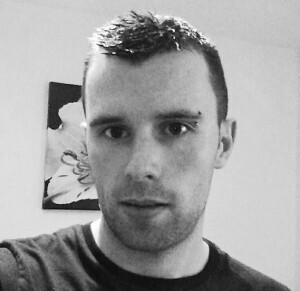
From top: RTÉ Studios, Montrose, Donnybrook, Dublin 4; Mark Cullinane

How did the public service broadcaster deal with austerity?

Mark Cullinane has completed a PHD on the response by the BBC and RTÉ to the economic crash.

Mark writes:

Academic research on the editorial coverage of and responses to crisis by national public service broadcasters on both sides of the Irish Sea is starting to come in and the emerging picture points to both the BBC and RTÉ as having fallen more or less in lockstep with the right-wing economics of their respective conservative governments.

As part of my own research I analysed a sample of the television and radio broadcast coverage by the Irish public service broadcaster, RTÉ, on some key aspects of what has become known as the Euro debt crisis between 2011 and 2013 – a moment where the future of the single currency seemed to hang in the balance.

The periods analysed encompassed a sequence of momentous and dramatic events in recent European history, including the aborted referendum in Greece on the country’s second bailout package, the subsequent ejection (through EU machinations) of prime ministers in both Greece and Italy and their swift replacement by technocratic administrations, as well as a series of tight elections in both countries in which radical anti-austerity political groupings surged and threatened to seriously disrupt Europe’s austerian masterplan.

My analysis aimed to explore how, when confronted with the travails of other peripheral crisis-hit ‘PIIGS’ nations, RTÉ’s framings of events implicitly and explicitly apportioned blame for economic crisis, legitimised or delegitimised the actions and proposals of different actors, and weighed up journalistically the electoral choices open to Greeks and Italians.

Analysis of the more than 150 separate broadcast items across the sample revealed some consistent features of crisis framings that confirm the general impression of public service broadcasting’s susceptibility to reproducing the preferred narratives of their political masters.

This is illustrated by, for example, the sustained blaming of Prime Ministers George Papandreou and Silvio Berlusconi, in Greece and Italy respectively, as key causes of crises; the horror expressed by journalists at the very prospect of opening up the decision on the second Greek bailout to its population in a referendum; the lending of tacit and explicit support for the anti-democratic statecraft that led to the ousting of both premiers on the basis that they represented threats to the integrity of the Eurozone; and the hailing of their EU-approved temporary technocratic replacements in the form of central banker Lucas Papademos and EU insider Mario Monti, as preconditions of national salvation in both countries.

So elevated was the official sense of emergency at the height of the Euro debt crisis that the studied journalistic performance of disinterestedness, often accentuated in coverage of foreign elections, instead went up a few octaves.

After entirely missing the electoral ascent of Syriza in the first, inconclusive Greek general election of 2012, during the subsequent second campaign its leader Alexis Tsipras was presented as a dangerous populist who had seduced a nihilistic electorate and was leading them to certain ejection from the Eurozone and perhaps even the EU.

Inconclusive election results in both Greece and Italy were assessed mainly in terms of their alignment with the best-laid plans of EU leaders and validated through the ever-present divination of market desires.

The views of those suffering the consequences of their austerian policies, however, remained a distant interest.

Irish viewers were even quietly invited to pull on the green jersey and cheer on the forces of technocratic fiscal responsibility in the face of those who would threaten ‘our’ recovery by causing market instability. So much for the prospects of an inter-PIIGS alliance!

As with the 2012 European fiscal compact treaty, the naturalisation of disciplinary neoliberalism as the new common sense segued seamlessly into a posture of seeing its challengers as quixotic dreamers at best or subversives at worst.

It was little surprise then, that when it emerged in late 2014, the largest Irish anti-austerity movement since the economy crashed – Right2Water – was given short shrift, not just by Ireland’s right-leaning commercial print and broadcast media but by the public broadcaster, too.

The movement, co-ordinated by unions and comprising affiliated political parties and autonomously-organised communities up and down the country, had formed in order to oppose the imposition of another Troika-mandated regressive charge – this time on water usage – as well as the new Irish Water utility which appeared to be established with a clear eye to medium term privatisation.

Both its sheer size – packing the main thoroughfares of towns and cities across the country on a consistent basis – and its broad constituencies of support made it a movement that no government could afford to ignore.

The coalition’s calculation that some concessions on the charging regime would dissipate opposition was proven misplaced as a large and sustained boycott of water bills throughout 2015, combined with a poor showing by the ruling parties in the general election of February 2016 produced a parliamentary arithmetic that swiftly forced the temporary suspension of water charges and imperilling the entire Irish Water project, for now.

For a broadcaster ensconced in its traditional political role as mediator of genteel parliamentarism, the street politics of an increasingly powerful anti-austerity movement were never likely to be warmly received in the circles of metropolitan Irish middle-class liberalism within which RTÉ is culturally immersed.

There are many contributing factors that might be cited to explain the journalistic failures of how the water wars were covered over the last few years.

Middle-class scorn at Right2Water’s subaltern base, for example, continues to play a role that should not be underestimated.

But most instructive of all, I suggest, is the sheer incompatibility of the movement’s very structure, modes of mobilisation and political demands with a broadcasting model whose conception of legitimate politics begins and ends at the gates of parliament, within whose perimeter political journalists resemble mere courtiers in thrall to its local dramas.

Mark Cullinane is a doctoral graduate in sociology from University College Cork. His research focused on the performance of the Irish public service broadcaster in mediating contemporary political and economic crisis.

Read on: Public service austerity broadcasts (OpenDemocracy.co.uk)

Mick FealtyPodcastCover Tunein

From top: Mick Fealty; William Campbell

In the latest episode of William Campbell’s Here’s How podcast (recently nominated for an Irish blog award) William meets veteran Northern Ireland journalist Mick Fealty, founding editor of Slugger O’Toole.

William writes:

Mick says the short-term effects of Brexit are being overestimated but the long-term effects are being underestimated. Will unionists really flock to get Irish passports?

Fight!

Listen here:

Slugger O Toole