

Category Archives: Misc

app-savills

It’s positively Mexican.

Dr John McCartney, Director of Research at Estate Agent Savills writes in today’s Irish Times that “property prices will have to go up, or costs will have to come down, before we see the resumption of large scale housing development“.

A First Time Buyer writes:

It’s a Mexican stand-off.

Prices will only increase with wages or if the Central Bank relaxes its mortgage lending rules.

Increasing wages would make our economy less competitive and would be detrimental for our FDI [foreign direct investment] and SME [small and medium enterprises] sectors.

Relaxing the CBI rules would increase the available mortgage amounts for borrowers, which would directly result in higher bids on the few properties that are available.

But house prices are already expensive with the result that would-be homebuyers are again having to look to the commuter belt.

Robbie Kelleher, Senior Investment Strategist at Davy’s outlines that the ratio of average house price to average incomes is currently close to 6x – in the past this ratio ranged from between 3x and 4x.

So what about the costs?

We’re told that the reason for the lack of housing supply are the high costs incurred by builders which, at current selling prices, they find increasingly difficult to pass on to potential buyers.

These costs include including labour, materials, professional fees, site acquisition, finance costs, development levies, social housing obligations and building and planning regulations.

Builders say they need to make a profit of at least 15% in order to achieve replacement costs and that, at the prices being achieved at present, this isn’t possible.

The banks are making exorbitant profit margins on variable rates. The ECB has cut its rate to zero per cent and the Irish banks refuse to pass on these savings on to their customers.

The Legal Services Regulation Bill was diluted down and is unlikely to lead to any significant reduction in legal costs.

The Planning Guidelines on Design Standards for New Apartments introduced last December now allows for smaller sized one, two and three-bedroom apartments.

The Part V social housing requirements have been reformed and a rebate scheme has been introduced in respect of levies paid to local authorities in Dublin and Cork, on foot of affordable housing development.

The Urban Regeneration and Housing Act introduced a vacant site levy but it is not in effect until 2017 and not payable until 2019.

The Department of Finance are adverse to introducing tax breaks for the residential property market as they may simply lead to a transfer of tax revenue from the State to developers with no effect on supply.

The definition of Mexican stand-off is a situation in which no one emerges a clear winner.

One thing is for certain there are a lot of losers as a result of our housing crises. But who is going to break the deadlock?

Industry view: Prices must rise or costs come down for major house building to restart (Irish Times)

Ireland in 2016: Housing Remains the Big Challenge (Davy)

Rollingnews

CdN4yB5XIAAbgR4 shelterpod

A homeless ‘shelter pod’ placed on Molesworth Street, Dublin (top) and being removed this morning (above)

You may recall how on the morning of February 15, 2016, homeless campaign group Gimme Shelter Ireland erected four ‘shelter pods’ across Dublin.

One was placed outside the Central Bank on Dame Street; one opposite the Dáil on Molesworth Street, next to where Jonathan Corrie died in December 2014; one beside Busáras facing the Custom House; and one on O’Connell Street.

The pod placed outside the Central Bank was removed later that day.

Further to this…

Seán Kenehan, in Lovin’ Dublin, writes:

A homeless ‘shelter pod’ on Molesworth Street was demolished and removed by the council in the early hours of this morning.

It had been home to Columb Fogarty, a homeless writer who just last night detailed his experience living on the streets in an article he wrote for Lovin Dublin.

Columb was given just five minutes to clear out when the removal happened suddenly at 7am – and some of his belongings were still in the shelter when it was destroyed.

This homeless ‘shelter pod’ outside the Dáil was destroyed by the council this morning (Lovin’ Dublin)

Previously: For Pod’s Sake

Pics: Rabble and Lovin’ Dublin

1 2 3 4

Green items from The Irish Workshop –  a platform for shoppers to buy directly from the workshops of Irish makers, designers and craftspeople.

Order today for St Patrick’s Day.

Charmiane Kenny, of the Irish Workshop writes:

Every year around St. Patrick’s Day, it is easy to find yourself struggling to find something green to wear, particularly if you want to look classy for the day’s festivities. Four Irish designers  help us in our quest to get our green on: Items can be ordered by clicking the links.

1. Award winning knitwear designer, Áine Knitwear, from Co.Clare has a selection of her lambswool designs in lime green. Gorgeous.

2. Dublin artist John Kirwan individually handpaints the scenes of the West, centred on Connemara’s stone walls, onto bowties. Dapper.

3. Milliner Davina Lynch handknits chunky Aran Hats with hand-dyed feathers – she calls them Lynchmobs. The forest green Lynchmob is perfect for St. Patrick’s Day – and for rugby matches too. Cosy.

4. Dublin-based textile artist, Brendan Joseph Scarves, distills beautiful places into woven scarves and bowties. This one is inspired by the Wicklow Mountains. Luxurious.

The Irish Workshop

hkYE569L

New Zealand Labour MP Iain Lees-Galloway

RTE reports:

New Zealand has passed legislation banning zero-hour contracts, in what is thought to be one of the first laws in the developed world to end the use of deals criticised as exploitative.

Opposition Labor MP Iain Lees-Galloway was joined by his political opponents in supporting the Employment Standards Legislation Bill to end the use of the deals under which employees are required to be available for work but have no guaranteed minimum hours.

To the best of my knowledge it’s the first of its type [in the developed world], certainly in terms of the US and UK,” Mr Lees-Galloway said.

“It’s possible Denmark doesn’t have them because these type of contracts are all about exploiting loopholes and I don’t think Denmark had the loopholes in the first place.”

There you go now.

New Zealand bans zero-hour contracts (RTE)

Previously: Zero Hour Contracts And You

The ‘If And When’ Employees

homeless

A homeless person sleeping rough in Temple Bar in November 2015

In forming a government, unlike Lanigan’s Ball, it is less important who is stepping in and out again and more important what policies they agree on. All of the parties to the current dance have explained, during the election, that their priority is to “protect the most vulnerable”, but now we need to turn this into detailed multi-annual policies to reduce poverty.

The first step is to recognise the shocking scale of the problem. The CSO has found that, between 2008 and 2013, the proportion of our people experiencing “deprivation” nearly trebled to 29 per cent. This means being unable to afford two from a list of items like heating your home or eating a substantial meal every second day, a very basic measure in the 21st century.

More than a third of children and one in five of people at work were classified as experiencing deprivation, while the picture is worse for groups like Travellers, lone parents, the long-term unemployed and the homeless.

For decades we have danced around in the same pattern. In boom times, people in poverty are left behind, while in more austere times the same groups suffer the most. Breaking this cycle will need a long-term commitment to policies and investments to provide adequate income, quality work and services, funded by sufficient and fair taxation.

There has been plenty of research and experience to show what makes the difference between a country with high and low levels of poverty. Nearly 20 years ago, the all-party National Anti Poverty Strategy pointed to most of the instruments needed. However, strategies alone don’t change the world; we need solid commitments in the programme for government to end the dance of poverty and despair.

Anne Loftus,
Chairwoman,
Robin Hanan,
Director,
European Anti-Poverty
Network,
Upper Ormond Quay,
Dublin 7.

Tackling poverty (Irish Times letter)

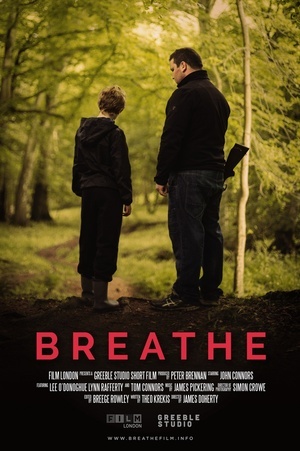
breathe

Breathe.

Set among the Travelling community

Peter Brennan writes:

 Our short film Breathe featuring John Connors (Love/Hate) has been selected by the British Film Institute and British Council to feature on BFI player as part of Five Films 4 Freedom, the world’s biggest online LGBT film festival.

Breathe will have its Irish premiere at the Dingle Film Festival on Friday March 18th [11am, St. James’ Church, Dingle, Co Kerry]…

Breathe (facebook)

Screen Shot 2016-03-11 at 10.25.30

Last October Caoimhe Butterly reported on working with refugees in Greece, Serbia, Croatia and Calais and the work she planned to do – specifically bringing a medical team out to Lesbos to help the people arriving on the island from Turkey.

Further to this, Caoimhe writes:

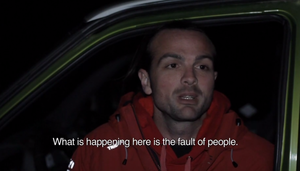
“For the past weeks, I’ve been editing a film of sorts – or vignettes- of those seeking refuge and lives of less precariousness. While in Lesvos the last time, we (myself and the great compañero Marcelo Biglia) interviewed folks from Syria, Iraq and Afghanistan and some of those working in solidarity with them – lifeguards with Proactiva, self-organised camps and places of respite.

…Our emphasis was on not contributing any further to an often reductionist framing of those on the move – one that emphasises vulnerability but not strength, endurance, dignity and the fragile, precious hope of being able to re-build lives of safety and meaning.”

Caoimhe Butterly

Previously: Giving Berth

Wireless+School+2

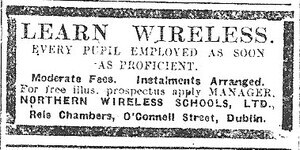
Cathal Brennan writes:

In 1916 Number 10/11 O’Connell Street was the location of Reis’s Chambers, which housed, among other businesses, the Irish School of Wireless. During Easter Week the insurgents captured the building and began broadcasting news of the Rising to the world.

The insurgents’ plans to capture the wireless school was one of the most daring and far sighted acts in revolutionary warfare and became a starting point for all modern revolutions. Capture the local broadcasting facilities.

Radio and the 1916 Rising (Cathal Brennan, Timeline.ie)

12728799_1539482489682599_2948876196702042336_n

Roisín El CherifKerosene

What you may need to know…

01. Dublin-based Galwegian Roisín El Cherif comes to the singer-songwriter fray from a multimedia background, including assistant director work on Brooklyn, Vikings, and others.

02. Her experience informs the video to single Kerosene, which she wrote, co-produced and directed with FailSafe Films.

03. The tune itself is a proposition seemingly made for bigger stages, which gives precedence to El Cherif’s voice, at once plaintive and possessed of certain presence.

04.
Roisín is playing at King Kong Club in Dubland on April 5 and has a few live session vids upcoming via The OB Blog’s OBSessions series. Stay tuned to her various social media for more.

Verdict: Big, sweeping pop with an ambitious visual identity to match. Much here to love for fans of the singer-songwriter oeuvre.

Roisín El Cherif