Category Archives: Misc

last night.

RTÉ Prime Time.

This herd is small, but that one is far away.

*chews cud*

(How close is Ireland to herd immunity? (Mark Coughlan, RTE)

Last night.

Budapest, Hungary.

After his Republic of Ireland players were booed before the teams played out a goalless draw against Hungary, manager Stephen Kenny said:

“The fact it was booed is incomprehensible really, and it must be damaging for Hungary, with the Euros in Hungary.

“It’s disappointing and it doesn’t reflect well on Hungary really, on Hungarian support. It doesn’t reflect well.

“Our players wanted to do it. It’s important. It’s an important stance and I commend them for taking that stance.

“I think it was the right decision. I approached [the Football Association of Ireland’s international operations manager] Barry Gleeson and said it was something we wanted to do, take the knee, and I think it’s a very important message.”

Alternatively.

Stephen Kenny: Republic of Ireland boss brands Hungary fans who booed his players taking a knee as ‘incomprehensible’ (Sky)

Meanwhile…

Beautiful game, in fairness.

Above from left: Labour Senator Marie Sherlock; Labour Education spokesperson Aodhán O Riordain; Ivana Bacik; her Director of Elections Duncan Smith TD, Labour Senator Rebecca Moynihan, and Labour Party Leader Alan Kelly

This morning.

Grand Canal, Dublin 2.

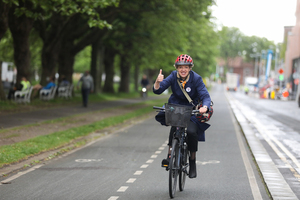
Cycling Senator Ivana Bacik and Labour Party colleagues celebrate her announcement as the party’s candidate for the Dublin Bay South by-election.

Not her first rodeo.

RollingNews

Meanwhile…

Mmm.

Preppy.

Last night.

On RTÉ One’s Prime Time.

Dr Maeve O’Rourke (above), lecturer and director of Human Rights Law Clinic at the National University of Ireland in Galway and co-founder of the Clann Project, spoke to Sarah McInerney about the Commission of Investigation report into Mother and Baby Homes and why it should be repudiated.

It followed the Clann Project publishing a transcript of an Oxford University seminar on June 2 last in which one of the authors of the commission’s report, Professor Mary Daly, explained why evidence given by survivors to the commissions’ confidential committee was deliberately and consciously excluded from the main body report and the commission’s ultimate findings.

Professor Daly said to integrate that confidential committee testimony into the body of the main report would have required “hundreds of hours of cross-checking…”.

Sarah McInerney: “Professor Mary Daly made it very clear in her testimony that the reason she felt, or the commission felt, that they couldn’t include survivors’ testimony in the main report, was because of the law. She said that those witnesses, if they wanted to include their testimonies, would have had to go through a very tough legal process and have their statements challenged. Do you accept that is something that would have needed to have been done?”

Dr Maeve O’Rourke: “There’s two things to say here. The first is that the law, the terms of reference which were in the statutory instrument, underpinning the commission, specifically state that the commission was empowered to the extent it considered appropriate to take into consideration what was in the confidential committee report, for the purposes of making general findings.

“So it’s not true that the law prevented the commission from integrating confidential committee testimony into the report in some way.

“The second thing is that, actually, a lot of people would have wanted to and did, in our experience, want to give proper evidence, as Professor Daly might have seen it, to the investigative committee. But, as we wrote repeatedly in public, but also we wrote to the commission in 2016 to point out that the commission unfortunately was not advertising the investigative committee on its website.

“We said that many people in touch with us had given evidence to the confidential committee, had no idea of the difference, and we asked the commission to advertise the investigative committee on its website because at that time, it was only letting people know about the confidential committee.

“And 550 people went to the confidential committee and only 19 managed, directly themselves, to get to the investigative committee in the first instance to give oral evidence.”

McInerney: “All right. And as it happens, the Government has not sought to defend those claims by Professor Daly. They also believe that the witness testimony could have been included in the report but Minister Roderic O’Gorman…has also said that, despite that witness testimony not being included, the Government doesn’t feel at this point that it can reject the report on the basis that, to do so, might undermine the redress scheme because, a spokesman for him said, particularly around the number of deaths and the conditions in the institutions, and the failure of the state to act on reports of these conditions. All of those findings in the report will advise the redress scheme.”

O’Rourke: “Well the minister is actually failing to turn his attention to the other key findings in the report and I’m not sure that people realise that this report finds: there is no evidence of incarceration in the institutions, no evidence of forced adoption, no evidence of medical neglect, no evidence of forced labour in mother and baby homes, and that adopted people’s criticism of the secrecy of information has been vitriolic and unfair.

“And, actually, the recommendations for  redress in the report are highly limited. The commission only recommended that women who were in institutions for more than six months, but only before 1973, should receive any medical care or payments. And the only children born in those institutions who should receive any redress are children who were in the institutions on their own. In other words, the commission did not recommend redress for the separation of mother and child because essentially it found there is nothing to see here, there was no unlawful separation. And that, as we know, is not true. And that cannot stay on the national historical record as the accepted version.”

McInerney: “So, if this report is rejected, as campaigners now are calling for, how does the Government decide who qualifies for redress?”

O’Rourke: “But Roderic, the minister, has already said to survivors several times, I’m not going to be bound by the limitations of the commission report. So I don’t think the Government can have it both ways.

“They’ve actually recognised that their redress scheme is going to have to recognise the harm of separation of mother and child, I think; the harms caused to children who were boarded out; the harms caused to people who were in poor adoptive placements that weren’t overseen properly. So on the one hand, he’s saying ‘don’t worry, I won’t be bound’ and on the other, he’s claiming that he has to be, even though we know that that’s not the case. We know that the redress board…”

McInerney: “Could it get too big though, Maeve. If there are no limitations on the redress and all the people who you say have gone through this very difficult  time in their lives, at the hands of the state, and religious institutions, but still, could it get too wide and and too unwieldly?”

O’Rourke: “But that is a political decision. It’s not a legal one. It’s never been. These redress schemes, unfortunately in some ways but have always been on the ex-gratia principle, meaning that ‘we recognise the moral need, we’re not recognising a legal need’. There will be some restrictions to the scheme but the  Government has already said we won’t base the scheme, really, on the commission report.

“So what I’m saying, what we’re all saying, is that this commission report does a massive disservice to the survivors in terms of historical truth and it’s not good enough say, ‘oh survivors are more interested in money than they are in the truth’. You can’t make them choose one or the other. The truth is the most basic form of redress, actually.”

McInerney: “And does it help at all that the minister has said, ‘we believe you’. He’s writing to survivors to say ‘we believe you’?”

O’Rourke: “I actually think it’s somewhat patronising of the survivors because, in actual fact, officially, they are not believed. And we have to remember that, long after Minister O’Gorman is gone, civil servants may well, as they do with the McAleese report, be relying on this report to say in public, as they still do, about the magdalene laundries, ‘the State has found there was no systematic abuse here’.

“We are seeing at the UN Committee Against Torture right now a case by Elizabeth Coppin who was detained in three magdalene laundries. And the State is saying ‘she is not telling the truth because the McAleese committee found no credible evidence of systematic ill-treatment in magdalene laundries’. So these reports have a lifetime far beyond any Government.”

Meanwhile, during the same programme, Susan Lohan, co-founder of Adoption Rights Alliance, said:

“I think when you have one of the three main authors of the report outline the shortcomings of their actual approach, that they took this decision to discount eye-witness testimony, that, certainly for the Adoption Rights Alliance, is the death knell in this report.”

On the commission’s report becoming the official, final word on Mother and Baby Homes in Ireland, Ms Lohan said:

“I think that would be ultimate insult to survivors. The report needs to be repudiated and set aside.”

The programme also drew attention to an article by Catriona Crowe in the Dublin Review about survivor Caroline O’Connor’s testimony being misrepresented in the commission’s report.

In respect of this article, James Gallen, Associate Professor in Law at Dublin City University, said:

“If we look at the article in the Dublin Review, we see a process that is disrespectful to survivors, that doesn’t follow international best practice, and a process that really challenges the idea that we are listening and believing survivors.”

In respect of the claim by the Minister for Children Roderic O’Gorman that repudiating the report would delay survivors receiving redress, Mr Gallen said:

“There is no basis in law or in the state’s prior practice to believe that. The Commission  of Investigation Act says the commission’s findings cannot be used in criminal or civil proceedings. And, in addition to that, all of the Government’s prior redress schemes have been ex-gratia which means without admission of legal liability or as a gift. You might remember the Ryan Commission – that ran concurrently with the Residential lnstitutions Redress Board scheme.”

Watch back in full here

This morning.

Too early to reconsider 2m rule in workplaces – McGrath (RTÉ)

Pic: WeWork

Loreto, Stephen’s Green, Dublin 2 earlier

This morning.

This year’s Leaving Certificate examinations are under way at schools throughout the country with students tackling English Paper 1.

Via RTÉ

This year’s 61,000 candidates were given a choice between exams or accredited grades, or both. The majority have opted for permutations involving both.

Where they sit an exam and receive an accredited grade they will be awarded whichever result is the higher out of both processes.

The exams begin this morning

Overall, 90% of candidates have registered to sit at least one exam – with the remainder opting for accredited grades only. Just under two-thirds intend sitting exams in five or more subjects.

90% of students intend to sit at least one exam as Leaving Cert begins (RTÉ)

RollingNews

Gnomes populate a tree on the edge of Slightly’s estate


Slightly Bemused writes:

I had a wonderful experience over the past few days. I realised that my town smells different in the different parts, and at different times of the day. I was heading to the main street, past the pub I grew up in which once again can open it’s outer doors.

When I was growing up, passing by that wall, with it’s extractor fan in the window, brought tales of smoke and stale Guinness, and probably yarns being spun around fresh pints, while in that front bar there was still straw on the ground, and the farmers wore their muddy boots and waited for the next round of their working day.

Often that included moving the cattle along the main street from the field across from my house, in the place that is now a convenience store, was a hardware store that sold everything from a needle to an anchor, and before that a garden centre.

Before that, a field, where the cows fed and waited to be led to the milking shed in a place that is now a Supervalu and posh hotel. The smells they left were not all that wonderful, but one of the joys of living in what was then very much a country village. I do not want to discuss muck spreading season!

But today, as you round the corner from that pub with more tales to tell than Sherherezade you turn on to the Main Street, and are met with the scents of far away places that lady may have known. We are coming to the Wellness Emporium (which was the local video rental shop during the time of the herds) and the scents of foreign spices and rare unguents and ointments fills the air, wafting you to dreams of Aladdin and his Princess.

All too soon you are past it, to come to the supermarket, and in the morning the smell of fresh breakfast rolls entices you to come in, luring you with thoughts of greasy loveliness. In the afternoon, this place is redolent with spicy chicken and pizza takes over in the evening. But my journey is not to end here.

On I continue, to be met with a wall of floral loveliness, a delight missing these past months. The florist is open again, and samples of his wares are placed outside and cannot help but lighten my day. Sadly, I do not understand which ones are which – I can just about manage roses – but they do smell good, and the colours add to the feeling of joy as I sadly pass on by.

Opposite the traffic lights, the thoughts of the sub-continent break in to waken you to the joys of korma and butter chicken, real curries and balti dishes. For vegetarians, this is a must as their range is quite simply spectacular, not to mention tasty, and the rival fragrances create a panoply of olfactory visions.

Further down, from the evening come the wonderful and hard to resist aromas of the Chinese takeaway, vying with those of the chipper next door. A relative, blow-in, the Chinese is there a mere 15 years, the chipper has a longer pedigree. Although the premises have been done up, they have been getting my order wrong since I was a nipper, although they do do a great Chicken Burger with Cheese.

When we came here, they were the only purveyors of convenience food, now we even have a hotel. They also do kebabs, but they do not have the proper vertical rotating slab of kebab meat grilling away to add its own aroma to the hodge podge of scents that do escape.

I may seem to mock, but coming home after a night in the corner pub, which when it was allowed always had live music of a Friday, passing that chipper’s door was nigh on impossible. The smell of chips on a few pints was irresistible. And their chips are good, with lashings of salt and malt vinegar.

If we continue on, there is the smell of the Thai restaurant after 5pm. Subtly different from the Chinese, once again you are transported to far off lands, and even if you have eaten, thoughts of second breakfast spring to mind, and temptation is hard to resist.  So on we go. But memories bubble up.

The first Thai food I had was aboard one of their naval vessels. Coming in to the port of Somalia, they were gifting a cargo of rice to my agency and the WFP. Our own ship was in port, and I was there all day, covered in dust and grime from a day up and down gangways, arguing with stevedores and dockers, truckers and tallymen.

And I got a call on the radio. I was to represent our agency at a dinner on the naval vessel just tieing up behind ours. As this would be after sundown, and so after curfew, I was authorised to stay aboard our ship for the night, and the captain, with whom I got on well, happily made a cabin available.

I was able to take a shower, and leave my cowboy belt of accoutrements, and my bushranger’s hat in the cabin. But there was little I could do about my clothes. I had not time, as the admiral commanding the Thai ship had sent a junior officer to escort me. A training vessel, the poor cadets were the ones offloading. I wished I had as good workers on my team. I apologised to the officer, indicating my grimy clothes, and let him know that I had been unprepared. He merely smiled.

He led me up the gangway of his ship, and I was piped aboard (only time, darn it, but it was fun) before everyone turned and came to attention, and the officers saluted as their flag was lowered at sundown. I was then escorted below to a cabin, and offered a clean set of civilian clothes for the event. I was impressed, their information was ahead of mine. I took another quick shower and changed. When I returned, my clothes had all been laundered. Cleanest I had seen them in months, despite the best efforts of our housekeeper.

So I was brought below, and met by the first officer of the ship, who spoke excellent English. The WFP rep was escorted by the ship’s Captain. I was introduced to the Admiral, who made a short speech about how honoured his nation was to assist in this great humanitarian endeavour, before inviting me to dine. My escort then politely asked if I had ever had Thai food before, and when I answered in the negative, he proceeded to explain each dish, and in one or two cases their cultural relevance. That was when I learned that Thai food is eaten with a spoon and fork.

The scents that arose were wonderful, and passing by the restaurant in my town always brings me back there

Back home, and we wander along the Butterstream that used run through the school in a field wherein I did my Inter Cert, that is now an Aldi. I was one of those who helped build the walls that now contain this stream, and made a few small wiers that have improved the flow, and encouraged small life to find a home there, right at the edge of the town. A later addition, the childrens’ play area has a point where the young ones can safely look down and if the day is clear see the little tiddlers and sprats dart around below.

Once bigger, some of those will journey down and enter the river just a few hundred yards away. But here is where fragrance is joined by sound, as the burbling of the brook washes over you, and leads you down to the place from which my town gets its name: the crooked ford across the Liffey at what was once a very important trade route. With an esker leading to the town from the north, and continuing aways to the south, this was where people travelled before there were roads, and in the days when much of the town was marshy.

The river brings new scents, those of the water flowers, and the decay amongst the reeds. An angler’s delight, these beds shelter the trout and chuff that are the fisherman’s targets. Catch and release is the order of the day, but I know many an hour has been spent by some who do not intend to catch, but just enjoy the serenity of the water. The patch along the stretch passes through hedgerows and shrubs, which bring a vibrancy to the air even when no blooms are to be seen. The air seems fresher, tastier, somehow fuller while being lighter.

And back out to the road for home, just south of the old ramparts of the Pale. Less obvious now after recent works, the road used have three distinct bumps approaching the town, which acted as an alarm clock for weary commuters on the bus on the way home of a dark and rainy evening, when you could not see outside the steamed up windows to tell where you were. That third bump was the signal to get up and make your way to the front, and if Peter was driving, get dropped off short of the stop directly opposite my house.

Although not so bad these days, here the scents are more mechanical, dominated by the traffic to this small town, which now is heavier than the traffic was from Naas to Dublin in the 60s when it was decided that for safety a dual carriageway had to be built.

And back around to the edge of the estate, and bid a welcome to Gnomie, who has moved in to live with Mr Gnome and mind our access. So back in past the beech trees and to the smell of fresh cut grass filling up my senses. And making my eyes run me cough and sneeze. Hay fever in these days brings funny looks it never did before. Why is it grass that affects me, when that smell just evokes summer? Well, back home, and dive for the antihistamines before I weep all over the place.

Maybe I will spoil myself, and have a Thai takeaway for dinner.

Slightly Bemused‘s column appears here every Wednesday.

North Korean leader Kim Jong-un appears to have lost weight after years of substantial gain

In Pyongyang the great leader Kim
Has recently started to slim
So now some debate
If this loss of weight
Means something has gone wrong with him

John Moynes

Getty