Strand – Country That You Came From

Sing us a song, you’re the piano man.

Niall Toner Jr (top right) delivers a bravura performance of a song from Strand’s album Can’t Trust The Rain as images of Dublin are projected onto him.

The album is available on vinyl, CD and digital streaming platforms.

Niall Toner writes:

“The video was shot and edited by Susan Gleeson using images of locked-down Dublin by photographer Cormac Figgis.

“This is not a song about lockdown, but his pictures seemed to speak to the tune nonetheless. It is probably more a song of nostalgia and longing if anything.”

Nick says: Do the Strand.

Strand

The Oscar Wilde statue in Merrion Square Park (above) is visible from a balcony at Number One, the playwright’s childhood home

On Friday, September 4

Number One Merrion Square, Dublin 2.

The childhood home of Oscar Wilde opens to the public for tours and events.

Currently housing The American College Dublin, Oscar lived at Number One with his parents, Lady Jane Wilde (the Irish nationalist poet Speranza) and surgeon Sir William Wilde until his graduation from Trinity College in 1874.

Oscar Wilde House spokesman James O’Connell said:

“We are delighted to offer tours of the building to the public again. We know people will be absolutely fascinated by the story of the extraordinary Wilde family….

“…The house itself is in amazing condition and the 250-year-old Irish oak floorboards in all the rooms and the staircases are just as they were. Visitors will be literally walking in the footsteps of the Wilde family.”

Tours are limited to 20 people.

Book here.

Oscar Wilde House

This morning

RTÉ Radio One’s Today with Claire Byrne.

Liam Herrick, Executive Director of the Irish Council for Civil Liberties (ICCL), spoke about the implications of a possible “crackdown through legislation on gatherings in homes”.

Liam Herrick: “I think the idea that we’re leaping to more criminalisation of private behaviour implies, first of all, that the Government has done all that it can do to deal with proven evidence of problem areas such as direct provision and meat plants and nursing homes. And it also assumes that the Government has exhausted all of its resources in terms of clear public health communication and support of the community and, only as a last resort, has leaping to criminalisation.

“I think they are two assumptions that are very, very questionable, given what we’ve seen over the last number of weeks.”

Claire Byrne: “But given what we know, right, about what’s happening with the cases of Covid-19 and we heard last night there’s nearly 400 clusters. We also heard that 252 of those clusters relate to social gatherings in private households. So we have a problem.”

Herrick: “Well, let’s define, Claire, what do they mean by social gathering in private households. If we’re talking criminalising gatherings of more than six people in a private home. There are almost an infinite range of events or situations in which more that six people might gather in a home. My family has seven people in it so does this mean that if we have two more people into the home from two other households, we’re committing a criminal offence?

“Other people share houses, rented accommodation, where there may be more than six people renting the house. They may wish to have one or two friends to attend them. You can have family events, people can be caring for each other. The idea of this kind of social gathering being blurred with the purported problem of house parties of 100s of young people gathering at locations is I think very problematic and the idea that there are clusters and outbreaks – well, are these linked to large events? Or are they linked to the fact that young people are being encouraged to go back out into the economy and work and because, inevitably, they’re coming into contact with community transmission that there may be problems in homes.

“I think this is a very unproven, vague and I would say something that really can’t be dealt with properly by the law and this is without, of course, looking at the huge, legal obstacles that we are dealing with here. We have the protection of the family home, the inviolability of the dwelling and the right to private and family life under the European Convention on Human Rights.

“And if we are talking about inserting the criminal law into the ordinary family and private life of members of the community, I think the Government has to go much, much further to make a case for such drastic action.”

Byrne: “I suppose though, if you’re looking at those numbers though, as they have been on the increase in the last number of weeks, the alternative to doing something like this is another lockdown?”

Herrick: “Well, this is, I think, the absurdity here. We don’t have, at present, restrictions on movement outside of one particular county. So we’re saying to people: you’re free to move about, you’re free to work, you’re free to go to a pub, you’re free to go to a restaurant, but we are considering criminalising you inviting a small number of people into your home. And we’re saying that we can’t trust you to behave responsibly in your own home.

“I mean we have the absurd situation at present that you can’t attend a small sporting event, a GAA, soccer event with 100 or 200 people, you can go to a pub to watch the same event. But we’re now saying to people that they won’t be able to invite one or two friends over to watch the same event in their own home. And I think we really are in danger here of bringing the law into disrepute.

“And the idea that the guards would be drawn into policing private behaviour is, I think, going against the whole ethos of what the guards have tried to, and succeeded in doing, over the last couple of months, is strengthening the relationship with the community.”

Byrne: “I see what you’re saying and it makes logical sense but I suppose, on the other hand, we do have this problem and it’s really difficult to square the circle isn’t it? I mean for the authorities that are dealing with this, how do we control the infection rates without telling people, through legislation if they need to, to stop gathering indoors?”

Herrick: “I think what we’re losing here is the logic and the coherence of how we go from public health advice to the Government weighing that up and making policy decisions and only as a last resort introducing legislation that is necessary and proportionate. I think as we moved away from the phases that we had earlier, as NPHET has been given a role of actually recommending criminal sanctions it seems now and there is a confusion, at a very profound level now between what’s advice, what’s regulation, and what’s law.

“I think we are losing the coherence of our approach. The public had accepted incredible restrictions on their rights and at the Irish Council for Civil Liberties, we accept the need for many of the restrictions that have been introduced but they need to be done in a lawful way, they need to be done only where necessary and proportionate and I think we are now leaping to very invasive, criminal sanctions without the Government actually articulating the necessity.

“Why, for example, are we going to have restrictions on private homes when we don’t have restrictions on movements between homes. And I think that the Government really needs to be doing more to explain this rather all of us only reading about this in The Irish Times this morning. I mean two weeks ago we were told the Government were considering primary legislation, now it seems this is going to be one of the health regulations.

“I mean, it really is not a proper to go about dealing with the public on such an important matter.”

Listen here

UPDATE:

RTÉ reporting:

“Cabinet is set to give gardaí three new enforcement powers to close pubs that do not serve food or maintain social distancing on the premises.”

….”Government continues to worry about the impact of social gatherings in houses on Covid-19, but it is not considering legislation today that could give gardaí powers to enter a home where more than six people are visiting.”

Par-tay!

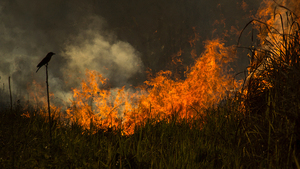
The ten category winners of the 2020 Bird Photographer of the Year competition.

[From top: “Electric” by Carlos Cifuentes Torres, (White Stork Ciconia ciconia. Seville, Spain);  “Fairy landing on Earth,” by Shu Qing, (Whooper Swan Cygnus cygnus. Sanmenxia, Henan, China); “A new beginning” by Swayamsiddha Mohapatra, (Indian Roller Coracias benghalensis. Kaziranga National Park, India); “Swifts over Iguazú Falls” by Francesco Filippo Pellegrini, (Great Dusky Swift Cypseloides senex. Iguazú Falls, Misiones, Argentina); “Hoopoe flight at low speed” by Gadi Shmila, (Common Hoopoe Upupa epops. Israel); “Perfect camouflage” by Moshe Cohen, (Eurasian Scops-owl Otus scops. Kibbutz Hatzor, Israel); “Ropewalker” by Nicolas Reusens, (Sword-billed Hummingbird Ensifera ensifera. Papallacta, Ecuador);  “Feeding frenzy” by  Greg Lecoeur, (Cape Gannet Morus capensis. Port St Johns, South Africa); “On the attack!” by Georgina Steytler, (Great Crested Grebe Podiceps cristatus. Perth, Western Australia). and “End of the day” by Majed AlZa’abi, (European Shag Gulosus aristotelis. Vardø, Norway).]

Explore the full collection here.

colossal

Gulp.

This morning.

Dublin Castle, Dublin 2.

Harry Warren writes:

This is a small part of the exhibition “100 Years of Women in politics and public life”. I heartily recommend a visit…

100 Years Of Women In Politics And Public Life (Dublin Castle)

Padraig Cribben, Chief Executive Of Vintners’ Federation of Ireland; Claire Byrne

This morning

RTÉ Radio One Today with Claire Byrne.

Padraig Cribben, Chief Executive Of Vintners’ Federation of Ireland discussed the undrinkable unthinkable…

Claire Byrne: “If people, you say, some people are selling drink [in alleged “shebeens”], if there are house parties happening and we know that there are over 200 clusters as a result of gatherings, social gatherings in private houses, should we stop having, should drinks stop being sold altogether for a period of time?”

Cribben: “Well, I mean it’s like everything else, I think all of those things need to be considered but the real, the real issue here is people taking personal responsibility and the real issue is that pubs are a controlled environment and the one thing that pubs are used to, they’re used to regulation, they’re used to controlling, they’re used to controlling people, they’re used to implementing regulation that they might not be terribly happy with. I mean if you go back, if you go back to the smoking ban of whatever number of years ago, that has been implemented with a high level of success.”

Byrne: “Yeah, it’s slightly different though, controlling the spread of a pandemic.”

Cribben: “But I mean the point is give us the guidelines, put the sanctions in place, police the sanctions and the publicans of this country will respond accordingly.”

Byrne: “OK, but go back to the sale of drink from off-licences. Because you have said, haven’t you, that it should be paused, stopped for three weeks at least?”

Cribben: “No, what I have actually said is that if, if NPHET believes that that to be a source of the problem, they should consider it. I think that’s slightly different than saying that it should be done. They may decide that’s not an issue. It very well may not be the issue. But, you know, I think, certainly cheap alcohol in supermarkets is an issue we’ve been consistent in saying that, for the last decade. It’s not just now. And I do believe that that should be addressed and addressed now.”

Hic.

Rollingnews/RTÉ

Retired Chief Justice Susan Denham: Supreme Court Justice Séamus Woulfe

This morning.

Further to Golfgate.

Via historian Diarmuid Ferriter:

That a former Supreme Court judge, Susan Denham, is inquiring into a serving Supreme Court judge, Séamus Woulfe, in relation to his attendance at the Clifden event seems bizarre.

It is perhaps both an attempt to dilute politicisation of his grossly misjudged actions by preserving the independence of the court, and a substitute for the still-awaited judicial conduct committee…

…Ironically, as chief justice, Susan Denham made what was regarded as a pointed intervention in 2017 dwelling on the imperativeness of the separation of powers when welcoming the appointment of Woulfe as attorney general, maintaining he would be an important and impartial bridge between the judiciary and the legislature….

Diarmaid Ferriter: A former judge inquiring into a serving judge over Clifden event seems bizarre (Irish Times)

In 2017…

In her address welcoming Mr Woulfe, the Chief Justice said the separation of powers in the State meant each great organ of State had its own specific powers.

“It is a system of checks and balances, and inevitably the courts make decisions on the actions of other branches of government,” she said.

“Consequently, it is necessary that there be some distance between the branches.”

She said that, by nature of their position and function, “judges are not expected to engage in public controversy, as other groups may who freely express their views to members of the legislature and executive.”

Chief Justice highlights independence of Attorney General (Irish Times, June 21, 2017)

Previously: Woulfe Trapped

Rollingnews

Anyone?

Yesterday: Part Of The Uniform

Broadsheet.ie