


A stop motion short by Elly Stern in which a homeless woman in a trash strewn city finds a dead fish and swallows it whole.
Metaphysical weirdness ensues.



A stop motion short by Elly Stern in which a homeless woman in a trash strewn city finds a dead fish and swallows it whole.
Metaphysical weirdness ensues.

Phil Hogan (above) has resigned as Ireland’s European Commissioner
The former Commissioner Phil
Has announced that from now on he will
Not oversee trade
As there’s food to be made
On his brand new George Foreman Grill
John Moynes
Last night: He Could Be Anywhere

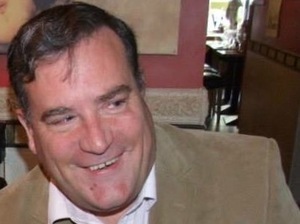
From top: Phil Hogan (right) with Michael Noonan at the Fine Gael ard fheis in 1999; Dan Boyle
I try not to let personal feelings sway me too much when making political assessments. Character is important, so is competency. So is achieving.
The motivation of most in politics is to try make a difference, bring about change, make the world a better place.
Few get the opportunity to make that difference. Of the few who do many of us will fail miserably. If honestly attempted there should no shame in that. We dream that change can be revolutionary when circumstances often show us otherwise.
As a counterpoint to constant failure, achievement for some in politics has been to equate success with position.
I see Phil Hogan as an exemplar of that sort of politics. He has achieved significant positions in his political life. That is up until now.
I take no pleasure in anyone’s resignation but many will be relieved that this resignation has been eked out eventually.
It was only a number of weeks ago that Phil Hogan went on a career fishing expedition, announcing he was investigating the possibility of putting himself forward, for consideration, as head of the World Trade Organisation. Could he have been more coy?
Now he will not be able to hold onto his current exalted status. The argument that he be allowed to remain centred around his apparent importance.
Not his ability, not his capability, his importance. Being in a position makes you important. Any analysis of what you have done gets deemed superfluous when you are The Man, it seems.
Phil Hogan’s career path has been relentless – a councillor, a Senator, a TD, a Junior Minister, a Cabinet Minister, before becoming an EU Commissioner first at Agriculture latterly at Trade.
I know that it is subjective but I can’t think of a single policy achievement he has had. He was a particular disaster as Minister for the Environment.
His handling of water charges was appalling. He helped rid local government in Ireland of many of its democratic elements. He interrupted and reversed our responsibility as a country in addressing climate change.
His particular skills seem to be having been in the right place supporting the right people at the right time.
He seemed to assume the position of Fine Gael’s fixer, that was once held by Michael Lowry. He managed to keep Enda Kenny in post as Fine Gael leader mere months before he became Taoiseach.
This was despite, it was thought, most Fine Gael TDs wanting Enda to step down.
Success came with a reputation of being ‘hard’. An example of his hardness was a crude, sexist comment to an older women he made at an Oireachtas Golfing Society in 2011. He has also been recorded making bigoted comments on travellers.
He decided if he was to become an European Commissioner. Ruairi Quinn made an attempt to highlight his willingness. Phil wasn’t having any of that.
The two roles he has held could have been utilised to achieve great change. In both portfolios he could have argued for better environmental standards making the European Union the standard bearer it claims to be.
That hasn’t happened nor with Phil in charge was it ever likely to. It’s likely he doesn’t believe in change, except to change back to what was before. For him position and prestige is gained by defending and protecting the status quo. There are still too many Big Phils in our politics.
Neither Ireland nor the EU needs Phil Hogan. None of us need his attitude.
Dan Boyle is a former Green Party TD and Senator and serves as a Green Party councillor on Cork City Council. His column appears here every Thursday. Follow Dan on Twitter: @sendboyle


MORE to follow

Awkward moment when moderator introduces #PhilHogan – but he does not appear on screen.. #golfgate pic.twitter.com/g6PxJMoiFI
— Suzanne Lynch (@suzannelynch1) August 26, 2020
This evening.
More as we get it.
UPDATE:

He’s arrived… #PhilHogan finally appears at EU virtual event #golfgate pic.twitter.com/axGabtNqmb
— Suzanne Lynch (@suzannelynch1) August 26, 2020
All better.
Pause.
RESIGN!
Update:
🚨🚨EU Commissioner Phil Hogan to resign tonight🚨🚨
https://t.co/dOslCVzzAQ— Hugh O'Connell (@oconnellhugh) August 26, 2020
Gulp.

But it’s NOT!
An imposter Broadsheet email currently doing the ’rounds’.
Please do not fall into ‘their’ seductive trap. Delete on sight. Mask optional.
Thank you.
Thanks JEH


From top: Chair of the Special Committee on Covid-19 Response, Independent TD Michael McNamara; Minister for Health Stephen Donnelly
This evening.
At the Special Committee on Covid-19 Response, chair of the committee Independent TD Michael McNamara asked the Minister for Health Stephen Donnelly about his earlier repeated claims that Ireland is at a “tipping point” and that we could be looking at another national lockdown.
Mr McNamara said there was no reasoning for Ireland to endure another lockdown and later told the minister:
“I really would caution about talk of another lockdown because there is a risk of unleashing a whirlwind. That’s my personal view. I really am not convinced that you will bring the country with you on that.”
They had this exchange:
Michael McNamara: “At that time [when the strategy was to flatten the curve] when restrictions were introduced, numbers were rising from 170 in hospitals to 440. From 50 in ICU to 80. Four months ago, on the 29th of April, there were 1,185 cases in hospital in Ireland, of which 120 were in critical care units. Three times today you told us that we were looking at a complete lockdown and that we were at tipping point. We’ve been hearing about a lot of tipping points, we’ve heard about tipping points now since June.
“We were also told today, by the HSE, that there were 22 patients admitted to hospital with ICU and six, sorry 22 admitted to hospital with Covid-19 and six in ICU. Now, I accept that for those 22 patients and their family and, in particular, the six in ICU and their families, that’s it an incredibly worrying and stressful time. But what I don’t understand, minister, is how you can possibly talk about a national lockdown, given those figures. And given that our health system coped with 1,185 four months ago.
“So I want to know: what is the strategy here? What are we hoping to achieve, if not that our health system is not overrun, because [Acting Chief Medical Officer] Dr [Ronan] Glynn earlier this week, I note accepted that we cannot eliminate the virus and that seems to be the general. I accept that there are those who are calling for it to be eliminated but he said that he doesn’t think we can eliminate it here. There’s a growing acceptance that you can’t eliminate it and if you do, what do you do then? You open up and you go through the same cycle. You’re talking about lockdowns and you’ve said, a couple of times, that they work.
“Argentina has been in a lockdown for six months, figures are spiralling, Earlier this week we had the WHO on RTE News saying that lockdowns don’t work. It was [WHO’s regional director for Europe] Hans Kluge who is the European Director of the WHO. So where are we going? What is the strategy?”
Stephen Donnelly: “Thank you, chair. So, first of all, you’re absolutely right, I have mentioned ‘a tipping point’ several times. But it’s not me making that up. I’m saying it because that is NPHET’s position. And I think it’s natural, chair, that we all become fatigued with this…”
McNamara: “No, I’m not…”
Donnelly: “People have been through an awful lot…”
McNamara: “How can you…”
Donnelly: “And the reason, chair, that I am emphasising it and re-emphasising it is because we need to be on our guard. In terms of your question on do lockdowns work? We know they work. Because we did one here and it worked. They did them across Europe and they worked. If the purpose is to flatten the curve, we locked the country down, the curve was flattened and that is the experience of most of the countries we’ve looked at…”
McNamara: “We have no idea how many people are unable to bear…You talked about causing unnecessary anxiety by using the word ‘trampoline’ and I very much accept your explanation. But talking about another lockdown in circumstances where we have, and again, I repeat, six people in ICU. And I regret each and every one of them desperately. I lost a very close relative of my own earlier this year and I know no matter what age somebody is at, you know, you don’t want to lose somebody close to you. Of course you don’t.
“But we talk about national priorities. We have six people in ICU. Twenty-two in hospital with Covid-19. At the height of this, we had over 1,100 people in hospital and 120 in ICU. And you’re talking about a lockdown again. Have you any idea of the effect that that’s having. Forget about the economy for a moment, but we can’t forget about it for too long because something has to fund our healthcare system. They don’t fund themselves in any country in the world. Have you any idea the effect that’s having on mental health, on people’s psyche, on people’s spirit in what’s happening in the country now? How can you possibly talk about a lockdown?
“Given the figures, it flies in the face of reason. And we all have eyes, we all have a capacity to reason. We all live in a post-Enlightment world.”
Donnelly: “Thank you, chair. Of course, I do understand the implications which is why I keep saying it. It’s why we brought in the measures last week. It’s because we must suppress the virus in our community, a huge national priority has been getting the schools open, for many of the reasons you say. And that’s now happening…because the transmission has been reduced. But chair, I think your question is fair, in that you’re saying ‘look the number of cases is going up and we know it’s going up very quickly’. So, for example, the key measure that the public health experts use is the number of cases over the last two weeks per 100,000…”
McNamara: “Sorry, the number of detected cases, we’ve no idea really how many, what’s happening outside of detection levels. Is that a fair…”
Donnelly: “We do. There is a study done estimating that the total number is about 40,000 to 50,000 versus the 27,000/28,000, we’ve…”
McNamara: “There are other studies that are being prepared that may or may, anyway…”
Donnelly: “The ones that the experts talk to me about are that one. We’ve detected probably a bit over half of the total cases. But chair this figure that they use. We were at three per 100,000 a while ago. Two weeks ago we were at 18 per 100,000 and today we’re 30 per 100,000. So let’s be very clear. This virus is rising again quickly in our community. Now I think you’ve very fairly asked, well how is that linked to hospitalisations. Because the cases are high but the hospitalisations, thank god, are low.
“Go back and look at the profile of what happened the first time. And what you’ll find is that this point in the pattern, as the cases were in and around where they are now and rising rapidly, hospitalisations were also very low. So the unambiguous message and advice from public health, chair, is that death will follow high numbers of cases. So what we don’t want to do is wait…for the hospital system to be overrun. We don’t want to wait for fatalities to go up and up and up before we act. We have to act first and that’s what we’re doing.”
McNamara: “But, minister, that line, that deaths will follow an increase in detected cases, it hasn’t happened across north America. It hasn’t happened, thankfully to date at least, across Europe.”
Donnelly: “Chair the situation in north America, with the greatest of respect, is not one we need to be looking at to learn lessons from…”
McNamara: “I’m not saying…that Donald Trump is doing a good job and please don’t mischaracterise me, I’m not…what I’m saying is that the increase in detected cases has not been accompanied…and it’s a trend that’s going on for some time in north America and the continent. It hasn’t been accompanied by an increase in hospitalisations and deaths. Thankfully, that’s all I’m saying.”
Later
McNamara: “Minister, I just join with you in asking people to behave responsibly to take personal responsibility for their actions to adhere to the measures that have been outlined but speaking personally, I really would caution about talk of another lockdown because there is a risk of unleashing a whirlwind. That’s my personal view. I really am not convinced that you will bring the country with you on that…that’s not a committee view, that’s a personal view.”
Earlier: K Clubbed



Behold: the BMW Blechmann R18 – a redesigned long distance cruiser for BMW Motorrad by bike builder Bernhard ‘Blechmann’ Naumann (whose claimed method is to ‘design as he works’, never planning in advance).
The bike has all manner of retro callbacks from classic pinstriping and sporty knee cutouts on the tank to a kidney shaped headlight reminiscent of the marque’s auto grille.
Can’t have. Only for looking at.

