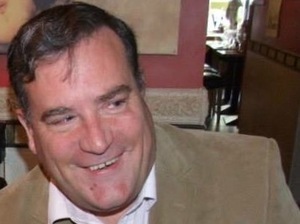
 From top: Grafton Street, Dublin last Christmas; Dan Boyle
Adam Smith and Karl Marx would have been agreement that wealth was the prism through which we should look at society.
Three hundred years of political economy have been based on variants of their musings on what wealth is, how it is created, and how it is distributed.
It can be argued that the relentless pursuit of wealth, regardless of consequences, has not as has been assumed, been the main determinant in our achieving happiness. Often it can be a huge impediment.
Much of this can be put down to how we define what wealth is. In our ‘developed’ societies we have sought to put a price on everything while denying ourselves the ability to realise the value of anything.
If we are to have a cultural war on anything it should be on how we define what is wealth, and how should it be applied.
Evolved societies should become more preoccupied with the idea of wellbeing. In Ireland we could greatly benefit if we were to follow emerging trends in this area.
As we were still analysing the votes and seats won in this year’s local and European elections, the New Zealand government led by Jacinda Arden was introducing what was being claimed as the World’s first Wellbeing Budget.
While in many ways the budget didn’t diverge too far from a conventional budget, it did prioritise two significant areas of additional public spending.
Spending on measures aimed at protecting and improving mental health was the first priority. The second area of additional spending on family and child welfare.
There is a canniness to this thinking. Under conventional measures of wealth, reactive spending in these areas are deemed to be adding to a nation’s wealth. Spending that seeks to lessen or prevent actions that lead to poor social impact, is currently seen as black hole expenditure. Yet which adds more to a community’s sense of happiness?
New Zealand is a country that has a similar population to that of Ireland. So has Denmark. The Danes are said to live through a philosophy they call Hygge, which they define as “a quality of cosiness and comfortable conviviality that engenders a feeling of contentment or well being”.
Outside of an overemphasis on alliteration, this is not a bad goal to strive for.
Since 2012 the United Nations has been publishing a World Index on Happiness. Through a number of criteria – social supports; life expectancy; freedom to make choices; charitable giving and perceptions of corruption – countries are ranked according to how proactive they are seen to be.
In the most recent report the top four countries were Nordic. Each is also a high tax and spend country. Ireland was listed as 14th in the index.
If we were so minded, and if the political will existed, Irish policies could be moulded in this way. They are being formulated and practiced in countries that are not too dissimilar to ours.
To achieve this we need to devote as much spending to social infrastructure as we do to traditional infrastructure. We have to invest more in people and less in tarmac and concrete.
In doing this we will begin to realise how hollow our obsession with economic growth is. How little of it has to with actual growth, improvement, evolution of who we are or the planet on which we live.
That what is presented as economic growth, is in fact a Kamikaze mission to denude our planet of irreplaceable resources over the shortest possible period of time, is unarguable.
Happy?
Dan Boyle is a former Green Party TD and Senator and serves as a Green Party councillor on Cork City Council. His column appears here every Thursday. Follow Dan on Twitter: @sendboyle
Rollingnews