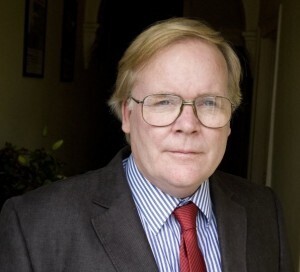
One senior [local Fine Gael] member present at the meeting said that Mr Deasy, who has held a seat in Waterford for Fine Gael since 2002, “came in for severe and sustained criticism” from those present, and that none spoke in support of the backbencher.

“Speaker after speaker came out strongly against John Deasy and his workrate as sitting Fine Gael TD,” the member said.

A motion of no confidence was proposed by one member – not an elected representative – and seconded before being passed overwhelmingly by the meeting which was held in Lawlor’s Hotel in Dungarvan.

Waterford Fine Gael members pass no-confidence motion in TD (RTÉ)

Rollingnews

UDPATE:

Daniel McConnell, in The Irish Examiner, reports:

Speaking to the Irish Examiner this morning, Mr Deasy said that party bosses have long been aware of problems within the Waterford Fine Gael membership and have done nothing about it.

He said: “The entire Waterford organisation needs to be stood down and reviewed by headquarters; repeated warnings have been given by myself and other with regard to the behaviour of individuals in Waterford for years now.”

Tensions have long existed between the Deasy camp and supporters of Senator Paudie Coffey and Mr Deasy revealed that because of “constant bitching” at himself by members, he and his supporters had stopped going to meetings such as that held last night years ago.

“This is well beyond typical interparty, internecine rivalries,” he said.

Deasy calls for local FG organisation be stood down following motion of no confidence in him (Daniel McConnell, Irish Examiner)

Related: John Deasy hits back after no confidence motion: ‘Fine Gael has ignored abuse and bullying for years’ (Kevin Doyle, Hugh O’Connell, Irish Independent)

UPDATE:

“After receiving a mandate from the Waterford electorate at the 2016 General Election, Fine Gael Deputy John Deasy was appointed special envoy to the US by Taoiseach Leo Varadkar and has since been doing important work on a special visa scheme for Irish citizens.

“Fine Gael’s General Secretary Tom Curran will soon be consulting with members and elected representatives in Waterford on finalising the party’s General Election ticket for the constituency.

“One candidate, Senator Paudie Coffey, was previously selected at convention to contest the next General Election.”

Statement issued by Fine Gael this morning.

Via Daniel McConnell


Ugh.

This morning, 6.30

Sandycove, County Dublin

Jared Huet writes;

Stay out of the water….

Swimming ban at Dublin beaches following Ringsend overflow (RTÉ)

Meanwhile…

This morning.

Seapoint, County Dublin.

Rollingnews

UPDATE:

flossieandthebeachcleaners tweetz:

Sandycove this morning…fancy a dip, even the jellyfish have changed colour 🤢💩@dlrcc @EPAIreland @CormacDevlin

At top. from left: Minister for Finance,Paschal O Donohue , Taoiseach Leo Varadkar and Minister for Communications, Climate Action and the Environment Richard Bruton; Michael Taft

We are now getting crash courses in pro-cyclical and counter-cyclical fiscal strategies. This has the potential to be more mind-numbing than discussion of fiscal space. But at the risk of numbed minds let’s jump into this by first defining these terms.

Pro-cyclical means a fiscal policy that accelerates either the upward or downward trajectory of the economy.

We have two recent examples:

Prior to the crash, Fianna Fail-led governments accelerated the economy and the property market through tax cuts and spending increases that resulted in unsustainable growth. They were feeding an economy to the point of gluttony.

Following the crash, Fianna Fail and Fine Gael-led governments accelerated the decline of the economy through tax increases and spending cuts, taking money out of a cash-starved economy.

Successive governments pursued the same fiscal policy both before and after the crash – a pro-cyclical policy. At their extremes such policies lead to booms and busts which is exactly what Ireland suffered.

The alternative is to pursue a counter-cyclical fiscal strategy. This is intended to smooth out the inevitable ups and downs of a capitalist market economy.

Therefore, when the economy is accelerating, a prudent government would try to slow it down to something approximating normal. This would entail raising taxes and slowing down spending increases.

For instance, had the government removed property tax breaks and introduced a property-tax in 2003/04, this would have taken some of the heat out of a runaway property market.

And if the government had stimulated the economy through investment increases in 2009/10, the economy would not have collapsed to the extent it did.

Now we are getting lectures about the current pro-cyclical policies, how we should have been cutting back when the economy started growing; and how we should be running substantial surpluses (the budget won’t go into surplus until next year and, even then, only marginally).

That, however, is the wrong way to read our current situation.

We are stuck in upside-down fiscal strategies. Yes, the right-side up approach would be to start cutting back (reduce the pace of spending increases, reduce the level of tax cuts) as the economy recovers.

But you only do that if fiscal strategy expanded during the preceding downturn. That didn’t happen here. We cut back during the recession.

So when the economy started growing, the government had to raise spending to make up for the cuts during the austerity years, while at the same time trying to turn the deficit into a surplus.

Public spending only started increasing in 2015, but the deficit was still nearly 2 percent of GDP. It wasn’t possible to do both.

Indeed, the Government struggled to return spending to pre-crash levels.

Factoring in inflation (GDP deflator), public spending per capita – in particular, investment – has not returned to 2008 level. Not only did spending increases struggle, deficit reduction started to lose steam.

Upside-down fiscal strategies cannot be corrected by simply flicking a policy switch. We may be stuck in a pro-cyclical trap that is structurally embedded in our public finances. And, like a finger trap, if we start reducing spending just before an economic slow-down we could end up reinforcing the trap by accelerating the slow-down.

This gives a different perspective to the oft-repeated phrase ‘well, austerity worked’. It didn’t. Austerity was many things, but in this context it was like cramming clothes into a suitcase and then sitting on the cover to close it shut.

It seemed to work for a while but it wasn’t sustainable. Eventually, the cover blows open and the clothes spill out on the floor. This is the pro-cyclical trap we are in.

So how should we proceed? Carefully, eschewing quick-fix solutions. Let’s look at two things that could help inform a more viable and sustainable fiscal policy.

First, strengthen our automatic stabilisers. This usually refers to unemployment benefit. Unemployment benefit replaces the reduced purchasing power of those who have lost jobs.

In other EU countries, unemployment benefit is pay-related which means most of the purchasing power is replaced. This helps maintain consumer spending and domestic demand.

In Ireland, the benefit is low which means only a small amount of purchasing power is replaced.
In the upcoming budget it is imperative to introduce a pay-related component to unemployment benefit (Fine Gael actually advanced this proposal recently).

This should be paid for by a small, incremental increase in employers’ social insurance which is ultra-low by EU standards.

Second: never mind the deficit, focus on the debt. We have considerable savings to help prevent the debt from rising out of control.
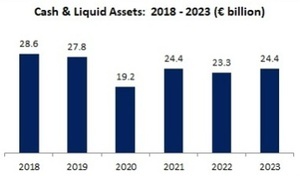
We have more than €20 billion in Exchequer savings. Judicious use of these funds (it is unclear if this includes the NAMA surplus of €4 billion or the liquid assets in the Strategic Investment Fund) could help moderate any increases in the debt arising from a hard Brexit.

This will depend on how bad the hit is. The ESRI projects a small hit, with the budget immediately going into deficit but returning to surplus by 2023 with debt falling again.

The Central Bank’s projection is more pessimistic, with the county’s finances still mired in a significant deficit in 2023 with debt still rising.

There are other measures we can take to mitigate the downward impact on public finances (a small example would be the net assets tax outlined here) and using the NAMA surplus for public housing in order to maintain revenue-generating activity (and to house people).

The very last thing we need to do is take fright and start cutting and taxing without regard to economic and fiscal harm – like we did in the last crisis.

If we do go down that route we’ll just be reinforcing the pro-cyclical trap. And picking clothes off the floor for a very long time.

Michael Taft is a researcher for SIPTU and author of the political economy blog, Notes on the Front. His column appears here every Tuesday.

Sam Boal/ Rollingnews

Paris, France is expected to be hotter than the Sahara Desert this week

If you’re on a Parisian street
This morning you’re in for a treat
As temperatures soar
Then rise a bit more
And all you can feel is the heat

John Moynes

Pic: BBC

Behold: the Charge Electric Ford Mustang – one of 499 first generation (1965 – 1973) Mustangs with their oily old gizzards swapped out for quad electric motors by UK EV startup Charge.

The 64Kw/h battery is good for 320km in cruise mode but considerably less if you engage the full 536bhp four wheel drive. Top speed is 240km/h but the thing will accelerate to 100km/h in less than 3 seconds.

Debuting next month at the Goodwood Festival of Speed and yours for €335,000.

uncrate

When reading I tend to scribble notes, underline and even, from time to time, express an opinion in response to the subject matter of the book.

I always keep at least two biros handy in case one runs out of ink and I’m suddenly left without the means to record my thoughts before they escape through my ears.

The other night one of my biros did run out of ‘fuel’ so it was quickly consigned to the wastepaper basket. But then, I stopped and looked at the abandoned pen and began to ponder its existence.

My first thought was that I had just casually and unthinkingly thrown away an amazing and perfectly operating machine just because it had run out of its once-off supply of fuel.

Given the rapidly dwindling resources available to us avaricious humans, I thought, wouldn’t it make much more sense to design the pen so that the fuel could be replenished thus extending the life of the machine by many years.

It is true that some biros are designed to take a refill but these are usually in the more expensive range. And, it’s fair to say, it wouldn’t make economic sense to manufacture refills for the ubiquitous BIC biros.

But the biro featured here (above), the one I threw away so casually comes under a category I would call – promotional. Trillions of them are manufactured every year and given away free to promote an endless list of causes and businesses.

Just look at it. It’s a superbly designed and, I would say, beautiful machine with simple parts. It’s easily disassembled with the capacity to refill.

It’s my favourite pen design – slim, metal, with good balance weight and comfortable to hold. I would keep this pen for a lifetime if refills were available.

And then my thoughts came back to us modern avaricious humans and I wondered.

Suppose this pen, fully fuelled up, was to slip into a worm hole and travel back in time to a human occupied cave of about 20,000 years ago.

It would cause a sensation, it would be revered as a gift from the gods or, even, a god in itself. The cave humans would use it to create cave art. They would probably draw the pen itself, such was its incredible design and power.

And when the pen ran out of its magic fluid they would mourn the loss of its lifeblood. But the pen would remain, would still be worshipped and be seen for what it is, an amazing machine unlike anything they had ever seen in nature.

The pen would be handed down to generation after generation with ever fantastic stories and myths surrounding its origin, power and destiny.

It would eventually be discovered by the descendants of the cave people – us.

And promptly consigned to the nearest wastepaper basket.

Anthony Sheridan is freelance journalists and blogs at PublicEnquiry.

Death of The Pen God (BackGardenPhilosophy)

Pic via Anthony

Broadsheet.ie
