


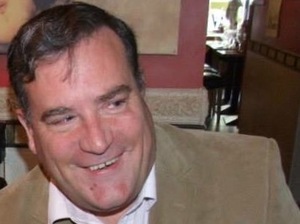
From top: Last weekend’s Sunday Times/ Behaviour and Attitudes poll; Dan Boyle
One poll does not a government make, yet the recent Sunday Times/Behaviour and Attitudes opinion poll showing nearly two in every three voters expressing support for either Fine Gael or Fianna Fáil, does reflect trends found in other recent polls.
Irish voters, it seems, are either reverting to type, or are falling out of love with the other.
Fine Gael, probably as a result of an inexplicable Leo bounce, now seem restored to its traditional level of support. Fianna Fáil seems to have doubled the support the party received in the 2011 general election.
The next general election will see two seperate elections. One will between Fine Gael and Fianna Fáil. The odds in this contest still favour Fianna Fáil. Coming out government seeking to retain office, is always the more difficult task.
In many ways the contest between the others remains the more interesting. It remains difficult to see the return of a single party government (after thirty years) or even a two party coalition. The others will be fighting amongst themselves, over the hearts and minds of between a quarter and a third of the electorate.
Sinn Féin, over the course of recent elections has acquired about 40% of these votes. The party is now firmly ensconsed in third position in the Irish political pecking order. However its further progress seems stymied.
The number of local representatives who have now left the party over bullying allegations, could now form a significant party in their own right. The whiff of sulphur that attracted new activists and young voters seems to have lost its appeal. The military efficiency that has helped bring the party to where it is, could be the very thing that impedes its further progress.
The Stormont soap opera isn’t inspiring confidence either. The party’s biggest problem remains what will become of its Great Leader. Even if Gerry Adams moves on, there is no guarantee that a new leader would remove many of the negatives that currently attach to the party.
If standing still is to be the fate of Sinn Féin, there are many in the Labour Party who now dream of such a fate. Under current trends Labour has the opportunity of winning, at most, two additional seats, while being uncertain of holding any but one of its current Dáil seats.
There is even a potential scenario where Labour could be coming back to the next Dáil with the same number, or even fewer, seats than The Social Democrats.
That party has also been finding it hard to gain forward momentum. The seats of Catherine Murphy and Róisín Shortall could be added to by Gary Gannon being elected in Dublin Central.
The Green Party is the only one of the others that has been maintaining its 2016 level of support. This still is an electoral twilight zone for the party, that could re-elect or have no one elected. The party has half a dozen constituencies where the possibility of Green TD exists.
The Binity party, current incarnation as Solidarity/People Before Profit, could have a difficult election with the People Before Profit section bearing a greater share of that pain.
It is among the Independent TDs that the greatest amount of change could occur. Rural TDs will be safer than their urban counterparts. Those with lower profiles will survive better than their grandstanding colleagues.
It may be satisfying to lose some of the more windier of this ilk, but an increased FG and FF presence in the next Dáil is not something to look forward to either..
Dan Boyle is a former Green Party TD and Senator. His column appears here every Thursday. Follow Dan on Twitter: @sendboyle
Meanwhile…

Looking for a political stocking filler?
Dan Boyle’s new book ‘Making Up The Numbers – Smaller Parties and Independents in Irish Politics‘ is being published by the History Press on November 27.