Freddie-Mercury-freddie-mercury-10921254-740-600

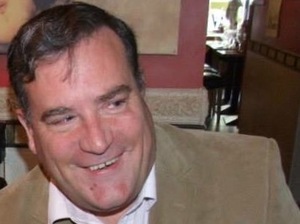
Freddie Mercury.

Gone 25 years ago today, one day after announcing he was HIV positive.

This Day in Music

UPDATE:

14524491_1260303497345692_6946743408410534890_o

Tonight at 8pm.

Freddstival – a celebration of the life of Freddie Mercury.

At the Grand Social on Liffey Street Lower, Dublin 1.

From the Facebook blurb:

“Join us – Barbara McCarthy, Paddy Cullivan and a host of Irish performers, including Martin McCann, mezzo-soprano Heather Fogarty, a cappella choir The Skipping Stones and more – for an epic night of rock, opera, karaoke, enlightenment and laughter. 25 years gone, but never forgotten.”

Tickets are €12 and are available here

Money raised will go to AIDS charities.

Freddstival (Facebook)

9043494190434942904349219043495590434919

Yesterday

The Pavee Point Traveller and Roma Centre, North Great Charles Street Dublin 1

John Connors, Christy Moore and Bressie helped launch a position paper on Traveller Men’s Health. Research shows that men in the Travelling community suffer more from depression, low self-esteem and discrimination.

The Pavee Point organisation wants a national strategy to address the suicide rate among the male Travelling community, which is almost seven times the national average.

Research published a decade ago showed Traveller men’s lives were 15 years shorter that the overall male population in Ireland. Pavee Point says there is nothing to suggest that has changed.

Call for strategy to address male Traveller mental health (RTÉ)

Meanwhile….

The Traveller advocacy group Pavee Point has welcomed the news that Taoiseach Enda Kenny has resolved to support the recognition of Traveller ethnicity.

Mr Kenny said on Wednesday that the Government would begin taking steps towards the recognition of Traveller ethnicity in the new year.

The Taoiseach said he had asked Minister of State at the Department of Justice David Stanton to prepare a report for the social affairs committee on the question of recognising Traveller ethnicity. The report is expected in a few weeks.

In fairness.

Pavee Point welcomes recognition of Traveller ethnicity (irish Times)

Rollingnews

90427616

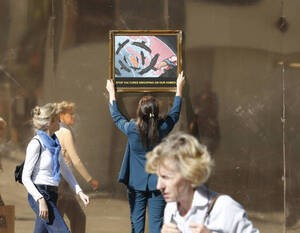
Michelle Moran and Roughan MacNamara of Focus Ireland launching the charity’s campaign calling for legislation to fully protect Irish homes from vulture funds in August

First-Time Buyer writes:

Effective lobbying is done as quietly as possible behind the scenes, ensuring that you get the result you were looking for without anyone else being the wiser…

Back in September, Minister for Finance Michael Noonan proposed a number of changes to Section 110 of the Taxes Consolidation Act 1997 which contains the provisions for Ireland’s securitisation regime.

This was on the back of various concerns raised in the media that “investors” (foreign funds) were using the legislation to avoid paying tax on Irish property by using S110 Special Purpose Vehicles (“SPVs”) for their transactions.

The Irish securitisation regime is very generous in that it permits certain companies to deduct interest payments on profit participating debt (i.e. loans where the interest rate is directly linked to the underlying profits of the SPV rather than a set rate).

In effect, this means that these SPVS could wipe out all of their profits with interest deductions leaving only a very small taxable margin (usually €1,000). These SPVs were making tens of millions from Irish property, but effectively were only paying as little as €250 to Revenue.

The aim of the amendments to the regime were to ringfence profits arising from a property business and ensure that a deduction was not available for profit participating interest.

This would protect the Irish tax base by ensuring these SPVs would pay tax at 25% on all of its Irish property profits, rather than only on the token €1,000.

A property business was originally defined as one which is involved in the holding or managing of “any financial asset which derives its value, or the greater part of its value directly or indirectly, from land in the State”.

When interpreted this would include property loans and mortgages but also shares in a company which derive its value from Irish property (e.g a Limited company that holds property, also known as a “Propco”).

What nobody noticed though was that in the time between the publishing of the original legislation in September to the publication of the Finance Bill in October a very deliberate change was made to narrow the definition of ‘specified mortgage’.

Such a narrowing means this anti-avoidance legislation is now only confined to loans and specified agreements deriving their value from Irish land but not to shares in a Propco (more on why below).

At the same time of this deliberate change, the Government included another, seemingly unrelated, measure to restore 100% interest deductibility for landlords of residential properties. This generous tax break encourages Propcos to be highly geared, to ensure their rental profits are significantly reduced by interest deductions.

When you combine these two measures it means the ‘investors’ will warehouse their Irish properties into simple Propcos, rather than the complicated SPVs, QIAIFs or ICAVs that we’ve been reading about in the media.

The investors will own the Propcos, via their existing S110 SPVs. They will fully leverage the Propco with related party debt, maximising the new 100% interest deductibility rules. This will ensure that any income arising will be fully sheltered by tax deductions, thus a continuing ability to avoid tax on the Irish rental profit.

In addition, the investor can avoid capital gains on a disposal of the property by simply selling the shares in the Propco rather than selling the property asset directly.

The gain on the sale of the shares of the Propco will arise to the S110 SPV and because the definition of ‘specified mortgage’ does not include the sale of shares, the SPV can use profit participating interest to wipe out its gain on the sale.

You couldn’t make this up.

Related: Vulture funds hit by political cave-in on tax reprieve (The Irish Times, November 22, 2016)

Previously: Mars Capital, Matheson And The €250 Tax Bill

Sasko Lazarov/Rollingnews

rte

dan

From top: RTÉ coverage begins for the first of five general elections held during the 1980s; Dan Boyle

Each Great Leap Forward is followed by several steps back.

Dan Boyle writes:

I first cast my vote in 1981. Ronald Reagan was the US President, Margaret Thatcher the British Prime Minister, and Leonid Brezhnev was General Secretary of the Central Committee of the Communist Party of the Union of Soviet Socialist Republics.

In the general election of that year the Trinity of Irish politics – Fianna Fáil, Fine Gael and the Labour Party, had won its usual 95% of the vote. Those of us coming of age then had little expectation that things could change quickly, or indeed change at all.

There were small signs indicating otherwise. A handful of interesting independents were elected. In Limerick, a speak as you found him socialist, Jim Kemmy, was arousing interest. The most that could be said about Seán Dublin Bay Rockall Loftus was his name.

Noel Browne was being elected for his fifth and final political party, Socialist Labour. Sinn Féin, in its Workers Party incarnation, won its first seat since 1957. The first Sinn Féin TD to take their seat in the Free State parliament.

The abstentionists were represented by the election of two H-Blocks hunger strikers. Those behind their election would later claim sole proprietorship of the Sinn Féin handle.

The Abortion Referendum of 1983 allowed some of us at least to fly a flag for another Ireland, even if we never believed that holy, Catholic Ireland was ever possible to shift.

It wouldn’t be until 1990, with the election of Mary Robinson as President, that any election I invested in yielded a positive result.

The nineties and onset of the millennium brought social change at a rate that had barely seemed possible in the previous seventy years of independent statehood before that.

Maybe those of us of a progressive bent got greedy, wanting more change more quickly. More likely having been denied change for so long, progressives have forgotten that change is never relentless nor is it linear. Each Great Leap Forward is followed by several steps back.

I fear that once again we are entering a dark age. The momentum has been gained, and the agenda has been won back by reactionaries. Hard won rights will recede amid much gnashing of teeth.

Despite that I’m not overcome with any sense of impending apocalyptic doom. Or with the feeling of powerlessness of the 1980s. Let them do their worse. They cannot roll back everything. When the argument has been won again, we will be starting from a place still far ahead from where we had begun.

Social justice can’t be guaranteed but it is inevitable. For now, at least temporarily, this is the new normal. We had better get used to it, but not for too long.

Dan Boyle is a former Green Party TD and Senator. Follow Dan on Twitter: @sendboyle

Top Pic: RTÉ Archive

Broadsheet.ie