
75674703redcgraphic

Red C poll in yesterday’s Sunday Business Post

Further to the results of yesterday’s Sunday Business Post/Red C poll

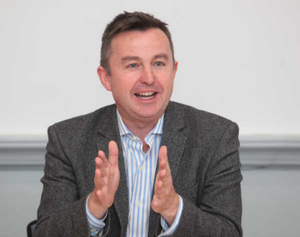
Geography lecturer and deputy head of the Geography Department at NUI Maynooth Adrian Kavanagh writes:

After little change in party support levels had been evidenced in the wake of the February general election, a series of opinion polls in July 2016 pointed to significant gains in support for Fianna Fail, pushing that party ahead of Fine Gael in terms of overall support levels.

The latest in series of Red C opinion polls more or less reflects the trend that has been established across all polls from July onwards; showing Fianna Fail standing a few percentage points ahead of Fine Gael in terms of overall support levels.

This also reflects the trend evidenced in the recent Behaviour & Attitudes poll, in which the two largest parties were both seen to lose some ground to Sinn Fein, Labour and the Anti-Austerity Alliance-People Before Profit. (This poll, however, sees the Social Democrats standing in notably stronger position than was the case with the Behaviour & Attitudes poll.)

The 25th September Sunday Business Post-Red C opinion poll estimates party support levels as follows: Fianna Fail 27% (down 2% relative to the previous Red C opinion poll), Independents and Others 26% (NC) – including Anti-Austerity Alliance-People Before Profit 6%, Social Democrats 4%, Green Party 2%, Renua <1%, Independent Alliance 4%, Other Independents 10% – Fine Gael 25% (down 1%), Sinn Fein 15% (up 2%), Labour Party 7% (up 1%).

My constituency-level analysis of these poll figures estimates that party seat levels, should such national support trends be replicated in an actual general election, would be as follows: Fianna Fail 52, Fine Gael 44, Sinn Fein 23, Anti Austerity Alliance-People Before Profit 8, Labour Party 7, Social Democrats 4, Independents 20.

As You Were More Or Less…: Constituency-level analysis of Sunday Business Post-Red C opinion poll (25th September 2016) (Adrian Kavanagh)

Red C poll: FF sees support slip for first time since election (Sunday Business Post)

Previously: For Whom The Polls Toll

Pic: Sunday Business Post

screen-shot-2016-09-26-at-14-11-20

John writes:

I was outside the big Centra in Stoneybatter earlier on today at about 12pm and I overheard some lad trying to make a quick sale on a bike. The potential buyer asked him where he got it, to which he replied ‘on the southside’.

He was trying to flog it for €50.

From what I could see, and after doing some research online, I would say it’s a black Carerra ‘Vengeance’ with neon blue text and trim, a little battered, but still in good condition.

Maybe Centra could help out with some security footage?

Anyone?

Earlier: Busted

screen-shot-2016-09-26-at-14-08-14

Brian Hayes, Fine Gael MEP

Farrel Corcoran’s article contains arguments concerning the Transatlantic Trade and Investment Partnership (TTIP) talks and coverage of TTIP that simply do not stand up to scrutiny.

Mr Corcoran argues that the proposed deal would allow the use of “carcinogenic pesticides” in foods. Let me be clear, nothing could be further from the truth. But that doesn’t stop protectionists deliberately misleading the public.

Again and again, European Commissioner Cecilia Malmström has said no EU trade agreement will ever lower our level of protection of consumers or food safety.

Both sides in the trade talks are crystal clear that importation of hormone treated meat will not happen. Yet those against trade have repeated something that they know was never on the agenda of the EU.

The precautionary principal, the EU’s guiding principal on food and safety standards remains unaltered.

When it comes to Ireland’s sovereignty the position couldn’t be clearer. The first item agreed in a joint declaration by the lead negotiators was that TTIP does not prevent governments, at any level, from providing or supporting services in areas such as water, education, health, and social services.

This has not stopped those against the talks framing the process as a kind of new conspiracy where the corporate world, aided and abated by the European Commission, has hatched a masterplan to impoverish us all by – wait for it – by increasing trade between the EU and the US.

He bemoans the fact, according to him, that there has been “little” media coverage. Come on, where has Mr Corcoran been for the past number of years?

Didn’t The Irish Times give him carte blanche in his article to peddle the usual distortions about TTIP. What’s he moaning about? You could nearly hear the tut-tutting from the opinion page.

Then he says there has been little civil society engagement and “no national debate” on TTIP. Well a debate requires a fair amount of time to both sides to make the case.

But it also requires an honest engagement with the facts rather than hyped, over-the-top and utterly sensationalist comments from Mr Corcoran and others.

TTIP is not a done deal, it’s a talks process and it’s ongoing. And I wouldn’t be holding my breath that it will come to an end anytime soon.

It’s caught up with elections in the US and Europe.

From Donald Trump to Nigel Farage, and now to Mr Corchtoran [sic], the line-up of populists against more trade is really quite breathaking. And this against a backdrop of high European unemployment and falling wages.

The sensible thing to do is to see what comes from TTIP at the end of the negotiation. Look at the issue in the round – the pros and cons – and then make a decision. I repeat there is no agreement between both sides, and there may never be.

Brian Hayes MEP
Donnybrook,
Dublin 4.

Media, democracy and trade agreements (Irish Times letters page)

Previously: Luke’s TTIP

Leah Farrell/Rollingnews

5000

Researchers at the University of Canterbury in Christchurch, New Zealand, have restored what is claimed to be the earliest recording of computer-generated music, created by modern computing patriarch Alan Turing.

Sez The Grauniad:

“Alan Turing’s pioneering work in the late 1940s on transforming the computer into a musical instrument has been largely overlooked,” they said.

The recording was made 65 years ago by a BBC outside-broadcast unit at the Computing Machine Laboratory in Manchester, England.

The machine, which filled much of the lab’s ground floor, was used to generate three melodies; God Save the King, Baa, Baa Black Sheep, and Glenn Miller’s swing classic In the Mood.

But when UC professor Jack Copeland and composer Jason Long [pictured above] examined the 12-inch (30.5cm) acetate disc containing the music, they found the audio was distorted.

“The frequencies in the recording were not accurate. The recording gave at best only a rough impression of how the computer sounded,” they said. They fixed it with electronic detective work, tweaking the speed of the audio, compensating for a “wobble” in the recording and filtering out extraneous noise.

“It was a beautiful moment when we first heard the true sound of Turing’s computer,” Copeland and Long said in a blogpost on the British Library website.

Beeps and boops streamable above.

First recording of computer-generated music – created by Alan Turing – restored

screen-shot-2016-09-26-at-13-37-58

Tonight.

Can’t Cope, Won’t Cope on RTÉ2 at 10pm.

Gareth Naughton writes:

In episode three of Can’t Cope, Won’t Cope, Aisling can’t help herself at the an important business dinner and the results leave her skating on thin ice. And Danielle’s attempts to help don’t quite go according to plan.

tmlewin

Trotscot writes:

Thought you might like this. After winining a prize in a works raffle of a voucher for a  [posh shirtmaker] TM Lewin shirt. I went on their website to find their Ireland locations, only to find out that the Dundrum store had moved…

it’s like a black fly in your Chardonnay.

A traffic jam when you’re already late.

A no-smoking sign on your cigarette break

Etc.

Broadsheet.ie