9036382590363838-1

Zebra-patterned ear muffs?

Again?

Malahide, Co Dublin yesterday.

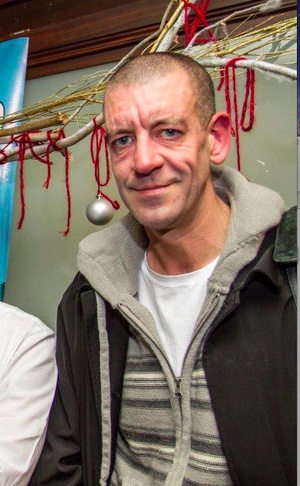
The launch of Beloved, Focus Ireland’s first retail store trading in pre-loved clothes, gifts and whatnot in time for Yule.

From top: Models Sophia Polz (left) and Naoise McDonnell and from left: Sophia, actress Susan Loughnane (centre) and Naoise all sporting clothes from the Beloved ‘collection’.

Collection.

Suit yourselves.

Focus Ireland

(Sasko Lazarov/Photocall Ireland)

bc

Screen-Shot-2013-02-26-at-11.21.00

Diarmaid Ferriter (above) and Boston College (top)

Diarmaid Ferriter, Professor of Modern Irish History at University College Dublin. sat down with Hot Press magazine this week.

A gentle enough encounter until the subject of The ‘Belfast Project‘ was raised.

After the Good Friday Agreement former loyalist and republican paramilitaries gave a series of candid interviews that chronicled their involvement in the Troubles with the recordings held in a library at Boston College. Until things went horribly wrong.

Hot Press: “You lectured in Boston College for a year. Were you there when the ill-fated Belfast Project archive was being put together?”

Diarmaid Ferriter: Interestingly, it was going on in the background. There was great secrecy around it. We were told a few times, (whispers) “Boston College has a very important project going on with former paramilitaries, and they’re being taped for posterity.” And I thought that it was actually a very good idea. It was done in this country, which people forget, after the War of Independence, but they did it in the 1940s and ‘50s. They collected statements from the survivors. It was called the Bureau of Military History, and do you know when they were released? 2003! Now what those gobshites did was they didn’t get proper legal advice. They went and did these interviews, and do you know what the agreement was? “We won’t release these tapes until you’re dead.” If I made an agreement with you that I’ll talk to you as long as you don’t release this until I die, on the understanding that that will be well into the distant future, so that it would be history and not current affairs, what happens if I walk out and get hit by a bus and die?. That’s the fundamental mistake they made. They didn’t get proper advice, they kept it secret.

Hot Press: “Why?”

Ferriter: “There were people who were pushing their own agendas because they wanted this material either for journalistic reasons or for political reasons… and the whole thing was a mess. It could have been a very valuable project. So they got the worst of all worlds then because it became an issue for practices and procedures in relation to oral history, which were embarrassing for those involved. Remember, the history department in Boston College wasn’t even consulted about this. There were particular individuals within Boston College who were trying to control this for themselves and, again, they got high on their own sense of importance. They thought they were players in the peace process, and they made fools out of themselves.

Gulp.

The full interview is in the latest issue of Hot Press, on sale now.

Thanks Olaf

Screen Shot 2014-12-04 at 13.24.17

Aoife Dooley writes:

I was wondering if you could you share my first animation?  It’s the start of a short series I am doing based on kids stories. This story is told by 11 year old Terriss. She’s looking back on a story her dad told her about “when he was young”. He passed away two years ago and she was dying to tell one of his funny stories.

Screen Shot 2014-12-04 at 12.53.30

MaireadSymphysiotomy survivors and supporters outside the Department of An Taoiseach last September (top) and Kent Law School lecturer Mairéad Enright (above)

Law lecturer Mairéad Enright has written about the symphysiotomy redress scheme on the Human Rights in Ireland blog.

From her piece:

The closing date for applications to the symphysiotomy redress scheme is this Friday. Assessment has already begun, some redress offers – a very small fraction of the total projected value of the scheme – have already been made and a very small number of those have been accepted.

I have written before about the core problem which has dogged this scheme since it was first proposed – it is simply incompatible, in principle, with the requirements of international human rights law. In particular, these women have not been offered any adequate remedy for breaches of their European Convention rights by the Irish state. O’Keeffe v. Ireland confirms that ex gratia redress without an acknowledgement of state liability cannot be considered an adequate remedy.

Since the scheme was announced, less than a month ago, it has been roundly criticised by expert commentators including, most recently, Sir Nigel Rodley of the UNHRC.

The devil is in the detail of the implementation. The time limit for application is unconscionable. The women had 20 working days to apply. This is the shortest time limit in the history of any State redress scheme: for example, the Residential Institutions Redress Board time limit was 3 years. The rudimentary progress reports published on the scheme website indicate that 70 women only received their application forms in the first week, because they requested them by telephone. The forms are, of course, available to download from the website, but the survivors of symphysiotomy are often very elderly and may not be computer literate.

Applications made after the deadline may be considered in ‘exceptional circumstances’, but in any case will not be considered if they are made after January 15 2015. ‘Exceptional circumstances’ is not defined within the terms of the scheme. It is worth noting that the same phrase affected the RIRB, and was interpreted in a very conservative fashion, to the particular detriment of applicants who took longer to apply because they were socially isolated, had intellectual or psychiatric difficulties, or lived abroad.1 It is beyond doubt that some women who deserve, in principle, to have access to state redress will go without it because the government refuses to give them more time. 70 women have joined Survivors of Symphysiotomy since the UNHRC hearings in July and there may be others. Two women recently brought a High Court challenge to the scheme because it was not clear that women with dementia could have a representative apply on their behalf.

The Department of Health said yesterday that 257 applications have already been made to the scheme. The progress reports give some indication of what is going on. It is not clear that the scheme can be considered a success. Certainly it is working very quickly. For example, in Week 1, 10 applications were made and 7 of these were assessed and offers made.

Everything is moving so quickly, not only because the volume of applications was very low in the beginning, but because assessment is done entirely on paper and payments are not individualised. The sole question for the assessor is whether to put an applicant in one payment band or another, or none at all. There is no hearing, and no finding of liability. Some applications have been rejected, and there is no appeal from the assessor’s decision.

The fact that so many women have made an initial application does not demonstrate that they are happy with this scheme or that they accept that it offers a better compensation package than they might obtain in court. On November 16, the majority of members of Survivors of Symphysiotomy (S.O.S.) voted overwhelmingly – not for the first time – to reject it. They have no obligation to accept any offer made under the scheme – they may yet withdraw.

The progress reports indicate that ‘a large number’ of the applications already received are awaiting medical records from hospitals or the preparation of specialist medical reports. This sort of problem was to be expected. Some women, for example, do not have their records because hospitals had levied unaffordable charges to provide them. Better consultation with Survivors of Symphysiotomy would have made this clear and the scheme could have been designed accordingly.

There are about 400 survivors of symphysiotomy known to S.O.S. The women who have not yet made an application may be experiencing related difficulties. How many have the necessary support to travel for medical and legal appointments, gather hospital documentation and so on? It will be very interesting to hear about women’s experiences of compiling and submitting their applications.

For now, the scheme trundles on. But this is not what proper redress looks like.

What’s (Still) Wrong with the Symphysiotomy Redress Scheme (Mairéad Enright)

Previously: What The Man From The UN Said

Nightmares

Sam Boal/Photocall Ireland

charlie

https://www.youtube.com/watch?v=_V96DVP2otI

A new promo for Charlie.

Starring Aidan Gillen (Charles J. Haughey), Tom Vaughan-Lawlor (PJ Mara), Risteárd Cooper (Dermot Nally), Peter O’Meara (Brian Lenihan), Gavin O’Connor (Sean Doherty), Marcus Lamb (Des O’Malley) and English actress Lucy Cohu (Terry Keane)

The DRAMA begins at 9.30pm on Sunday January 4, 2015 on RTÉ One and will run over three successive Sundays.

FIGHT!

Any excuse

Thanks Anne Louise Foley

xmasbookshop

Give the gift of READING.

The (truly) Independent Bookshop.

The basement of 17 South William Street, Dublin.

Thomas Morris writes:

A group of Independent Dublin publishers have opened a pop-up bookshop on South William Street, from now until Christmas.

The publishers include Columba Press, Irish Academic Press, Liberties Press, The Lilliput Press, Little Island, New Island, The Salvage Press, The Stinging Fly, Swan River Press, and many other magazines and journals.

Staff from the publishers are manning the shop, and all the books are ones that were published by the above. (I work for Stinging Fly). It’s a rare thing to have so many publishers coming together like this. And it’s a truly independent venture.

We’ll be having an official opening party TODAY (Thursday) from 6:30pm, and there’ll be mulled wine, chocolate treats, and many a special offer. Everyone is welcome.

The Independent Bookshop :11am to 7pm (8pm on Thursdays) until December 23

Grotto4CUTGrotto7CUT Grotto2CUTGrotto3CUT Grotto1CUTGrotto6CUTGrotto5CUT
The grotto: a sensuously curvaceous take on the traditionally angular sauna by Canadian designers Partisan. Built in the garden of a private home overlooking Lake Huron, each interior panel was created as a three-dimensional model before being cut from moisture-resistant cedar.

Construction video.

mymodernmet/visualnews

Broadsheet.ie