
From top: Taoiseach Micheál Martin (left) greeting Minister for Housing, Local Government and Heritage Darragh O’Brien (right), whose Land Development Agency Bill will strip powers from local authorities; Dan Boyle

One of my motivations in contesting the 2019 local elections, was the possibility that there might soon be a following election for an executive Mayor for Cork.

If it were to happen I felt I could offer myself as a candidate with experience who could meet the challenge of the position.

A referendum on that issue was narrowly defeated in Cork, but was approved in Limerick. That city will get to implement the first, and only, real advance in local democracy in the history of the State.

As regards local government in Ireland, its history has been extremely poor. That history has been a catalogue of diminishing functions and powers since the inception of the State.

Sadly that ball started in Cork City with the application of the Cork City Management Act, 1929, which separated the executive functions of a local authority away from its elected members.

Since I was first elected to what was then Cork Corporation in 1991, that diminution of functions has continued unabated.

The Council to which I was elected was a housing authority which had a self build capacity. It was a planning authority of first instance, not by passed as with strategic housing developments.

It was a waste management authority. It was a water authority.

When the various functions of local authorities were not being moved to newly established, ever more distant quangos, the remaining decision making powers were being shifted from elected councillors to appointed officials within the councils themselves.

This is a process that is now being repeated with legislation giving powers to the Land Development Agency.

Within this bill is a provision to remove the power from elected councillors to vote on the disposal of property to the Agency. This is wrong on a number of levels.

Not only does it remove one of the few, important and necessary powers of elected councillors, it virtually gifts land to the Agency where it may be developed without cognisance of the wider development goals of an area.

This is being proposed because of a mistaken belief that local oversight is inconvenient to the development of housing, and may be subject to political abuse.

Oversight should never be seen as inconvenient. Failing to politically convince is hardly an abuse. Too often we have had legislation that has used an administrative machete to achieve desired goals.

The proposed legislation has had the surprise effect of uniting councillors, from all political parties and none, in their opposition to the bill.

Whether this will be enough to stop its progress is hard to see. After all years of emasculating Irish local government has gone unhindered due to the acquiescence of generations of councillors.

The other significant difference between 1991 and now was that the Council I was elected to then contained ten members of the Oireachtas, nine TDs and a Senator. The ending of the dual mandate has accelerated the weakening of local government.

Central government has only been too happy to weaken local government. All the while allowing back bench TDs operate as if they were still councillors.

The parish pump remains a flood risk to real reform in our political system. Change in any sense remains inconvenient.

Dan Boyle is a former Green Party TD and Senator and serves as a Green Party councillor on Cork City Council. His column appears here every Thursday. Follow Dan on Twitter: @sendboyle

RollingNews

Taoiseach Micheál Martin says significant restrictions are set to remain in place until the second half of May

In April the cabinet will say
That they honestly can’t see a way
To loosen the rules
On things other than schools
This side of the last half of May

John Moynes

RollingNews

Behold: the Voro Wolf King – not your average electric trottinette.

Combining dual 72V 40A minimotors, two 1500 nominal watt motors, and a 72V battery, the Wolf King can accelerate to 80km/h in a first-gen Lamborghini Countach-esque 4.8 seconds and on to an absurdly dangerous top speed of 100km/h.

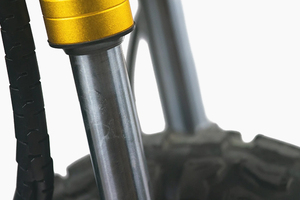
There’s a  sturdy 6082 aluminium frame, tubeless racing (or off-road) tires, full hydraulic brakes and a motorcycle-style hydraulic shock suspension system.

Organ donor card optional.

Yours for just over €2,500 (+shipping)

hiconsumption

The Jonah Medal – Septembering

I’ve got a peaceful easy feeling.

The Jonah Medal is the new project by former La Rocca singer Bjorn Baillie (top).

The Wicklow-born musician recorded it in the legendary Laurel Canyon in the Hollywood hills in LA as well Nick Cave‘s studio in Brighton, UK.

And it has that free-wheeling Crosby, Stills & Nash vibe.

Bjorn writes:

“The song is about being in the middle of the mid-life storm. You’re pulled every which way by the younger who need and rely on you, and the older who need you for a whole other set of reasons.

“I like the word September as a metaphor for middle-age. You’re no longer in your Spring-youth. So being in your 40s is Septembering. The things that have come along in your life, the people who have become part of your family, and define who you are now. The responsibility and weight of those relationships is reflected in this song.”

Nick says: A star is Bjorn again.

The Jonah Medal

Sinn Féin TD Paul Donnelly and his wife Angela at the Election count centre Citywest, near Dublin, Ireland, February 9, 2020

This morning.

In the Dáil at the Convention Centre, Dublin.

Sinn Féin TD Paul Donnelly spoke during a debate on the Civil Registration (Right of Adoptees to Information) (Amendment) Bill 2021, sponsored by his party to allow adopted persons the right to access their birth records.

He said:

“When I was thinking about writing this speech I went to the person I know is an expert in this, my wife Angela, who was adopted in Dublin in 1968.

“These are her words:

‘I always knew I was adopted. I was told before I really knew what it meant. I couldn’t have asked for better parents. I loved them and my sisters dearly and was loved unconditionally by them.

Despite this, I always felt there was something missing! Something I couldn’t see, smell or touch but something very tangible all the same. I didn’t feel my parent’s ancestors were mine. Their family tree didn’t feel like my history.

I first approached the adoption board when I was 22 following my father’s death. I had felt that requesting my original birth cert would be disloyal to my parents, but following my dad’s passing I realised that we all only have one life to live.

I had a meeting with a social worker who gave me three pieces of non identifying information about my birth mother. There was no information on my file about my birth father.

What followed that meeting was years of intermittent contact with the adoption board. I’d try to put my adoption to the back of my mind and all the unanswered questions associated with it. But it kept creeping back into my consciousness.

When pregnant with our first child I was unable to answer background questions asked by the hospital.

When our first child was born, it was like I had been granted the greatest wish imaginable. I was acutely aware that Seán was my first biological link with the world.

After several years and several requests, the adoption board agreed to give me my original birth cert.

I have no idea how these decisions are made. Why I was granted my birth cert whilst many adoptees are not.

Seeing my birth mother’s name meant so much to me. Knowing I was a member of the O’Donnell family allowed me some knowledge of my ancestors and a sense of belonging.

I have since made contact with my birth mother and three new sisters, it has been a very positive experience for me. I would not have been able to achieve this without my birth cert.

For me it didn’t matter how much I was loved and cherished. I always knew I was adopted and so always felt deep down that someone hadn’t wanted me, always felt something was missing. Not knowing your biological history doesn’t seem like a big issue to those who have it but those who don’t feel its loss.

Being told that you don’t have a right to your own information is very difficult to accept.

Children placed for adoption signed no contracts, relinquished no rights, agreed to nothing.

Information on who you are is a very basic need and the absence of it is not without consequences for those affected by it.’

Oireachtas.ie

Broadsheet.ie