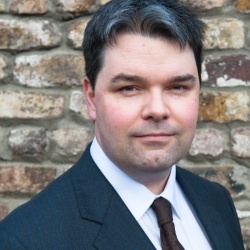
From top: Marian Finucane, John Delaney; From left: Demot Ahern, Conor Brophy, Brigid Laffan, Elaine Loughlin, Eddie Molloy; Marian Finucane
Yesterday.
On RTÉ Radio One’s Marian Finucane show.
Ms Finucane and the show’s newspaper panel discussed the recent matters concerning the Football Association of Ireland that have unfolded since Mark Tighe, in The Sunday Times, reported two weeks ago that the ex-CEO of the FAI John Delaney gave the FAI a €100,000 loan in 2017.
The item on the FAI where Ms Finucane, as she had on the previous week’s show, defended Mr Delaney’s tenure at the FAI (see below) was wrapped up before the show took a break.
Then, after commercials, Ms Finucane told her listeners:
“Now, before we move on, I think I should declare an interest because about ten years ago, when we were qualifying for the World Cup, a charity I’m involved in was nominated as the FAI charity for that trip because our charity works in South Africa.”
“But, unfortunately, Thierry Henry did the dickens on us and it never happened.”
Ms Finucane was referring to French player Thierry Henry’s handball during the Ireland V France World Cup qualifying game in November 2009.
Ms Finucane didn’t name the charity but it’s understood she was referring to the charity she and her husband founded Friends In Ireland which aims to help orphaned children affected by HIV and AIDS in South Africa.
However, despite Ireland not playing in the World Cup in South Africa in June 2010, the FAI still announced Friends in Ireland as its “official charity” six days after the World Cup kicked off.
In the same announcement, the FAI said Republic of Ireland international Sean St Ledger had become the charity’s ambassador at the time.
In a press release date June 17, 2010, the FAI said.
“As the official charity of the FAI, Friends in Ireland will have bucket collections outside the Aviva stadium on match day and will also avail of a number of other promotional and fundraising activities inside Aviva stadium and at Airtricity League games.”
In the same press release, Ms Finucane was quoted as saying:
“We are honoured and delighted with this partnership with the FAI. We are hoping that all footballers, young and old, and their supporters, will help us to help these wonderful children who find themselves in such tragic circumstances.
“The FAI staff, Sean St. Ledger, Giovanni Trapattoni and John Delaney have been inordinately helpful to Friends in Ireland in developing this partnership.
“While we didn’t get to play football there, the footballing world can nonetheless play a hugely important role in South Africa!“
On Ms Finucane’s newspaper panel yesterday were Director of the Global Governance Programme of the European University Institute Brigid Laffan; former Minister for Foreign Affairs, Dermot Ahern; political correspondent at The Irish Examiner, Elaine Loughlin; management consultant, Eddie Molloy; and former RTE journalist and now director of strategic communications at Teneo Dublin, Conor Brophy.
As mentioned above, their discussion followed the extensive media coverage about the FAI over the past two weeks since Mr Tighe’s story on the €100,000 loan.
This was a matter Mr Delaney tried to prevent from being reported upon, by going to the High Court seeking an injunction, but failed with Judge Anthony Barr saying: “…the finances of the FAI and any payment and repayment to its chief executive are matters of significant public interest.”
Since Mr Tighe’s story about the loan, Mr Delaney stepped down as CEO, after 14 years, to become executive vice-president of the FAI, while The Sunday Times, last week, reported that the FAI, for several years, paid €3,000 a month in rent for Mr Delaney who, at the time, was earning €360,000.
Yesterday, Mr Tighe wrote an in-depth analysis piece on the FAI’s finances and debt.
Ms Finucane opened the segment by asking Mr Molloy for this thoughts on the recent coverage, telling Mr Molloy “there’s nothing wrong, is there, with lending a company €100,000”.
Mr Molloy said the fact that the transaction by Mr Delaney – who is also on the executive committee of UEFA – wasn’t mentioned in the association’s financial reports “raises questions” and added the fact the CEO was even lending money to the FAI was “bizarre”.
He added:
“I looked at the website yesterday and it’s up to date. But what it says is: John Delaney took up the role of executive vice-president, following his tenure as chief executive. That is done on a Saturday night, the day before it was published in The Sunday Times.
“Now if you read that very carefully, he took up the role of executive vice-president, there wasn’t a role of executive vice-president but he took up the role. Secondly, there already is a vice president.
“Now his role is executive vice president which gives you real decision-making powers. It’s not an honorary vice-president thing, following his tenure as chief executive.
“So this sounds like part of a seamless, planned, state-of-the-art transition from one role to another and it’s all wrong, ok, that’s what I would say.”
Mr Molloy added that half the board members have been on the FAI board for 14 years or more and said he felt “uneasy” that board and committee members were being referred to as “part of the football family”.
Sounding perplexed, Ms Finucane asked why that made him felt uneasy.
Mr Molloy asked her to imagine if all the members of RTÉ’s board were referred to as “family”.
“It’s too tight,” he said, before saying independence is very important when it comes to boards and their members.
Sounding even more perplexed, Ms Finucane said: “But how do you know that this board doesn’t do that? We don’t know that.”
Ms Finucane later said: “I’m surprised that you all resent this word ‘family’.”
Mr Molloy asked Ms Finucane to consider what the board has sanctioned or “stood over” – namely the €100,000 loan and Mr Delaney’s transition from CEO to a €110,000 role that didn’t exist previously.
Ms Finucane replied: “Well, what does it tell you? Except that they’re responding and reacting to a matter that became one of great public interest, concern, etc. I mean they had to do something did they not?”
She continued: “I mean if you take his role with UEFA, I presume it’s very good… that it’s very good to have one of your people on UEFA. But you can’t get that role within UEFA if you don’t have a serious role with your own organisation at home, say, in this instance, the FAI. That’s my understanding of it.”
Mr Molloy said Mr Delaney was voted to his position on the executive committee of UEFA in 2017.
He then added: “What has that got to do with what was played out over the last fortnight? It’s got nothing to do with it.”
Ms Finucane went on to quote an interview given by football pundit and journalist Eamon Dunphy who said that Mr Delaney had done, in her words, “wonderful things” at club level across the country and that he’s “very respected and liked for that”.
She also said of Mr Delaney’s injunction attempt: “Everybody is leaping on the thing about going to the court, every one of us has the right to go to a court at any stage that we want to, on any grounds.”
Former Minister for Foreign Affairs Dermot Ahern, who said he got into politics because of his involvement in soccer in his early 20s, recalled his dealings with the FAI when he was the Minister for Communications.
At the time, the FAI wanted to sell Ireland’s matches’ exclusive rights to Sky.
Mr Ahern said he had a “huge battle” with the FAI who argued, unsuccessfully, that by doing the deal with Sky, it would create millions for the FAI and that this would, ultimately, trickle down to and help Ireland produce better players.
The former minister said he successfully argued, at the time, that only 250,000 households had Sky subscriptions and young people across Ireland wouldn’t get to see, let alone be inspired, by the matches.
Mr Ahern went on to say he shared Mr Molloy’s concerns about governance at the FAI.
Towards the end of the segment, Ms Finucane had the following exchange with journalist Elaine Loughlin when Ms Loughlin attempted to speak about Mr Tighe’s analysis piece on FAI’s debt.
Loughlin: “The Sunday Times has really been to the fore on this in uncovering what is going on in the FAI. And Mark Tighe has a great piece of analysis today and I think it shows a tale of two FAIs. You’ve one FAI where you have millions of debt – a lot of it going back to the redevelopment of the Aviva Stadium and there’s still massive issues of millions, of millions of debt that the FAI is still trying to pay back. And then – ”
Finucane: “Well, I mean, you’ve got to be fair here. It coincided with the crash.”
Loughlin: “It did, but – ”
Finucane: “And there were to be tickets sold that, to look at them, they look like eye-watering prices. But, at that time, people were spending that kind of money. And they had hoped to pay their debt and then the world fell apart. You know, I mean.”
Loughlin: “Yes, but Marian, the world – ”
Finucane: “You can’t blame them for Lehman’s.”
Loughlin: “The world fell apart but, as we’ve seen, in multiple articles now, John Delaney still continued to use the FAI credit card to buy rounds of drinks for supporters, no wonder he’s so popular, as Dermot outlined earlier on.
“He was still getting his rent paid, he was still on a massive salary.”
“….it did seem like there was a facade that everything was rosy in the garden of the FAI while they still had these massive debts. So they were acting as if everything was ok.”
The Oireachtas Joint Committee on Transport, Tourism and Sport will question members of Sport Ireland about funding it has granted to the FAI “and related matters” on Wednesday, at 2.30pm.
Mr Delaney and other senior members of the FAI will go before the same committee on April 10.
FAI announce Friends in Ireland as Official Charity (FAI, June 17, 2010)
Listen back in full here