
Seán Gallagher gives his presidential pitch in 60 seconds or less pic.twitter.com/ftD8mfhE64
— RTÉ News (@rtenews) October 7, 2018
Yesterday.
Presidential hopeful Seán Gallagher explained why he wants the job.
Previously: How Was It For You?



Seán Gallagher gives his presidential pitch in 60 seconds or less pic.twitter.com/ftD8mfhE64
— RTÉ News (@rtenews) October 7, 2018
Yesterday.
Presidential hopeful Seán Gallagher explained why he wants the job.
Previously: How Was It For You?

Housing Minister Eoghan Murphy
This morning.
On RTÉ’s Morning Ireland.
RTÉ’s Education Correspondent Emma O’Kelly re-interviewed a homeless family whom she interviewed in September 2017.
At the time of last year’s interview, 18-year-old Amanda* said living in a hotel, for a year at that point, had offered her “no privacy” and “no peaceful time”.
She also feared that people at her school, because of her situation, would decide she was “scum”.
Ms O’Kelly started off her report saying “nothing has changed for this family” and explained that the family – a mother, two daughters and one son – are still living in the same hotel room.
In this morning’s report, a tearful Amanda told Ms O’Kelly:
“You want to voice what’s actually going on, the truth with everything, but you are sometimes afraid, and, just, your voice is gone.”
“In my old school, for example a lad started shouting ‘oh, yeah, you’re living the high life, if you’re homeless. You know, you get your bedroom, you’re living in a high-class hotel, you’re getting your food paid for you and everything. You can just around doing nothing, waiting for a house that’s paid for you.
“And I’m sitting there in tears. I can’t hide it because it’s not the high life. You’re living with stench of people, cooking food in rooms, rotten away with mould and everything else.
“I feel like I’ve been stolen of most of my life.”
Amanda also told Ms O’Kelly that her mental health is deteriorating, saying:
“People need to know that it is deadly to live like this. You do just want to…you feel like you have no life left living in here with no help, no sense of security, you just think what’s the point. You really do.”
Amanda also said that it’s the job of Taoiseach Leo Varadkar and Housing Minister Eoghan Murphy, and “everyone else that’s sitting in that Dáil” to fix the homeless crisis.
She said “it’s their job to care” and if they don’t, then the job should be given to someone else.
Meanwhile, last year…
After Amanda spoke on Morning Ireland in September 2017, Housing Minister Eoghan Murphy said:
“It’s probably one of the most important contributions to this debate that we’ve heard in the past number of months.
“…the bravery they had this morning to come out and tell the country about their particular circumstances, I think was very brave but very important that people understand what these families are facing…”
*Amanda is not her real name.
This morning’s interview can be listened to in full here
‘Your voice is gone’ – student speaks of being homeless (Emma O’Kelly, RTE)
Previously: ‘Will They Still Be Your Friend? Or Will They Find You Scum?’
UPDATE:
https://twitter.com/namawinelake/status/1048190649172971521

Broadcasting Authority of Ireland and RTÉ
The Broadcasting Authority of Ireland recently completed a five-year funding review of RTÉ and TG4.
Further to this, the BAI has released a statement today stating…
“The BAI recommends, at a minimum, that RTÉ should receive an increase in its annual public funding of €30m per annum. Given the urgency of RTÉ’s current funding position, the increased level of public funding recommended should be available to the broadcaster immediately.
“As set out in the report, the BAI believes that there may well be a case for increased funding in excess of €30m per annum and remains open to receiving further detailed proposals from the broadcaster over the period of its 2018-2022 Strategic Plan, aligned with its statutory remit.
“The BAI recommends an increase of €6m per annum in public funding for TG4. It is the view of the BAI that this increase should have full effect from 2018 and onwards over the period of TG4’s strategy.
“The BAI believes that both funding increases are justified, as, in its view, the funding currently available is not sufficient to ensure the broadcaster’s sustainability.”
Broadcasting Authority of Ireland Statement on Five-Year Review of Public Funding (BAI)

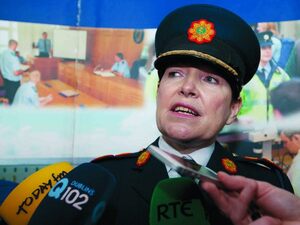
Former Garda Commissioner Nóirín O’Sullivan
The Irish Times, reports:
The former Garda commissioner, Nóirín O’Sullivan, has sought all information held on her by a number of major media organisations under European Union data protection rules.
Faced with the request, RTÉ has told some of its journalists that all of their email records are being examined by the State broadcaster’s data protection officer….
…The former commissioner has also made the same request for data records to The Irish Times and the publisher of the Irish Mail and the Irish Mail on Sunday.
Anyone?
Nóirín O’Sullivan requests data held on her by key media bodies (The Irish Times)


From top: A sit-in on O’Connell Bridge in Dublin city during the Take Back The City national day of action on Saturday; RTÉ’s Audrey Carville; Paddy Cosgrave
This morning.
On RTÉ Radio One’s Morning Ireland.
Audrey Carville spoke to co-founder of the Web Summit Paddy Cosgrave in light of the Take Back The City protests which took place across Ireland on Saturday.
Mr Cosgrave was critical of Fine Gael for castigating the protesters as “criminals” while seemingly never speaking out about Irish farmers who’ve occupied farms to prevent them from being compulsorily purchased to provide factories or offices for foreign companies.
He was also critical of RTÉ’s coverage of the matter.
Audrey Carville: “Large crowds of people protested across the country on Saturday over the housing crisis. It was organised by the Take Back The City group as part of a national day of action over the shortage of housing. Rallies were also held in Sligo, Galway, Kildare, Limerick, Derry, Belfast, Drogheda, Maynooth, Bray and in Wexford.
“Speeches called for an end to evictions, increased provision of social housing and affordable rents. Well with us in studio this morning, one man who was at the Dublin city protest on Saturday, entrepreneur, co-founder and chief executive of the Web Summit Paddy Cosgrave. You’re welcome and good morning.”
“Will you tell us why you were there?”
Paddy Cosgrave: “I think one of the motivating factors was captured by the lead story on the front page of the Sunday Business Post yesterday which is this crisis is not just one affecting society, it’s having a very negative impact on the economy at large. And it’s impacting small businesses, that’s very obvious but perhaps what’s not so obvious is that multi-nationals are also being impacted and dramatically so, to the point that they’re prepared to raise this issue consistently over the last year with ministers of this country.
“On the march, I met, I walked with somebody who worked with Google, others from Indeed, Facebook, LinkedIn, and I think that Fine Gael may have underestimated what type, the nature of this crisis.”
Carville: “The Government has said protests don’t build houses and they question their impact. They’ve also said previously that homelessness here is no worse than anywhere else.”
Cosgrave: “Well I grew up on a farm. And when my next-door neighbour occupied a building that was in use in Dublin last summer for seven full days with the IFA [Irish Farmers’ Association] grain committee – that was the Department of Agriculture. It wasn’t stormed by heavy police officers, dressed in riot gear. They were left, peacefully there, to protest for seven days. Fine Gael never came out and spoke out against members of the IFA, farmers in this country as “criminals”, as “disgraceful”, words used by ministers over the last week. And I think that should tell you something about Fine Gael.
“Fine Gael have essentially decided that they think the protesters in the city are of working class background, that they’re from poor, disadvantaged areas and, as a consequence, they’ll kind of castigate them as criminals. But when farmers do it, when farmers occupy farms – all over this country, which they’ve been doing for years now – there’s not a word out of Fine Gael.”
“And I think that should tell you something about the operating basis of Fine Gael as a party in modern Ireland.”
Carville: “In relation to Fine Gael, they’re the main party in Government, it’s their job to put together a policy which will deliver housing for people here and they say they’re doing that, they tell us about the figures of house completions, they tell us about the money being invested. They’ve announced this Land Development Agency which they believe will be a big factor in solving this. You’re not convinced?”
Cosgrave: “Well I think if you want to understand Fine Gael’s priorities, you should look at the first act of business of this year, 2018. Heather Humphreys proposed a bill, called the Industrial Development Bill that, you know, there are people that desperately need places to live but the Government decided that the number one priority was to grant extraordinary powers to the IDA to compulsorily purchase farms around this country that foreign companies had identified as areas that they would like to build – factories or offices. That’s contained in the Industrial Development bill 2018, that was the first act of Fine Gael.
“And they prioritised that legislation in the interest of foreign companies to compulsory purchase farmers’ land in this country. It had to do with the case of Thomas Reid – a farmer, very close to the Leixlip plant, or Intel’s Leixlip plant. And I think, again, that’s very, very revealing. There’s land all over this country that can be compulsorily purchased for houses but that hasn’t been a priority for this Government.”
Carville: “But have you raised this with Leo Varadkar. He was a speaker at your MoneyConf conference this year.”
Cosgrave: “Have I raised it? I think thousands, tens of thousands of people have been raising it, the Central Bank has…”
Carville: “No, but have you raised it?”
Cosgrave: “…been raising it. The European Commission has been raising it…”
Carville: “Yeah but you’re here…”
Cosgrave: “The Economist…”
Carville: “Have you raised it?”
Cosgrave: “…has been raising it. Have I raised it? Yes, I took part in a protest on Saturday.”
Carville: “I know that. But you had personal access to Leo Varadkar – he was one of your keynote speakers at your MoneyConf event this year. Did you have a meeting with him…”
Cosgrave: “Absolutely. Have I tweeted about it? Have I tweeted him directly, yeah…”
Carville: “No that’s not what I’m asking…”
Cosgrave: “Absolutely.”
Carville: “…and you know. Have you had a face-to-face meeting. At that opportunity to raise it with the most senior politician in the country?”
Cosgrave: “I find this reprehensible. Have RTE covered the fact that this government has never said so much as a word about farmers in this country who’ve occupied farm after farm after farm – halting the for sale of those farms for years now.”
Carville: “Hmmm. But have you…”
Cosgrave: “Have you pointed out the hypocrisy of that? That a group of people from west, believed to be from west Dublin, are castigated as criminals and disgraceful. Why? Because Fine Gael knows they don’t vote for them.”
Carville: “But I’m asking you a simple question Paddy Cosgrave. No, no…”
Cosgrave: “…when farmers occupy properties illegally by the way, illegally, illegally…”
Carville: “I’m asking you a question, you’re in here this morning, making these points, raising your concerns on the back of what has been taking place over the past number of weeks. I’m asking you – as someone in your position, with direct access to the Taoiseach, at an event that you organised this year. Did you talk to him about this…face-to-face?”
Cosgrave: “Oh sure for years, for more than a year, I’ve been raising, for more than two years, I’ve been raising these issues directly with government, with special advisors to a number of ministers…”
Carville: “But not to Leo Varadkar.”
Cosgrave: “I’ve met in my house with the Minister for Housing – because these issues are not just mauling society, they’re affecting the entire economy, they’re shuttering small businesses, they’re forcing multi-nationals, for the first time, in almost the history of this state, to publicly and openly criticise a sitting government. That’s unprecedented.”
Carville: “And yet…”
Cosgrave: “Are there other examples of that? Can you cite another example of a multi-national in this country, publicly criticising a sitting Government?”
Carville: “And yet, I’m reading a report from yesterday’s Sunday Times where figures compiled by property group Green Reit, and a number of commercial property agents, show that eight tech companies, including some of those you mentioned – Amazon, Facebook, Google – who are here and well established here. And they’re looking to create space for an additional 20,000 workers and they’re well aware of the housing crisis.”
Cosgrave: “Sure and the…”
Carville: “So the impact on them is not questionable…”
Cosgrave: “You cite Amazon, this is essentially propaganda. Amazon themselves have, at a ministerial level, raised this issue. The question is, you know, 200,000 jobs. How many jobs is the country losing? How many jobs is the country losing? How many offices are Google and Amazon opening up across Europe – and they’re doing it and I know well that they’re doing it because of the difficulties in finding accommodation.”
Carville: “So how would you solve it? Have you any solutions?”
Cosgrave: “Absolutely, I think there are huge numbers of solutions. There’s nothing radical that’s needed. I think there are perfect examples, all across Europe, that have followed all sorts of policies for years – but those policies aren’t even discussed, they’re not even discussed in the national media, they’re not even discussed by this broadcaster.”
Carville: “Name one.”
Cosgrave: “I think that’s incredibly worrying. Let’s take Germany just as an example, just take tenants’ rights as an example, indefinite lifespan for tenancy contracts, what about the immediate ban of Airbnb? That’s being done in cities across Europe. Three years ago at this point, five years ago, Berlin initiated and indicated that they would start to regulate Airbnb and three years ago they instigated bans and heavy restrictions on Airbnb. That hasn’t happened here. It’s very easy to implement those.”
Carville: “Ok. Well thank you very much for coming in to talk to us this morning…”
Listen back here
Saturday: Sit Down Next To Me



RTÉ, Montrose, Donnybrook, Dublin 4: pages from the executive summary of an assessment by the European Broadcast Union
The executive summary of an assessment by members of the European Broadcast Union (EBU) into RTÉ’s future has been obtained by The Times Ireland Edition, under the Freedom of Information Act.
RTÉ refused to release the full report because it claimed “this would interfere with publishing its five-year strategic plan”.
Via Catherine Sanz of The Times:
RTÉ lacks focus and innovation, struggles to appeal to certain audiences and is wasting money, according to a critical report by public service broadcasters across Europe.
The assessment found that all levels of the state broadcaster lacked coherence and there was mistrust between departments.
It said a high level of overlap in its programming schedule had caused RTÉ to lose time, money and audience numbers.
It referenced a consistent “lack of synergy” in the organisation, which it said did not encourage innovation.
The broadcaster was at a “decisive moment” and was being stretched “beyond what is reasonable” by the number of services it ran. The report urged consolidation.
The report said that the “weak funding situation” should be countered by more aggressive lobbying.
It suggested that the organisation concentrate on services for a diverse audience base. “RTÉ needs to think differently and be free of the mindset of its traditional content offer,” it added.
Good times.
RTÉ ‘wastes cash and is losing its audiences’ (Catherine Sanz, The The Times Ireland Edition)
Read full EBU executive summary here
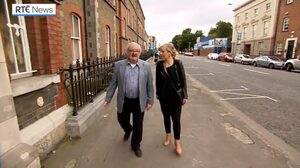
What to do with the site of the last remaining Magdalene laundry in State ownership is proving bitterly divisive | https://t.co/A4MOypUeVu pic.twitter.com/jGeypcaJmR
— RTÉ News (@rtenews) September 20, 2018
Last night.
An RTÉ News report by Sharon Ní Bheoláin on the last remaining magdalene laundry on Sean McDermott Street, Dublin 1.
It followed the decision made last week by Dublin City Council to preserve the site based on a motion put forward by Social Democrats Cllr Gary Gannon, for Dublin’s North Inner City, to stop the sale of the site to a Japanese hotel chain.
Hmmm.
In response, Mr Gannon tweeted:
Previously: A Constant Reminder
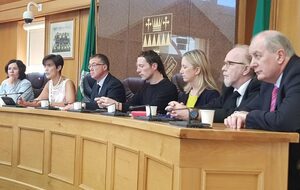
Presidential hopefuls at Kerry County Council including (right to left) Gavin Duffy, Jimmy Smyth, Gemma O’Doherty and William Delaney
This lunchtime.
On RTÉ Radio One’s News at One.
Paschal Sheehy reported from Kerry where several presidential hopefuls addressed county councillors – including journalist Gemma O’Doherty – in a bid to secure a nomination for the presidency.
Before playing a clip of Ms O’Doherty speaking to members of the media, Mr Sheehy told show host Claire Byrne:
“Gemma O’Doherty is running on an anti-corruption platform. Now, she refused to discuss with us, afterwards, her reason for raising, sorry..she refused to discuss with us her allegation that Veronica Guerin had been murdered by the State. But she did go into the reasons why she is running for a nomination for he presidency with us.”
Ms O’Doherty then said:
“Well, I believe that the Irish people are greatly concerned about the toxic culture of corruption and cronyism that has infested our state. And I think there is huge concern about the fact that their taxes are being squandered by this government on a daily basis. I feel an awful lot of citizens have been denied the right to truth and justice. They have great concerns about the functioning of our criminal justice system.
“They feel they have been denied the right to a decent healthcare system, to affordable housing. I’m greatly concerned about the crisis of homelessness in our state and really I think that people feel that there’s a disconnect between the political elite, the media and citizens on the ground.
“And these are the areas that I want to raise and I believe that the presidency can be a sanctuary for people who feel disenfranchised and feel alienated from the governing elite in this country.”
Listen back in full here.
Meanwhile…
Thank you to the Councillors of Meath for giving me the first nomination in the 2018 Presidential Election. #Aras18 #Aras2018
— Gavin Duffy (@GavinDuffy) September 3, 2018
Top Pic: Kerry County Council

Housing Minister Eoghan Murphy
This morning.
Housing Minister Eoghan Murphy spoke to Miriam O’Callaghan on RTÉ Radio One’s Today with Seán O’Rourke about the homeless and housing crisis.
During the interview, Mr Murphy told Ms O’Callaghan he’s expecting the figure for the number of people using emergency accommodation in July – expected to be released this week – to increase from the figure of 9,872, including 3,824 children, recorded in June.
From the interview…
“What we have at the moment is a very acute supply problem which is being corrected and we can go into that in some detail in relation to the CSO figures.
“…what we saw for the last quarter, was about 4,500 new homes were completed. What we actually need to achieve is somewhere between 6,000 and 8,500 new homes being completed every quarter and then that continuing for a steady period of time.
“We have to move away from these violent swings in our housing output where we go from 90,000 – which is twice too many – people’s properties being overvalued and people then falling into massive negative equity and then, in a few short years, people living in cramped accommodation, trying to raise a family…
“…At the moment, we have about 2,400 [social housing homes] were built last year, another 4,400 will be built this year. At the end of the second quarter of this year, 4,000 were being constructed on site with another 2,000 to go on site.
“We’re going to hit our target for increasing the stock of social housing by 50,000 by 2021.
“Importantly though, this year, Miriam, about one in four or one in five new houses that are built will be social housing homes and that commitment maintains for the next ten years.”
“…If you look at 2020 and 2021, under our plans, we will be putting more people in social housing homes than into the private rental sector because we have this commitment to build new social housing homes.”
“…Again, looking at the CSO figures, which are independent from my own department, last year about 20,000 places to live were made available, 14,500 new homes were built, another 2,500 homes came out of vacancy – stock that wasn’t being used.
“Another 1,000 homes which had been started before the crash but were never finished were completed and about 2,000 new student bed spaces. So, that’s a dramatic increase.”
“…If you look at something like rough sleeping. This time last year it was far worse than it is now. We’ve seen a dramatic reduction in people who are sleeping rough.
“…I don’t have them [homeless figures for July] yet. We’re still compiling them. My understanding is that they will be slightly up because we are, again, seeing an increase in presentations.
“…My understanding is that the figures have gone up in one particular region which would give me reason to believe that actually they’ll be up overall.
“Whether or not they hit 10,000 this month, I can’t be certain now.
“…Hitting 10,000 doesn’t tell us anything that hitting 9,000 didn’t tell us which is that we have a very serious crisis.”
Towards the end of the interview, Ms O’Callaghan asked Mr Murphy about a report by Daniel McConnell, in the Irish Examiner, last week which claimed some Fine Gael ministers fear their “posh boy” image and failure to solve the housing crisis will “kill” their election hopes.
Mr Murphy said:
“Miriam… it doesn’t matter where I’m from or where I grew up or how I dress or how I look or how I speak, none of these things matter and people who, serious people really who shouldn’t entertain those types of ideas but, unfortunately, some of our politicians and some of our commentators are.
“What matters is: are our policies working?”
“…Fine Gael is the party of the Just Society. Declan Costello – that people growing up would have opportunities, the same opportunities, regardless of who there parents were or what they did…”
“…If people think the problem or our housing crisis is the fact that I am a posh boy from Dublin 4, then they are missing the mark completely…”
Listen back in full here

RTE’s reverential coverage of the Pope’s visit was not journalism. It was propaganda for an institution that has been criminally complicit in the rape and buggery of children around the world and is the prime institutional carrier of mysogyny and homophobia.
— Vincent Browne (@vincentbrowne) August 26, 2018
Can only conclude after a few days of comparing news coverage with public sentiment re Pope, that editors have fixed views on how certain stories should be covered, which cannot be dislodged either by passage of time or social change
— Fergal (@Fergal) August 26, 2018
Oh.
Meanwhile…

Ah here.
Thanks LiamZero