



The Art Deco and Bauhaus spiral staircases of Budapest, photographed by Balint Alovits.



The Art Deco and Bauhaus spiral staircases of Budapest, photographed by Balint Alovits.

Garda Commissioner Nóirín O’Sullivan at a press conference in 2014, and whistleblower Supt Dave Taylor (left)
This morning.
Sarah Bardon, in The Irish Times, reports:
The Government is to move to establish a commission of investigation into allegations that senior gardaí engaged in an orchestrated campaign to discredit a Garda whistleblower.
The Irish Times understands that retired high court judge Iarlaith O’Neill, who was asked last October to take a look at the allegations and report his findings within weeks, has recommended that further investigation is warranted into claims made by Supt David Taylor.
… In her 10-page submission to Mr O’Neill, seen by The Irish Times, the commissioner denies she was involved in any such campaign against Mr McCabe.
…Ms O’Sullivan told the judge she had an unblemished disciplinary and conduct record that she prided herself on.
New commission to investigate Garda whistleblower claims (Sarah Bardon, The Irish Times)
Meanwhile…
Last December.
Readers may recall how it was reported in The Sunday Times that retired High Court judge Iarfhlaith O’Neill – who has examined the protected disclosures made by Sgt Maurice McCabe and former head of the Garda Press Office Supt Dave Taylor – was given “conflicting accounts from key witnesses” including the Garda Commissioner Noirin O’Sullivan.
Mr Justice O’Neill’s review was received by the Minister for Justice Frances Fitzgerald on December 7 but it has not yet been published.
Readers will recall how Supt Taylor has claimed there was an orchestrated campaign, within the gardai, to destroy the reputation of Sgt McCabe.
Supt Taylor has claimed he was following orders from senior gardaí and that both the former Garda Commissioner Martin Callinan and the current commissioner Ms O’Sullivan knew about the campaign.
Before Christmas, John Mooney, in The Sunday Times, reported that, as part of his protected disclosure, Mr Taylor claimed he sent a text to Ms O’Sullivan in which he told her a journalist had interviewed a person making allegations about McCabe.
Taylor claims O’Sullivan sent a one-word reply to his text: “perfect”.
In a statement to Mr Justice O’Neill, Ms O’Sullivan denied Taylor’s claims, and said she often responded to texts messages using the word “perfect” or “thanks”.
New row over McCabe ‘smears’ (John Mooney, Sunday Times)
Yesterday: “Legacy Issues”
Leah Farrell/Rollingnews

Cormac writes:
“So my mom managed to Blu-Tack a newspaper clipping of Mrs Brown’s mug onto my passport, which was only spotted by the nice lady at the Aer Lingus boarding gate who thought it was only hilarious. I must admit… I was 100% caught out here.”
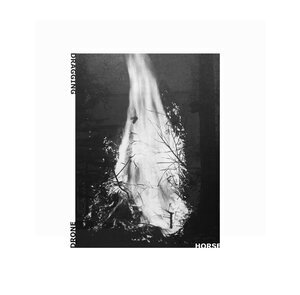
Horse – Cork sludge/hardcore four-piece
What you may need to know…
01. Last we heard of Cork-based hardcore outfit Horse, they were getting riled up for Lodgefest II, at the now-defunct Pine Lodge venue, late last year.
02. In the months since, the band has released a split 12″ single alongside fellow Leeside rabble-rousers Bisect. We featured that band’s side of the record not too long ago.
03. Their half of it is streaming in the widget above and available for download as a stand-alone release.
04. Next live excursion is another bus out of town, this time to Connolly’s of Leap, on February 24th, for the Leaping-ton show. Hope is Noise and Horse are joined by new lads The Liminals and, in their first Cork show in years, post-metallers Rest.
Thoughts: Having firmly settled into a new line-up, Horse’s weighty, downtuned hardcore is newly focused, and somehow even more abrasive.

Yesterday’s Irish Examiner and Irish Times (top) and this morning’s covers (above)
Outsourcing the same picture editor?
We may never know.
Earlier: De Tuesday Papers


This morning.
The Supreme Court in the UK ruled, by a majority of 8 to 3, that the UK parliament must vote on whether the UK government can trigger article 50 and start the Brexit process.
It also ruled, unanimously, that there is no requirement for the assemblies of Northern Ireland, Wales and Scotland to give their permission for the process.
Delivering the judgment, Lord Neuberger said the following:
On 1 January 1973, the United Kingdom joined the European Economic Community (now the European Union, the EU). This was achieved by Government ministers signing a treaty of accession and Parliament enacting the European Communities Act 1972. Over the next forty years, developments in the EU resulted from further treaties, many of which were adopted in subsequent Acts of Parliament, some of which curbed the exercise of the powers of UK ministers in EU institutions.
One of those Acts of Parliament was in 2008, and it approved the inclusion of Article 50 into the EU Treaties. In broad terms, Article 50 provides that a country wishing to leave the EU must give a notice ‘in accordance with its own constitutional requirements’, and that EU Treaties ‘shall cease to apply’ to that country within two years.
On 23 June 2016, a UK-wide referendum produced a majority in favour of leaving the EU, and the Government then announced its intention to trigger Article 50.
The issues in these proceedings have nothing to do with whether the UK should exit from the EU, or the terms or timetable for that exit.
The main issue is whether the Government can trigger Article 50 without the prior authority of an Act of Parliament. The other issues concern the obligations of the UK Government under the devolution legislation before triggering Article 50, and in particular, whether the legislatures in Scotland, Wales and Northern Ireland must be consulted.
So far as the main issue is concerned, as a general rule, the Government has a prerogative power to withdraw from international treaties as it sees fit. However, the Government cannot exercise any power if it would thereby change UK laws, unless it is authorised to do so by Parliament.
The claimants argue that, as a result of leaving the EU, UK law will change and legal rights enjoyed by UK residents will be lost. Accordingly, they say, the Government cannot trigger Article 50 unless authorised by Parliament. In reply, the Government argues that the 1972 Act does not exclude the power for ministers to withdraw from the EU Treaties, and that section 2 of the 1972 Act actually caters for the exercise of such a power.
Today, by a majority of 8 to 3, the Supreme Court rules that the Government cannot trigger Article 50 without an Act of Parliament authorising it to do so.
Put briefly, the reasons given in a judgment written by all eight justices in the majority are as follows. Section 2 of the 1972 Act provides that, whenever EU institutions make new laws, those new laws become part of UK law. The 1972 Act therefore makes EU law an independent source of UK law, until Parliament decides otherwise.
Therefore, when the UK withdraws from the EU Treaties, a source of UK law will be cut off. Further, certain rights enjoyed by UK citizens will be changed. Therefore, the Government cannot trigger Article 50 without Parliament authorising that course.
We reject the Government’s argument that section 2 caters for the possibility of the Government withdrawing from the EU Treaties. There is a vital difference between changes in UK law resulting from changes in EU law, which are authorised by section 2, and changes in UK law resulting from withdrawal from the EU Treaties. Withdrawal effects a fundamental change by cutting off the source of EU law, as well as changing legal rights. The UK’s constitutional arrangements require such changes to be clearly authorised by Parliament, and the 1972 Act does not do that. Indeed, it has the opposite effect.
The referendum is of great political significance, but the Act of Parliament which established it did not say what should happen as a result. So any change in the law to give effect to the referendum must be made in the only way permitted by the UK constitution, namely by an Act of Parliament. To proceed otherwise would be a breach of settled constitutional principles stretching back many centuries.
The dissenting justices consider the Government can trigger Article 50 without an authorising Act of Parliament. Their view is that the 1972 Act (taken with the 2008 Act), renders the domestic effect of EU law conditional on the EU Treaties applying to the UK.
In their view, parliament has not imposed any limitation on the Government’s prerogative power to withdraw from the Treaties, and, if Article 50 is triggered, EU law will cease to have effect in UK law in accordance with the 1972 and 2008 Acts.
On the devolution issues, the court unanimously rules that UK ministers are not legally compelled to consult the devolved legislatures before triggering Article 50. The devolution statutes were enacted on the assumption that the UK would be a member of the EU, but they do not require it.
Relations with the EU are a matter for the UK Government. The Sewel Convention plays an important part in the operation of the UK constitution but the policing of its scope and its operation is not a matter for the courts.
We thank all those who have played a part in helping us determine these important legal questions.
Watch the above judgment being delivered here
Read the judgment in full here


A compilation of sumptuousness from Disney by film editor Jorge Luengo Ruiz: 79 years of hand-drawn and latterly computer aided animation from Snow White And The Seven Dwarves (1937) to Moana (2016).
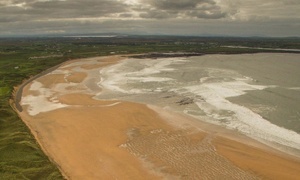

From top: Doughmore beach, Doonbeg; Application for a scaled-down sea wall
“Two new protection structures are proposed – the first involves using sheet metal and rock armour for 609 metres at one end of the dune system, with a second of 256 metres at the other end, beside the golf hotel.
It says the final structure will be “screened from view”, and permission is also sought for a construction compound and public car park…”
Revised plans outlined for Donald Trump’s golf course in Doonbeg, County Clare..
Louise writes:
, I’m just wondering if people are aware that Trump submitted a new application just before Christmas to build on Doonbeg beach after his wall was turned down..
Objections from the public have to be received by post to Clare County Council by February 3.
It would be a terrible mistake to let them build there, and if you do have an opinion about this, please let your voice be heard.
Application here:
The Futility Of Trying To Fix A Coastline (Patagonia)
Previously: It’s Too Bigly