Yearly Archives: 2019

The Lucky Duck

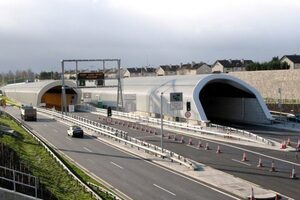
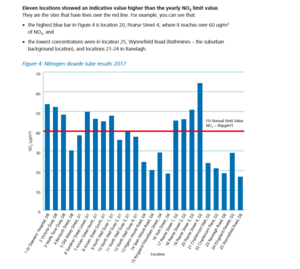
Dublin Port Tunnel; from a report by the Environmental Protection Agency on the Urban Environmental Indicators – Nitrogen Dioxide levels in Dublin released yesterday

Social Democrats tweetz:

EPA report records high air pollution at Dublin Port Tunnel entrance/exit. @trishroesocdems says residents assured during consultation phase that noxious fumes wouldn’t be released into residential areas. Now 800 new homes proposed beside exit at Laurence lands/Oscar Treanor site

Anyone?

The EPA can be read in full here

Dublin traffic pollution poses public health risk – EPA (RTE)

Pic: AA

Dashoda – In Between

The debut single by Wexford-born musician Gavin MacDermott (top) is a melodic blast of introspective electro pop with a mandolin solo proudly peeking out from beneath the beats.

The video by Conor Donoghue was shot in Dublin’s St Anne’s Park (Gavin’s granny used to live around the corner).

Gavin says:

“I was inspired by the onset of adulthood.”

Nick says: It’s a walk in the park.

Dashoda

From top Paul Kehoe, Minister for State at the Department of Defence; Derek Mooney

A few weeks back I discovered online that one of my favourite London pubs, the Coach and Horses on Greek Street in Soho is about to change hands.

The pub is both iconic and historic – and not just because I’ve been swigging pints there on visits to London since the early 1980s.

It has been the watering hole of Dylan Thomas, Francis Bacon, Lucian Freud, Louis MacNeice, Graham Greene and countless other journos, actors, artists and Bohemian hangers-on.

The pub is just across the street from the offices of the British satirical magazine, Private Eye, and has hosted many of the Eye’s infamous off-the-record lunches in an upstairs private dining room.

The design and layout of the main bar was immortalised as the set for the play based loosely on the life of one of its most infamous denizens, the notoriously unsober Spectator and Sporting Life humourist, diarist and columnist, Jeffrey Bernard.

One anecdote, and there are many about Bernard, tells you almost all you need to know about the man. In the late 1970s he was offered a very generous advance for his autobiography.

He promptly wrote to the letters page of the New Statesman announcing that he had been asked to write a book about his life and would be very grateful if anyone could write to tell him what he had been doing between 1960 and 1974. Funny, self-deprecating and totally dissolute.

Sometimes Bernard would become so ensconced in the Coach and Horses that he would neglect to submit that week’s “low life” column. On such occasions his editor would insert the legend: there is now “low life” column this week as Jeffrey Bernard is unwell.

Jeffrey Bernard is unwell, a euphemism that became his calling card.

Not that non-submission of copy was the only grounds for not publishing his work. On some occasions Bernard would remember to submit a column but the editor would still choose not to run it, instead running a banner proclaiming: Jeffrey Bernard’s column does not appear this week as it remarkably resembles the one he wrote last week.

Which is all a very roundabout way of getting to the topic of today’s Broadsheet column – though to my credit this is borrowed more from one from early June not last week.

In essence, what I am about to say now is a restatement of what I said in Poor Kehoe has To Go, a month ago.

Four weeks back I wrote that it was long past time for Minister of State for Defence Paul Kehoe to be moved out of that department and moved somewhere… anywhere… else. I suggested that he might trade places with Minister of State David Stanton, currently in the Department of Justice.

The stumbling and bungling by Kehoe over the past few weeks, especially the last few days have only served to strengthen the case for Kehoe to go.

As Broadsheet highlighted yesterday he has seriously put his foot in it offering contradictory reasons as to why two naval service ships are currently on reserve and cannot put out to sea. A mistake he compounded by going on to TV, radio and social media to repeat it several times

Kehoe’s version is not just at variance with the reasons set out by senior naval officers, it has since been debunked by his boss, the Cabinet level Defence Minister and Taoiseach, Leo Varadkar – though not before the Taoiseach managed to confuse matters even further by not knowing how many ships are in the Irish naval service fleet (hint: the answer is 9).

Don’t forget Leo Varadkar is the Minister for Defence, Kehoe is merely the junior minister, albeit one more regularly in contact with officials.

So, why shouldn’t Kehoe simply be sacked? Well, not because he hasn’t messed up. He has and managed to do it publicly over the last few days. But he shouldn’t be sacked as that only serves to single him out as a scapegoat.

Though Kehoe has been at the Department of Defence for eight years (since Fine Gael came into government at 2011) and has as much ownership of the current state of defence dysfunction as it is possible to have, he has never been the source of the mayhem. He has never ever been the senior Minister there.

For almost every day of his stewardship there has been a succession of cabinet level Defence ministers who had the ultimate responsibility in law and in fact for the policy side: from Alan Shatter to Simon Coveney to two Taoisigh: Enda Kenny and now Leo Varadkar.

All have been part-timers, each also held responsibility for another significant government department.

Shatter: Justice, Coveney: Agriculture, Kenny and Varadkar: Taoiseach. Almost none of this fab four gave defence the level of attention it needed at cabinet table discussions, especially when up against the departments of Finance and Public Expenditure, while Kehoe simply never had the political clout to win against the lads in Merrion Street.

Kehoe was given an impossible task, his error was in accepting it knowing the limitations. His secondary error was in staying on too long. The far greater mistake was in knowing all this and still putting Kehoe in the position. The blame for this bigger mistake lies with Kenny and Varadkar.

Instead of just blaming everything on Kehoe and having a quick pre-Summer political hullabaloo that is over in a few days, the way to move forward constructively is for An Taoiseach, to borrow a phrase from the naval service note, “…to consolidate and regenerate… cut our cloth” and reassign Kehoe.

Minister of State, Stanton, be on standby.

Derek Mooney is a communications and public affairs consultant. He previously served as a Ministerial Adviser to the Fianna Fáil-led government 2004 – 2010.  Follow Derek on Twitter: @dsmooney

Rollingnews

And ‘coils’ for the ladies.

FIGHT!

Above from left: Chief Commissioner of the Irish Human Rights and Equality Commission Emily Logan, TV presenter Brendan Courtney and Social Inclusion Officer with Monaghan County Council Bernie Bradley.

This morning.

The launch by The Irish Human Rights and Equality Commission of new research entitled “Caring and Unpaid Work in Ireland” with the Economic and Social Research Institute (ESRI).

The research shows almost half of women in Ireland and 30% of men provide care for others on a daily basis and that Irish people do the third highest amount of unpaid work in Ireland.

The report was launched with the participation of TV Presenter Brendan Courtney, who has spoken of his personal experiences of care related to his father, and by Bernie Bradley who alongside being a full-time Social Inclusion Officer with Monaghan County Council, is a Member of the Commission’s Disability Advisory Committee and parent of a daughter with Down Syndrome.

Meanwhile, have we reached peak Peaky?

Only YOU can decide.

Irish People Do Third-highest Amount Of Unpaid Work (Newstalk)

Sam Boal/RollingNews

Claire McGettrick, co-founder of the Adoption Rights Alliance

There is an unhelpful and wholly inaccurate paradigm encompassing the discourses around adoption in Ireland, which assumes that adopted people and natural mothers are on opposite sides, engaged in an almighty war around privacy.

On one side you have the needy adopted person, and on the other, the natural mother who is terrified of her adult child coming back into her life.

An adopted person’s right to information about themselves and contact with natural family are entirely separate issues.

Adopted people want the same access to their personal data as every other Irish citizen; no adopted person is demanding the right to a relationship.

Moreover, not all adopted people want contact with natural family members, and in fact, a significant number of natural mothers wish to seek out their adult children but feel powerless to do so.

Evelyn Mahon’s claim (“Women who gave up their children for adoption should not be made to suffer twice,” Opinion & Analysis, July 4th) that the institution of adoption is based on “the welfare principle of the best interests of the child” is entirely at odds with the archival evidence and testimony of human rights abuses gathered by Dr Maeve O’Rourke and myself as part of the multi-award winning Clann Project.

Ireland’s closed, secret, forced adoption system was not child-centred, nor was it rooted in anything resembling a feminist ethos: natural mothers insist they were forced to swear that they would never contact their children again.

There is no evidence that natural mothers sought or were guaranteed secrecy from their children, and in practice such a guarantee could never have been given as birth registrations have been public records since 1864.

It is long past time to move on from the myth that adopted people and natural mothers are competing against each other for privacy rights.

It is inaccurate, offensive, and damages our efforts to address the injustices against women and children in 20th-century Ireland.

Claire McGettrick,
Co-founder, Adoption Rights Alliance,
Irish Research Council
Postgraduate Scholar,
UCD School of Sociology,
Dublin 4.

Adoption and the right to information (The Irish Times letters page)

Previously: With Philomena

Update:

Border between Republic of Ireland and Northern Ireland

Dara Doyle, of Bloomberg, reports:

Ireland is set to acknowledge publicly for the first time the need to set up checks at or around its border with Northern Ireland in a no-deal Brexit scenario, people familiar with the matter said.

The government will accept that checks, especially on livestock, will be required at least close to the frontier if the U.K. crashes out of the European Union when it publishes no-deal contingency plans on Tuesday, the people said, asking not to be identified because the plans haven’t yet been discussed with cabinet.

…The European Commission has pushed the Irish government to lay out its plans for the border in a no-deal Brexit, a person familiar with the matter said earlier this year. Ireland was proving elusive when the Commission has attempted to pin down the government on its plan, according to the person.

Irish to Accept Need for Border Checks in a No-Deal Brexit (Bloomberg)

Pic: Bloomberg

UPDATE:

UPDATE:

In respect of its article, Bloomberg has added:

The location of any checks is still to be determined, one of the people said.

“An earlier version of this story said the government would accept that checks would have to be at or close to the border.

“A spokesman for Foreign Affairs Minister Simon Coveney said that was “incorrect.” Updated contingency plans will be published in full later Tuesday, after the cabinet has had its discussion, the spokesman said.”

Irish Said to Accept Need for Checks in No-Deal Brexit (Bloomberg)