
Author Archives: Admin

577e82_92606a98e44342aa9b3afa313e4d35c1 577e82_5aabbd48b4524bafac10628134a4aaf1alexis

Evanna Lyons, from Meath, and Alexis Cronin [above on couch – brother of the ‘sheet’s Olga], from Cork, have founded an upcycling initiative in Arusha, Tanzania.

Evanna and Alexis convert plastic bottles and bags into furniture – then funnel some of the profits back into the community.

Darragh Murphy, in today’s Irish Times, reports:

Dunia Designs pays teams of workers to clean discarded plastic bottles and bags they collect in the thronged city’s townships and incorporate them into hard and soft furnishings. And then they give away their profits.

It sounds good, if aesthetically problematic. Walking into the Dunia Designs workshop in Arusha’s Ilboru quarter (after a death-defying ride on a “picky picky” motorcycle), I expect to find uninviting objects of austere minimalism.

Not so. The company’s founders, Evanna Lyons and Alexis Cronin, wanted to make furniture they would buy themselves. “That was our whole aim all along,” says Lyons, a psychotherapist from Meath who also works in the local hospital. “It had to be impossible to tell it from any other furniture. And nobody believes it until you sit on it.”

I ask to see some samples – and am informed they are all around me, and indeed under my backside. Most of the furniture is made using upcycled plastic, local fabrics and frames made of “greenwood” (processed street waste made into planks as durable as any wood).

… In the teeming, chaotic, rutted streets around Ilboru, there are several schools, but they don’t come free. Lyons and Cronin want to spend half of their Dunia profits sending as many children to school as they can afford – currently three in primary, five in secondary and five in tertiary education.

… Eleven months on, and they are making pool tables, looking into making bricks out of shredded plastic and are about to supply furniture to Fumba Town, a new eco-city in Zanzibar.

Once completed, Fumba Town eco-city will comprise 1,500 houses, plus apartment blocks, hotels and restaurants on the semi-autonomous archipelago, which is particularly plagued by plastic refuse.

A fantastic use for plastic in Tanzania (Irish Times)

Dunia Designs

Screen Shot 2016-05-13 at 15.58.22

A very impressive graduation short written directed and animated by Karis Oh. To wit:

A story about an artist who learns about the importance of the things unseen as she gets to draw a stranger’s portrait.

shortoftheweek

Screen Shot 2016-05-16 at 00.21.11

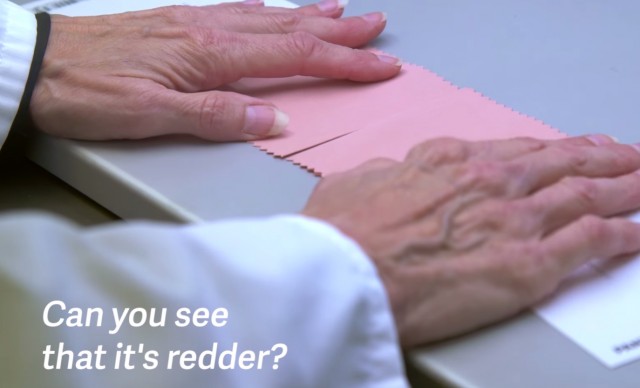
A short film by Quartz. To wit:

Designers and artists all over the world use Pantone’s color guides to make sure their blue is actually blue. Like a Webster’s dictionary for color, Pantone guides are a standard against which anyone can check their own work. Those standards are created at Pantone’s factory headquarters in Carlstadt, New Jersey. In this video, Quartz talks to the workers who maintain and enforce those standards.

nfgraphics

toinettecunningham

Noirin-OSullivan

President of the Association of the Garda Sergeants and Inspector Antoinette Cunningham; and with Garda Commissioner Noirin O’Sullivan

The new president of the Association of the Garda Sergeants and Inspector Antoinette Cunningham spoke to Seán O’Rourke on RTÉ Radio One this morning.

They discussed the AGSI members’ plans to protest next week over pay and their willingness to take industrial action if needs be.

They also talked about the O’Higgins’ report, Sgt Maurice McCabe’s allegations and Garda Commissioner Noirín O’Sullivan’s allegation to the inquiry that McCabe told two officers he was acting out of malice.

The allegation was proven to be false after Sgt McCabe produced a recording of his conversation with the two Gardai.

From their discussion…

Antoinette Cunningham: “I can tell you Seán, from our conference and our mood on the ground, I can tell you that we are prepared to go as far as we have to go. Next week we have a march, we will picket the Dáil next week, as a national executive from AGSI.”

“The week after that we will move on to picket the Office of the Minister for Justice and the Taoiseach. We will do whatever it takes for us to highlight our cause around pay. It’s not a desirable position, it’s not what we want to do but I would like members of the public to understand, we don’t want to try and affect services to the public but we have to try and highlight our cause in some form and sadly this is the last one that’s left.”

Later

Seán O’Rourke: “The O’Higgins’ report published last week, looking into claims of corruption and malpractice made by your colleague, Sgt Maurice McCabe. One of the things the report did was highlighted the ill treatment he received in the force after he spoke out. Now, do you think, or do you agree with the suggestion that An Garda Siochana is a cold house for whistleblowers?”

Cunningham: “Well, first of all, I’m not going to comment on any individual, Seán. But I will comment on a general basis in relation to whistleblowing. And I think, look, organisations like An Garda Siochana, have a responsibility to ensure that people who do want to make disclosures within the organisation have a safe environment to do that. I know that the Protected Disclosures Act of 2014 brings in the guards within that and I think, you know, there shouldn’t be any fear or repercussions made by anyone who wants to report corruption or malpractice in any organisation, including An Garda Siochana.”

O’Rourke: “There was one thing which I think a lot of people were disturbed by. Now, in a sense, it’s difficult for people, particularly like the Garda Commissioner to comment because there is a restriction on what can be said or revealed about what emerges and exchanges add something to like a Commission. But nonetheless, it has emerged into the public arena that senior counsel for both the Commissioner and indeed members of the force suggested that Sgt McCabe had been acting with malice and that evidence would be brought to that effect. But then when it transpired that Sgt McCAbe had had a recording of the exchanges in which this malpractice was alleged to have been given voice to by him, that just vanished. Now does that concern you?”

Cunningham: “Well, I think, look Sean, the Commissioner has, at this stage, not commented on that so it would be remiss of me to try in any way to comment on that matter. What I would like to talk about in relation to…”

O’Rourke: “No but do you think we should know more? Or is it good enough that, and I wouldn’t accuse the Minister or the Commissioner of hiding behind a law, which is her duty to uphold, but nonetheless, would you accept that there should be some forum for clearing the air about this?”

Cunningham: “Well I think that’s a matter for the Garda Commissioner, Sean. I don’t think it’s, it would be appropriate for me to comment in relation to that.”

O’Rourke: “Is it not a matter for every citizen in this state? And you, as president of the AGSI, that such murky dealings appear to have been going on. At least that’s the suggestion, and we have to enter all sorts of caveats about this, it’s selective and we don’t know what the context is, but there appears to be a record which is the basis for this report by Michael Clifford last week in the Examiner.”

Cunningham: “Well I think if there is a murkiness or anything attached to it, Seán, that needs clarity, then it’s not for me to provide that clarity, it’s a matter for the Garda Commissioner.”

O’Rourke: “Well you could call for it thought?”

Cunningham: “Well I don’t know if it’s appropriate for an association to call for it, I think if  members of the public want to call for it, or if indeed anyone else wants to call for it, I don’t think it’s a matter for a Garda association…”

Listen back in full here

Pic: AGSI

Screen Shot 2016-05-16 at 11.54.53

Taoiseach Enda Kenny and US President Barack Obama

You may recall the Transatlantic Trade and Investment Partnership deal between the European Union and the US.

Part of the deal involves an ‘Investment Court System’.

Further to this…

Peter O’Dwyer, in today’s Irish Examiner, reports:

One of the most controversial aspects of the proposed deal is the inclusion of an investment court system (ICS), which critics argue would give corporations the power to sue sovereign states in trade disputes.

… Dublin-based senior counsel and former chairman of the Bar Council of England and Wales Matthias Kelly said the proposed investment court would “certainly infringe” upon the Irish Constitution in two areas and possibly three. In his opinion, the investment court system would:

Possibly infringe on Article 15.2.1 which vests sole power to make law in the Oireachtas;

Certainly infringe on Article 34.1 which vests the power to dispense justice in the Irish domestic courts;

Certainly infringe on Article 34.3.2 which makes the High Court and Appellate Courts above it the sole court in which a law may be questioned.

‘Referendum required’ in transatlantic trade deal (Peter O’Dwyer, Irish Examiner)

Previously: Luke’s TTIP

13124818_898741616903527_2741921828647785571_n

1. HAWK is the brainchild of London-based Galwegian Julie Hawk and Matt Harris, with a full live band emerging in 2013 from initial excursions as a duo.

2.
They’ve been getting adoring glances for their noirish alt-rock on either side of the pond, with airplay from BBC Radio 6 and XFM in the UK, and garnering a fancy among Irish muso media, including Nialler9 and Paul McLoone, whose show aired their upcoming self-titled EP in its entirety.

3.
Streaming above is single Once Told, released this past January. It’s a rail against Ireland’s attitudes towards women’s rights and reproductive health, in a similar vein to last year’s pro-marriage equality piece Glass.

4.
On tour throughout June, taking in London, the usual Irish city stops, and the Carlow Arts Festival. Full rundown of dates here.

Verdict: A Venn diagram of sounds, influences, references, and themes taking in indie, alt-rock, and post-rock.

HAWK

Screen Shot 2016-05-16 at 10.50.50

XNhu8gBh_400x400

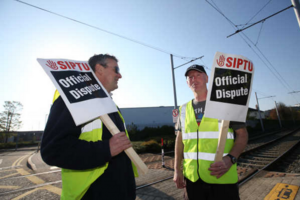
From top: Luas drivers Neil MacDonnell and Alan Kavanagh at the picket line at the Sandyford Luas Depot last week; Glenn Fitzpatrick

Luas drivers plan to strike for full days on Friday, May 20 and Friday, May 27.

They also plan to hold four-hour stoppages on Thursday, May 26;  and on June 2, 3, 7, 8, 9 and 10.

Further to this…

Glenn Fitzpatrick, of The Young Celts, writes:

If you landed on planet earth last week for the very first time and picked up a newspaper, you might be inclined to think that the workers who operate the LUAS trams were responsible for the economic woes of the entire country.

The vitriol, of which they’ve been on the receiving end, has ticked almost all of the boxes.

There have been calls from respected, supposedly middle-of-the-road journalists to take a leaf from Ronald Reagan’s book and simply ‘sack them all’ or ‘bring in the army to drive the trams’ while the entire business community has been rolled out to accuse them of putting a nation’s economic recovery at risk.

I’m not going to get into a back and forth about the legitimacy of the pay claim lodged by SIPTU, on behalf of the drivers.

I believe in fruitful industrial relations processes that lead to compromise and which avoid strike action 99% of the time.

Their starting point of seeking increases of up to 52% has received much criticism.

None of this of course is nuanced or considerate of the fact that these claims are usually inclusive of other terms of employment, such as pay levels for new entrants and access to maternity leave.

Everyone has become an industrial relations correspondent over the last few months. Everyone has an opinion on just how much a LUAS driver is entitled to earn, the level of skill required to operate a tram and the gross unfairness of the situation, relative to the earnings of doctors, nurses and the Gardai.

Of course given the accelerated nature of discourse, particularly on Twitter and Facebook, everyone feels that their opinion should count for something.

Somewhat oddly, I don’t recall the same people standing up for the pay of Gardaí and nurses when it was on the chopping board in 2010.

Of course, if Transdev had any interest from the beginning in entering a fruitful industrial relations process, the public would have continued with their lives largely unaware of anything.

Negotiations involve both sides getting to ‘Yes’. These conversations belong at a negotiating table (with a mediator if needs be).

They do not belong on the airwaves, in the newspapers or on Twitter.

Unfortunately, this transnational company (which has a turnover of €Bns) never had any interest in entertaining a fruitful industrial relations process.

Instead, they opted to side-step our weak legislation on workers’ rights and collective bargaining, threw the baby out of the bathwater and commenced a media war instead – knowing full well that once they did that, the rest would inevitably look after itself.

When it comes to playing out a media war, some will point out that Union spokespeople get invited onto the airwaves to give their side of the story.

Others will point at out that the narrative has to be fair to commuters who have been affected by the dispute.

There is an element of truth to both of these notions – just an element. Unfortunately throughout this whole saga, voices in support of the dispute appear against a primary definition of the issue by the employer, someone from the Dublin Chamber, IBEC etc.

Suggesting that the coverage of the dispute has been fair to both sides is like saying a schoolyard fight between four bullies and one victim is acceptable grounds for a scrap, purely because the victim has a pair of fists.

It is hard to find one LUAS related story that does not frame it as a disruption to commuters. We’ve all heard at this stage about how the drivers are ‘holding commuters to ransom’.

This amounts to gross hyperbole.

All you have to do, to see through this tripe, is look at two simple statistics; Ireland is terrible at strategic public transport. One quarter of people who use public transport in Ireland use it for travelling to college or work – this is the second lowest usage in the EU.

Further to this, the LUAS lines make up for about 20% of Dublin’s daily commuters. People found ways in and out of the city before the LUAS existed and strike days are always accompanied by sufficient notice to make alternative arrangements.

So sorry, Sean, from the Aran Islands, no one is holding you to ransom.

Naturally, it has never been factored into the media’s framing of the dispute that 52% was actually a starting point for negotiations.

Imagine your Union representative’s starting point being the compromised position? Set your sights that low and you’ll never be disappointed. The media also opted to omit the fact that we have pretty regressive laws when it comes to collective bargaining and trade union recognition.

Under more robust laws, employers would be obliged to sit down and talk, regardless of what the employees’ starting point for talks is. So before you go off on one and say how you’ve read all the facts, it is worth bearing in mind that what the media chooses not to highlight is often as, if not more important, to the narrative.

Most of the media outlets used to carry industrial relations correspondents. Most disputes are now under the banner of ‘business and industry’.

No profit-driven news outlet is going to upset their advertisers by running an information campaign about how the right to strike is sacrosanct and a pillar of any democratic society. So perhaps it is not all that surprising that a lot of commentary has a smell of fascism off it.

One of the great illusions of our day is that it is natural for people to think that the media reflects the general will of society at large. Nothing could be further from the truth.

Yes, we have some excellent journalists and I don’t want to tar them all with the same brush but ultimately, the entire media spectrum is dominated by consumer interests.

You’d be forgiven for thinking that Brexit is almost entirely an economic issue, given that it seems to only be the place of finance and business interests to comment.

On everything from decent work to housing provision, those who seek to extract as much profit from society as possible get to define the issue. Alternative voices exist but ultimately, the weighting is so heavy against them that they become lost.

Some would argue that, regardless of how skewed the narrative is, media doesn’t possess the power to control what we think. Of course it doesn’t. I’m not suggesting that.

However, it’s naïve to look at the economics of media ownership and to think that it doesn’t cultivate how we think. The parameters for which debate can take place are shaped and perhaps the biggest mark of naivety of all is to think that the interests of consumer media and a transnational corporation are aligned with those of society at large.

This is how soft power works and while this is certainly at the extreme end of things, this is how the vast majority of transport disputes are framed. Before a member of the picket line could even get a word in edgeways, the consumer media kicked into gear and did what it always does.

What resulted was a chilling effect on solidarity and a level of dehumanisation that no cohort of workers should ever have to go through.

Unfortunately, opinion polls that are only ever going to get one answer are plentiful and this is what outlets consider journalism, rather than meaningful contributions to this saga such as distinguishing between a starting salary and the top end of a scale.

I suppose the latter doesn’t sell papers or gather clicks.

I suspect many may have stopped reading by now but for those of you inclined to support the drivers, for those of you who understand that a domino effect on wage rises would be a good thing, for those of you who think that workers should be able to ask for a bigger slice of the pie, we need to do more.

As of this morning, parties that seek to court the union man/woman’s vote that have come out in support of the Luas workers are Sinn Féin, AAA-PBP and most recently, the Social Democrats.

The silence from ‘Connolly’s party’ is absolutely damning in the wake of them latching on to his legacy once more but, at this stage, it is not surprising.

Attempts are now being made by those who have no time for workers’ rights campaigns to apply selective solidarity to trade disputes, suggesting that the Tesco workers are worthy of our sympathies but the Luas drivers are not.

This could soon become a political question for the trade unions and workers nationwide.

The Young Celts

Related: Luas operator Transdev suspends sick pay scheme (RTE)

Previously: Luas Across City

My Generation

Sam Boal/Rollingnews