Swipe right.

Mind the gap.

Some Old Queen writes:

A story map by Mila Sullivan from the Department of Public Expenditure and Reform on The Changing Patterns of Unemployment and Poverty in Ireland, 2011-2017.

Mila’s final line in the story map (‘The proportion of the population in receipt of Job-seeker’s Allowance is going down. The population in receipt of Family Income Supplements is increasing’) is very telling and proves the point that stats can be selectively used. In this case that employment is not the be all and end all of wealth distribution.

The maps can be zoomed in and contain a huge amount of data all the way down to almost neighbourhood level and new data is constantly uploaded. Great work Mila.

In fairness

The Changing Patterns of Unemployment and Poverty in Ireland, 2011-2017

‘sup?

Carlos Fandango writes:

I know you don’t normally do this but I was out walking the dogs yesterday morning on Baggot Street [Dublin 2]. Found these (above). Dropped them into Irishtown Garda Station…

Anyone?

Chief Justice Frank Clarke and Fine Gael Minister for Justice Charlie Flanagan at the launch of Courts Service Annual Report 2017 in Phoenix House, Dublin, on Saturday

Yesterday.

In The Sunday Times.

Mark Tighe reported that, on Saturday, the chief justice of Ireland Frank Clarke announced a ban on the use of social media and all electronic communications within courts except in the case of “bona fide” journalists or lawyers.

He reported:

Clarke said the presidents of the five courts, from the District Court to the Supreme Court, had signed a practice direction meaning the ban would apply to all courts.

He said the new rule was a form of “soft law”. It would not create a criminal offence but judges could order parties to stop using devices, to surrender phones or order them to leave court if they refused to comply.

“In a paper released by Clarke, he appeared to point to the Jobstown case as one of a number of recent trials that showed a need for regulation.

“…Charlie Flanagan, the justice minister, welcomed the rules, saying it was essential to ‘ensure the integrity of the trial process’.

“Journalists considered bona fide would be those who work for a publisher or broadcaster signed up to standards set by the Press Council of Ireland or the Broadcasting Authority of Ireland. It also includes members of the National Union of Journalists.”

Jobstown trial farrago inspires ban on live court tweets (Mark Tighe, The Sunday Times)

Spicebag.

A documentary.

Colin Brady writes:

A video about the culinary phenomenon that is Spicebags. We learn why it’s overtaken the 3 in 1 as the Chinese takeaway go to order…

Taller Stories (Facebook)


‘sup?

Via the Irish Whale and Dolphin Group

A Video from Saturday’s killer whale encounter six miles east of Rockabill, County Dublin  Too early to say with certainty from this clip whether these are as the audio suggests “John Coe” and “Dopey Dick” of the Scottish West Coast Community group of killer whales, but we’ll keep you informed if we get photographic evidence that confirms it….

Irish Whale and Dolphin Group (Facebook)

Part of an underwater performance by British artist Sue Austin in her submersible wheelchair, customised with perspex fins and battery-powered propellors.

Part of a longer performance commissioned for the 2012 Olympics and Paralympics, filmed in the waters off Sharm el Sheikh in Egypt by Norman Lomax.

colossal

50 years ago.

Sibling of Daedalus writes:

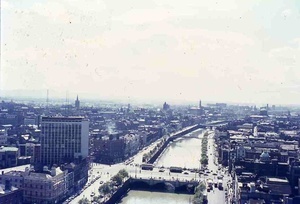
Views from Liberty Hall, Eden Quay,  Dublin 1,  taken in 1968. From top: South, south-east, east, West and the views today in a 180 view from Liberty Hall’s observation deck. Top four photos from the excellent Dixon Slides collection in Dublin City Libraries and Archive Digital Repository.

Digital Repository (Dublin City Libraries)

Tales Of Old Dublin (Sibling of Daedalus)

Glamour Pam  (right) as she was shown on the BBC Africa documentary Fake Me: Living For Likes

Um

But the BBC Africa documentary, which looked at how people portray themselves differently on social media, was edited because of concerns about adverse reaction in some of the more conservative African countries where it was shown, prompting a debate at the BBC about whether the corporation should be censoring women’s bodies.

“The decision to deal with Pam’s cleavage was made at senior editorial level at BBC Africa,” said one internal email discussing the incident and justifying the decision.

BBC in row over blurring cleavage of interviewee in Kenya (The Guardian)

Biddy Bitcoin writes:

This is surreal. Shambolic censorship of a woman’s body. Why?

Broadsheet.ie