



Finally
at

This morning.
Phoenix Park, Dublin 7
Minister for Housing Eoghan Murphy, Minister for Finance Paschal Donohoe, Lord Mayor of Dublin, Councillor Nial Ring and residents celebrate the ‘turning of the sod’ on the first phase of the Regeneration of O’Devaney Gardens Dublin.
A mere 10 years after removing all 285 householdss when the regeneration project was initially mooted and then scrapped.
Of the 600 new homes promised, 30 per cent will be social homes, and 20 per cent will be “ affordable” housing , it is claimed and hotly disputed,
Good times.
Previously: O’Devaney Gardens on broadsheet
Sam Boal/RollingNews

Gulp.
This morning.
Hanoi, Vietnam.
Terry Rickard writes:
Code of Conduct in Public Places Notice in Hanoi Park. Nothing wrong with that…


A traffic survey carried out by the Dublin Cycling Campaign on Ormonde Quay, Dublin 1 (top) last week has revealed how popular cycling has become for people commuting into the city centre, despite the lack of dedicated cycling infrastructure.
Last week, a man’s leg was crushed beneath a bus as he cycled across Butt Bridge towards Custom House Quay while another man was seriously injured on Monday when he was knocked down while cycling along Usher’s Quay.
On Wednesday last, between 8-9.15am. a study was carried out by the Dublin Cycling Campaign where vehicles travelling along Ormond Quay towards the city centre were counted.
The results show that bicycles account for almost half of all vehicles travelling along the quay during rush hour, with 1,126 bikes recorded out of a total vehicle count of 2,314, giving bicycles a 49% share of all vehicles.
The Dublin Cycling Campaign write:
One of the standout statistics from the survey was that bicycles outnumbered private cars by a ratio of almost 2:1.
A previous traffic study at this location, carried out by Dublin City Council in May 2017, recorded bicycles as having a 25% share of vehicular traffic.
While Dublin Cycling Campaign’s rush hour figure of 49% is not directly comparable, it does highlight how the City Council and the NTA may be underestimating the need and the demand for dedicated cycling infrastructure on the Liffey Quays.
It is important to note that the section of the Quays where the study was carried out, Ormond Quay, has no dedicated cycling infrastructure. There is a bus lane on Ormond Quay, which is also technically a cycle lane, but there is no physical segregation between people on bikes and motor vehicles.The study also shows how busy the bus lane was, with 200 buses using the route between 8.00am and 9.15am. This means that 1,126 cyclists “shared” the bus lane with 200 buses during rush hour.
…itreinforces Dublin Cycling Campaign’s demand for urgent action to be taken to progress the construction of the Liffey Cycle Route.
This segregated cycle route, which was first proposed in 2011, has withered in the hands of Dublin City Council and the National Transport Authority for long enough and we are now calling for real leadership to realise the scheme.
In order to increase pressure on the decision-makers, Dublin Cycling Campaign has decided to hold monthly demonstrations along the Liffey Quays until the Liffey Cycle Route is built.
The first of these protests will take place on Sunday 8th of July, with demonstrators meeting at Grand Canal Square for an 11am start, before cycling en masse along the Liffey Quays.
These mass cycling protests will continue until progress has been made, and will increase in their frequency and their intensity if there is no obvious progress.
New Study Reveals Huge Numbers Commuting by Bike on Dublin’s Quays (DublinCyclingCampaign)
Thanks Kieran

Flag of St George outside an unnamed Dublin pub during the 2014 World Cup
Further to England’s World Cup advancement…
Ireland-based, England-born Malcolm D writes:
Having had a miniature St George flag ripped off my car during the last World Cup I am preparing to openly support England again and intend wearing my [Three Lions] replica shirt this weekend in Dublin. Is this a wise move or still too soon? Perhaps your readers could help?
Anyone?
Pic via Patrick Comerford


The winning ‘Ale Mary’ as it might look on shelves
The votes are in.
Last week – with a pair of tickets to the second White Hag Hagstravaganza international brewing festival in Sligo on offer – we asked you to name your own beer.
You entered in your chugging dozens.
But there could be only one left standing.
Broadsheet commenter H’s named tipple ‘Ale Mary‘ (above) poured suds over rivals such as ‘Sweet Mildred’s Sinful Revenge‘ (nominated by Mildred St Meadowlark), ‘Witches Armpit’ (Edalicious) and ‘Beardy McDitchscoop’s Amazing Overly-Hopped Pontificating Headache Elixer‘ (Kolmo) to secure first place.
H’ and a pal will join thousands of crafty booze hounds descending on The White Hag brewerey, Ballymote, County Sligo on July 28
Thanks all.
Hic.
Previously: Hagstravaganza 2″ Bigger, Better Crafter
Fourth Gear
at

Last night.
American Ambassador’s Residence, Phoenix Park, Dublin
Two American muscle cars were among the attractions at a July 4 celebration last night.
Name those jammers (model plus year), anyone?
Rollingnews.
Meanwhile…

Ah here.

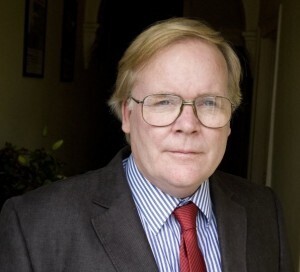
From top: The Living Wage Technical Group’s logo; Michael Taft
The Living Wage Technical Group has today produced the hourly Living Wage for 2018: €11.90 – a 20 cents rise over last year. Since the Living Wage was first launched in 2014, it has increased from €11.45 – a 4 percent increase.
What has been driving this increase?
One word: housing.
The Living Wage is constructed on the work of the Vincentians’ Minimum Essential Standard of Living with some variations introduced by the Technical Group. This is a comprehensive and detailed breakdown of the cost of all goods and services that go into a minimum living standard.
When we separate out housing costs from the rest of the expenditure (food, transport, health, utilities, etc.) we can see the issue.

In the four years, housing costs increased by 37 percent. All other costs fell by -4 percent.
This leads us to a particular insight: if general pay increases in the economy are merely going to pay higher rents or higher house prices, then employers are essentially subsidising economic rents, whether to a landlord or developers /financial institution.
This is a drain on the productive economy and leaves many people’s living standards no better off except that they may have kept pace with housing costs.
For many people the solution is to increase the minimum wage to the level of the Living Wage. This would require an hourly increase of €2.35 or 25 percent.
Leave aside the issue of whether this would be feasible without employment or working time loss (just to note: the ESRI found that the 50 cents increase in the minimum wage in 2016 had no negative impact on employment).
The Living Wage, while expressed in an hourly payment, is actually based on a full-time worker (39 hours per week). Therefore, the Living Wage is:
Weekly: €469
Annual: €24,444
Anything less than those benchmarks and workers fall below the Living Wage. So someone may be paid, on an hourly basis, above the Living Wage. But if they only work 35 hours, they may be below the weekly and annual Living Wage.
This is important because there is evidence from the US that businesses facing substantial increases in the minimum wage are cutting back hours and forcing more work on to employees. In this way, firms can ease the increase in overall payroll.
When the minimum wage in Ireland jumped by 50 cents in 2016 there was anecdotal evidence that in the hospitality sector some workers faced higher targets (mattress changing, room cleaning). All this to say that without strong labour protection some employers may attempt to claw back minimum wage increases by sweating labour.
This suggests that we need a broader, multi-pronged strategy in order make the Living Wage a living fact. I would suggest three areas:
First, reduce high living costs which would reduce the Living Wage. For instance, if rents increased by just half the pace they did over the last four years the Living Wage would be lower. There are other living costs that could be reduced:
Public transport fares: we have one of the least subsidised public transport systems in Europe, resulting in high fares and a poorer service. Increased subventions would mean lower fares.
Healthcare: reduce insurance, GP and prescription medicine costs – through a free, universal health service.
Communications: yes, Ireland is a high-cost country. Consumer prices are 17 percent higher than EU-15 levels. But why is communication 24 percent higher? It would be helpful if the Government commissioned a study into all prices to get a real handle on the reason for our high living costs – rather than assume that current market pricing is somehow ‘natural’.
Second, provide for collective bargaining at company and sectoral level. The Irish private sector is generally low-paid compared to our EU peer-group. It also has much lower collective bargaining coverage.
This is especially so in the low-paid sectors – retail and hospitality – where Irish pay and collective bargaining levels are even further down the EU table. By providing workers with the tools to bargain together, they can drive up wages consistent with the company’s ability to pay and, so, bring workers closer to the Living Wage.
Further, workers can better protect themselves collectively if employers try to claw back wage increases by degrading working conditions.
Third, the minimum wage does have a role but what is needed is a more robust approach. For example, minimum wage increases could be linked to overall wage increases in the private sector but instead of expressing them in percentage terms, they could be expressed in terms of a flat-rate pay increase or a combination of the two.
This would use general wage increases as parameters but express the increase in terms of an egalitarian calculation. In this way, the minimum wage would rise as a proportion of the average or median wage.
This three-pronged approach would help bring workers above the Living Wage while reducing living costs, which would be a benefit to all workers and the productive economy.
In short, the drive to achieve the Living Wage for all workers must take place at a social level (living costs), in the workplace (stronger workers’ rights) – both combined with a solidarity minimum wage strategy.
This broad-based strategy can help make the Living Wage a living fact.
Michael Taft is a researcher for SIPTU and author of the political economy blog, Notes on the Front.

Taoiseach Leo Varadkar talks to reporters at the New York Stock Exchange yesterday
It’s an odd move for Leo to choose
To sympathise with Donald’s views
But over some food
In New York, he was rude
About people who work in the news
John Moynes
Pic: Kim Haughton/Rollingnews