

Kurzgesagt on the finer points of the bacteriophage – serial killer of the microscopic world – never done slaughtering the organisms that live around and inside us.
Previously: Black Hole Bomb



Kurzgesagt on the finer points of the bacteriophage – serial killer of the microscopic world – never done slaughtering the organisms that live around and inside us.
Previously: Black Hole Bomb


Behold: the 2018 Aston Martin V12 Vantage V600.
A 6.0l, 600bhp, seven-speed, carbon fibre sports car inspired by the 1998 V8 Vantage V600, limited to just seven examples each of the coupe and roadster variants.
Available on request to the select few somewhere north of €210,000.


Yesterday.
Perth, Scotland
Brian Quinn writes:
Lara Serviolle (above right), a member of the Irish Medieval Armoured Combat team, has won the IMCF Female Longsword World Championship!!
Lara is an amazing woman, living in Sligo and has stormed the medival Combat world winning the competition for the second time after her win in 2017.
She is an inspiration and deserves as much recognition as she can get!
10 fighters and supporters travelled over from Ireland for the event and over 500 fighters from all over the world fought in the 4 day event
Medival Armoured Combat is a full contact sport, fighters compete in full armour with swords, shields, axes, maces etc. We are trying to build the profile to the sport in Ireland and Lara is an amazing advocate!!
Watch Lara’s winning fight here
Irish Medieval Armoured Combat team
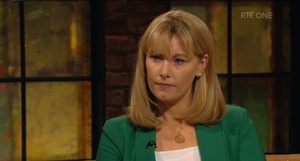
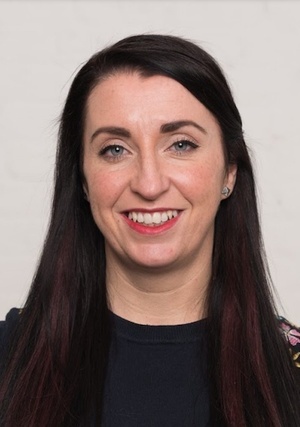
From top: Emma Mhic Mhathúna on The Late Late Show last Friday; Anne Marie McNally
On this morning’s commute I was listening to a Dua Lipa tune and one lyric in particular struck me and immediately brought Emma Mhic Mhathúna, and the many other women to mind.
The lyric goes ‘You say you’re sorry, but it’s too late now, so save it, get gone, shut up..’ and I just thought, how utterly appropriate. All the sorrys in the world cannot right the wrongs perpetrated against these women and their families but as we know from previous scandals in this country, sometimes a sorry can be hugely important.
When Enda took to his feet in the Dáil that day to apologise to the Magdalene women it was a powerful moment.
However this current situation feels different; maybe because it is still so recent and therefore raw? Or maybe because sorry rings hollow when it come from within a system that hasn’t changed to reflect any acknowledgment of just how badly it failed.
When I was a kid pleading ‘I’m sorry’ while being chastised, my mother used to say to me ‘sorry means I won’t do it again’ and the problem with the current sorrys emanating from officialdom is that they simply don’t come with the promise that it won’t happen again.
Because it could. Because it might well be already happening in other areas of our health service.
Just last week in the Public Accounts Committee it was revealed to Catherine Murphy TD that there are currently four pending court cases involving patients of the BreastCheck service who believe they failed to have their cancers diagnosed appropriately.
We are all acutely aware that our health service is dysfunctional. Yes, there are millions of fantastic stories of people who have had great individual experiences once in the system (I include myself in that) but those individual cases are down, in many cases, to just sheer luck on the day and also to the tireless and often thankless work of the front-line staff in our health service.
But whether you’ve had a good experience or not, the simple fact is that the overall system is dysfunctional and those fantastic staff are working against the backdrop of a system that fails them and us daily.
At this stage people have heard so many calls for the abolition of the HSE that those calls now seem to ring hollow. There’s a general sense of malaise with our health service and an almost resigned acceptance that ‘this is how things are’. But it shouldn’t be.
Before I turned on Dua Lipa this morning I listened to RTE Radio One’s Morning Ireland where Emma O’Kelly, the Education Correspondent, had a package regarding the complete lack of therapeutic supports for disabled children attending St John of God’s School in Islandbridge, Dublin 8.
The package included an interview with a couple whose child is impacted. The couple happened to be French citizens living in Ireland and they said they were shocked that vital public services like this are outsourced to a private charity.
They spoke about how lucky they are that they have the financial means to pay for private speech and language therapies and occupational therapies but that was offset by a young lone parent living in the flats I grew up in whose son is profoundly disabled and totally reliant on the services supposed to be provided in the school because she can simply not afford to arrange those services privately.
So one child will be guaranteed a better future than another child from the same school, all on the basis of the income of their parents. There is no other way to view that than as a complete abdication of responsibility by the State.
Similarly those women who are terrified right now by the thought that maybe their smear test wasn’t accurate or maybe they ignored other symptoms because they’d been reassured by a clear smear, can either face a waiting period in the public system through their GPs or, if they can afford it, they can go an pay roughly €85 to a private clinic and have an immediate smear.
I could point to every other treatment required by people and there’d be a similar Private Vs Public story of one person guaranteed a better outcome than another all because of the balance in their bank account.
Our two tier system is the definition of unfair and it is an indictment of the failure to create a true modern Republic.
The unprecedented cross-party agreement to the Róisin Shortall led SláinteCare initiative to create a truly universal publicly accessible single tier health service is the only show in town but we need true dedication from Government to really get that show on the road and the many vested interests who profit from the current two-tier private/public model will have to be faced down completely.
Anne Marie McNally is Social Democrats Political Director and General Election candidate for Dublin Mid-West.
Top pic: RTÉ


Pro-choice poster in Dublin; Dr Thomas Finegan
We should hold views on the basis that they are true. Our views, accordingly, should be arrived at by thinking, and not by political instinct, or by emotion, or by adopting the prevailing opinion among our social group in order to make interaction and advancement easier.
The forthcoming referendum hinges on the question of whether there is a right to abortion. In popular, political discourse the right to abortion is usually defended by appeal to bodily integrity, or autonomy, or equality, or some combination of these.
However, most ethicists (moral philosophers) are in agreement that appeal to these goods isn’t sufficient to justify a right to abortion. Why? To justify a right to abortion it also needs to be shown that the unborn don’t have the same basic moral worth as born individuals.
This makes sense. While protecting one’s bodily integrity is important, it doesn’t justify deliberately harming an innocent person who poses no real risk to one’s bodily well-being.
Likewise, autonomy is important, but its exercise shouldn’t be used to harm others. And similarly as regards equality: the right to equal treatment doesn’t support acts that harm others who are fundamentally equal in basic moral worth to ourselves.
So in order to support a right to abortion it must also be shown that the unborn are not like us in moral worth. If they are fundamentally equal to us in basic moral worth they, too, have human dignity and a right to life, meaning that abortion cannot be a right.
Ultimately, then, the forthcoming referendum hinges on the question of whether or not it is true that the unborn are fundamentally equal to us in moral worth.
This aligns with the legal question at hand. The referendum proposal is this: to completely delete – not just limit or qualify – the right to life of the unborn from the Constitution (and thus to comprehensively deny that they are fundamentally equal to us). It is this sort of constitutional amendment that is required to permit the legislative proposal put forward by Minister Simon Harris.
So, is it true that the unborn are fundamentally unequal to us in basic moral worth?
Answering this requires thought, not slogans. In order to demonstrate that the unborn aren’t owed basic moral respect a particular standard for basic moral worth must be cited which the unborn fail to satisfy (and which we do satisfy!).
No contemporary moral philosopher disputes that the unborn being is a human being. This is a scientific question with a straightforward scientific answer. The unborn is an actual human being, not a potential human being: an unborn entity cannot grow as a member of its species unless it actually is a member of its species. And a biological entity either is or isn’t an actual member of a particular species.
The unborn being is clearly an individual being, too. While it may be reliant on its mother the unborn being is functionally, biologically and genetically distinct from her. (Those who deny this are committed to viewing abortion as self-harm.) So being an individual human being is not a standard that excludes the unborn.
[Because the unborn is a very young human being it’s entirely appropriate to describe him/her as an unborn “child”. “Foetus” is the Latin term for “young” or “offspring”, and so etymologically it means roughly the same thing as “child”. I use “child” from now on.)
Being located outside the womb is a poor standard too since location by itself hardly seems morally relevant for basic moral worth. It would also imply, absurdly, that a partially delivered child is “partially” our equal and that partial-birth abortions are “partially” wrong.
Furthermore, it would entail that a prematurely delivered child at 22 weeks has a substantially greater moral status than a much more developed child still in the womb at 39 weeks, just because the latter child happens to be located inside the womb.
Nor is being fully independent a convincing standard because we are all dependent on others to some extent (especially when young, sick, economically impoverished, and elderly).
None of these standards are plausible. Instead, the standard that pro-choice moral philosophers have settled on to exclude the unborn child from fundamental equality is the (immediate) ability to experience self-consciousness or to exercise rationality.
This standard excludes unborn children: they seem to lack the (immediate) capacity for self-consciousness or rationality.
However, it has been realised that this standard also excludes other human beings from fundamental equality: newborn children and young infants, those in a so-called “persistent vegetative state”, adults with profound intellectual disability, and those with severe, late stage dementia.
Among the world’s leading pro-choice philosophers who have come to this general conclusion are Jeff McMahan (Oxford University), Michael Tooley (University of Colorado), Peter Singer (Princeton University) and John Harris (University of Manchester). They conclude that since abortion is permissible then so too, in principle, is infanticide and other killings society regards as seriously wrong.
The standard they use to exclude unborn children also implies that the more self-conscious or rational one is the more moral worth one has. Ultimately, since levels of self-consciousness and rationality differ even among “normal” humans, this means that no one is fundamentally equal. In other words, fundamental equality is a fiction on the most plausible premise used to justify a right to abortion.
This destroys the basis for thinking that human equality is true. It also points to the difficulty of thinking that human moral worth can increase from one developmental point to another (e.g. during the course of fetal development).
The only credible way to justify the idea of fundamental equality is to appeal to our common human nature: it is the only reality we share equally in common.
This is what the Universal Declaration of Human Rights does. It begins by referencing “all members of the human family” and “human beings”. Article 2 declares that “everyone” is entitled to “human” rights “without distinction of any kind”. Article 6 declares that “everyone” is to be counted as a person. Article 23 references “human” dignity.
Logically, this means that unborn children are fundamentally equal in moral worth to human beings who have passed the fetal stage of their development. Most of the time most of us recognise this truth.
We generally speak of the “baby” in the womb. If pioneering in utero surgery is being reported reference is made to the “children” it will benefit. We know that miscarriages are a tragedy not just for the parents but for the little person whose life had only just begun. If a third party attacks a baby in the womb we seek justice, not just on behalf of the mother but also on behalf of the defenceless child who was injure
Contemporary intuitions shift somewhat when it comes to the issue of abortion, however. But these intuitions run counter to the truth of fundamental human equality which both liberalism and socialism began by defending. And so these intuitions should be revised.
Easier said than done, of course. But why? I think there are a number of explanations for why so many of us are so reluctant to recognise abortion as a serious wrong against unborn members of the human family (non-exhaustive list below).
Some of these explanations are more understandable than others, but none of them gets close to acting as a premise which could begin to deny that unborn children are fundamentally equal in basic moral worth to other human beings and thus deserve basic respect.
Generalisations are unavoidable:
We can relate much easier to people who are at roughly the same developmental stage as us, and so when it comes to unwanted pregnancies we are naturally drawn towards the interests of the pregnant mother over those of her baby
Unborn persons are almost totally invisible to us in everyday life (which is why images of unborn children can inspire or shock, depending on the context)
We tend to associate opposition to abortion with people, political movements, and religious groups we don’t like (some of us subconsciously transfer our attitudes to them onto unborn children, which is why provocatively mocking or dehumanising unborn children is not uncommon)
We tend to think that opposing abortion logically entails condemning women who have had abortions (a clear non-sequitur, even leaving aside how men’s and wider society’s failures are massively, massively responsible for the phenomenon of abortion)
We (I think this applies more so to men) tend to view unplanned children as an almost cosmic injustice against our freedom and aspirations
We comfortably and passively assume that abortion is an inevitable element of society, just like prostitution and excessive chemical use (and poverty and homelessness?)
Historically most cases of dehumanising a category of human beings have occurred to further the interests of an already powerful group, whereas the dehumanisation inherent in the push for abortion rights is partly an attempt to further the interests of an already marginalised group (women). For those interested in justice the dehumanisation is thus harder to see
None of the above begins to deny that the unborn child is a vulnerable “other” who is marginalised and dehumanised by unjust social, economic, and political structures, similar to how women, black people, and others have and continue to be marginalised.
If this is so then it has implications for how we vote in the referendum. The referendum simply asks us to vote to delete the unborn child’s right to life, entirely, without qualification, and for all stages of pregnancy.
The referendum proposal is based on the following claim: that unborn children are emphatically not our fundamental equals in moral worth, that, in reality, they have no significant moral worth.
Leaving aside political instinct, emotion, and the consensus view among your social group, ask yourself: is this claim true? Can it be judged true without judging vulnerable humans besides the unborn as lacking in moral worth?
One final remark. We can’t be relativists about these questions. In other words, we can’t think that contradictory answers are equally valid. Relativism as an intellectual position is blatantly incoherent.
Furthermore, in order to be a consistent relativist one would need to be relativist about everyone’s moral worth, not just the moral worth of unborn children.
Dr Thomas Finegan is lecturer in Theology at the Department of Theology and Religious Studies, Mary Immaculate College in Thurles, County Tipperary.
Rollingnews

White Bay, County Cork.
Vic Barry writes:
Sorry to say, Cork has one of the smallest and BEST beaches in the country ;) All we need is the weather…
FIGHT!


Saturday.
The Alexander Hotel, Dublin 2
Minister for Health Simon Harris TD at the Doctors Together For Yes National Summit ahead of the 8th Amendment Referendum on May 25.
Sam Boal/Rollingnews


Saturday.
Merrion Square, Dublin 2
Thousands of supporters assemble for a rally of Love Both Campaign which is asking people to vote No in the 8th referendum.
Rollingnews

Port Geal by Thatchers Of The Acropolis, what sez:
The name Port Geal means Bright Tune or, if you’re feeling that way inclined, Bright Harbour. The track is a mix of electronica, rock and sean-nós and was inspired by the song Gille Mear made famous by Ó Riada’s Cór Chúil Aodha from Cork.
Thatchers Of The Acropolis play Mindfield at this year’s Electric Picnic


From top: Sgt Maurice McCabe and Lorraine McCabe; Former head of the Garda Press Office Supt Dave Taylor
This morning.
The Disclosures Tribunal will hear from Supt Dave Taylor.
Supt Taylor – who was head of the Garda Press Office from July 2012 until June 2014 – is scheduled to give evidence for the next three days.
Over the next two weeks, he’ll be followed by his wife Michelle Taylor, former Justice Minister Alan Shatter, and former Garda Commissioners Martin Callinan and Noirin O’Sullivan.
After that, it’s understood a number of journalists are scheduled to give evidence.
The tribunal is examining claims made by Supt Taylor that he was instructed by former Garda Commissioner Martin Callinan, with the knowledge of Deputy Commissioner Noirin O’Sullivan, to negatively brief journalists about Garda whistleblower Sgt Maurice McCabe.
He’s also since told the tribunal that the director of communications Andrew McLindon – who took up his role in September 2013 – was also aware of what was allegedly happening.
Mr Callinan, Ms O’Sullivan and Mr McLindon all deny the claims.
The tribunal has already heard Supt Taylor claimed in his disclosure that he was directed to draw journalists’ attention to a complaint of sexual assault made against Sgt McCabe in 2006 by the daughter of a Garda colleague, known as Ms D – which the DPP found had no foundation in April 2007 – to the effect that this was the “root cause” of Sgt McCabe’s complaints about malpractice within An Garda Siochana.
The tribunal’s chairman Supreme Court judge Peter Charleton has already told the tribunal that Supt Taylor has “softened” his position towards Ms O’Sullivan over the course of three statements he has made to the tribunal since he made his protected disclosure on September 30, 2016.
The tribunal hasn’t heard specific details of this “softening”.
A few days before Supt Taylor made his protected disclosure on September 30, 2016, Sgt McCabe made his own protected disclosure.
This, the tribunal has heard, came on foot of a discussion he had with Supt Taylor, and his wife Michelle, at the couple’s home on September 20, 2016.
In his evidence to the tribunal, Sgt McCabe said Supt Taylor was upset and told him he had recently spoken to a spiritual person and that he felt he had to confess to Sgt McCabe that he “destroyed” him.
Sgt McCabe told Judge Charleton that Supt Taylor said there had been an orchestrated campaign – ordered by the then Garda Commissioner Martin Callinan – to attack Sgt McCabe and the campaign was in the form of whispering, phone calls and text messages.
Mr Callinan denies this.
Sgt McCabe also said Supt Taylor told him that Mr Callinan always wrote the texts and that Supt Taylor was told to send them on to journalists, other senior gardai, and a number of TDs.
Sgt McCabe said Supt Taylor also told him that he would send one of these texts to Ms O’Sullivan.
Sgt McCabe said Supt Taylor told him he would have sent hundreds of text messages, if not thousands, and that he referred to Ms O’Sullivan as the “pusher”.
After Sgt McCabe gave his evidence, Tara Burns BL, for Supt Taylor, told the tribunal it’s Supt Taylor’s position that when he referred to ‘pusher’, he was telling Sgt McCabe that Ms O’Sullivan was pursuing a prosecution against him [Supt Taylor].
Sgt McCabe did not agree.
Ms Burns also contended that Supt Taylor never said Mr Callinan composed any texts and that he didn’t say he sent hundreds of texts relating to the alleged smear campaign or Ms D allegation but, instead, he sent text messages informing the recipients about any media reports concerning Sgt McCabe.
Sgt McCabe didn’t agree with these claims either.
It’s likely Supt Taylor will be asked what exactly he claims to have told journalists about Sgt McCabe, which journalists he told and when/how did he tell them.
It’s likely he’ll be asked about the run-up to the Public Accounts Committee meeting on Thursday, January 23, 2014 – in which the then Garda Commissioner Noirin O’Sullivan made his infamous “disgusting” remark” – and events of that day.
The tribunal has already heard that prior to this meeting there were a number of “pre-PAC” meetings to prepare for Mr Callinan’s appearance and that notes from these meetings show Sgt McCabe and the Ms D allegation were discussed.
Although RTE journalist and former Crimecall presenter Philip Boucher Hayes has yet to give evidence, the tribunal’s opening statement has already outlined Mr Hayes has told the tribunal, on December 17, 2013, in RTE, Mr Hayes had a private conversation with Mr Callinan in which Mr Callinan told him Sgt McCabe was not to be trusted and that he was a “troubled individual” with a “lot of psychological issues and psychiatric issues”.
This came about, according to Mr Hayes, after a row broke out between the gardai and the producers of Crimecall over whether they could ask Mr Callinan about the penalty points controversy at the time.
Mr Boucher Hayes claims Mr Callinan told him Sgt McCabe was famous in An Garda Siochana for a set of grievances he had against Garda management and that there were other things he could tell Mr Boucher Hayes about him – “horrific things, the worst kind of thing” – but he didn’t elaborate further.
The journalist also alleges that Mr Callinan told him that if he wanted to know about Sgt McCabe or the penalty points issue, to contact Supt Dave Taylor.
Mr Boucher Hayes claims, after this, Supt Taylor immediately “buttonholed” him and said: “Now do you understand what the problem with Maurice McCabe and the penalty points is?”
When Mr McLindon gave evidence, he told the tribunal he couldn’t recall penalty points ever having been raised by Mr Hayes that day but did say he saw the two men speak privately.
The tribunal has also already heard that Supt Taylor claims he heard Mr Callinan refer to Sgt McCabe as a “kiddie fiddler” to Fianna Fail TD John McGuinness after the meeting of the Public Accounts Committee on January 23, 2014.
Fine Gael TD John Deasy has told the tribunal that on the way to the same PAC meeting he had a brief conversation with Mr Callinan and that Mr Callinan told him Sgt McCabe was not to be believed or trusted with anything.
The Comptroller and Auditor General Seamus McCarthy – whose report into the quashing of penalty points was being discussed at that PAC meeting – has also told the tribunal that, on the same day, Mr Callinan told him Sgt McCabe was not to be trusted, that he had questions to answer, and that there were allegations of sexual offences against him.
Mr Callinan denies all these claims.
It’s also expected that Supt Taylor will be asked about his knowledge of the so-called carpark meeting at Bewley’s Hotel on the Naas Road, between Mr Callinan and Fianna Fail TD John McGuinness on Friday, January 24, 2014, during which Mr Callinan allegedly told Mr McGuinness Sgt McCabe sexually abused his children and nieces.
Mr Callinan denies saying this.
Supt Taylor will also likely be asked about his involvement, if any, in the briefing of solicitor Gerald Kean before he went on RTE’s Marian Finucane Show.
During the show, Mr Kean emphatically, and repeatedly, alleged that Sgt McCabe and former Garda John Wilson didn’t cooperate with an internal Garda investigation into the quashing of penalty points by Assistant Commissioner John O’Mahoney in 2013.
Sgt McCabe and Mr Wilson later sued over the comments.
In relation to the Garda phones used by Supt Taylor during his time in the Garda Press Office, the tribunal has already heard that he had the use of three phones during that period – from July 2012 to June 2014 – but none of these have been surrendered to the tribunal.
However, it’s understood billing records from these phones should be available.
The tribunal has also heard details of three phones seized from Supt Taylor – in December 2014, February 2015 and May 2015, during the course of the investigation into leaks.
During this time period, Supt Taylor was not working in the Garda Press Office.
After Ms O’Sullivan took over as Garda Commissioner, following Mr Callinan’s resignation in March 2014, Supt Taylor was transferred to the Traffic Department and, from June 2014, he was there until he was suspended and arrested in May 2015 for allegedly leaking material to journalists.
He didn’t return to work in the Traffic Department until February 14, 2017 – the day after the DPP ruled there was to be no prosecution for a second time with the previous similar ruling having been made in February 2016.
As mentioned above, Supt Taylor told Sgt McCabe about the alleged smear campaign in September 2016.
The tribunal heard evidence from Chief Supt Francis Clerkin last week about his criminal investigation into Supt Taylor.
Chief Supt Clerkin explained his criminal investigation into Supt Taylor was prompted by communications he discovered Supt Taylor had with journalists while he was separately investigating leaks to the media concerning two Roma children in October 2013.
CS Clerkin said Assistant Commissioner John Twomey appointed him to carry out the investigation into the leaking of information regarding the Roma children on July 2014 and, in turn, he chose Detective Superintendent Jim McGowan (Ms O’Sullivan’s husband), Inspector Dave Gallagher, Sergeant Thelma Waters, Sergeant Brian Kavanagh and Garda Ross Rowan to the investigation team.
In early or mid-December 2014, CS Clerkin obtained phone billing records – which An Garda Siochana can obtain as they pay for the phones.
They showed that the district officer in Tallaght had been in touch with Supt Taylor around the time of the Roma children being taken into care and that Supt Taylor had been in contact with the journalist who wrote the exclusive about the Roma children. This was after Supt Taylor told CS Clerkin that he first heard about the Roma children in the media.
CS Clerkin said the billing records also showed that Supt Taylor, while he was in Traffic, had 11,000 communications with journalists between September 2014 and December 2014 – a quarter (2,800) of which were with Eavan Murray, of the Irish Sun; while 190 were with John Mooney, of the Sunday Times, and 17 were with Juno McEnroe, of the Irish Examiner.
Three of Supt Taylor’s phones were subsequently seized – on December 18, 2014, on Februrary 19, 2015 and May 2015.
CS Clerkin has told the tribunal that when he seized Supt Taylor’s phone (SM3) on December 18, 2014, he sealed it and gave it to Det Supt McGowan with a view to examining it later.
CS Clerkin said the investigating team had hoped to see texts going back to October 2013 – when Supt Taylor was in the Garda Press Office and when the incident with the Roma children occurred – but no such information was on the phone as it had only been issued to Supt Taylor in September 2014 and Supt Taylor had taken the old (2013) phone away with him at that time.
After learning that Supt Taylor had been requesting information about incidents from other gardai, CS Clerkin said he seized Supt Taylor’s second phone (SM2) on February 19, 2015. He also had his laptop (SM5) also seized on this day.
He was later arrested in May 2015 and, the tribunal heard that, other than confirming his name, mobile number and email address, Supt Taylor replied ‘no comment’ for the duration of six interviews and being in custody for up to 18 hours.
It was around this time his third phone (SM4) was surrendered to CS Clerkin.
A file went to the DPP on August 4, 2015 and CS Clerkin recommended that he be prosecuted for disclosing information to numerous journalists between October 21, 2013 and February 19, 2015, contrary to Section 62(2) of the Garda Síochána Act 2005.
On February 17, 2016, the DPP recommended no prosecution. The DPP said:
“While highly suspicious, I do not think that it is possible to prove beyond reasonable doubt that the suspect disclosed confidential information. Therefore, I direct no prosecution.”
The gardai then asked a second time if the DPP would reconsider a prosecution against Supt Taylor in relation to disclosing personal data without the prior authority of the Data Controller.
This lead to a final direction being given by the DPP on February 13, 2017.
Supt Taylor went back to work the following day, February 14, 2017.
It’s likely that Supt Taylor will be asked about visits made by certain journalists to the home of Ms D in February/March 2014 – specifically that of Debbie McCann, of the Irish Mail on Sunday and Eavan Murray, of the Irish Sun, in February/March 2014.
Neither Ms McCann nor Ms Murray wrote about Ms D.
It’s also likely that Supt Taylor will also be asked his contact with Paul Williams, of the Irish Independent, who interviewed and did a video interview with Ms D in Marc h 2014 and subsequently wrote four articles about her in April and May 2014.
Meanwhile, Sgt McCabe has also told the tribunal that Supt Taylor told him Supt Noel Cunningham told him [Taylor] that Ms O’Sullivan was after “throwing me under a bus” when she referred a claim presented at the O’Higgins Commission of Investigation – which pertained to Supt Cunningham and another sergeant and their famous Mullingar meeting with Sgt McCabe in August 2008 – to GSOC in May 2016.
Ms O’Sullivan referred the matter to GSOC even though, at the same time, she told the tribunal she understood the matter to have just been a mistake.
Judge Charleton specifically said the decision to send the matter to GSOC – given it was understood to be an error – “..is something that I won’t understand until my dying day”.
The tribunal begins this morning at 11am.
Previously: ‘I Destroyed You,’ He Kept Saying, ‘I Destroyed You’
Lost Phones. Missing Laptops, Damaged iPads
Disclosures Tribunal: Anomalies
Rollingnews
UPDATE:
